Check: Definition, Types, and How It Works
Understand checks, their types, how they work, and their role in modern banking.
What Is a Check?
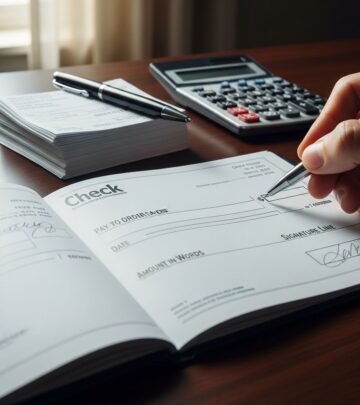
A check is a written, dated, and signed instrument that directs a bank to pay a specific amount of money from an account holder’s account to a designated payee. It serves as a financial document that functions as a substitute for cash or digital payment methods. Checks have been a fundamental component of the banking and financial system for centuries, enabling individuals and businesses to transfer funds safely and create a documented record of transactions.
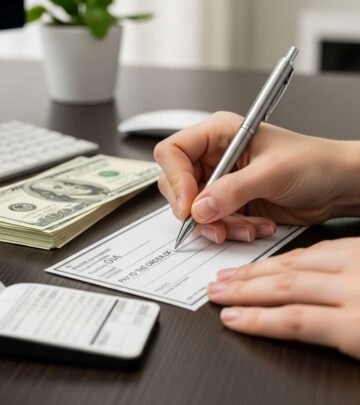
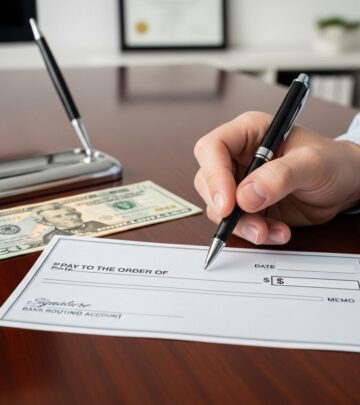
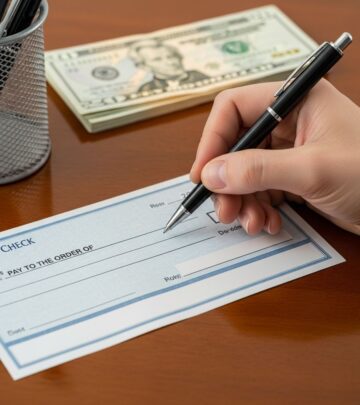
When a person writes a check, they are essentially providing written authorization to their financial institution to withdraw funds from their account and distribute them to another party. The check contains critical information including the date of issue, the payee’s name, the amount to be paid, and the account holder’s signature. This combination of elements creates a legally binding instruction that banks recognize and process.
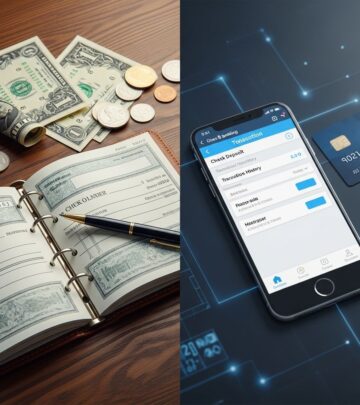
In the digital age, while checks remain relevant, their usage has declined significantly as electronic payment methods have become more prevalent. However, they continue to play an important role in certain financial transactions, particularly in business payments, rent collection, and situations where a written record of payment is essential.
How Checks Work
The process of writing and clearing a check involves several key steps that ensure funds are properly transferred from the payer to the payee:
- Writing the Check: The account holder completes all required fields on the check, including the date, payee name, amount in both numerical and written form, and provides their signature.
- Depositing the Check: The payee takes the check to their bank and deposits it into their account, providing it to a bank teller or using an automated check deposit system.
- Initial Processing: The receiving bank scans the check and records the information electronically, beginning the clearing process.
- Check Routing: The check is routed to the payer’s bank through the Federal Reserve or a private clearinghouse, which sorts and processes millions of checks daily.
- Verification: The payer’s bank verifies that sufficient funds are available in the account and that the signature matches the account holder’s registered signature.
- Fund Transfer: Once verified, the funds are electronically transferred from the payer’s account to the payee’s account.
- Settlement: The transaction is settled, and both banks update their records accordingly.
This process typically takes one to three business days, depending on various factors including the banks involved, the amount of the check, and whether it is a local or out-of-state transaction. Modern check processing relies heavily on electronic imaging and data extraction technology to expedite the clearing process.
Types of Checks
There are numerous types of checks, each designed for specific purposes and circumstances:
Personal Checks
Personal checks are the most common type, issued by individuals to pay bills, make purchases, or transfer funds to other individuals. These checks are drawn against personal checking accounts and contain the account holder’s name, address, and account information.
Cashier’s Checks
A cashier’s check is issued by a bank itself rather than an individual. The bank guarantees payment because the funds are withdrawn from the bank’s own account rather than a personal account. These checks are often requested for large transactions because they carry the bank’s promise of payment and are considered very secure.
Certified Checks
A certified check is a personal check that has been verified by the bank to ensure that sufficient funds are available in the account to cover the amount written. The bank stamps the check as certified, guaranteeing payment. The funds are set aside immediately, reducing the risk to the payee.
Traveler’s Checks
Traveler’s checks are prepaid check-like instruments that allow individuals to carry funds while traveling without carrying large amounts of cash. They can be cashed at banks, hotels, and various retailers worldwide. The traveler signs the check when purchasing it and again when cashing it as a security measure.
Money Market Checks
Money market checks are issued to account holders who maintain money market accounts. These checks allow limited check-writing privileges while maintaining the benefits of a money market account, which typically offers higher interest rates than standard checking accounts.
Postdated Checks
A postdated check is written with a date in the future, instructing the bank not to process it until that date arrives. While legal, postdated checks create uncertainty about payment timing and are not recommended for routine transactions.
Third-Party Checks
A third-party check is made payable to one person but deposited or cashed by another person. While technically legal in many jurisdictions, many banks restrict or refuse to accept third-party checks due to fraud concerns and verification difficulties.
Stale Checks
A stale check is one that has not been presented for payment within a certain timeframe, typically six months. Banks are generally not required to honor stale checks, and the funds may not be transferred if a stale check is deposited.
Key Components of a Check
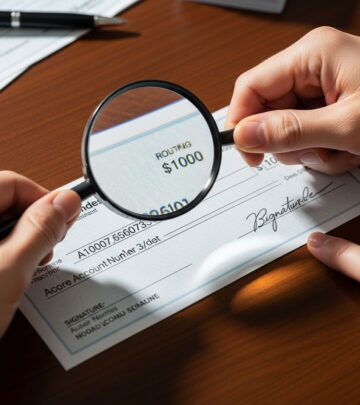
Understanding the anatomy of a check is essential for writing them correctly and recognizing legitimate checks:
| Component | Description |
|---|---|
| Check Number | A unique identifier for each check in a series, used for record-keeping and identification. |
| Routing Number | A nine-digit code that identifies the specific bank or credit union where the account is maintained. |
| Account Number | The unique identifier for the payer’s account at the financial institution. |
| Date | The date the check is written, indicating when the check was issued. |
| Payee Line | The line indicating “Pay to the order of” followed by the name of the person or entity receiving the funds. |
| Amount Box | The numerical representation of the amount to be paid, typically in the upper right corner. |
| Amount Line | The written-out version of the amount in words to prevent alteration and fraud. |
| Signature Line | The space where the account holder signs to authorize the payment. |
| Memo Line | An optional line for notes about the purpose of the check. |
| MICR Line | Magnetic Ink Character Recognition line containing routing, account, and check numbers for automated processing. |
Advantages of Using Checks
Despite the rise of digital payments, checks retain several advantages:
- Written Documentation: Checks provide a tangible record of payment that can be retained and referenced for accounting and dispute resolution purposes.
- Payment Authorization Control: The check writer maintains control over when payment is made, unlike some electronic transfers that occur immediately.
- Widely Accepted: Many organizations, particularly government agencies and utility companies, still accept checks as payment.
- No Fees for Basic Checks:Many banks do not charge fees for writing standard personal checks, making them economical.
- Legal Recognition:Checks are legally recognized financial instruments that create enforceable obligations and evidence of payment.
- Accessibility:Checks can be used by individuals without requiring digital technology or internet access.
Disadvantages of Using Checks
There are also notable drawbacks to relying on checks:
- Processing Time:Checks typically require three to five business days to clear,delaying access to funds.
- Fraud Risk:Checks can be forged,altered,or stolen,potentially resulting in unauthorized withdrawals.
- Manual Errors:Writing checks leaves room for mistakes such as incorrect amounts or missing information.
- Declining Infrastructure:As fewer businesses use checks,the infrastructure supporting check processing continues to decline.
- Cost Considerations:Special checks such as certified or cashier’s checks often incur fees.
- Float Risk:During the clearing period,funds remain technically in the payer’s account,creating potential overdraft situations.
Check Processing and the Federal Reserve
The Federal Reserve plays a critical role in the check clearing process in the United States. The Fed maintains a nationwide network of check processing centers that receive,sort,and route millions of checks daily. The Check Clearing for the 21st Century Act (Check 21),implemented in 2004,modernized check processing by allowing banks to create electronic images of checks rather than physically transporting paper checks. This innovation significantly reduced processing times and costs while maintaining the security and legality of check transactions.
Digital Check Alternatives
As technology advances,several digital alternatives to traditional checks have emerged:
- Electronic Funds Transfer (EFT):Direct transfer of funds between bank accounts using automated clearing houses (ACH).
- Wire Transfers:High-speed transfer of funds between financial institutions,typically for large amounts.
- Mobile Payment Apps:Applications that enable fund transfers through smartphones and digital devices.
- Online Bill Pay:Bank-provided services that allow customers to pay bills electronically through their bank’s website or app.
- Digital Wallets:Services like PayPal,Venmo,and Apple Pay that facilitate peer-to-peer and merchant payments.
Regulatory Framework and Consumer Protection
Checks are subject to various federal and state regulations designed to protect consumers and maintain the integrity of the banking system. The Uniform Commercial Code (UCC) establishes standardized rules for check transactions across all states. The Electronic Funds Transfer Act provides consumer protections for electronic payment methods,including certain check-related transactions. Banks are required to maintain security measures to prevent fraud and unauthorized use of checks.
Frequently Asked Questions
What is the difference between a check and a draft?
While often used interchangeably,a check is specifically drawn against a bank account and must be signed by the account holder. A draft is a broader financial instrument that may be drawn against various sources and does not necessarily require a bank.
How long does it take for a check to clear?
Most checks clear within one to three business days. However,some checks may take longer depending on factors such as the amount,the banks involved,and whether it is a local or out-of-state check.
Can I stop payment on a check?
Yes,you can issue a stop payment order to your bank before the check is presented for payment. Most banks charge a fee for this service,typically between $15 and $35.
What happens if I write a check and there are insufficient funds?
If your account lacks sufficient funds when a check is presented,the bank may return the check as “non-sufficient funds” (NSF) or “bounced.” You may face overdraft fees and the payee may also charge fees. Repeated NSF incidents can affect your banking history.
Are checks still commonly used?
While check usage has declined significantly with the rise of digital payments,they remain important for certain transactions,particularly in business payments,rent collection,and situations requiring documented proof of payment.
What makes a check a legal instrument?
A check becomes a legal instrument through the combination of a written order,a specific amount of money,a named payee,a date,and the signature of the account holder authorizing the payment. These elements create a binding financial obligation recognized by law.
References
- Check Clearing for the 21st Century Act (Check 21) — Federal Reserve System. 2004. https://www.federalreserve.gov/paymentsystems/pcs_about.htm
- Uniform Commercial Code (UCC) Article 3: Negotiable Instruments — National Conference of Commissioners on Uniform State Laws. 2022. https://www.uniformlaws.org/
- Electronic Funds Transfer Act (EFTA) — U.S. Federal Trade Commission. 2024. https://www.ftc.gov/business-guidance/privacy-security/electronic-funds-transfer-act
- Check Processing and the Federal Reserve — Board of Governors of the Federal Reserve System. 2023. https://www.federalreserve.gov/paymentsystems/
- Overdraft Fees and Consumer Protection Standards — Consumer Financial Protection Bureau (CFPB). 2024. https://www.consumerfinance.gov/
Similar Articles








Read full bio of medha deb