Check Clearing Timelines Explained
Discover the typical timelines for check clearing, factors that influence delays, and strategies to access your funds faster in today's banking system.
Checks remain a common payment method despite digital alternatives, but understanding when funds become available is crucial for managing cash flow. Typically, most personal checks clear in
two business days
, though this can vary based on check type, deposit method, and account history.The Fundamentals of Check Processing
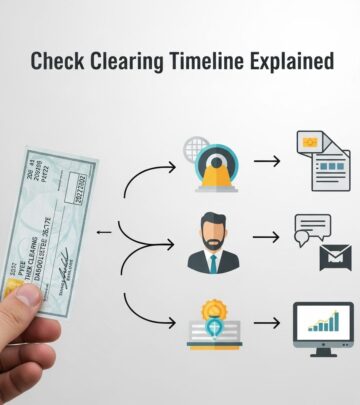
Check clearing involves verifying the check’s validity and transferring funds from the payer’s account to the payee’s. Banks use electronic systems to image the check and exchange data, speeding up what was once a manual process. Clearing occurs first, followed by settlement through the Federal Reserve, which can add 1-3 business days.
Business days exclude weekends and federal holidays, and processing starts only before a bank’s cutoff time—often 2 p.m. for branches and noon for ATMs. Depositing after cutoff delays the process to the next day.
Standard Clearing Times by Check Type
Different checks clear at varying speeds due to risk levels and regulations. Here’s a breakdown:
| Check Type | Typical Clearing Time | Notes |
|---|---|---|
| Personal Checks | 2 business days | First $225-$275 available next day |
| Government/Cashier’s Checks | 1 business day | Next-day availability under EFAA |
| Same-Bank (On-Us) Checks | Same or next day | Internal processing is fastest |
| Large Deposits (>$5,525) | Up to 7 days | Extended holds possible |
| Foreign Checks | 2-6 weeks | International verification required |
Government checks, including Treasury and payroll from federal agencies, must be available the next business day. Cashier’s and certified checks follow suit due to bank guarantees. Personal checks carry higher fraud risk, leading to longer verification.
Federal Regulations Governing Funds Availability
The
Expedited Funds Availability Act (EFAA)
of 1987 sets maximum hold periods to protect consumers. Banks must make the first$225
of a deposit available the next business day (increasing to $275 in July 2025), with the remainder by the second business day for most checks. Exceptions allow longer holds for new accounts or overdraft history.- $225 Next-Day Rule: Applies to the initial portion of personal check deposits.
- Second-Day Full Access: For non-risky checks under EFAA guidelines.
- Exceptions: Up to 7 days for large sums over $5,525 (rising to $6,725 in 2025).
These rules ensure predictable access while allowing banks to mitigate risks.
Factors That Can Delay Your Check Clearing
Several variables extend processing beyond the norm:
- Account Age: Accounts open less than 30 days face full holds up to 9 days.
- Overdraft History: Repeated overdrafts in the past 6 months trigger caution.
- Deposit Amount: Single-day check deposits exceeding $5,525 prompt extended review.
- Deposit Timing: After-hours or weekend deposits wait until the next business day.
- Check Suspicion: Banks may hold if fraud is suspected or funds seem uncertain.
Mobile deposits add scrutiny; banks verify images for quality, potentially delaying clearance. Foreign checks require cross-border coordination, often taking weeks.
Mobile and Digital Deposit Innovations
Apps from banks like Chase and PNC enable photo-based deposits, often providing provisional credit same-day. However, full clearance still follows standard timelines. Advantages include convenience, but risks like poor image quality can cause rejections.
Digital imaging converts physical checks to electronic files sent via networks like the Federal Reserve’s, reducing settlement to 1-3 days. This has shortened overall times from weeks to days.
Real-World Examples of Clearing Scenarios
Consider these cases:
- Friday Deposit Before Cutoff ($1,000 Personal Check): $225 available Monday, remainder Tuesday.
- Monday Large Deposit ($6,000): Possible hold until following Monday.
- Same-Bank Cashier’s Check: Funds accessible Wednesday if deposited Tuesday.
- Post-Holiday Mobile Deposit: Processing starts next business day after holiday.
These illustrate how timing and type dictate availability.
Strategies to Accelerate Fund Access
Minimize delays with these tips:
- Deposit early in the day at a branch for quickest processing.
- Opt for cashier’s or government checks when possible.
- Maintain a strong account history to avoid holds.
- Use mobile apps for provisional credit, verifying image clarity.
- Ask about same-bank transfers for instant access.
Verify payer funds beforehand to prevent bounces, which incur fees and delays.
Risks of Premature Withdrawals and Bounced Checks
Spending before full clearance risks overdrafts if the check bounces. Banks charge fees ($25-$35 typically) and may reverse transactions. Always wait for confirmation or use only provisional funds cautiously.
Alternatives to Traditional Checks
For faster transactions, consider:
- ACH Transfers: 1-3 days, low-cost electronic option.
- Wire Transfers: Same-day, but fees apply.
- Digital Wallets (Zelle, Venmo): Instant for linked accounts.
- Debit/Credit Cards: Immediate processing.
These reduce reliance on checks amid declining usage.
Frequently Asked Questions (FAQs)
What is the first amount available from a check deposit?
Banks must provide
$225
(rising to $275 in 2025) the next business day under EFAA.Can weekends affect clearing times?
Yes, only business days count; Friday deposits often extend to Tuesday.
How long for a check over $5,525?
Up to 7 business days due to large-deposit exceptions.
Do mobile deposits clear faster?
Provisional credit may be immediate, but full clearance matches standard times.
What if my check bounces?
Funds reverse, fees apply, and it may harm your account standing.
Staying informed empowers better financial decisions in check-based transactions.
References
- Check Processing Guide: How it’s Done — BankersHub. 2023. https://www.bankershub.com/blogs/blog/check-processing-guide-how-its-done
- How Does the Check Clearing Process Work? — GoCardless. 2024-05-15. https://gocardless.com/en-us/guides/posts/how-does-the-check-clearing-process-work/
- How Long Does It Take for a Check to Clear? — PNC Insights. 2025-01-10. https://www.pnc.com/insights/personal-finance/spend/how-long-for-check-to-clear.html
- How Long it Takes a Check to Clear — NerdWallet. 2025-03-20. https://www.nerdwallet.com/banking/learn/how-long-does-a-check-to-take-to-clear
- Expedited Funds Availability Act (EFAA) — Federal Reserve (via consumerfinance.gov reference). 1987 (last updated 2024). https://www.consumerfinance.gov/rules-policy/regulations/229/
- How Long Does it Take for a Check to Clear? — Chase Bank. 2025-02-28. https://www.chase.com/personal/banking/education/basics/how-long-does-it-take-for-a-check-to-clear
Similar Articles








Read full bio of medha deb