Accessing Your Money: Check Cashing Without a Bank
Discover practical solutions for depositing and cashing checks when you lack traditional banking access.
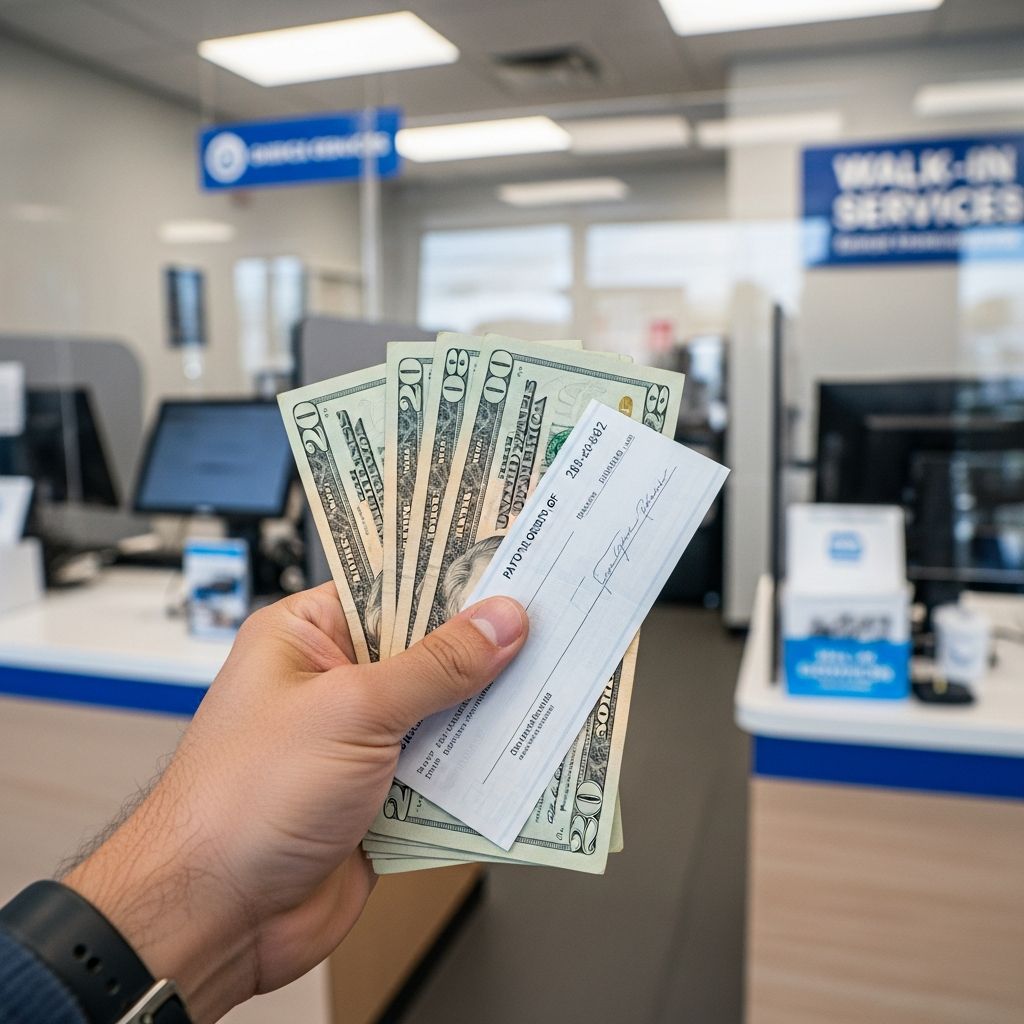
Approximately 5.9 million U.S. households lack traditional bank accounts, according to Federal Deposit Insurance Corporation data. For individuals in this situation, receiving payment via check can create a significant obstacle. The good news is that numerous alternatives exist to convert checks into usable cash, each with distinct advantages and associated costs. Understanding these options empowers unbanked individuals to make informed decisions about their financial transactions.
Understanding Your Check-Cashing Landscape
The absence of a bank account does not mean you cannot access the funds represented by a check. Various service providers have emerged to fill this gap in the financial services market. These alternatives range from traditional brick-and-mortar establishments to modern digital solutions, offering flexibility in how and when you access your money. However, most alternatives come with fees that vary based on check type, amount, and urgency of access.
The Issuing Bank Route: Your First Option
The financial institution that issued the check represents your most cost-effective starting point. Most banks will cash checks drawn on their accounts regardless of whether you maintain a customer relationship with them. This approach typically involves walking into a branch with your check and a valid government-issued identification document.
The advantage of this method extends beyond minimal or nonexistent fees. Banks possess the authoritative knowledge about check validity and funds availability. Processing times are generally immediate, and you receive your full check amount without deductions. Some banks may verify your identity more thoroughly than other options, but this verification serves to protect both parties from fraudulent activity.
The primary limitation is geographical convenience. If the issuing bank has no nearby branches, travel costs may offset any fee savings. Additionally, banking hours may not align with your availability, potentially requiring time off work.
Retail and Grocery Store Check-Cashing Services
Major retailers and grocery chains have become significant players in check-cashing services. Establishments like Walmart, Kroger, and similar national retailers operate customer service desks or money centers specifically designed for this purpose. These locations offer substantial convenience advantages due to their extended hours and widespread availability across communities.
The process typically involves approaching the designated service counter with your check and valid identification. Staff verify the check details, collect the applicable fee, and provide you with cash minus the service charge. Fees at retail locations generally remain under $10, making them considerably more affordable than specialized check-cashing stores.
Before visiting a retailer, telephoning ahead ensures they accept your specific check type and confirm current fee structures. Some retailers impose limits on check amounts they will cash, while others decline certain check categories like personal checks. This preliminary confirmation prevents wasted trips and disappointment.
Digital Payment Applications and Mobile Solutions
Contemporary financial technology has revolutionized check-cashing accessibility through smartphone applications. Services including Cash App, PayPal, and Venmo allow users to deposit checks photographically without visiting physical locations. This digital approach requires minimal equipment—merely a smartphone with a camera and internet connectivity.
Cash App stands out for its low-cost structure, offering free check deposits with funds typically available within minutes to two business days. However, the service caps deposits at $3,500 per individual check and $7,500 monthly. PayPal charges a percentage-based fee when funds are needed immediately, though exact rates vary. Venmo similarly accommodates check deposits through their mobile platform.
The convenience factor cannot be overstated. You can initiate deposits at any hour, from any location, without traveling to physical service locations. For individuals with inconsistent schedules or limited transportation access, this represents a game-changing solution. However, these services typically require account creation, which may involve providing personal information and establishing banking relationships with the application providers.
Prepaid Debit Card Deposit Methods
Prepaid debit cards function as bank accounts without requiring traditional banking relationships. Available at most retail locations for minimal activation fees, these cards allow check deposits through accompanying mobile applications. Once funds are loaded onto the card, users can make purchases, conduct online transactions, and withdraw cash from automated teller machines.
The deposit process mirrors that of traditional bank accounts. Users endorse the check, photograph it through the mobile app, and submit it for processing. Depending on the card provider, funds become available immediately or within a few business days. Some cards waive deposit fees if you accept standard processing timelines, while charging fees for expedited access.
This method offers a bridge between traditional banking and alternative services. While you avoid bank account requirements, the prepaid card provides functionality similar to conventional debit accounts. Some providers offer protections like Federal Deposit Insurance Corporation coverage when accounts are registered. Fees vary considerably among card providers, so comparing options before selection proves worthwhile.
Specialized Check-Cashing Establishments
Dedicated check-cashing stores represent the traditional alternative to banks. These businesses, including chains like ACE Cash Express and Check Into Cash, specialize in serving unbanked populations. They typically require only the check itself and valid identification, making them accessible to individuals lacking other documentation.
The notable advantage of check-cashing stores involves their flexibility regarding identification requirements. Unlike many alternatives, these establishments sometimes accommodate customers without government-issued identification or those under eighteen years old. Processing occurs quickly, often immediately, allowing instant access to funds.
However, this accessibility comes at a premium cost. Check-cashing stores charge the highest fees among available options, ranging from 1 to 10 percent of the check amount, translating to $5 to $50 for smaller checks and potentially $10 to $100 for larger amounts. Despite their higher costs, for certain populations facing barriers to other methods, these establishments provide essential services.
Third-Party Authorization and Personal Networks
An often-overlooked option involves leveraging trusted relationships. If you know someone with a bank account, you can endorse your check to them, allowing them to deposit and cash it on your behalf. This method incurs zero fees and requires minimal formal documentation.
The process involves signing the check’s back and writing “Pay to the order of [person’s name].” That individual then deposits or cashes the check using their own bank account access. This approach works particularly well for regular recurring checks where a consistent trusted contact exists.
The obvious limitation involves trust and relationship availability. Not everyone has reliable contacts willing to assist with financial transactions. Additionally, some check issuers restrict third-party endorsement, making this method unavailable for certain check types.
Comparing Methods and Associated Expenses
| Method | Typical Fee Range | Processing Time | Identification Required | Availability |
|---|---|---|---|---|
| Issuing Bank | $0-$5 | Immediate | Government ID | Bank hours only |
| Retail Store | $0-$10 | Immediate | Government ID | Extended hours |
| Cash App | Free | Minutes to 2 days | Account setup | 24/7 online |
| Prepaid Card | $5-$25 | 1-3 business days | Sometimes | 24/7 online + ATM |
| Check-Cashing Store | $5-$50 | Immediate | Minimal/Flexible | Variable hours |
| Friend/Family | $0 | Variable | None | Relationship dependent |
Selecting the Right Method for Your Situation
Choosing an appropriate check-cashing method depends on several personal factors. Consider the check amount, as some services impose limits. Assess your timeline for accessing funds, as urgent needs favor immediate options while those with patience might leverage fee-waiving delayed processing. Evaluate your identification documentation availability, since some methods require specific credentials.
Geographic location significantly impacts your options. Rural areas may lack retail check-cashing services or specialized stores, making digital applications or the issuing bank your primary choices. Urban dwellers enjoy abundant alternatives and can shop for the lowest fees.
Frequency of check cashing influences cost-benefit analysis. If you receive frequent checks, a prepaid card with reasonable fees might prove more economical than repeated retail transactions. Conversely, occasional check recipients can afford to visit check-cashing stores despite higher per-transaction costs.
Check Types and Their Acceptance Variations
Different check categories receive varying levels of acceptance across service providers. Payroll checks enjoy the widest acceptance due to their reliability and predictability. Government checks, including Social Security deposits and tax refunds, also receive broad acceptance. Personal checks from individuals face the most restrictions, with many retailers and digital services declining them entirely.
Cashier’s checks and money orders occupy a middle ground, accepted by most establishments but sometimes subject to additional verification. When planning to cash an unusual check type, contacting your chosen service provider beforehand ensures acceptance and understanding of associated requirements.
Frequently Asked Questions
Can I cash a check at any bank branch?
Most banks will cash checks drawn on their institutions for non-customers, but policies vary. Call ahead to confirm, as some branches reserve this service for account holders or charge fees for non-customer transactions.
What identification do check-cashing services require?
Government-issued identification like driver’s licenses or passports are standard requirements. However, specialized check-cashing stores sometimes accommodate alternative identification or waive requirements for established customers.
How quickly can I access funds through digital apps?
Cash App typically provides access within minutes to two business days. PayPal and other services may take one to three business days depending on the source bank and check type.
Are prepaid card deposits as safe as bank deposits?
Registered prepaid card accounts may qualify for FDIC insurance coverage similar to traditional bank accounts, though this varies by provider. Review specific terms before selecting a prepaid card service.
Why do check-cashing services charge such high fees?
These businesses assume fraud risk, operate physical locations, and serve customers traditional banks sometimes decline. Their higher fees reflect these operational costs and risk factors.
Looking Forward: Building Financial Stability
While these alternatives solve immediate check-cashing needs, financial experts generally recommend transitioning toward traditional banking relationships for long-term financial health. Bank accounts provide safer fund storage, access to credit products, and protection through regulatory frameworks. Many financial institutions now offer low-cost or fee-free accounts designed for underbanked populations.
Beginning your banking journey might involve opening a basic checking account, which gradually reduces dependence on expensive alternative services. Over time, building banking relationships creates opportunities for credit building and financial advancement impossible to achieve while remaining unbanked.
References
- How to Cash a Check Without a Bank Account — Chase Bank. 2025. https://www.chase.com/personal/banking/education/basics/cash-a-check-without-a-bank-account
- 6 Ways To Cash A Check Without A Bank Account — Bankrate. 2025. https://www.bankrate.com/banking/checking/how-to-cash-a-check-without-a-bank-account/
- How to Cash a Cheque Without a Bank Account — Western Union. 2025. https://www.westernunion.com/blog/en/ca/how-to-cash-a-cheque-without-a-bank-account/
- How to Cash a Check Without a Bank Account — PNC Insights. 2025. https://www.pnc.com/insights/personal-finance/spend/how-to-cash-check-without-bank-account.html
- 6 Ways to Cash a Check Without a Bank Account — PayPal US. 2025. https://www.paypal.com/us/money-hub/article/cash-check-without-bank-account
Similar Articles



Read full bio of medha deb