Cheapest Way To Build A House: 5 Affordable Options
Discover proven strategies to construct your dream home affordably without sacrificing quality or safety.
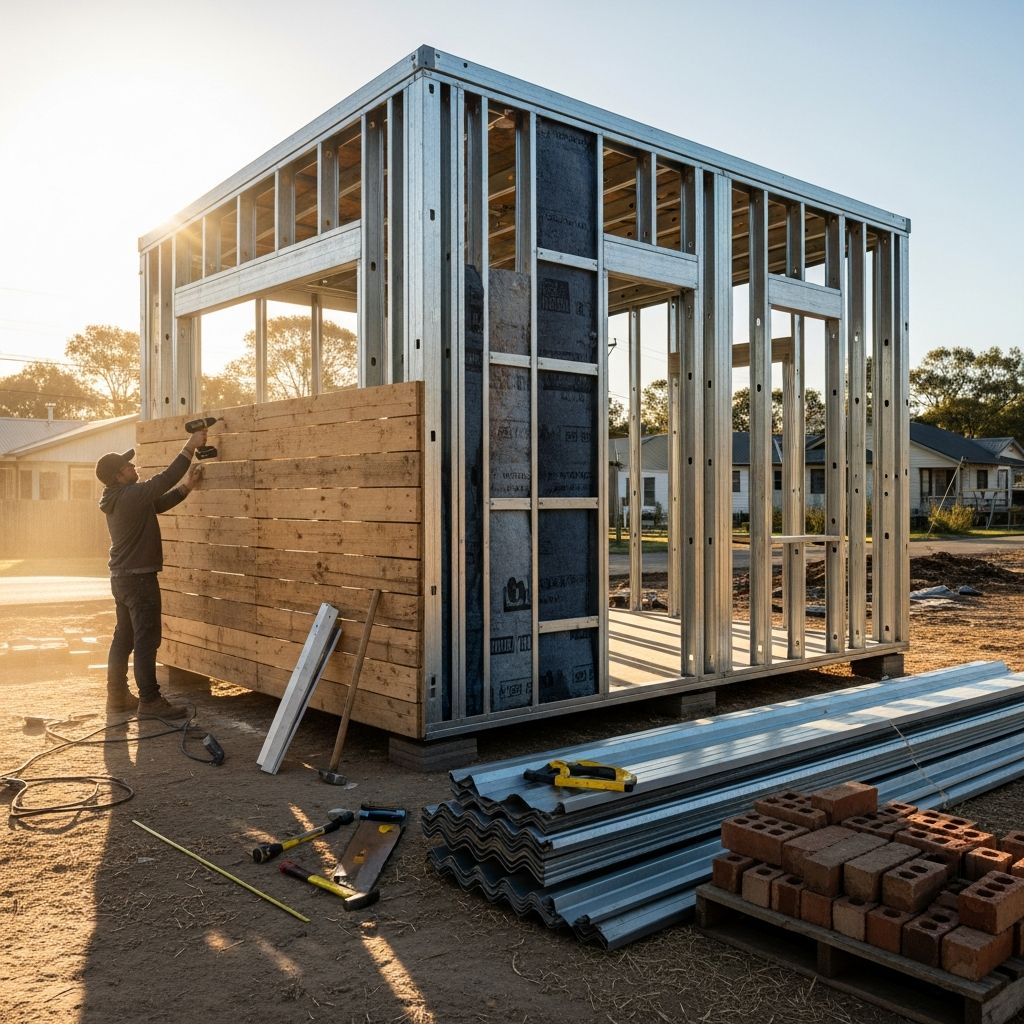
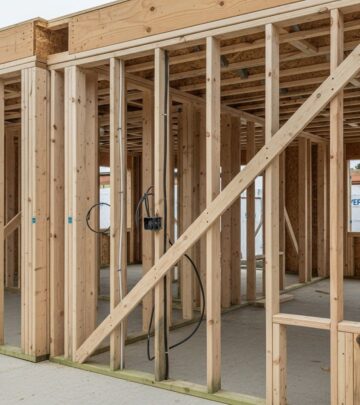
Building a house from scratch can seem daunting, especially with rising material costs and labor expenses. However, innovative methods and smart planning allow homeowners to construct durable, functional homes for a fraction of traditional costs. This guide explores the most affordable approaches, drawing from proven strategies used by thousands of budget-conscious builders.
Is It Cheaper to Build or Buy a House?
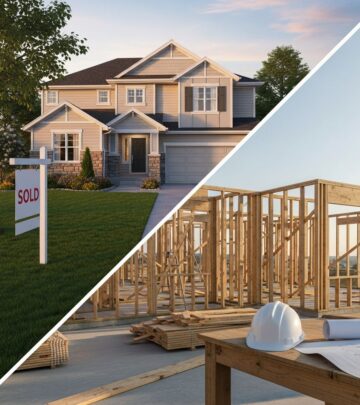
Deciding between building and buying depends on location, market conditions, and personal needs. In many areas, building a custom home costs less per square foot than purchasing an existing one, particularly if you opt for efficient designs. Traditional stick-built homes average $150 to $300 per square foot, while alternatives like prefab or modular can drop to $80-$150. Buying often involves premiums for location and updates, but building offers customization and potential long-term savings on energy efficiency.
- Pros of Building: Tailored design, energy savings, no renovation hassles.
- Cons of Building: Time-intensive, permitting delays, upfront capital.
- Pros of Buying: Immediate occupancy, established utilities.
- Cons of Buying: Higher closing costs, hidden repairs.
Current data shows building can save 10-30% in rural or suburban areas where land is affordable. Always compare local listings and contractor quotes.
Tiny Houses: The Ultimate Budget Option
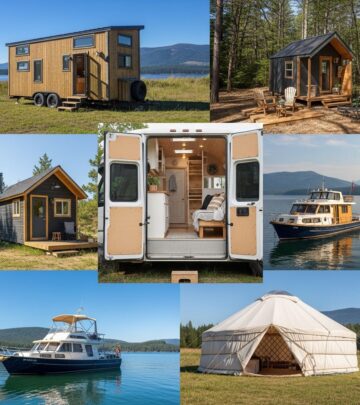
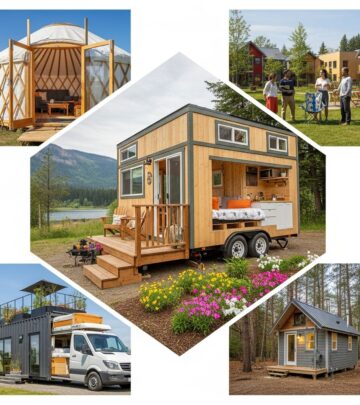
Tiny houses, typically under 400 square feet, represent one of the cheapest ways to build. Costs range from $10,000 to $50,000, excluding land. These compact dwellings appeal to minimalists and those downsizing, offering mobility and low maintenance.
Key advantages include reduced material needs and off-grid capabilities like solar panels and composting toilets. Builders often use trailers for foundations, bypassing expensive slabs. Popular models feature lofts for sleeping, multifunctional furniture, and high insulation for efficiency.
| Tiny House Type | Avg. Cost | Size | Build Time |
|---|---|---|---|
| DIY Trailer | $10k-$30k | 100-200 sq ft | 3-6 months |
| Prefab Kit | $30k-$50k | 200-400 sq ft | 1-3 months |
| Custom THOW | $50k-$100k | Up to 400 sq ft | 6-12 months |
Regulations vary; some areas classify them as RVs, easing zoning. Financing through personal loans or RV loans keeps costs low. Success stories highlight families thriving in 200-square-foot spaces with clever storage.
Shipping Container Homes: Industrial Chic on a Dime
Repurposed shipping containers cost $1,500-$5,000 each and build homes from $20,000 to $100,000. Their steel construction provides durability against weather and pests, with modular stacking for expansion.
Conversion involves insulation, cutting for windows/doors, and foundation work. One-container homes suit singles, while multi-unit designs accommodate families. Costs break down as: container ($3k), mods ($10k), foundation ($5k), finishes ($10k).
- Benefits: Quick assembly (weeks), eco-friendly recycling, portability.
- Challenges: Rust prevention, insulation for temperature control.
Engineers recommend welding reinforcements and spray foam insulation. Real-world examples include 1,600-square-foot homes from four 40-foot containers at under $80 per square foot.
Barndominiums: Barn Meets Home
Barndominiums (barndos) blend living quarters with workshops, costing $50-$150 per square foot. Metal buildings start at $20 per square foot for shells, allowing DIY interiors to slash expenses.
Ideal for rural properties, they offer open floor plans, high ceilings, and low upkeep. A 2,000-square-foot barndo might total $100,000, versus $400,000 for stick-built. Pole barn kits simplify erection.
| Feature | Cost Savings | Example |
|---|---|---|
| Metal Shell | 50% less than wood frame | $40k for 2,000 sq ft |
| DIY Interior | 30-40% reduction | Shop + living space |
| Energy Efficient | Lower utilities | Insulated metal panels |
Zoning favors agricultural areas. Customize with lofts, garages, or livestock areas for multifunctional use.
Prefab and Modular Homes: Factory Precision
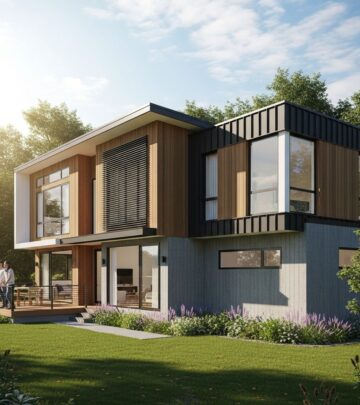
Factory-built homes arrive 80-90% complete, costing $80-$200 per square foot. Assembly takes days, minimizing labor. Modulars are site-assembled like Legos; prefabs are transported whole.
Savings come from bulk materials and controlled environments. A 1,500-square-foot modular might cost $120,000, including delivery. Brands offer customizable plans from ranches to moderns.
- Timeline: Design (1 month), build (2 months), install (1 week).
- Financing: FHA/VA loans for manufactured homes.
Alternative Builds: Cob, Straw Bale, and Earthbags
Natural materials like cob (clay/sand/straw) cost under $10 per square foot for DIYers. Straw bale homes excel in insulation, earthbag structures in seismic zones.
Cob domes: Artistic, thermal mass for passive heating. Straw bales: R-30+ walls, fire-resistant when plastered. Earthbags: Sand-filled for $5-$15 per square foot, hurricane-proof.
These require owner labor but yield super-insulated, mortgage-free homes. Workshops teach techniques for under $1,000.
Key Strategies to Cut Costs Further
1. Buy Land Wisely
Rural plots cost $5,000-$20,000 per acre versus urban premiums. Check utilities, zoning, perc tests.
2. DIY Where Possible
Owner-builders save 25-40% on labor. Focus on framing, finishes; hire for plumbing/electrical.
3. Shop Materials Smart
Salvage yards, overstock sales, metal roofing for longevity. Bulk buys via Habitat ReStores.
4. Energy Efficiency
Passive solar, LED lights, high R-value insulation reduce bills 50%.
5. Financing Hacks
Construction loans, USDA rural loans at 1% down, sweat equity credits.
How Much Does It Cost to Build a House?
Average U.S. costs: $100-$200 per square foot for basics, $300k+ for 2,000 sq ft. Budget breakdown: Land (10%), site prep (10%), foundation (15%), framing (20%), systems (20%), interiors (25%).
| Category | % of Budget | Tips to Save |
|---|---|---|
| Foundation | 15% | Slab over basement |
| Framing | 20% | Metal vs. wood |
| Roofing | 10% | Metal panels |
Frequently Asked Questions (FAQs)
What is the cheapest way to build a house?
Tiny houses or shipping containers often cost $20k-$50k total, ideal for minimalists.
Can you build a house for $50,000?
Yes, with DIY tiny homes or container conversions on cheap land.
How much does a 1,000 sq ft house cost to build?
$80k-$150k using modular or barndo methods.
Is it cheaper to build up or out?
Building up saves on foundation but increases structural costs; out is simpler for budgets.
What permits are needed for alternative homes?
Varies by locality; check building codes for tiny homes as RVs or ADUs.
References
- Residential Construction Cost Data — U.S. Census Bureau. 2024-01-15. https://www.census.gov/construction/c30/current/index.html
- Modular Building Costs Analysis — Modular Building Institute. 2023-11-20. https://www.modular.org/cost-study/
- Alternative Housing Guidelines — U.S. Department of Housing and Urban Development (HUD). 2024-05-10. https://www.huduser.gov/portal/publications/alt-housing.html
- Barndominium Construction Standards — American Institute of Steel Construction. 2023-09-01. https://www.aisc.org/technical-resources/
- Rural Development Loan Programs — USDA Rural Development. 2025-01-01. https://www.rd.usda.gov/programs-services/single-family-housing-programs
Similar Articles








Read full bio of medha deb