Chase Savings Account Interest Rates 2025
Compare Chase savings rates and discover how they stack up against high-yield alternatives.

Chase Savings Account Interest Rates: A Comprehensive Overview
Chase, as the nation’s largest bank, offers several savings account options designed to help customers build their financial future. However, when it comes to interest rates, Chase savings accounts are known for offering minimal returns compared to online banking alternatives. Understanding Chase’s current rates, fee structures, and how they stack up against competitors is essential for making informed banking decisions.
Understanding Chase Savings Account Offerings
Chase provides two primary savings account options for customers: the Chase Savings account and the Chase Premier Savings account. Both accounts come with the convenience of Chase’s extensive branch and ATM network, which includes more than 15,000 ATMs and 5,000 branches across the country. This accessibility makes Chase particularly attractive for customers who value in-person banking services alongside digital options.
The standard Chase Savings account serves as the entry-level savings product, while the Premier Savings account offers slightly enhanced benefits for customers who meet specific eligibility requirements. Both accounts feature FDIC insurance protection up to the maximum amount allowed by law, ensuring your deposits are safeguarded.
Current Chase Savings Rates
As of November 2025, Chase savings rates remain exceptionally low. The standard Chase Savings account offers an annual percentage yield (APY) of just 0.01%, which is significantly below the national average savings rate of 0.40%. This minimal rate means that your deposits grow at an extremely slow pace, with a $10,000 deposit earning only $1 annually before any applicable fees.
The Chase Premier Savings account provides a slightly higher relationship rate of 0.02% APY, but only when customers meet specific requirements. To qualify for this improved rate, you must link the Premier Savings account with either a Chase Premier Plus checking account or a Chase Sapphire checking account. Additionally, you need to initiate at least five transactions per monthly statement period using the linked account. Without meeting these requirements, the standard rate for Premier Savings remains at 0.01%.
Interest is compounded and credited monthly based on your daily collected balance. It’s important to note that interest rates at Chase are variable and determined daily at the bank’s discretion, meaning rates can change without notice.
Chase Savings Account Fees and Requirements
Understanding the fee structure is crucial when evaluating the true earnings potential of a Chase savings account. Both accounts carry monthly service fees that can significantly reduce your interest earnings.
The standard Chase Savings account charges a $5 monthly service fee. However, Chase offers multiple ways to waive this fee:
– Link your account to an eligible Chase checking account- Maintain a daily balance of at least $300- Set up a monthly automatic transfer of at least $25 from a Chase checking account- Link to a Chase College Checking account for overdraft protection- Be under age 18
The Chase Premier Savings account carries a higher $25 monthly service fee. This fee can be avoided by maintaining one of the following during each monthly statement period:
– A balance of $15,000 or more at the beginning of each day- An eligible linked checking account
Neither account requires a minimum deposit to open, making them accessible to all customers regardless of their initial savings amount.
How Chase Compares to Online Banks and Competitors
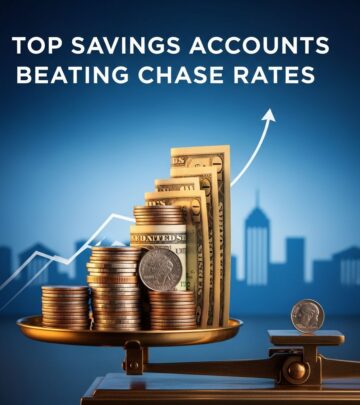
Chase’s savings rates pale in comparison to high-yield savings accounts offered by online-only institutions. While Chase offers 0.01% to 0.02% APY, many online banks provide rates exceeding 4% or even 5%. For example, some high-yield savings accounts offer APYs of 4.00% to 5.00%, allowing your money to grow exponentially faster than with Chase.
The disadvantage of Chase’s low rates reflects the operational costs associated with maintaining thousands of physical branches and ATMs. Large traditional banks prioritize branch access and customer service amenities over competitive interest rates, whereas online banks eliminate brick-and-mortar expenses and redirect those savings to customers through higher yields.
| Aspect | Chase Savings | Chase Premier Savings | High-Yield Online Banks ||——–|—————|———————-|————————|| APY | 0.01% | 0.02% (relationship rate) | 4.00%-5.00% || Monthly Fee | $5 (waivable) | $25 (waivable) | Often $0 || Minimum Deposit | None | None | $0-$1,500 || Branch Access | Yes (15,000+ ATMs) | Yes (15,000+ ATMs) | Limited/Online only || FDIC Insurance | Yes | Yes | Yes |
Additional Savings Options at Chase
Beyond traditional savings accounts, Chase offers certificates of deposit (CDs) for customers seeking fixed-rate savings products. CDs allow you to lock in an interest rate for a predetermined term, ranging from one month to 10 years. However, CDs require a minimum $1,000 opening deposit, and Chase’s CD rates are generally lower than those offered by specialized online CD providers.
CDs feature fixed interest rates compounded daily, providing predictable earnings throughout the CD term. The tradeoff for this security is reduced liquidity—you cannot access your funds without penalty until the term expires. Despite offering more competitive rates than savings accounts, Chase CDs still typically underperform compared to offerings from dedicated online banks.
Chase’s Competitive Advantages
While Chase’s savings rates are modest, the bank offers several compelling advantages that may justify using Chase for your savings needs:
Extensive Branch and ATM Network: Chase operates one of the largest physical banking networks in the United States. With thousands of locations nationwide, customers enjoy convenient access to their accounts, whether they need to deposit checks, withdraw cash, or speak with a banker in person. Chase was recognized as the Best Bank for Branch Access in the 2025 Bankrate Awards, acknowledging this significant advantage.
Mobile Banking Platform: Chase provides a highly-regarded mobile banking app that simplifies account management. Customers can check balances, transfer funds, deposit checks via mobile capture, and monitor transactions from their smartphones.
New Customer Bonuses: Chase frequently offers promotional bonuses to attract new customers, though these incentives are typically applied to checking accounts rather than savings products.
Overall Banking Reputation: Chase earned 3.6 out of 5 stars in Bankrate’s comprehensive review across its deposit products, reflecting the bank’s solid overall service quality, even if savings rates are not competitive.
When Chase Savings Makes Sense
Despite low interest rates, Chase savings accounts may still be appropriate in certain situations:
– You value the convenience of a nearby Chase branch for regular banking needs- You maintain multiple accounts at Chase and benefit from integrated digital banking- You’re under 18 and qualify for fee waivers- You maintain high balances sufficient to waive monthly fees through balance requirements- You prioritize account accessibility and customer service over maximum interest earnings
Better Alternatives for Maximizing Savings Growth
If your primary goal is to maximize interest earnings on savings, numerous alternatives outperform Chase significantly. High-yield savings accounts at online banks typically offer rates 200-500 times higher than Chase’s offerings. Credit unions such as Alliant Credit Union and online banks like EverBank provide substantially better rates without requiring large minimum balances or paying monthly fees.
For emergency funds and short-term savings goals, high-yield savings accounts offer the optimal combination of accessibility, safety, and return. For longer-term savings, CDs with competitive rates or money market accounts may provide enhanced earning potential.
Frequently Asked Questions
Q: What is the current Chase Savings account interest rate?
A: As of November 2025, the Chase Savings account offers an APY of 0.01%, which is well below the national average of 0.40%.
Q: How can I avoid the monthly service fee on my Chase Savings account?
A: You can avoid the $5 monthly fee by linking to an eligible Chase checking account, maintaining a $300 daily balance, setting up a $25 monthly automatic transfer, linking a Chase College Checking account, or being under age 18.
Q: What is the Chase Premier Savings relationship rate?
A: The Chase Premier Savings relationship rate is 0.02% APY, available when your account is linked to a qualifying Chase checking account and you complete at least five transactions monthly.
Q: Are Chase savings accounts FDIC insured?
A: Yes, Chase savings accounts are FDIC insured up to the maximum amount allowed by law, protecting your deposits against bank failure.
Q: How do Chase savings rates compare to online banks?
A: Chase rates (0.01%-0.02%) significantly underperform online banks, which commonly offer 4.00%-5.00% APY or higher, allowing your savings to grow much faster.
Q: What is the minimum opening deposit for Chase savings accounts?
A: There is no minimum opening deposit required for either the Chase Savings or Chase Premier Savings account, making them accessible to everyone.
Q: Does Chase offer CDs, and how do their rates compare?
A: Yes, Chase offers CDs with terms ranging from one month to 10 years and requires a $1,000 minimum deposit. However, better rates are generally available through specialized online CD providers.
References
- Chase Savings Account Interest Rates 2025: How They Compare — NerdWallet. 2025-05-07. https://www.nerdwallet.com/banking/learn/chase-savings-account-interest-rate-how-it-compares
- Chase Savings Account Interest Rates — Bankrate. 2025-09-20. https://www.bankrate.com/banking/savings/chase-savings-rates/
- Chase Savings Account Interest Rates — Chase. 2025-11-28. https://www.chase.com/personal/savings/savings-account/interest-rates
- Chase Premier Savings Account — Chase. 2025. https://www.chase.com/personal/savings/interest-savings
Similar Articles








Read full bio of Sneha Tete