Charles Schwab vs. Fidelity: 2025 Comparison
Compare Charles Schwab and Fidelity to find the best brokerage platform for your investment goals.
Charles Schwab vs. Fidelity: Which Broker Is Right for You?
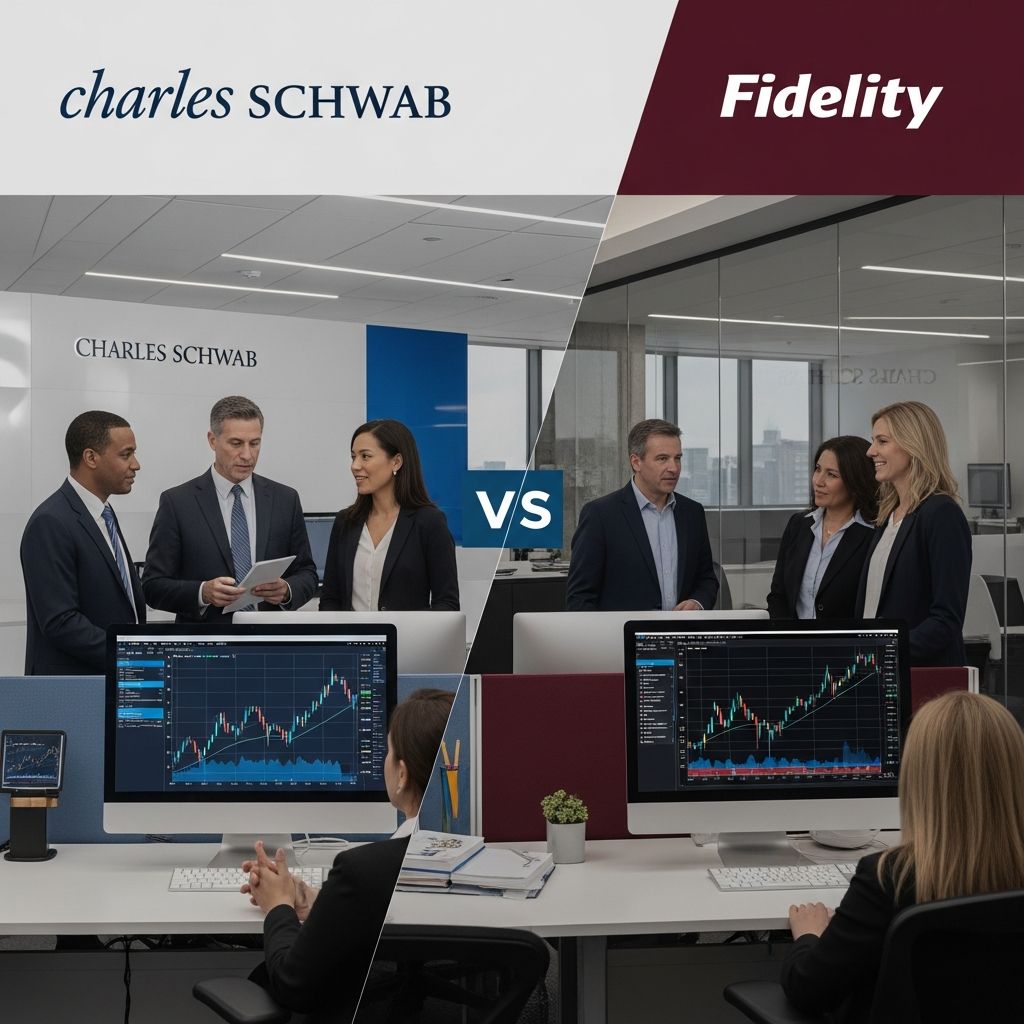
When it comes to choosing an online brokerage platform, two names consistently stand out: Charles Schwab and Fidelity. Both companies have established themselves as industry leaders with decades of experience in financial management, personal advising, and retail brokerage services. These platforms offer comprehensive online and mobile investing experiences that cater to investors of all skill levels. However, determining which broker best suits your needs requires a detailed comparison of their offerings, fee structures, research capabilities, and user interfaces.
While Fidelity and Charles Schwab share many similarities in their core offerings, important differences exist that could significantly impact your investing experience. This comprehensive guide breaks down the key distinctions between these two powerhouse brokers to help you make an informed decision.
Fee Structure and Pricing
One of the most critical factors when selecting a broker is understanding the fee structure. Fortunately, both Fidelity and Charles Schwab have made significant moves toward lowering costs for retail investors.
Stock and ETF Trading Commissions
Both platforms offer free trading for stocks and exchange-traded funds (ETFs), eliminating a major cost barrier for active investors. This zero-commission structure represents a fundamental shift in the brokerage industry and makes both options highly competitive for frequent traders.
Options and Mutual Fund Trading
When trading options contracts, both brokers charge $0.65 per contract, making them equally priced on this front. For mutual fund trading, both charge approximately $50 per transaction for mutual funds not on their no-fee lists. However, both platforms offer thousands of mutual funds with zero transaction fees, giving investors substantial flexibility in building diversified portfolios without incurring additional costs.
Account Maintenance Fees
Neither platform charges inactivity fees or non-trading fees for basic account activities such as deposits and withdrawals. This is a significant advantage for casual investors or those who may take breaks from trading. Charles Schwab does charge for certain specialized services, including account transfers, returned ACH transfers, wire fees, and issuing paper stock certificates. Fidelity offers more zero-cost features overall, though most investors rarely utilize these specialized services.
Advisory and Broker-Assisted Services
Both brokers offer broker-assisted trading for clients who prefer personalized service. Fidelity charges $19.95 per trade for this service, while Charles Schwab charges $25 per trade. Additionally, both platforms provide access to financial advisors either online or through physical retail branches, though these services come at an additional cost depending on account size and service level.
Investment Selection and Asset Classes
The breadth of available investments is crucial for building a well-diversified portfolio. Both Schwab and Fidelity excel in this area, though they each have distinct advantages.
Core Investment Options
Both platforms allow you to trade virtually all major asset classes, including stocks, ETFs, options, and mutual funds. Each broker offers several thousand no-fee mutual funds, providing investors with tremendous flexibility in constructing their investment strategies. Fidelity offers approximately 3,220 no-transaction-fee mutual funds, while Charles Schwab provides approximately 7,774 such funds, giving Schwab a quantitative edge in this category.
Futures and Alternative Assets
Charles Schwab distinguishes itself by supporting futures trading, an offering that Fidelity does not provide. However, futures represent a volatile, high-risk asset class that appeals primarily to advanced traders rather than typical retail investors. Both platforms support direct cryptocurrency investment, accommodating the growing interest in digital assets among investors.
Bonds and Fixed Income
Both brokers offer access to bonds, fixed income securities, and precious metals trading. This comprehensive range of tradable securities ensures that investors can build portfolios spanning multiple asset classes without needing multiple brokerage accounts.
Trading Platforms and User Experience
The quality and functionality of a trading platform significantly impacts your investing experience. Both Fidelity and Charles Schwab offer multiple platforms tailored to different investor types.
Fidelity Platforms
Fidelity provides three primary trading platforms: Fidelity.com, a mobile app available for iOS and Android, and Fidelity Trader+. These platforms are designed with accessibility in mind, making them particularly suitable for beginner and intermediate investors. The platform layout and design help inexperienced investors understand their options readily, creating an environment conducive to building trading experience while maintaining simplicity.
Charles Schwab Platforms
Charles Schwab offers five trading platforms: Schwab.com, Schwab Mobile for iOS and Android, and the legendary thinkorswim platform available for web, desktop, and mobile devices. Thinkorswim represents one of the most powerful trading platforms available to retail investors, offering advanced charting tools, backtesting capabilities, and sophisticated technical analysis features. This broader range of platforms accommodates everyone from beginners to professional traders.
Customization and Complexity
Experienced traders often need greater customization options and technical depth. Charles Schwab’s platforms support a greater degree of customization in data sets, allowing traders to build their own comparisons using multiple assets and indicators. Fidelity’s platform, while excellent, supports less customization, which may prove frustrating for more advanced traders seeking highly specific analytical configurations.
Research and Analysis Tools
Quality research and analysis capabilities help investors make more informed decisions. Both platforms excel in this area, though with different strengths.
Research Offerings
Both Charles Schwab and Fidelity offer a full range of news and analysis. Users can access trading data such as price history, critical statistics, and technical indicators spanning the lifetime of any given asset. Beyond raw data, both platforms provide market reports, white papers, and edited analyses designed to support better financial decision-making.
Data Quality and Sources
While both companies offer well-regarded information, Charles Schwab’s research offerings are generally considered to be of particularly high quality. Schwab provides access to over a dozen research sources, including Morningstar, Refinitiv/LSEG, Argus, Vickers, and Computrade/Market Edge. Fidelity, conversely, offers exceptional research and data offerings and edges slightly ahead of Schwab in certain areas, particularly with exclusive analytical content.
Robo-Advisory Services
Both platforms include robo-advising capabilities, allowing you to invest in artificial intelligence-driven portfolios based on your pre-selected parameters. Charles Schwab requires a $5,000 minimum investment to use their robo-advisor but charges no advisory fees, while Fidelity has no minimum balance requirement but charges a fee on accounts exceeding $25,000. This difference may be significant depending on your account size and preferences.
Special Features and Unique Offerings
Index Funds with No Expense Ratios
Fidelity distinguishes itself by offering several index funds that charge no expense ratio, a rare offering in the industry that provides significant long-term cost savings for index investors.
Cash Interest Rates
Fidelity offers a competitive 3.97% interest rate on uninvested cash, significantly outpacing Charles Schwab’s 0.05% rate. For investors holding substantial cash balances, this difference can result in meaningful additional income.
Beginner Support Programs
Charles Schwab provides new investors with $50 to split across the top five stocks in the S&P 500 and highlights educational materials specifically designed for beginners. This approach helps new investors take their first steps with tangible assets rather than starting from zero.
Customer Service and Support
Responsive, knowledgeable customer service becomes crucial when you need assistance with your accounts or have trading questions. Charles Schwab offers 24/7 phone and chat support, ensuring you can reach a representative whenever needed.
Fidelity also provides excellent customer service through multiple channels, though specific hour availability may vary based on your account type and the service you require. Both brokers have built strong reputations for customer satisfaction and support quality.
IRA and Retirement Account Options
Both brokers offer extensive IRA options, though neither provides an IRA match to help boost retirement savings. Schwab offers an impressive list of IRA types, including custodial and inherited accounts, giving investors flexibility in how they structure retirement accounts.
Comparison Table: Key Features at a Glance
| Feature | Fidelity | Charles Schwab |
|---|---|---|
| Account Minimum | $0 | $0 |
| Stock Trading Costs | Free | Free |
| Options Trades | $0.65 per contract | $0.65 per contract |
| No-Fee Mutual Funds | 3,220 | 7,774 |
| Cash Interest Rate | 3.97% | 0.05% |
| Trading Platforms | 3 | 5 (including thinkorswim) |
| Futures Trading | No | Yes |
| 24/7 Support | Available | 24/7 Phone & Chat |
Who Should Choose Fidelity?
Fidelity represents an excellent choice for several investor profiles:
– Beginner Investors: The intuitive platform design makes it easier to understand your options and build confidence as you gain experience.- Frequent Traders: Low fees and no account minimums make Fidelity attractive for active trading strategies.- Retirement Planning Focused: Fidelity excels in retirement account options and planning assistance.- Research-Oriented Investors: Fidelity’s comprehensive research and data offerings help support informed decision-making.- Cash-Rich Investors: The competitive 3.97% cash interest rate makes Fidelity advantageous for those holding significant uninvested balances.
Who Should Choose Charles Schwab?
Charles Schwab appeals most to these investor categories:
– Advanced Traders: Thinkorswim and other advanced platforms provide sophisticated charting and technical analysis capabilities.- Futures Traders: Schwab’s futures trading capability attracts investors interested in these derivative instruments.- Fund Enthusiasts: With 7,774 no-transaction-fee mutual funds, Schwab offers the most choice for fund-based investing.- Premium Research Users: Charles Schwab’s high-quality research from multiple providers supports sophisticated analysis.- 24/7 Support Seekers: Round-the-clock phone and chat support ensures assistance whenever needed.
Frequently Asked Questions
Q: Are there any account minimums required to open an account with either broker?
A: No, both Fidelity and Charles Schwab require $0 minimum to open an account. However, certain services like Charles Schwab’s robo-advisor require a $5,000 minimum investment.
Q: Which broker is better for beginner investors?
A: Fidelity generally edges ahead for beginners due to its more intuitive interface and educational focus. However, Charles Schwab also offers excellent beginner resources and even provides $50 in matching funds for new investors to split across the top S&P 500 stocks.
Q: Do both brokers offer retirement accounts?
A: Yes, both offer comprehensive IRA options and other retirement accounts. Charles Schwab offers a slightly broader range, including custodial and inherited IRA accounts.
Q: Which platform has better research tools?
A: Both offer excellent research, but Charles Schwab’s offerings are generally considered slightly superior for active traders. Fidelity edges out Schwab in certain exclusive research areas.
Q: Can I trade cryptocurrency on both platforms?
A: Yes, both Fidelity and Charles Schwab support direct cryptocurrency investment, accommodating the growing interest in digital assets.
Q: What’s the main difference in trading platforms between the two brokers?
A: Charles Schwab offers more trading platforms (5 vs. 3), including the advanced thinkorswim platform. Fidelity focuses on simplicity and ease of use across its three platforms.
Q: Which broker offers better returns on uninvested cash?
A: Fidelity significantly outpaces Charles Schwab with a 3.97% interest rate compared to Schwab’s 0.05% rate on uninvested cash balances.
The Bottom Line
Both Fidelity and Charles Schwab represent exceptional choices for online investing. You truly cannot go wrong selecting either broker. The decision ultimately depends on your specific investing style, experience level, and priorities.
If you’re a beginner investor or prefer a streamlined, intuitive interface, Fidelity’s user-friendly design and strong educational resources make it an excellent choice. For more active or sophisticated investors seeking advanced technical analysis tools and premium research, Charles Schwab’s thinkorswim platform and extensive research options provide superior capabilities.
Consider your primary investing needs, account size, and preferred trading style when making your decision. With zero-commission stock and ETF trading, thousands of no-fee mutual funds, and comprehensive research tools, both platforms have democratized investing and eliminated many traditional barriers to entry for retail investors.
References
- Fidelity vs. Charles Schwab — SmartAsset. 2025. https://smartasset.com/investing/fidelity-vs-schwab
- Fidelity vs. Schwab: 2025 Comparison — NerdWallet. 2025. https://www.nerdwallet.com/investing/learn/fidelity-vs-schwab
Similar Articles








Read full bio of medha deb