Charging Bull: The Brass Icon of Wall Street
Discover the story behind Wall Street's most iconic bronze sculpture and its powerful symbolism.
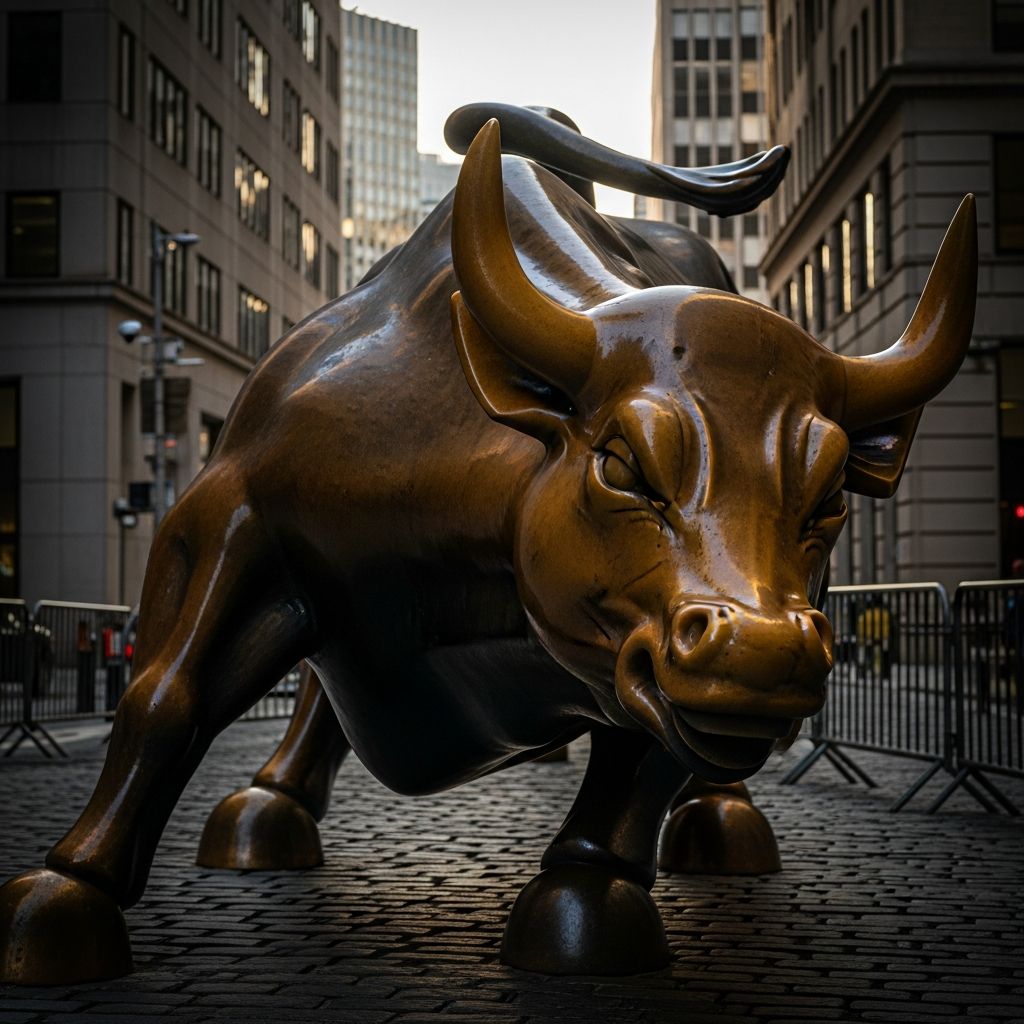
Standing majestically in the Financial District of Manhattan, just north of Bowling Green, the Charging Bull is more than just a bronze sculpture. This iconic 7,100-pound monument has transcended the realm of public art to become a global symbol of financial optimism, resilience, and American strength. Drawing thousands of visitors daily, the Charging Bull represents not merely an investment in bronze and artistic vision, but a powerful statement about market confidence and economic hope.
The Origins and Creation of the Charging Bull
The story of the Charging Bull begins in the aftermath of one of the most traumatic events in financial history. In 1987, the stock market experienced a devastating crash that sent shockwaves through the financial world and instilled fear in the hearts of investors globally. Italian-American sculptor Arturo Di Modica witnessed the uncertainty and despair that gripped the nation during this period. Rather than remain a passive observer, Di Modica envisioned a creative response that would inspire hope and demonstrate the resilience of the American people.
Di Modica dedicated two years to bringing his vision to life, working meticulously to create a sculpture that would embody strength, power, and unwavering optimism. He invested his own personal savings—totaling $360,000—into this ambitious project. For Di Modica, this wasn’t merely a commercial endeavor or a work commissioned by wealthy patrons. Instead, he viewed the sculpture as a gift to the people of New York, a city that had nurtured his artistic career and creativity. This sense of purpose and personal commitment infused the sculpture with authenticity and emotional resonance that would later captivate millions.
The Daring Guerrilla Installation
On the frigid night of December 15, 1989, Arturo Di Modica and a small group of dedicated helpers executed what would become one of the most famous acts of guerrilla art in American history. Without permits, official authorization, or public announcement, they transported the massive 7,000-pound bronze bull on a flatbed truck through the streets of Manhattan’s Financial District. Their destination was intentionally symbolic—the plaza directly outside the New York Stock Exchange building, where they positioned the charging bull beneath the NYSE’s Christmas tree as a surprise “gift” to the people of New York.
This unconventional approach to art installation reflected Di Modica’s belief that transformative public art sometimes requires bold action. The sculpture stood 11 feet tall and measured 16 feet in length, making it impossible to ignore. Its aggressive stance—with the bull leaning back on its haunches, head lowered, and horns poised as if ready to charge—communicated a message of unstoppable forward momentum.
The Public Response and Relocation
When authorities discovered the unauthorized sculpture the next morning, their first instinct was to remove it. The New York Stock Exchange had not commissioned the work, and city officials faced a clear violation of installation protocols. Within hours, the Charging Bull was removed from its position outside the NYSE.
However, what happened next surprised everyone involved. Instead of fading into obscurity, the Charging Bull ignited an overwhelming surge of public support. New Yorkers from all walks of life rallied behind the sculpture, captivated by its powerful message and artistic merit. The public’s emotional response demonstrated that Di Modica had tapped into something deeply resonant—a collective yearning for hope and confidence in the face of economic uncertainty. The removal of the bull only amplified its symbolic power and cultural significance.
Recognizing the sculpture’s value to the community, the Downtown Lower Manhattan Association worked to find a permanent home for this unexpected cultural treasure. Eventually, the Charging Bull was granted a permanent location at Bowling Green Park, a historic public space in the heart of the Financial District. This relocation from unauthorized installation to officially sanctioned public landmark represents a remarkable journey from guerrilla art to treasured monument.
The Symbolism and Meaning
Market Optimism and Bullish Sentiment
In financial terminology, a “bull” market represents rising stock prices, investor confidence, and optimistic economic outlook. Conversely, a “bear” market signifies declining prices and pessimism. The Charging Bull embodies the bullish spirit—the belief that despite temporary setbacks, markets will recover and prosper. Di Modica captured this concept in the sculpture’s aggressive posture, portraying a bull ready to charge forward with unstoppable momentum and determination.
Resilience and Economic Recovery
Beyond its connection to market terminology, the Charging Bull represents something more profound: human resilience in the face of adversity. Created immediately following the 1987 stock market crash, the sculpture emerged as a visual reminder that economic setbacks, however severe, need not define the future. The bull’s powerful stance communicates that strength, determination, and confidence can lead to recovery and renewed growth. This message transcends financial markets and speaks to the broader human capacity to overcome challenges.
American Power and Prosperity
According to Di Modica’s original vision, the sculpture was designed to “encourage everybody to realize America’s power.” The bull serves as a testament to American economic might, the dynamism of Wall Street, and the prosperity that characterizes the nation’s financial system. For international visitors and domestic observers alike, the Charging Bull has become synonymous with American capitalism, entrepreneurship, and economic leadership.
Physical Characteristics and Artistic Detail
The Charging Bull is a masterwork of sculptural precision. Every detail, from its sharp horns to its bristling tail, has been meticulously crafted to capture the essence and power of a charging bull. The sculpture weighs 7,100 pounds and stands 11 feet tall, with a length of 16 feet—dimensions that make it impossible to overlook. The bronze material itself carries symbolic weight, suggesting permanence, strength, and timelessness. The patina that develops on the bronze surface over years of exposure to Manhattan’s elements adds to the sculpture’s character and gravitas.
The aggressive forward-charging stance is particularly significant. The bull’s posture communicates unstoppable momentum and unwavering determination. The lowered head and prominent horns create a sense of imminent action, as if the bull might charge forward at any moment. This dynamic quality distinguishes the sculpture from more static or contemplative artworks, creating an energy that resonates with observers and generates the emotional impact that has made it so enduringly popular.
Cultural Impact and Global Recognition
What began as an unauthorized installation outside the New York Stock Exchange has evolved into one of the most recognizable and photographed landmarks in the world. The Charging Bull draws thousands of visitors daily, making it one of New York City’s premier tourist attractions. People travel from around the globe to photograph themselves with the sculpture, creating social media moments that have helped propagate the bull’s image and message globally.
The sculpture has transcended its original artistic context to become embedded in popular culture. It has appeared in numerous films, television shows, and commercial advertisements, further cementing its status as a cultural icon. The bull has been referenced in literature, music, and various artistic works, each interpretation adding new layers of meaning to the original sculpture.
Children frequently climb on the sculpture, rubbing its horns and nose in the belief that contact with the bull brings financial luck. This folk tradition has created physical wear patterns on the sculpture, with the most-touched areas showing a distinctive polished appearance. Some visitors treat the sculpture as a shrine to American capitalism, while others view it as a symbol of good fortune and prosperity.
Controversies and Critiques
While the Charging Bull enjoys widespread popularity and cultural reverence, it has not been without critics. Anti-capitalist movements, most notably the Occupy Wall Street protests of 2011, have criticized the sculpture as a symbol of corporate excess and financial inequality. These critics argue that the bull represents everything problematic about Wall Street—greed, speculation, and the prioritization of profit over social welfare.
Additionally, some observers question whether the Charging Bull has blurred the boundaries between authentic public art and corporate branding. Its intimate association with Wall Street and the financial industry raises questions about whether the sculpture functions primarily as promotional material for capitalism itself. Despite these criticisms, the sculpture has maintained its prominence and continues to be celebrated for its artistic merit and cultural significance.
The Broader Symbolism of Bulls in Finance
The bull has symbolized financial power and might for centuries. Beyond the specific Charging Bull sculpture, bulls and bears represent fundamental investor archetypes. Bull investors anticipate rising prices and profit opportunities, while bear investors expect market declines. This dualism has become integral to how financial markets are understood and discussed. The Charging Bull sculpture has become the physical embodiment of bullish sentiment, making Di Modica’s work perhaps the most recognizable representation of market optimism in existence.
Tourism and Economic Impact
The Charging Bull generates substantial economic impact for New York City through tourism. The sculpture’s popularity has made the Financial District a major tourist destination for visitors interested in Wall Street and financial markets. Hotels, restaurants, and shops in the vicinity benefit from the steady stream of visitors drawn to photograph and interact with the sculpture. The bull has become a symbol of New York City itself, featured on postcards, merchandise, and tourist guides.
Artistic Legacy and Influence
Arturo Di Modica’s creation has influenced how artists approach public sculpture and civic engagement. The Charging Bull demonstrates the potential for art to capture collective sentiment and become a rallying point for community identity. Di Modica’s willingness to invest his personal resources and take artistic risks in creating work for public benefit has inspired subsequent artists and sculptors. The sculpture stands as a testament to the power of individual vision and creative commitment.
Preservation and Maintenance
As one of New York City’s most iconic monuments, the Charging Bull requires ongoing maintenance and preservation. The sculpture’s bronze surface is periodically cleaned and treated to maintain its appearance and protect it from environmental degradation. City officials and preservation experts recognize the sculpture’s cultural and economic importance, ensuring that it receives appropriate care and restoration work as needed.
The Bull’s Journey to Icon Status
The transformation of the Charging Bull from unauthorized installation to global icon represents a remarkable trajectory. Within a few decades, Di Modica’s creation has moved from being removed by authorities to being protected as a treasured public monument. This evolution reflects both the power of the artistic vision and the responsive nature of public sentiment. The sculpture’s success demonstrates that authentic, meaningful art can transcend commercial considerations and institutional approval to achieve genuine cultural resonance.
Frequently Asked Questions
What does the Charging Bull symbolize?
The Charging Bull symbolizes financial optimism, market strength, resilience, and American economic prosperity. It represents the bullish sentiment that markets will recover and grow, even after economic downturns.
Who created the Charging Bull and when?
Italian-American sculptor Arturo Di Modica created the Charging Bull. He spent two years on the project after the 1987 stock market crash, and the sculpture was installed on December 15, 1989, outside the New York Stock Exchange as an unauthorized gift to the people of New York.
Why was the Charging Bull initially removed?
The sculpture was removed because it was installed without permits or official authorization. However, public demand led to its restoration, and it was eventually granted a permanent location at Bowling Green Park in the Financial District.
How much does the Charging Bull weigh?
The Charging Bull weighs 7,100 pounds and stands 11 feet tall, measuring 16 feet in length, making it one of the most substantial public sculptures in New York City.
How many visitors does the Charging Bull attract?
The Charging Bull draws thousands of visitors daily, making it one of the most photographed and visited monuments in New York City and a major tourist attraction in the Financial District.
What is the historical significance of the Charging Bull?
The Charging Bull stands as a historical marker of artistic response to economic crisis, representing hope and resilience following the 1987 stock market crash. It symbolizes the American capacity to recover from adversity and maintain confidence in economic growth.
References
- Charging Bull: Symbol of strength in financial markets — One Money Way. 2024. https://onemoneyway.com/en/dictionary/charging-bull/
- Charging Bull — Wikipedia. 2024. https://en.wikipedia.org/wiki/Charging_Bull
- The story behind the Wall Street Bull — Fully Vested. 2024. https://fullyvested.com/insights/the-story-behind-the-wall-street-bull/
- Sculpture Bull on Wall Street: Art, Symbolism, and Influence — Wall Street Prints. 2024. https://wallstreetprints.com/blogs/investing-insights/sculpture-bull-wall-street
- The Secret History of the Wall Street Bull — Element FCU. 2024. https://www.elementfcu.org/the-secret-history-of-the-wall-street-bull/
- A Short History of the Famous Wall Street Bull — Jesse Nusbaum. 2021. https://www.jessenusbaum.com/blog/2021/11/18/a-short-history-of-the-famous-wall-street-bull
Similar Articles








Read full bio of medha deb