Charge Cards vs Credit Cards: Key Differences
Discover how charge cards and credit cards differ in payments, limits, fees, and rewards to choose the best option for your financial needs.
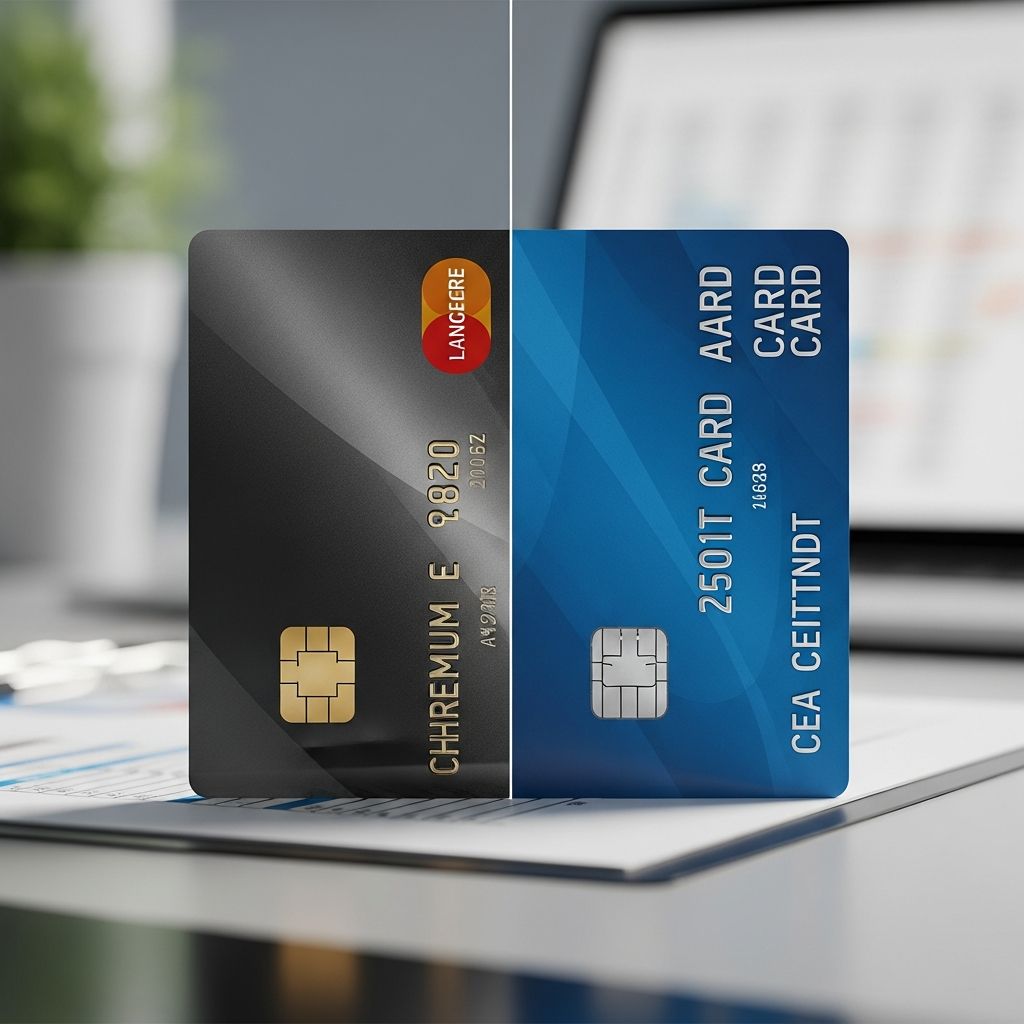
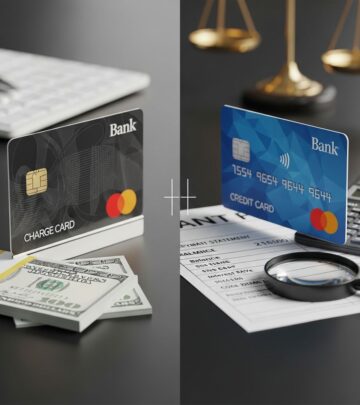
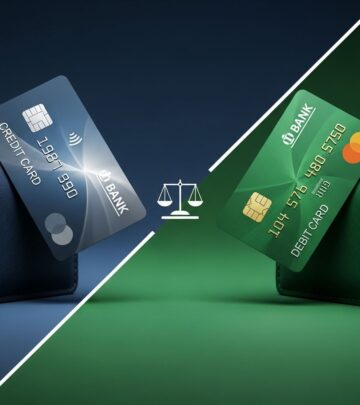
Charge cards and credit cards both enable purchases without immediate cash outlay, but their operational mechanics diverge significantly. Charge cards demand full balance repayment each billing cycle, eliminating interest accrual, while credit cards permit carrying balances with interest charges. This fundamental contrast influences spending flexibility, costs, credit building, and suitability for various users.
Understanding the Fundamentals of Charge Cards
Charge cards function as deferred payment instruments where users access credit for transactions but settle the entire outstanding amount monthly. Issuers like American Express pioneered these products, often targeting high-spenders who prioritize rewards over revolving debt. Unlike revolving accounts, charge cards enforce discipline by prohibiting partial payments, fostering cash flow management.
Spending capacity on charge cards lacks a fixed ceiling. Approval for transactions hinges on real-time evaluations of payment reliability, account balances, and financial health rather than a static limit. This dynamic approach suits businesses or individuals with variable expenses, allowing substantial purchases if repayment history supports it.
- Full monthly settlement: Balances due in entirety by statement date to evade penalties.
- No interest charges: Absence of revolving balances prevents APR accumulation.
- Dynamic limits: Purchasing power adjusts per usage patterns and liquidity.
However, non-compliance triggers late fees, account suspensions, or interest on overdue portions, underscoring the need for meticulous budgeting.
Core Mechanics of Traditional Credit Cards
Credit cards operate as revolving credit lines with predefined limits, offering grace periods for interest-free repayment if balances clear fully. Minimum payments—typically 1-4% of balances or fixed amounts—provide short-term liquidity, though unpaid portions incur high APRs, often exceeding 20%.
Fixed limits cap total exposure, protecting issuers while enabling credit utilization tracking, a key credit score factor. Users enjoy payment flexibility, ideal for smoothing irregular cash flows, but risk debt cycles from compounding interest.
- Minimum payments: Partial settlements allowed, with remainder accruing interest.
- Preset limits: Clear boundaries on borrowing capacity.
- Interest accrual: Charges apply post-grace period on carried balances.
Credit cards dominate consumer finance due to accessibility, with issuers waiving annual fees on many no-frills options.
Payment Structures: Full vs Partial Repayment
The repayment model defines user experience. Charge cards mandate 100% payoff, mirroring debit-like discipline without immediate deductions. This eliminates interest but demands robust monthly liquidity.
Credit cards contrast by permitting minimums, preserving cash for essentials while deferring full settlement. Convenience comes at a cost: interest on revolved amounts erodes purchasing power over time.
| Aspect | Charge Card | Credit Card |
|---|---|---|
| Repayment Requirement | Full balance monthly | Minimum payment (1-4%) |
| Interest on Balance | None if paid in full | Yes, on unpaid portion |
| Grace Period | Until due date | 20-25 days typically |
| Penalty for Late Pay | Fees, possible interest, freeze | Late fee, higher APR |
This table illustrates how charge cards enforce fiscal prudence, suiting those with steady inflows, whereas credit cards accommodate variability at interest expense.
Spending Limits and Flexibility Compared
Credit cards impose hard caps, viewable anytime, preventing overspending but constraining large one-offs. Utilization above 30% harms scores, prompting limit increases for heavy users.
Charge cards forgo caps, approving based on holistic profiles—revenue, assets, history. This fluidity excels for enterprises with lumpy expenditures, like inventory buys, sans limit anxiety.
Both report to bureaus: credit cards via utilization and payments; charge cards primarily through on-time full payments, bolstering profiles without utilization drag.
Costs and Fees: What to Expect
Charge cards often levy annual fees ($95-$550+) for premium perks, offset by no interest. Late payments invite hefty fines ($30-40) or temporary halts.
Credit cards vary: no-fee basics exist alongside reward-laden ones mirroring charge fees. Primary costs stem from interest (15-30% APR) and late charges, ballooning with revolved debt.
- Charge: Annual fees common; no APR; late penalties severe.
- Credit: Optional annuals; high APR; balanced late fees.
Net cost favors charge cards for full payers, credit for minimalists managing interest.
Rewards, Perks, and Added Value
Both deliver incentives, but charge cards shine in luxury: travel credits, elite status, concierge—often justifying fees for high-spenders.
Credit cards offer broad rewards—cashback 1-5%, miles, points—with accessible entry. Perks like purchase protection, extended warranties universalize appeal.
| Benefit Type | Charge Card Examples | Credit Card Examples |
|---|---|---|
| Cashback/Points | 1.5-3x multipliers | 2-5% categories |
| Travel Perks | Airport lounge, insurance | Miles, no-fx fees |
| Protections | High coverage limits | Standard guarantees |
Selection hinges on spending: charge for volume luxury, credit for everyday optimization.
Impact on Credit Profiles
Charge cards build history via consistent full payments, minimally affecting utilization since no limits exist. Late misses dent scores severely.
Credit cards influence via payment (35%), utilization (30%), balancing act for optimization. Responsible use elevates scores; debt hampers.
Both aid profiles when managed well, charge suiting avoiders of debt ratios.
Who Benefits Most from Each?
Choose charge cards if:
- You maintain ample monthly liquidity.
- Seek uncapped spending for big buys.
- Value elite rewards over flexibility.
- Prefer interest-free operations.
Opt for credit cards if:
- Cash flow varies, needing payment leeway.
- Debt management aligns with low utilization.
- No-fee rewards suffice.
- Building score via controlled revolving use.
Businesses favor charge for credit reporting sans personal guarantees sometimes; consumers mix both.
Real-World Applications and Strategies
Professionals leverage charge cards for expense predictability, pairing with business accounts. Families use credit for emergencies, paying fully to mimic charge benefits interest-free.
Hybrid strategies: primary charge for routine, credit backup. Monitor statements diligently across both to maximize scores and perks.
Frequently Asked Questions
Can charge cards help improve my credit score?
Yes, on-time full payments report positively, enhancing payment history without utilization hits.
Do charge cards charge interest?
No, provided full payment; overdue may incur it alongside fees.
What’s the difference from debit cards?
Debit deducts immediately; charge defers full monthly settlement.
Are charge cards only for businesses?
No, personal versions exist, though business common due to flexibility.
Can I get a charge card with fair credit?
Possible, but strong finances/payment history key over scores.
References
- Charge Card vs. Credit Card: Key Differences — Ramp. 2023. https://ramp.com/blog/charge-cards-vs-credit-cards
- Charge Card vs. Credit Card: What’s the Difference? — Experian. 2024-01-15. https://www.experian.com/blogs/ask-experian/what-is-the-difference-between-charge-cards-and-credit-cards/
- Charge Card vs. Credit Card: Key Differences — Equifax. 2023-11-20. https://www.equifax.com/personal/education/credit-cards/articles/-/learn/charge-vs-credit-cards/
- Understanding Credit Cards vs Charge Cards — American Express India. 2024. https://www.americanexpress.com/in/credit-know-how/how-do-credit-cards-work/
- Charge Card vs. Credit Card — Citi. 2024-02-01. https://www.citi.com/credit-cards/understanding-credit-cards/charge-card-vs-credit-card
- Charge Card vs. Credit Card: Main Differences — Chase. 2025. https://www.chase.com/personal/credit-cards/education/basics/charge-cards-vs-credit-cards
Similar Articles








Read full bio of medha deb