Charge Cards and Credit Scores
Discover how charge cards influence your credit profile differently from traditional credit cards, with tips for positive impact.
Charge cards offer spending flexibility without fixed limits, requiring full monthly payments. They influence credit scores primarily through payment timeliness and account diversity, unlike credit cards that also affect utilization ratios.
Understanding Charge Cards vs. Credit Cards
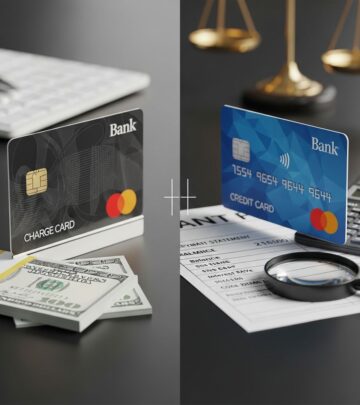
Charge cards differ fundamentally from revolving credit cards. Credit cards provide a set spending cap and allow carrying balances with minimum payments, enabling debt accumulation over time. In contrast, charge cards demand complete payoff each billing cycle and often lack a predefined limit, basing approval on spending patterns, income, and payment reliability.
This structure promotes disciplined spending. Issuers like American Express pioneered charge cards for high-spending individuals seeking premium perks without revolving debt risks. While both report to bureaus—Equifax, Experian, TransUnion—charge cards emphasize full repayment discipline.
Key Factors in Credit Scoring Models
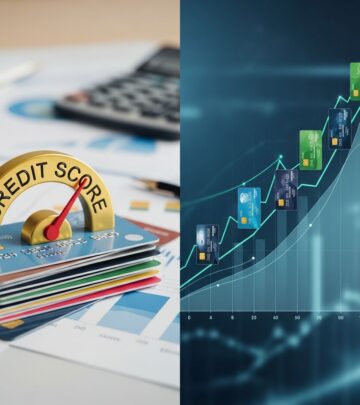
Credit scores, such as FICO (used by 90% of top lenders) and VantageScore, weigh components differently. FICO allocates 35% to payment history, 30% to amounts owed (including utilization), 15% to credit history length, 10% to credit mix, and 10% to new credit. VantageScore adjusts slightly, with payment history at 40%.
| Factor | FICO Weight | VantageScore Weight | Charge Card Impact |
|---|---|---|---|
| Payment History | 35% | 40% | High: On-time full payments boost scores |
| Amounts Owed/Utilization | 30% | 20% | Low/None: No fixed limit excludes from ratio |
| Length of History | 15% | ~20% (with mix) | Moderate: Ages like any account |
| Credit Mix | 10% | Included in history | Positive: Adds revolving-like diversity |
| New Credit | 10% | 11% | Temporary dip from inquiries |
How Charge Cards Shape Payment History
Payment history dominates scoring. Charge card issuers report activity monthly. Consistent full, on-time payments signal reliability, potentially raising scores over time. A single 30+ day delinquency lingers seven years, severely impacting scores—dropping FICO by 100+ points initially.
- On-time payments: Build positive history, visible across all bureaus.
- Late payments: Reported after grace periods (typically 30 days), harming scores long-term.
- Collections: Extreme delinquency leads to agency reports, further damage.
Unlike utilities or rent (rarely reported unless delinquent), charge cards routinely contribute to this vital factor, aiding score growth for responsible users.
Credit Utilization: Why Charge Cards Stand Apart
Utilization measures revolving debt against limits, ideally under 30%. High ratios signal risk. Credit cards factor directly: $300 on $1,000 limit = 30% utilization. Charge cards evade this since no limit exists; balances don’t compute into ratios.
This neutrality benefits big-spend months—a $5,000 purchase won’t spike utilization like on a credit card. However, low balances miss utilization boosts. Other ‘amounts owed’ elements, like high-balance accounts, may indirectly influence scores.
Building Credit History and Mix with Charge Cards
A charge card extends history length—average age of accounts, oldest account age. New users gain a positive entry; veterans see gradual aging benefits. It diversifies mix, blending with installment loans (e.g., mortgages), showing versatility—10% FICO boost potential.
For thin files or poor histories, charge cards establish patterns without utilization pitfalls, ideal for rebuilding if payments stay flawless.
Potential Downsides and Risks
Hard inquiries from applications ding scores 5-10 points temporarily (two years visible). Multiple recent accounts signal risk. High balances across many accounts hurt, even sans utilization. Missed payments devastate most.
- Over-reliance: Tempts overspending without limits.
- Approval hurdles: Requires strong income/history.
- Fees: Annual charges, foreign transaction fees common.
Strategies for Positive Credit Impact
Maximize benefits: Pay fully/on-time always. Use for routine expenses to build history. Pair with low-utilization credit cards for balance. Monitor reports via AnnualCreditReport.com (weekly free). Dispute errors promptly.
Corporate charge cards usually spare personal scores unless guaranteed personally—verify terms.
Real-World Examples and Scenarios
Scenario 1: $10,000 monthly spend on charge card, paid fully—bolsters payment history, ignores utilization. Score rises steadily.
Scenario 2: Same on credit card (limit $15,000)—67% utilization tanks score temporarily until paid.
Scenario 3: Late charge card payment—score plummets, recovery takes months/years.
Frequently Asked Questions
Do charge cards build credit?
Yes, via payment history, history length, and mix. No utilization drag aids consistency.
Can charge cards hurt my score?
Yes, through delinquencies, inquiries, or excessive balances.
Are charge cards reported to bureaus?
Most are, like credit cards.
What’s better for credit: charge or credit cards?
Depends—charge for discipline, credit for utilization management.
Do all charge cards lack limits?
Typically, but some set ‘soft’ caps based on profiles.
Choosing the Right Charge Card
Premium options (e.g., Amex Platinum) suit high earners with rewards. Business variants minimize personal risk. Evaluate fees vs. perks, ensure affordability for full payments.
In summary, charge cards enhance scores responsibly used, sidestepping utilization while hitting core factors. Integrate thoughtfully into your financial toolkit.
References
- Do Charge Cards Affect My Credit Score the Same as Credit Cards? — NerdWallet. 2024-01-15. https://www.nerdwallet.com/credit-cards/learn/charge-cards-affect-credit-score-compared-with-credit-cards
- Do Charge Cards Build Credit? — Bankrate. 2025-02-20. https://www.bankrate.com/credit-cards/building-credit/how-charge-cards-affect-credit/
- How Do Charge Cards Affect Your Credit Score? — Experian. 2024-11-10. https://www.experian.com/blogs/ask-experian/how-do-charge-cards-affect-your-credit-score/
- Charge Card vs. Credit Card: What’s the Difference? — Equifax. 2025-03-05. https://www.equifax.com/personal/education/credit-cards/articles/-/learn/charge-vs-credit-cards/
- Credit Card vs. Charge Card: What’s the Difference? — myFICO. 2023-08-12. https://www.myfico.com/credit-education/faq/cards/charge-vs-credit-card
Similar Articles








Read full bio of Sneha Tete