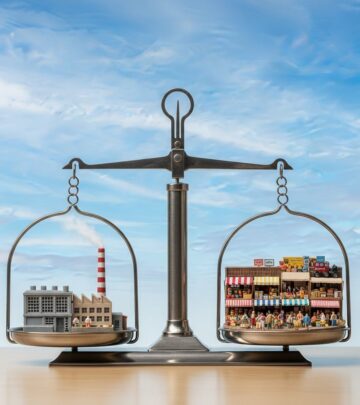
Characteristics of a Monopolistic Market
Understanding the defining features and barriers of monopolistic markets.

What Are the Characteristics of a Monopolistic Market?
A monopolistic market represents one of the most fascinating and studied market structures in economics. Unlike competitive markets where numerous firms vie for consumer attention, a monopoly is dominated by a single seller who exercises significant control over pricing and supply. Understanding the defining characteristics of monopolistic markets is essential for economists, business professionals, and investors seeking to comprehend how certain industries operate and why they may require regulatory oversight.
A monopoly occurs when one company or entity is the sole provider of a product or service that has no close substitutes. This market structure differs fundamentally from perfect competition, where many firms offer identical products, and from monopolistic competition, where multiple firms offer differentiated products. The monopolist’s dominance creates a unique market dynamic that shapes pricing strategies, consumer choice, and overall market efficiency.
Understanding Market Monopolies
At its core, a monopoly is an economic market structure characterized by a single dominant firm that controls the entire supply of a particular good or service. This firm operates without significant competition, allowing it to exercise considerable influence over market price and output decisions. The monopolist can restrict supply to maintain higher prices, extract economic rent from consumers, and earn supernormal profits that would be impossible in competitive markets.
The concept of monopoly extends beyond simply having one seller; it encompasses the absence of viable alternatives. Consumers cannot easily switch to competing products because alternatives either do not exist or are inadequate substitutes. This lack of consumer choice is what fundamentally distinguishes a monopoly from other market structures and what makes monopolies subjects of economic and regulatory interest.
Key Characteristics of Monopolistic Markets
Monopolistic markets exhibit several distinctive characteristics that set them apart from other market structures. These characteristics create the conditions that allow a single firm to maintain its dominant position and control market outcomes:
1. Single Seller Dominance
The most obvious characteristic of a monopolistic market is the presence of a single seller or a dominant firm that controls the market. This seller is the only source of supply for a particular product or service, meaning consumers have no alternative suppliers to turn to. The monopolist effectively becomes the market, and its decisions regarding production and pricing directly determine market outcomes.
In real-world applications, this might mean a utility company being the sole provider of electricity or water in a region, or a pharmaceutical company holding exclusive patent rights to a life-saving medication. The absence of competitors allows the monopolist to act as a price-maker rather than a price-taker, a fundamental distinction from competitive firms.
2. Barriers to Entry
One of the most critical characteristics maintaining monopolistic markets is the presence of high barriers to entry that prevent new competitors from entering the industry. These barriers create a protective moat around the monopolist’s market position, ensuring continued dominance:
- Legal Barriers: Patent protections, licenses, and government regulations can legally prevent competitors from entering a market. A pharmaceutical company with a patent on a drug has legal protection against competitors manufacturing the same medication for the duration of the patent.
- Economies of Scale: Some industries require such massive capital investment that only the existing dominant firm can operate profitably. Natural monopolies in utilities, for example, exist because duplicating infrastructure would be economically inefficient.
- Control of Resources: When a firm controls essential raw materials or resources, it can prevent competitors from accessing the inputs needed to produce competing products.
- High Capital Requirements: Industries requiring substantial upfront investment, such as telecommunications or rail networks, naturally limit the number of viable competitors.
- Brand Loyalty and Network Effects: Strong brand recognition or network effects can create barriers as consumers face switching costs or lack incentives to switch to unknown alternatives.
3. No Close Substitutes
A defining feature of monopolistic markets is that consumers cannot easily substitute the monopolist’s product with alternatives. The product or service is unique or sufficiently differentiated that consumers perceive no viable alternatives. This absence of substitutes gives the monopolist significant pricing power because consumers cannot turn to competitors if prices rise.
For instance, if you need electricity in a region served by a single utility company, you cannot simply purchase electricity from a competitor. The uniqueness or lack of substitutes reinforces the monopolist’s market power and ability to maintain prices above competitive levels.
4. Price-Setting Power
Unlike firms in competitive markets that must accept the prevailing market price, monopolists can set prices independently. This price-setting power, also called monopoly pricing power, allows the firm to choose any price-quantity combination along the demand curve. The monopolist can raise prices without losing all customers because consumers lack alternatives.
However, monopolists still face constraints from the demand curve; raising prices too high reduces quantity demanded. The optimal pricing strategy involves balancing the desire for higher margins against the reduction in sales volume that typically accompanies price increases.
5. Profit Maximization Beyond Competition
Monopolistic firms can earn economic profits (supernormal profits) in the long run, something that competitive firms cannot sustain. While competitive firms earn only normal profits in equilibrium, monopolists can maintain above-normal returns indefinitely due to barriers preventing new entrants from competing away these profits.
The monopolist maximizes profit where marginal revenue equals marginal cost, then charges whatever price consumers are willing to pay at that quantity. This often results in higher prices and lower quantities than would prevail under perfect competition, leading to allocative inefficiency.
6. Distinction from Monopolistic Competition
It is important to distinguish monopolies from monopolistic competition, a different market structure. While monopolies feature a single seller with no close substitutes, monopolistically competitive markets include many firms offering differentiated products. Though monopolistic competitors have some price-setting power, they face more competition and less ability to maintain long-term economic profits compared to true monopolies.
Types of Barriers Creating Monopolies
Different types of barriers maintain monopolistic market structures, each creating distinct conditions that protect the dominant firm:
Natural Monopolies
Natural monopolies arise when a single firm can produce output more efficiently than multiple competitors. This occurs in industries with high fixed costs and low marginal costs, such as utilities. Duplicating infrastructure would be wasteful, making a single provider the most economically efficient structure. Governments often regulate natural monopolies to prevent exploitation while preserving efficiency.
Legal Monopolies
Government-granted monopolies include patents, copyrights, licenses, and franchises. These legal protections incentivize innovation and investment by guaranteeing exclusive market access for a defined period. Pharmaceutical patents, for example, provide monopoly protection to encourage drug development, though this protection eventually expires allowing generic competition.
Technological Monopolies
When a firm possesses superior technology or unique innovations, it can maintain monopoly status. This technological advantage creates barriers because competitors lack the knowledge, capabilities, or resources to replicate the innovation. Over time, however, technological monopolies may erode as competitors develop alternative solutions or technologies.
Resource-Based Monopolies
Some monopolies exist because a firm controls access to essential resources. A company owning the only deposit of a rare mineral or controlling crucial infrastructure creates barriers for competitors. This type of monopoly persists as long as the resource remains valuable and unavailable to competitors.
Economic Impacts of Monopolies
Monopolistic markets create distinctive economic outcomes that differ from competitive markets:
- Higher Prices: Monopolists typically charge prices exceeding marginal cost, resulting in higher consumer prices compared to competitive markets.
- Reduced Output: Monopolies produce less output than competitive industries, restricting supply to maintain higher prices.
- Allocative Inefficiency: Resources are not allocated efficiently because the monopolist restricts production below the socially optimal level.
- Consumer Surplus Loss: Consumers pay more and receive less, reducing consumer welfare compared to competitive outcomes.
- Deadweight Loss: The difference between the monopoly outcome and the competitive outcome represents deadweight loss, a measure of economic inefficiency.
- Supernormal Profits: Monopolists earn above-normal profits that cannot be competed away due to entry barriers.
Real-World Examples of Monopolistic Markets
Several industries demonstrate monopolistic characteristics:
- Utilities: Local electricity, water, and natural gas providers often operate as natural monopolies.
- Pharmaceuticals: Patented medications represent legal monopolies during the patent protection period.
- Telecommunications: In some regions, single providers dominate local telephone or internet markets.
- Transportation: Certain airports or rail networks may operate with monopoly characteristics in specific geographic areas.
- Technology: Tech companies with dominant platforms may exercise significant market power.
Regulatory Approaches to Monopolies
Governments employ various strategies to address monopoly concerns:
- Antitrust Enforcement: Agencies investigate and challenge monopolistic practices and mergers that reduce competition.
- Price Regulation: For natural monopolies, governments may regulate prices to prevent excessive charges.
- Entry Promotion: Policies may aim to reduce barriers and encourage competitive entry.
- Structural Remedies: Breaking up monopolies or preventing mergers can maintain competitive market structures.
- Utility Regulation: Specialized regulatory frameworks govern natural monopolies in utilities and telecommunications.
Frequently Asked Questions
Q: What is the primary difference between a monopoly and perfect competition?
A: The primary difference is the number of sellers and market power. Perfect competition features many firms with no pricing power, while monopolies have a single seller with significant price-setting ability. Competitive firms are price-takers, whereas monopolies are price-makers. Additionally, monopolies have barriers preventing entry, while competitive markets allow free entry and exit.
Q: How do patents create monopolies?
A: Patents grant exclusive legal rights to produce and sell an invention for a specified period, typically 20 years. This legal protection prevents competitors from manufacturing identical products, creating a temporary monopoly. Pharmaceutical companies, software developers, and technology firms commonly use patents to maintain monopoly positions during the patent term.
Q: Why are natural monopolies sometimes considered acceptable?
A: Natural monopolies are acceptable because competition would be economically inefficient. Duplicating infrastructure in utilities, for example, would waste resources. A single provider minimizes costs through economies of scale. However, governments typically regulate natural monopolies to prevent price exploitation while maintaining efficiency.
Q: Can monopolies ever be beneficial to consumers?
A: In some cases, yes. Legal monopolies like patents incentivize innovation by guaranteeing profitable returns on R&D investment. Natural monopolies provide efficient service delivery in certain industries. Additionally, monopolies sometimes achieve economies of scale that reduce average costs, potentially benefiting consumers through improved products or services, even if prices remain elevated.
Q: What is deadweight loss in the context of monopolies?
A: Deadweight loss represents the economic inefficiency created when monopolies restrict output below the competitive level. The difference between the quantity produced and consumed under monopoly versus perfect competition results in lost economic value. This loss is borne by society through higher prices, reduced consumer surplus, and unrealized gains from trade.
Q: How do switching costs relate to monopolistic markets?
A: Switching costs are expenses incurred when consumers change from one provider to another. High switching costs create barriers to entry by making consumers reluctant to switch to competitors, even if alternatives exist. This can strengthen a firm’s monopoly position by reducing price sensitivity among locked-in customers.
Q: Can a company with a large market share always be considered a monopoly?
A: Not necessarily. A large market share alone does not constitute a monopoly. A true monopoly requires not just market dominance but also the ability to maintain that dominance through barriers preventing competition. A company with 70% market share facing potential competitors differs from a company with 70% share protected by patents or high entry barriers. Legal definitions of monopoly consider market power and contestability.
References
- Antitrust Basics — U.S. Department of Justice, Antitrust Division. 2024. https://www.justice.gov/atr/antitrust-basics
- Market Structure and Competition Policy — Federal Trade Commission. 2024. https://www.ftc.gov/news-events/topics/competition
- Understanding Monopolies and Economic Efficiency — OECD Competition Committee. 2023. https://www.oecd.org/competition/
- Intellectual Property and Market Competition — World Intellectual Property Organization. 2024. https://www.wipo.int/
- Natural Monopoly Regulation Framework — U.S. Energy Information Administration. 2024. https://www.eia.gov/
Similar Articles








Read full bio of medha deb