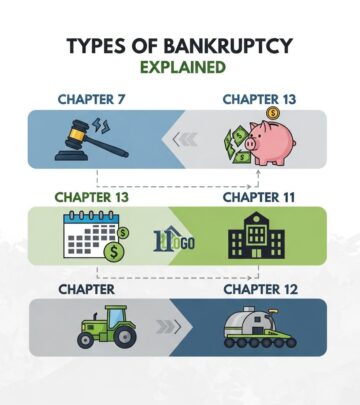
Chapter 7 vs Chapter 13 Bankruptcy
Discover the key differences between Chapter 7 liquidation and Chapter 13 reorganization to choose the right bankruptcy path for your financial recovery.

Bankruptcy offers a legal lifeline for individuals overwhelmed by debt, with Chapter 7 and Chapter 13 standing out as the primary options for consumers. Chapter 7 provides a swift liquidation process to erase most unsecured debts, while Chapter 13 emphasizes reorganization through a structured repayment schedule that preserves assets. This comprehensive guide breaks down eligibility criteria, procedural differences, financial implications, and long-term effects to empower you in selecting the best strategy.
Understanding the Core Mechanisms of Each Bankruptcy Type
Chapter 7 bankruptcy, often termed liquidation bankruptcy, targets individuals and businesses unable to sustain their financial obligations. A court-appointed trustee evaluates the filer’s assets, selling non-exempt property to distribute proceeds among creditors. Most everyday items like clothing, furniture, and basic vehicles fall under exemptions, meaning many filers retain essential possessions while discharging debts such as credit cards, medical bills, and personal loans.
In contrast, Chapter 13 functions as a reorganization tool exclusively for individuals, including sole proprietors, with reliable income sources. Filers propose a 3- to 5-year repayment plan to the court, where a trustee disburses payments to creditors. This approach halts foreclosures and repossessions, allowing time to catch up on secured debts like mortgages and car loans.
Eligibility Requirements: Who Qualifies and Who Doesn’t
Qualifying for Chapter 7 hinges on the means test, which compares your income to state medians. If your average monthly income over the prior six months falls below the median for your household size, you pass automatically. Higher earners must demonstrate that disposable income cannot support a Chapter 13 plan after deducting allowable expenses. This prevents abuse by ensuring only truly needy individuals access liquidation.
Chapter 13 eligibility demands regular income and total unsecured debts under $465,275 plus secured debts below $1,395,875 (adjusted periodically for inflation). Unlike Chapter 7, it suits those with steady jobs facing temporary setbacks, as it restructures rather than erases debt.
| Criteria | Chapter 7 | Chapter 13 |
|---|---|---|
| Income Requirement | Pass means test (low disposable income) | Regular income required |
| Debt Limits | None | Unsecured < $465,275; Secured < $1,395,875 |
| Who Can File | Individuals, businesses | Individuals only |
| Asset Retention | Exempt assets protected; others sold | All assets retained |
Step-by-Step Process: From Filing to Discharge
Filing Chapter 7 initiates an automatic stay, pausing creditor actions. Within days, a trustee oversees a 341 meeting where creditors question your finances. If no significant non-exempt assets exist, the case closes in 3-6 months with a discharge order wiping out eligible debts. Most cases are “no-asset,” streamlining the process.
- Complete credit counseling pre-filing.
- Submit petition, schedules, and fee ($338 as of 2024).
- Attend 341 meeting 20-40 days post-filing.
- Await discharge 60 days after meeting.
Chapter 13 begins similarly with credit counseling and filing ($313 fee), but requires a detailed repayment plan within 14 days. The court confirms the plan after a confirmation hearing, binding all parties. You make monthly payments to the trustee, who handles distributions. Successful completion yields discharge; early dismissal restarts creditor pursuits.
- File petition and proposed plan.
- Automatic stay activates.
- Attend 341 meeting.
- Court approves plan (3-5 years commitment).
- Complete payments for discharge.
Financial Costs: Fees, Attorney Expenses, and Hidden Charges
Chapter 7 typically incurs lower costs, with attorney fees ranging $1,000-$3,500 plus the $338 filing fee. Chapter 13 demands higher upfront ($2,500-$6,000 attorney fees) and ongoing trustee fees (8-10% of payments), reflecting the extended oversight.
Over three to five years, Chapter 13 payments might total tens of thousands, prioritizing secured debts and priority claims before general unsecured ones. Budgeting disposable income ensures feasibility, often reducing interest on arrears.
Handling Different Debt Categories
Unsecured Debts: Chapter 7 discharges credit cards, medical bills, and payday loans outright. Chapter 13 treats them as residual, paying pennies on the dollar or nothing based on plan feasibility.
Secured Debts: Chapter 7 risks losing collateral if behind; reaffirmation preserves some. Chapter 13 enables curing arrears via plan, retaining home and car.
Priority Debts: Taxes, child support remain non-dischargeable in both. Chapter 13 spreads payments interest-free, unlike Chapter 7’s post-discharge burden.
Impact on Assets and Exemptions
State or federal exemptions shield equity in homes ($27,900 federal homestead), vehicles ($4,450), and household goods ($14,875). Chapter 7 trustees liquidate excess, rare for modest households. Chapter 13 avoids sales entirely, paying creditors the non-exempt value over time.
Credit Score Effects and Rebuilding Strategies
Both filings dent scores severely—Chapter 7 (FICO drop 100-200 points for 10 years), Chapter 13 (7-10 years reporting). Secured delinquencies pre-filing amplify damage. Post-discharge, secured cards, timely payments, and low utilization aid recovery within 1-2 years.
Strategic Considerations: When to Choose Each
Opt for Chapter 7 with low income, few assets, and unsecured-heavy debt. Choose Chapter 13 for home retention, tax repayment, or means test failure. Conversions from 7 to 13 occur if abuse presumed, but rarely forced.
Frequently Asked Questions
Can I file Chapter 7 if I own a home?
Yes, if equity is exempt or you surrender it. Chapter 13 better protects high-equity properties.
How soon after Chapter 7 can I file Chapter 13?
Immediately, no waiting period applies across chapters.
Does bankruptcy stop eviction?
Temporarily via stay; Chapter 13 may cure rental arrears.
Will employers know about my bankruptcy?
Not unless they check credit or you disclose; government jobs may require it.
Can I keep my car in Chapter 7?
Yes, if exempt or payments current with reaffirmation.
Professional Guidance and Next Steps
Consult accredited attorneys for personalized assessment. Free counseling clarifies options without commitment. Bankruptcy resets finances responsibly when alternatives fail.
References
- Chapter 7 vs. 13 Bankruptcy: The Main Differences — Leinart Law Firm. 2024. https://www.leinartlaw.com/resources/chapter-7-vs-chapter-13/
- Chapter 7 vs Chapter 13 Bankruptcy — Experian. 2024-11-12. https://www.experian.com/blogs/ask-experian/bankruptcy-chapter-7-vs-chapter-13/
- Comparing Chapter 7 Bankruptcy and Chapter 13 Bankruptcy — Dworken & Bernstein Co., LPA. 2024. https://dworkenlaw.com/similarities-and-differences-between-chapter-7-and-chapter-13-bankruptcy/
- What is the difference between Chapter 13 and Chapter 7 bankruptcy? — Farmer & Morris Law, PLLC. 2024. https://www.farmermorris.com/faqs/what-is-the-difference-between-chapter-13-and-chapter-7-bankruptcy/
- What is the difference between bankruptcy cases filed under chapters 7, 11, 12 and 13? — United States Bankruptcy Court, District of Colorado. 2024. https://www.canb.uscourts.gov/faq/general-bankruptcy/what-difference-between-bankruptcy-cases-filed-under-chapters-7-11-12-and-13
Similar Articles








Read full bio of medha deb