Chapter 7 vs Chapter 11 Bankruptcy: Key Differences
Understand the critical differences between Chapter 7 liquidation and Chapter 11 reorganization bankruptcy.
Understanding Chapter 7 and Chapter 11 Bankruptcy
Bankruptcy provides individuals and businesses with legal protection when facing overwhelming debt. Two of the most common bankruptcy options are Chapter 7 and Chapter 11, each serving different financial situations and goals. While both chapters offer debt relief, they operate through fundamentally different processes with distinct advantages and disadvantages. Understanding these differences is essential for anyone considering bankruptcy protection.
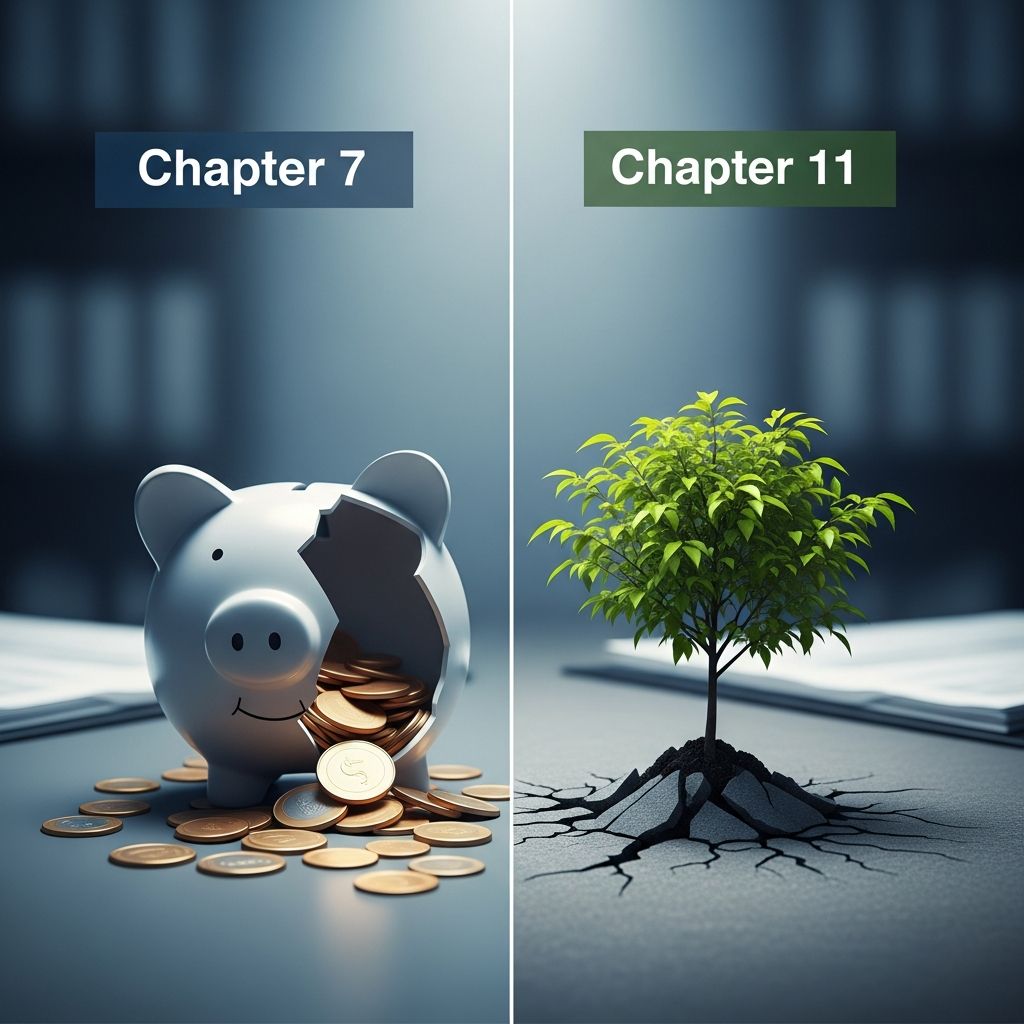
Chapter 7 bankruptcy, often called “liquidation bankruptcy,” allows individuals and businesses unable to repay their debts to eliminate most unsecured obligations quickly. In contrast, Chapter 11 bankruptcy provides a reorganization pathway, primarily for businesses, enabling them to restructure debts while continuing operations. The choice between these two chapters significantly impacts your financial future, credit score, timeline, and asset retention.
The Purpose and Design of Each Chapter
Chapter 7 Bankruptcy Purpose
Chapter 7 bankruptcy is designed for individuals, corporations, and partnerships in financial difficulty who lack the ability to pay their existing debts. This chapter focuses on providing a fresh start by eliminating most unsecured debts, including credit card balances, medical bills, personal loans, and utility bills. The primary goal is to discharge these obligations rather than establish a repayment plan. When you file for Chapter 7, you acknowledge that your financial situation has become unmanageable and requires a clean break from your current debt burden.
Chapter 11 Bankruptcy Purpose
Chapter 11 bankruptcy allows businesses to reorganize and restructure their finances while continuing operations. This chapter enables companies to maintain day-to-day business functions, keep employees on the payroll, satisfy creditors, and potentially achieve profitability again. While primarily designed for businesses, Chapter 11 is also available to individuals with substantial income or significant debt. The reorganization process allows debtors to propose a plan restructuring debt payments, extending timelines, and adjusting terms to make obligations more manageable.
Key Operational Differences
How Chapter 7 Works
When you file for Chapter 7 bankruptcy, a court-appointed trustee takes possession of your non-exempt property. The trustee then liquidates these assets, selling them for cash and distributing the proceeds to creditors according to bankruptcy law priorities. This process typically concludes within 3 to 6 months from filing to discharge. The timeline moves quickly because there is no complex reorganization plan to negotiate or implement.
Most Chapter 7 cases are classified as “no-asset” cases, meaning debtors have no non-exempt property to liquidate. In these situations, unsecured creditors receive nothing from the liquidation process, but the debtor still receives a discharge of these debts. This is one reason Chapter 7 remains popular among individuals seeking quick debt relief.
How Chapter 11 Works
Chapter 11 introduces the debtor-in-possession (DIP) status, allowing businesses or individuals to retain control of their assets and continue operations throughout the bankruptcy process. Rather than selling assets, debtors propose a reorganization plan outlining how debts will be restructured and addressed. This plan must detail debt classification, business operation adjustments, asset sales or acquisitions if necessary, and creditor repayment schedules.
Creditors receive the proposed plan and vote on whether to accept it. The court must ultimately approve the plan before implementation. This process requires extensive financial analysis, creditor negotiations, and court oversight, often taking months or even years to complete. The complexity and extended timeline result in significantly higher costs compared to Chapter 7.
Asset Protection and Exemptions
One major concern for bankruptcy filers is asset protection. Chapter 7 and Chapter 11 handle assets quite differently.
Chapter 7 Asset Treatment
While Chapter 7 involves liquidation, many assets receive protection through exemptions. Bankruptcy exemption laws vary by state but typically protect essential property such as clothing, household furnishings, work equipment, and primary residences (up to a certain equity limit). Over 95% of Chapter 7 cases are “no-asset” cases, meaning all property is either exempt or there is no equity to distribute to creditors. This statistic demonstrates that most individuals filing for Chapter 7 successfully retain their essential belongings.
Vehicles, retirement accounts, and personal property also receive protection under exemption laws in most states. The trustee only has authority to liquidate non-exempt assets with meaningful equity that can be converted to cash for creditor repayment.
Chapter 11 Asset Protection
Chapter 11’s debtor-in-possession status specifically protects a business’s assets by allowing continued operation. Rather than selling assets for liquidation, the reorganization plan may propose asset restructuring, targeted sales to generate reorganization funds, or strategic acquisitions to improve financial viability. This approach preserves the business structure and allows for selective asset management rather than wholesale liquidation.
Control and Oversight Mechanisms
Control is a critical distinction between these bankruptcy chapters, with significant implications for decision-making and business continuity.
Chapter 7 Control Structure
In Chapter 7, a court-appointed trustee assumes control of the debtor’s non-exempt assets. The trustee’s responsibilities include selling these assets, managing the proceeds, and distributing funds to creditors according to bankruptcy law priorities. This arrangement limits the debtor’s control over their financial affairs during bankruptcy. The trustee acts in the best interests of unsecured creditors, not the debtor.
For business owners filing Chapter 7, this loss of control is particularly significant because the business typically ceases operations following liquidation. The debtor no longer manages business decisions or asset disposition once the trustee takes control.
Chapter 11 Control Structure
Chapter 11’s debtor-in-possession concept allows business owners or management to retain control of operations and decision-making. Debtors continue running their business, negotiating with suppliers and customers, managing employees, and maintaining operational continuity. However, this retained control comes with increased responsibility and oversight.
Debtors must provide detailed financial reports to the court and creditors, often on a monthly basis. This transparency requirement allows creditors and the court to monitor reorganization progress and ensure compliance with the proposed plan. Court oversight includes monitoring asset management, reviewing business decisions, and ensuring the reorganization proceeds according to the approved plan.
Timeline and Duration
The bankruptcy process timeline differs dramatically between Chapter 7 and Chapter 11, affecting when you achieve debt relief and financial resolution.
Chapter 7 Timeline
Chapter 7 bankruptcy typically progresses rapidly, with most cases completing within 3 to 6 months from filing to discharge. After filing your petition with the bankruptcy court, you attend a 341 meeting of creditors approximately 30 to 45 days later. During this meeting, the trustee reviews your case and creditors have the opportunity to ask questions about your financial situation and assets.
Following the 341 meeting, the trustee liquidates non-exempt assets if any exist. After this process completes and the trustee distributes proceeds to creditors, the court issues a discharge order eliminating your personal liability for unsecured debts. This relatively quick resolution allows you to move forward with rebuilding your financial life rapidly.
Chapter 11 Timeline
Chapter 11 cases take considerably longer, often extending months or years. The reorganization plan development, creditor negotiations, voting processes, and court approval all require substantial time. Complex business situations with numerous creditors, significant assets, or operational challenges extend the timeline further. Large corporate reorganizations have taken multiple years to complete.
The extended timeline increases professional fees, court costs, and administrative expenses. However, many businesses consider this investment worthwhile if it preserves the company, maintains jobs, and achieves long-term viability.
Cost Comparison
Financial cost is a significant practical difference between bankruptcy chapters.
| Aspect | Chapter 7 | Chapter 11 |
|---|---|---|
| Court Filing Fee | $338 (approximately) | $1,717 (significantly higher) |
| Attorney Fees | $500-$1,500 | $3,000-$15,000+ |
| Overall Complexity | Simple | Highly complex |
| Professional Support Needed | Minimal | Extensive (accountants, valuation experts) |
| Administrative Costs | Low | High (ongoing reporting, monitoring) |
Chapter 7 bankruptcy is substantially more affordable, making it ideal for individuals or small businesses with limited financial resources. Filing fees are minimal, and attorney fees typically range from $500 to $1,500. This affordability allows individuals facing financial hardship to access the bankruptcy system without incurring debt for the bankruptcy process itself.
Chapter 11 involves significantly higher costs. Filing fees exceed $1,700, attorney fees often reach $3,000 to $15,000 or more, and additional professional expenses for accountants, business valuation experts, and financial advisors accumulate throughout the process. Ongoing reporting and administrative costs continue throughout the reorganization period. These substantial expenses mean Chapter 11 is typically reserved for businesses with sufficient assets or revenue to justify the investment.
Eligibility Requirements
Chapter 7 Eligibility
Chapter 7 is available to individuals and businesses who cannot reasonably repay their debts. For individuals, the “means test” determines eligibility. This test compares your income to the state median and evaluates whether you have disposable income after accounting for necessary expenses. If your income falls below the state median or you lack sufficient disposable income, you qualify for Chapter 7.
Businesses of any size can file Chapter 7 if they cannot pay their obligations. No income limits apply to business Chapter 7 filings.
Chapter 11 Eligibility
Chapter 11 is available to individuals, partnerships, corporations, and other business entities. There are no income restrictions for Chapter 11 filing. Individuals with high incomes who don’t qualify for Chapter 7 under the means test can file Chapter 11 instead. Businesses of any size can file Chapter 11, and many large corporations use Chapter 11 specifically to reorganize while continuing operations.
Debt Treatment and Discharge
Chapter 7 Debt Discharge
Chapter 7 eliminates most unsecured debts through discharge. After the bankruptcy process concludes, you are no longer personally liable for these debts. Credit card balances, medical bills, personal loans, and utility arrears are permanently eliminated. Creditors cannot pursue collection efforts against you for discharged debts.
However, certain debts cannot be discharged in Chapter 7. Student loans, recent taxes, alimony, child support, and debts incurred through fraud remain your responsibility. Additionally, Chapter 7 does not eliminate secured debts like mortgages and auto loans unless you surrender the property securing the debt.
Chapter 11 Debt Restructuring
Chapter 11 does not discharge debts. Instead, it restructures them through the reorganization plan. The debtor proposes revised payment terms, extended timelines, reduced balances, or modified interest rates. Creditors vote on the plan, and if approved by the court, debtors make payments according to the new terms. Upon completion of the reorganization plan, the debtor’s remaining obligations are satisfied, effectively resolving the debt crisis through restructuring rather than elimination.
This restructuring approach allows businesses to preserve operations while addressing debt obligations. Rather than liquidating the business entirely, reorganization enables continued cash flow generation to fund debt repayment.
Credit Report Impact
Bankruptcy significantly affects credit reports, with different chapters having distinct impacts.
Chapter 7 bankruptcy remains on your credit report for 10 years from the filing date. During this period, the bankruptcy notation can negatively affect your credit score and borrowing ability. However, credit scores often begin improving within 1 to 2 years after discharge, especially if you establish new positive credit history.
Chapter 11 bankruptcy stays on credit reports for 7 years from the filing date. While this is three years shorter than Chapter 7, the extended reorganization timeline may result in the bankruptcy appearing on your credit report during much of the active reorganization period. Both chapters significantly impact creditworthiness, affecting interest rates and lending availability temporarily.
Business Continuity Considerations
For business owners, the ability to continue operations is often the deciding factor between bankruptcy chapters.
Chapter 7 results in business cessation. The trustee liquidates business assets, and the business entity no longer exists following the liquidation process. Employees lose their jobs, customer relationships end, and the business infrastructure dissolves. For business owners attached to their companies, this outcome may be unacceptable.
Chapter 11 enables business continuity. With proper reorganization planning, businesses maintain operations, preserve employees’ jobs, maintain customer relationships, and work toward profitability under restructured debt obligations. This continuity preservation makes Chapter 11 attractive to larger businesses with viable operations but unsustainable debt levels.
Frequently Asked Questions
Q: What is the main difference between Chapter 7 and Chapter 11 bankruptcy?
A: Chapter 7 is a liquidation bankruptcy that eliminates most unsecured debts through asset sales, while Chapter 11 is a reorganization bankruptcy allowing businesses to restructure debts and continue operations. Chapter 7 typically takes 3 to 6 months, whereas Chapter 11 can take months or years.
Q: Can individuals file Chapter 11 bankruptcy?
A: Yes, individuals can file Chapter 11, though it is less common. Chapter 11 is primarily used by high-income individuals who don’t qualify for Chapter 7 under the means test or those with significant assets they wish to preserve.
Q: How long does Chapter 7 bankruptcy stay on my credit report?
A: Chapter 7 bankruptcy remains on your credit report for 10 years from the filing date. Chapter 11 bankruptcy stays for 7 years. However, credit scores often begin improving within 1 to 2 years after discharge.
Q: Will I lose my home in Chapter 7 bankruptcy?
A: Not necessarily. Homestead exemptions protect home equity up to specified limits. State exemption laws determine how much home equity receives protection. If your equity falls within the exemption limit, you can retain your home.
Q: Which bankruptcy chapter is more affordable?
A: Chapter 7 is significantly more affordable than Chapter 11. Chapter 7 filing fees are approximately $338 with attorney fees typically ranging from $500 to $1,500, while Chapter 11 involves much higher costs, including higher filing fees and substantial attorney and professional fees.
Q: Can I keep my business open if I file Chapter 7?
A: No. Chapter 7 involves liquidation of business assets, and the business generally ceases operations. Chapter 11 is the appropriate choice for businesses wanting to continue operating during bankruptcy.
Choosing Between Chapter 7 and Chapter 11
Selecting between Chapter 7 and Chapter 11 depends on multiple factors including your income, assets, financial goals, and whether you operate a business.
Chapter 7 is appropriate if you:
– Have limited income and primarily unsecured debts
– Desire quick debt relief within months rather than years
– Lack significant business assets worth preserving
– Need an affordable bankruptcy option
– Qualify under the means test
Chapter 11 is appropriate if you:
– Own a business with viable operations but unsustainable debt
– Have sufficient income or assets to fund reorganization
– Don’t qualify for Chapter 7 under the means test
– Want to preserve your business and employee jobs
– Possess significant assets requiring protection
Consulting with a bankruptcy attorney helps evaluate your specific situation and determine which chapter offers the best path forward for your financial recovery.
References
- What is the difference between Chapters 7, 11, 12 and 13? — U.S. Bankruptcy Courts. https://www.pawb.uscourts.gov/content/what-difference-between-chapters-7-11-12-and-13
- What is the difference between bankruptcy cases filed under Chapters 7, 11, 12 and 13? — Central District of California Bankruptcy Court. https://www.canb.uscourts.gov/faq/general-bankruptcy/what-difference-between-bankruptcy-cases-filed-under-chapters-7-11-12-and-13
- Chapter 7, 11, 13 & More: Every Type of Bankruptcy Explained — Upsolve. https://upsolve.org/learn/every-type-of-bankruptcy-explained/
- What Is The Difference Between Chapter 7, 11 And 13 Bankruptcy — Bunch and Brock Law Firm. https://www.bunchandbrocklaw.com/difference-between-chapter-7-11-13-bankruptcy/
- Chapter 7 vs Chapter 11 Bankruptcy in Memphis TN: Key Differences — Hurst Law Firm. https://hurstlawfirm.com/chapter-7-vs-chapter-11-bankruptcy-in-memphis-tn-key-differences/
Similar Articles








Read full bio of medha deb