Understanding Chapter 7 Liquidation Bankruptcy
Complete guide to Chapter 7 bankruptcy liquidation and debt discharge processes

When overwhelming debt becomes unmanageable, many individuals and business entities turn to Chapter 7 bankruptcy as a path forward. This form of bankruptcy, formally known as liquidation bankruptcy, allows debtors to eliminate qualifying debts by surrendering nonexempt property for sale by a court-appointed trustee. The process provides what bankruptcy law describes as a ”fresh start”—an opportunity to discharge debts and rebuild financial life.
Unlike other bankruptcy chapters that involve reorganizing debt through repayment plans, Chapter 7 focuses on converting assets into cash to satisfy creditor claims. For individuals drowning in debt, this mechanism offers relief from personal liability for most debts, stopping collection efforts and allowing creditors to be paid from available assets rather than future earnings.
The Core Purpose and Mechanism of Chapter 7 Filing
Chapter 7 bankruptcy operates on a straightforward principle: convert a debtor’s available assets into money and distribute that money to creditors according to established legal priorities. When a debtor becomes unable to meet financial obligations, the bankruptcy code provides this liquidation route as an alternative to Chapter 11 reorganization.
The filing process initiates when an individual or business entity submits a bankruptcy petition with the court. This lengthy document requires detailed disclosure of all assets, liabilities, income, expenses, and creditor information. The debtor must gather numerous financial documents, including tax returns and pay stubs, to complete the required forms accurately.
Before filing, individuals must complete a credit counseling course from an approved agency within 180 days prior to submission. This course is intended to help debtors explore alternatives to bankruptcy and understand their financial situation more thoroughly. The completion certificate must be attached to the bankruptcy petition.
How the Automatic Stay Protects Debtors
Upon filing for Chapter 7 bankruptcy, the court immediately places an automatic stay on all debts. This powerful legal protection temporarily halts creditor collection efforts and prevents multiple threatening actions simultaneously.
The automatic stay specifically prevents:
- Debt collection calls and letters from creditors
- Home foreclosure proceedings
- Wage garnishment by employers
- Vehicle and property repossession
- Eviction from residential property
- Utility disconnection and service termination
This breathing room allows debtors to reorganize their affairs and prepare for the bankruptcy process without immediate pressure from multiple creditors simultaneously pursuing collection.
The Trustee’s Role in Asset Management and Distribution
A critical figure in any Chapter 7 case is the court-appointed bankruptcy trustee. This individual assumes control of the debtor’s estate and serves several essential functions throughout the bankruptcy process.
The trustee’s primary responsibilities include:
- Reviewing the debtor’s complete financial records and documentation
- Identifying which property qualifies as exempt and which is nonexempt
- Taking possession of nonexempt property designated for liquidation
- Marketing and selling assets to maximize proceeds
- Distributing proceeds to creditors according to legal priority
- Ensuring creditors receive the maximum value possible from the debtor’s assets
The trustee acts as an impartial administrator, balancing the debtor’s legitimate right to retain exempt property with creditors’ right to receive payment from available nonexempt assets.
Exempt Versus Nonexempt Property
A fundamental concept in Chapter 7 bankruptcy is the distinction between exempt and nonexempt property. Federal and state law protect certain categories of property from liquidation, recognizing that debtors need basic necessities to survive and function in society.
Exempt property that trustee cannot seize includes:
- Motor vehicles up to a specified value
- Reasonably necessary clothing for the debtor and family members
- Household goods and furnishings required for basic living
- Kitchen appliances and essential household equipment
- Jewelry up to a certain monetary limit
- Retirement accounts including pensions, IRAs, and 401(k) plans
- A portion of home equity in primary residence
- Tools and equipment necessary for professional or trade work
- Portion of earned but unpaid wages
- Public benefits including social security and unemployment compensation
Nonexempt property available for liquidation includes:
- Valuable collections such as stamps, coins, and rare items
- Cash and bank account balances exceeding exempt amounts
- Stocks, bonds, and investment portfolios
- Second vehicles beyond the exempt motor vehicle
- Vacation homes or additional residential properties
- Jewelry exceeding the protected amount
- Luxury items and non-essential possessions
The trustee thoroughly assesses the debtor’s property within 180 days following the initial filing to determine what falls into each category.
The 341 Meeting: Creditor and Trustee Interaction
Every Chapter 7 case involves a mandatory meeting between the debtor, the trustee, and any creditors who choose to attend. Known as the 341 meeting (referencing the section of the bankruptcy code), this proceeding occurs after the debtor files but before asset liquidation and debt discharge.
During this meeting, the debtor must appear under oath and answer detailed questions from the trustee regarding their financial situation, assets, liabilities, and the accuracy of information provided in the bankruptcy petition. The debtor must bring identification and proof of social security number. Creditors may attend and ask questions, though they rarely do so.
This meeting serves multiple purposes: it verifies the accuracy of submitted financial information, allows the trustee to clarify details about assets and debts, and provides creditors with an opportunity to ask questions directly.
Understanding Secured and Unsecured Debts
Chapter 7 bankruptcy treats different types of debts differently based on whether they are secured (backed by collateral) or unsecured (without collateral).
For Secured Debts: Debtors have three options when dealing with secured creditors in Chapter 7:
- Redeem: Pay the creditor the full current value of the collateral in a lump sum within approximately 2.5 months of filing
- Reaffirm: Sign an agreement to continue making regular loan payments during and after the bankruptcy case
- Surrender: Return the collateral to the creditor or allow repossession or foreclosure to proceed
For Unsecured Debts: These debts are typically discharged (eliminated) at the conclusion of the Chapter 7 case, with important exceptions. Priority unsecured debts—those with special legal status—must be paid before general unsecured debts from available assets.
Debts that cannot be discharged include child support obligations, alimony, recent income taxes, federal student loans, and certain other claims. Additionally, if a debtor made significant cash advances or purchased luxury goods shortly before filing, creditors may challenge the discharge of those specific debts.
Differences Between Chapter 7 and Chapter 13 Bankruptcy
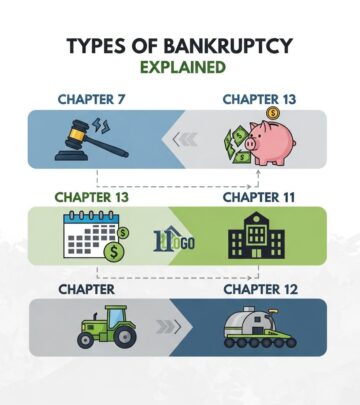
While Chapter 7 offers liquidation, another bankruptcy avenue—Chapter 13—works fundamentally differently.
| Characteristic | Chapter 7 | Chapter 13 |
|---|---|---|
| Bankruptcy Type | Liquidation | Reorganization |
| Who Can File | Individuals and business entities | Individuals only (including sole proprietors) |
| Asset Sales | Nonexempt assets are sold | Debtor retains assets; creates repayment plan |
| Timeline | Approximately 4-6 months | 3-5 years |
| Debt Eligibility | Disposable income must be low enough to pass means test | Cannot exceed $2.75 million in combined debt (as of mid-2024) |
| Outcome | Remaining debts discharged after liquidation | Debts eliminated after completing payment plan |
Chapter 7 is more appropriate for debtors with minimal assets and income, while Chapter 13 suits those with regular income who can afford to repay a portion of their debts over time.
Special Considerations for Small Business Owners
Sole proprietors and self-employed individuals contemplating bankruptcy must understand specific implications for their business assets. When filing Chapter 7, all business assets must be disclosed, and nonexempt business equipment and property will be sold by the trustee.
Business owners with substantial business debts or those wanting to preserve business property should explore alternatives. Chapter 13 bankruptcy for small business owners or Subchapter V of Chapter 11 may provide better options for protecting business operations while addressing debt.
The Discharge Process and Its Finality
The ultimate benefit of Chapter 7 bankruptcy is the debt discharge—a court order that eliminates the debtor’s personal liability for qualifying debts. This discharge typically occurs approximately four months after filing, though the timeline can vary based on case complexity.
Once discharged, creditors cannot pursue collection against the debtor for those eliminated debts. This release is permanent and provides the ”fresh start” that bankruptcy law intends. The debtor emerges from bankruptcy able to rebuild credit and financial life without the burden of prior debts.
However, in most Chapter 7 cases involving individuals, little to nothing is actually liquidated because their assets fall within exempt categories. These ”no-asset” cases still result in debt discharge but involve no asset sales by the trustee.
Eligibility and the Means Test
Not every debtor automatically qualifies for Chapter 7 bankruptcy. The bankruptcy code requires that individuals pass a means test to establish eligibility. This test compares the debtor’s income against the median income in their state and calculates disposable income available for debt repayment.
If disposable income is low enough, the debtor passes the means test and can proceed with Chapter 7. Those with higher incomes or significant disposable income may be required to use Chapter 13 instead, which involves a repayment plan rather than liquidation.
Businesses and sole proprietors face different eligibility requirements. For business entities, the absence of profitability or ability to reorganize under Chapter 11 often leads to Chapter 7 filing.
Cost and Timeline Considerations
Chapter 7 bankruptcy typically spans four to six months from filing to discharge, making it faster than Chapter 13 or Chapter 11 reorganization. This relatively quick resolution allows debtors to move forward with rebuilding their financial lives sooner.
The cost of filing Chapter 7 varies by jurisdiction and whether debtors use bankruptcy attorneys or file pro se (without legal representation). Court filing fees are required, and attorney fees vary significantly. Many bankruptcy attorneys offer flat-fee arrangements for straightforward Chapter 7 cases.
Frequently Asked Questions About Chapter 7
Will I lose my home if I file Chapter 7?
Not necessarily. Federal and state law protect a portion of home equity from liquidation through homestead exemptions. The amount protected varies by state but generally allows debtors to retain their primary residence if equity is within exempt limits. However, if you fail to continue mortgage payments, the lender can still foreclose.
Can I file Chapter 7 if I have a job?
Yes, employment is not a barrier to Chapter 7 filing. The means test considers income level, not employment status. Many employed individuals file Chapter 7 when their income is insufficient to cover debts or when they lack disposable income after basic living expenses.
What happens to my credit after Chapter 7?
Chapter 7 bankruptcy appears on your credit report for ten years from the filing date. However, many debtors find their credit improves over time because debts are eliminated and the bankruptcy marks the end of that crisis, not the beginning of new debt.
Are all debts discharged in Chapter 7?
No. Certain debts cannot be discharged, including child support, alimony, recent income taxes, federal student loans, and court-ordered fines or restitution. Additionally, creditors can challenge the discharge of debts arising from recent luxury purchases or cash advances.
Do I need a bankruptcy attorney?
While not legally required, bankruptcy attorneys provide valuable guidance through a complex process. An attorney ensures all required documents are complete and accurate, represents you at the 341 meeting, and protects your rights throughout the case.
References
- Chapter 7 Bankruptcy — Cornell Law School Legal Information Institute. Accessed February 2026. https://www.law.cornell.edu/wex/chapter_7_bankruptcy
- Chapter 7 Bankruptcy – Liquidation Under the Bankruptcy Code — Internal Revenue Service. Accessed February 2026. https://www.irs.gov/businesses/small-businesses-self-employed/chapter-7-bankruptcy-liquidation-under-the-bankruptcy-code
- A Chapter 7 Bankruptcy Overview — Nolo. Accessed February 2026. https://www.nolo.com/legal-encyclopedia/chapter-7-bankruptcy-overview-29571.html
- What Is Chapter 7 Bankruptcy? — Texas Law Help. Accessed February 2026. https://texaslawhelp.org/article/what-is-chapter-7-bankruptcy
- What Should I Know About Chapter 7 Bankruptcy? — Georgia Legal Aid. Accessed February 2026. https://www.georgialegalaid.org/resource/what-should-i-know-about-chapter-7-bankruptcy
- Chapter 7 Bankruptcy — New York City Bar Association. Accessed February 2026. https://www.nycbar.org/get-legal-help/article/bankruptcy/chapter-7-bankruptcy/
- Bankruptcy Guide – Chapter 7 — California Courts Self Help Center. Accessed February 2026. https://selfhelp.courts.ca.gov/bankruptcy-guide
Similar Articles








Read full bio of medha deb