Chapter 10 Bankruptcy: Understanding Business Debt Relief
Comprehensive guide to Chapter 10 bankruptcy filings for businesses seeking debt reorganization and relief.

Chapter 10 Bankruptcy: A Comprehensive Overview
Bankruptcy law provides numerous avenues for individuals and businesses to address overwhelming debt situations. Among the various chapters outlined in the U.S. Bankruptcy Code, Chapter 10 historically represented a significant option for businesses seeking reorganization and debt relief. Understanding the nuances of Chapter 10 bankruptcy, including its purpose, process, and implications, is essential for business owners contemplating financial restructuring.
Chapter 10 bankruptcy was primarily designed to address the financial challenges faced by corporations and other business entities. Unlike personal bankruptcy chapters that focus on individual debtors, Chapter 10 provided a framework through which businesses could reorganize their operations while addressing creditor obligations. This chapter allowed businesses to continue operations while developing and implementing a plan to repay or restructure their debts under court supervision.
Historical Context and Evolution of Chapter 10
Chapter 10 bankruptcy emerged as part of the broader bankruptcy reform that took place during the early twentieth century. It served as a precursor to what would eventually become Chapter 11 bankruptcy, which is the modern reorganization chapter used today for most business bankruptcies. The evolution from Chapter 10 to Chapter 11 reflected changing attitudes toward business reorganization and more streamlined procedures for debt restructuring.
While Chapter 10 is no longer commonly used in modern bankruptcy practice, understanding its historical significance provides valuable context for comprehending the current bankruptcy system. The transition to Chapter 11 incorporated many lessons learned from Chapter 10 proceedings and introduced more efficient mechanisms for business reorganization.
Key Characteristics of Chapter 10 Bankruptcy
Eligibility and Filing Requirements
Chapter 10 bankruptcy was available to corporations and other business entities that met specific eligibility criteria. The filing requirements included demonstrating that the business faced genuine financial distress and that reorganization was preferable to liquidation. Debtors seeking Chapter 10 protection needed to file a petition with the bankruptcy court, along with various financial documents and schedules detailing their assets, liabilities, and business operations.
The petition process required detailed disclosure of the business’s financial situation, including balance sheets, income statements, and explanations of how the business arrived at its current financial position. This transparency was designed to ensure that creditors and the court had sufficient information to evaluate whether reorganization was feasible.
Reorganization Process
The cornerstone of Chapter 10 bankruptcy was the development of a reorganization plan. This plan outlined how the business would restructure its operations, potentially modify debt obligations, and return to financial viability. The plan required approval from affected creditors and confirmation by the bankruptcy court before implementation could commence.
The reorganization process involved several critical steps. First, the debtor or a trustee appointed by the court would assess the business’s operations and financial structure. Second, they would develop a comprehensive reorganization plan addressing debt restructuring, operational improvements, and revenue generation strategies. Third, the plan would be presented to creditors for voting. Finally, if creditors approved the plan and the court confirmed it, the business would proceed with implementation.
Creditor Treatment and Debt Restructuring
Under Chapter 10 bankruptcy, creditors were classified into different groups based on the nature and priority of their claims. Secured creditors had claims backed by collateral, while unsecured creditors held claims without such backing. The reorganization plan typically provided different treatment for different creditor classes.
The plan might involve extending payment timelines, reducing claim amounts, converting debt into equity, or some combination of these approaches. The overarching principle was that reorganization should provide creditors with greater recovery than they would receive in a liquidation scenario. This encouraged creditors to support the plan, as they had an incentive to maximize their recovery through the business’s continued operation.
Discharge in Chapter 10 Bankruptcy
A fundamental benefit of Chapter 10 bankruptcy was the potential for discharge of debts. Upon successful completion of the reorganization plan, the business received a discharge, releasing it from personal liability for specified debts. However, not all debts were dischargeable. Certain categories of obligations remained the responsibility of the debtor even after bankruptcy completion.
The discharge provided relief by eliminating the debtor’s personal liability for discharged debts, though valid liens could remain on specific property if not avoided during the bankruptcy case. This distinction was crucial: while the creditor could not pursue the debtor for payment, they could still enforce liens to recover the secured property if the debt remained unpaid.
Non-Dischargeable Debts
Under the Bankruptcy Code, specific categories of debts were excepted from discharge for public policy reasons. These exceptions typically included:
– Certain tax obligations and related penalties- Court-ordered child support and alimony payments- Debts arising from fraud or misrepresentation- Debts incurred through criminal conduct- Certain educational loans- Debts for willful and malicious injury to persons or property
The exact categories of non-dischargeable debts could vary, and some required affirmative action by creditors to have them excepted from discharge. Creditors needed to file an adversary proceeding requesting that the court determine specific debts were not dischargeable.
Chapter 10 vs. Other Bankruptcy Chapters
Comparison with Chapter 11
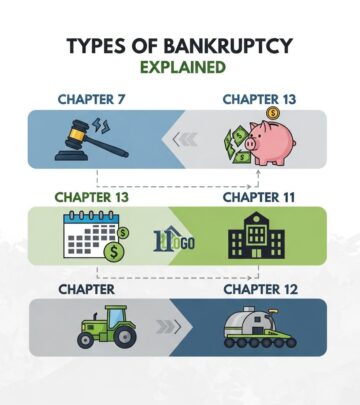
Chapter 11 bankruptcy, which replaced Chapter 10, offered similar reorganization benefits but with streamlined procedures and reduced complexity. Chapter 11 became the standard reorganization chapter for large businesses, small businesses, and corporations. The transition from Chapter 10 to Chapter 11 reflected legislative intent to create a more flexible and efficient process for business reorganization.
Comparison with Chapter 7
While Chapter 10 focused on reorganization and continuing business operations, Chapter 7 bankruptcy involved liquidation. In Chapter 7, the business would cease operations, assets would be sold, and proceeds distributed to creditors according to priority. Chapter 10 offered a fundamentally different approach, prioritizing business continuation when feasible.
Comparison with Chapter 13
Chapter 13 bankruptcy applies to individual debtors with regular income, allowing them to reorganize personal debts through a repayment plan. Chapter 10 served a similar reorganization function but specifically for business entities rather than individuals. A Chapter 13 discharge, for example, might be available if the debtor completes the repayment plan, though certain debts remain non-dischargeable.
The Chapter 10 Filing Process
Petition and Initial Requirements
The Chapter 10 process began with filing a bankruptcy petition in federal bankruptcy court. The petition included comprehensive financial disclosures, including detailed balance sheets, profit and loss statements, lists of assets and liabilities, and information about the business’s operations and management structure. The debtor also needed to file a statement of financial affairs explaining how the business accumulated its debts and its current financial condition.
Court Involvement and Trustee Appointment
Upon filing, the bankruptcy court would supervise the case and typically appoint a trustee to oversee the reorganization process. The trustee represented the creditors’ interests, assessed the business’s viability, and helped develop the reorganization plan. In some cases, the debtor-in-possession might manage the business under court supervision rather than a trustee taking control.
Development and Approval of the Reorganization Plan
The reorganization plan was the central document in Chapter 10 bankruptcy. It detailed how the business would restructure operations, modify debts, and achieve financial viability. The plan specified treatment of different creditor classes, payment schedules, and operational changes. Once developed, the plan was disclosed to creditors, who voted to accept or reject it. The court then held a confirmation hearing to determine whether the plan met statutory requirements and should be approved.
Advantages and Disadvantages of Chapter 10
Advantages
– Business Continuation: The business could continue operations while restructuring debts, maintaining employment and ongoing value.- Creditor Recovery: Creditors typically recovered more through reorganization than through liquidation.- Debt Restructuring: Obligations could be modified, extended, or reduced to reflect the business’s financial capacity.- Court Supervision: Judicial oversight ensured fair treatment of creditors and protection of stakeholder interests.
Disadvantages
– Complexity: The Chapter 10 process involved substantial legal and procedural requirements.- Time and Cost: Extended bankruptcy proceedings increased costs for legal representation and court administration.- Uncertainty: Plan confirmation was not guaranteed, creating uncertainty for all parties involved.- Stigma: Filing for bankruptcy carried reputational consequences for the business and its management.
Modern Bankruptcy Practice and Chapter 10’s Legacy
Although Chapter 10 is no longer used in contemporary bankruptcy practice, its framework and principles have been incorporated into Chapter 11. Modern business bankruptcy practitioners benefit from the historical experience with Chapter 10 filings, which informed the development of more efficient reorganization procedures. Understanding Chapter 10 provides valuable historical context for appreciating the current bankruptcy system’s structure.
Today, businesses seeking reorganization protection file under Chapter 11, which provides greater flexibility and efficiency than the historical Chapter 10 framework. Chapter 11 allows single-asset real estate entities, small businesses, and large corporations to pursue reorganization while maintaining court oversight and creditor protection.
Frequently Asked Questions
Q: Is Chapter 10 bankruptcy still available today?
A: No, Chapter 10 bankruptcy is no longer used in modern practice. It has been replaced by Chapter 11, which provides more streamlined reorganization procedures for businesses.
Q: What type of businesses could file under Chapter 10?
A: Chapter 10 was available to corporations and other business entities facing financial distress who sought reorganization rather than liquidation.
Q: How did Chapter 10 discharge work?
A: Upon successful completion of the reorganization plan, the business received a discharge releasing it from personal liability for specified debts, though certain non-dischargeable debts remained.
Q: What were non-dischargeable debts in Chapter 10?
A: Certain debts, including tax obligations, fraud-related debts, and court-ordered support payments, were excepted from discharge for public policy reasons.
Q: How long did Chapter 10 bankruptcy take?
A: Timeline varied significantly depending on case complexity, the time needed to develop and approve a reorganization plan, and the extent of creditor negotiations.
Q: Could creditors object to a Chapter 10 discharge?
A: Creditors could challenge discharge of specific debts, particularly those involving fraud or misrepresentation, requiring court determination.
References
- Discharge in Bankruptcy – Bankruptcy Basics — United States Courts. Accessed 2025. https://www.uscourts.gov/court-programs/bankruptcy/bankruptcy-basics/discharge-bankruptcy-bankruptcy-basics
Similar Articles








Read full bio of medha deb