Ceteris Paribus: All Other Things Being Equal
Master the economic principle of ceteris paribus and understand how economists isolate variables.

What Is Ceteris Paribus?
Ceteris paribus is a Latin phrase that translates to “all other things being equal” or “all other things remaining constant.” In economics, this fundamental concept allows economists to analyze the relationship between two variables while holding all other factors constant. When economists invoke ceteris paribus, they are essentially creating a theoretical framework where only the variables under examination change, while everything else in the economic environment remains stable. This simplification is crucial for understanding cause-and-effect relationships in economic systems that are otherwise far too complex to analyze comprehensively.
The concept emerged from the need to make economic analysis more manageable and scientific. Without ceteris paribus, economists would struggle to identify how specific changes in one variable affect another because numerous external factors constantly influence economic outcomes. By assuming that all other things remain equal, economists can isolate the direct effect of one variable on another, much like scientists conduct controlled experiments in laboratories.
Understanding the Meaning and Translation
The term “ceteris paribus” comes from Latin, where “ceteris” means “other things” and “paribus” means “equal.” Therefore, the literal translation is “other things being equal.” Alternative English translations include “all other things being equal,” “other things held constant,” and “all else equal.” These variations all convey the same fundamental concept: the assumption that all variables except those under immediate consideration remain unchanged.
This principle is not unique to economics. Scientists and researchers across various disciplines use similar reasoning when conducting experiments. For example, when testing the law of gravity, researchers assume that if you drop an apple from a tree, it will fall to the ground, provided there are no unusual changes to normal circumstances or “ceteris paribus.” However, ceteris paribus is most widely employed in economics, where it serves as a foundational tool for building and testing economic theories.
The Importance of Ceteris Paribus in Economics
Ceteris paribus plays a vital role in economic analysis for several compelling reasons. First, it offers economists a way to create a framework for testing and developing economic models. By holding other variables constant, economists can construct simplified models that capture the essential relationships between key economic variables without being overwhelmed by the complexity of real-world interactions.
Second, ceteris paribus makes economic theories more scientific and less philosophical. It transforms economics from a descriptive social science into an analytical discipline where hypotheses can be tested and verified. By establishing clear assumptions about which variables remain constant, economists can make testable predictions about economic behavior.
Third, this concept allows economists to explore multiple variables through systematic testing and hypothesis development. Rather than attempting to understand an entire economic system at once, economists can examine individual mechanisms one at a time, building their understanding incrementally. This approach often yields more insight than ambitious attempts to explain everything happening throughout the entire economy simultaneously.
Practical Examples of Ceteris Paribus
Supply and Demand Analysis
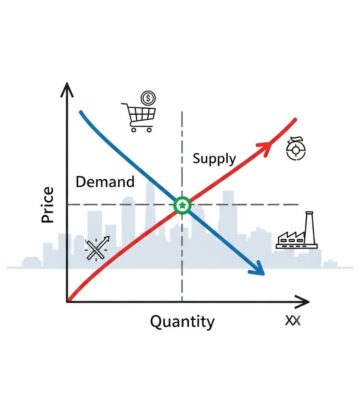
One of the most common applications of ceteris paribus in economics is the analysis of supply and demand. According to the law of supply, an increase in price results in an increase in quantity supplied, when keeping all other factors constant. Using ceteris paribus, economists can focus solely on the relationship between price and supply. When producers receive higher prices for a product, they become willing to offer more of that product for sale by increasing production. While the real world is far more complex, ceteris paribus allows economists to examine this theoretical relationship between price and supply in isolation.
Price Changes and Consumer Demand
A classic example of ceteris paribus involves milk prices. If the price of milk falls, ceteris paribus, the quantity of milk demanded will rise. This prediction assumes that other factors, such as consumer preferences, income levels, prices of substitute goods, and marketing methods remain unchanged. In reality, these factors might change simultaneously, but the ceteris paribus assumption allows economists to focus specifically on how a price change affects demand.
Interest Rates and Borrowing
Another important application involves interest rates and borrowing behavior. An increase in interest rates will, ceteris paribus, cause the demand for loans to fall. Higher interest rates increase the cost of borrowing, so there will be less demand for loans. However, if consumer confidence was high, people might still want to borrow more despite higher rates. The ceteris paribus assumption assumes that confidence levels and other economic conditions remain the same, allowing economists to isolate the effect of interest rate changes on loan demand.
Oil Prices and Consumption
Ceteris paribus applies to commodity markets as well. Higher oil prices should lead to less demand for oil, all other things being equal. This assumes that fuel efficiency standards, consumer preferences for alternative energy, and economic growth rates remain constant. In practice, these factors change, but the ceteris paribus framework helps economists understand the specific mechanism by which price changes affect quantity demanded.
Minimum Wage Effects
When analyzing the effects of minimum wage increases, economists use ceteris paribus to isolate employment impacts. All else equal, if a minimum wage higher than the market-clearing rate is introduced, employers will demand less labor, resulting in a reduction in employment. This ceteris paribus analysis assumes that business conditions, worker productivity, and other labor market factors remain constant, even though these factors typically change in real-world scenarios.
How Ceteris Paribus Simplifies Economic Analysis
The fundamental value of ceteris paribus lies in its ability to simplify complex economic relationships. In the real world, economists face enormous difficulty isolating individual variables because multiple factors constantly influence economic outcomes simultaneously. Without simplifying assumptions, economic analysis would become impossibly complicated.
By using ceteris paribus, economists can break down complex problems into manageable components. They examine how changes in one variable affect another while deliberately ignoring the countless other variables that might also be changing. This approach converts economics from an overwhelming jumble of interconnected factors into a systematic science where individual relationships can be understood and tested.
Ceteris paribus also enables economists to move from theoretical analysis to practical model-building. Economic models would be far too unwieldy if they attempted to account for every possible variable and interaction. By holding certain variables constant through ceteris paribus assumptions, economists create tractable models that can be analyzed mathematically and tested empirically.
Limitations and Criticisms of Ceteris Paribus
Despite its importance, ceteris paribus has significant limitations that economists acknowledge. The most obvious limitation is that ceteris paribus does not reflect real-world conditions. In actual economies, numerous variables change simultaneously, and these changes often interact with each other in complex ways. The more extensively economists apply ceteris paribus assumptions, the further they distance themselves from reality.
This divergence from reality can reduce the accuracy of economic models. When ceteris paribus assumptions become too restrictive, the resulting predictions may not accurately describe what actually happens in the economy. Real-world fluctuations, unexpected shocks, and complex interactions between variables often produce outcomes that differ from ceteris paribus predictions.
Critics also argue that ceteris paribus allows economists to ignore or overlook important real-world factors. Some contend that the concept permits economists to block out genuine problems or the significant impact of human behavior and psychology on economic activity. For instance, consumer sentiment, business confidence, and behavioral quirks influence economic outcomes, but ceteris paribus analysis may not adequately account for these factors.
Additionally, ceteris paribus analysis typically focuses on short-term effects and partial equilibrium rather than examining long-term impacts and general equilibrium across the entire economy. What appears true under ceteris paribus assumptions in the short term may not hold in the longer term as other variables adjust.
Ceteris Paribus Versus General Equilibrium Analysis
Ceteris paribus analysis represents what economists call “partial equilibrium” analysis. It examines how changes in one market or variable affect that specific market or variable, while assuming other markets and variables remain unchanged. This contrasts with “general equilibrium” analysis, which attempts to model how changes in one part of the economy ripple through and affect the entire economic system.
Partial equilibrium analysis, enabled by ceteris paribus assumptions, is simpler and more tractable but potentially less comprehensive. General equilibrium analysis attempts greater realism but becomes far more mathematically complex and difficult to implement. Both approaches have merit, and economists often use both methods for different purposes.
Key Applications of Ceteris Paribus in Economic Analysis
Gross Domestic Product (GDP) Analysis
Ceteris paribus is used in relation to GDP to determine how the money market will change when variables remain constant. By holding certain factors constant, economists can better understand how changes in money supply or government spending specifically affect GDP.
Interest Rates and Monetary Policy
Through keeping interest rates as the independent variable, analysts can examine how rising interest rates increase borrowing costs, thereby reducing the demand for debt. This ceteris paribus framework helps central banks understand the transmission mechanisms of monetary policy.
Labor Market Analysis
To define the possible effects of rising minimum wages, economists use ceteris paribus. Possible effects include how wage increases may reduce employment levels, assuming other factors like productivity and business demand remain constant.
When Ceteris Paribus Assumptions Break Down
Ceteris paribus assumptions often break down in several practical scenarios. When testing economic theories, economists cannot always regulate every variable or identify all important and potential variables that might influence outcomes. Economic systems contain feedback loops and dynamic interactions that violate simple ceteris paribus assumptions.
For example, when oil prices rise, the demand for oil may fall, but this change in demand may also affect inflation expectations, which then influences interest rates and consumer behavior, creating complex feedback effects that simple ceteris paribus analysis cannot capture. Similarly, policy interventions intended to achieve specific ceteris paribus outcomes often produce unintended consequences as other variables adjust.
Best Practices for Using Ceteris Paribus
Careful use of ceteris paribus requires economists to maintain intellectual honesty about the limitations of their analysis. When using ceteris paribus, economists should explicitly state their assumptions about which variables are being held constant and why. They should acknowledge that their predictions apply to a simplified theoretical scenario rather than the complex real world.
Economists should also avoid overstating claims derived from ceteris paribus analysis. Findings that hold “all other things equal” may or may not hold when “other things” actually change. Good economic analysis combines ceteris paribus insights with recognition of real-world complexity.
Frequently Asked Questions (FAQs)
Q: Why do economists use ceteris paribus if it doesn’t match reality?
A: Ceteris paribus allows economists to understand individual economic relationships in isolation. While no economic model perfectly captures reality, ceteris paribus analysis provides valuable insights into how specific variables interact. By understanding these relationships systematically, economists can better understand complex real-world outcomes that involve multiple variables changing together.
Q: What is the difference between ceteris paribus and causal analysis?
A: Ceteris paribus is a tool that helps establish causal relationships by holding other variables constant. It helps identify cause and effect by eliminating confounding factors. True causal analysis often relies on ceteris paribus thinking, though rigorous causal inference requires more sophisticated methods than simple ceteris paribus assumptions.
Q: Can ceteris paribus predictions ever be wrong?
A: Yes, ceteris paribus predictions can be wrong in the real world because the assumptions rarely hold perfectly. When “other things” change, outcomes may differ from ceteris paribus predictions. Additionally, economic relationships can change over time or vary across different contexts and countries.
Q: How does ceteris paribus apply to international economics?
A: Ceteris paribus applies to international economics in analyzing trade, exchange rates, and capital flows. For example, if exchange rates change while other factors remain constant, export competitiveness and import prices will change in predictable ways. However, international economics involves many variables, making ceteris paribus assumptions particularly challenging to maintain.
Q: Is ceteris paribus still relevant in modern economics?
A: Yes, ceteris paribus remains fundamental to economic analysis. While modern econometrics and computational methods allow economists to model more variables simultaneously, the basic principle of isolating relationships through controlled assumptions remains valuable. Contemporary economics blends ceteris paribus analysis with more sophisticated statistical techniques.
References
- Ceteris Paribus in Economics — Economics Help. 2024. https://www.economicshelp.org/blog/glossary/ceteris-paribus/
- What Does Ceteris Paribus Mean? — GoCardless. 2024. https://gocardless.com/guides/posts/what-does-ceteris-paribus-mean/
- Ceteris Paribus — INOMICS Economics Terms. 2024. https://inomics.com/terms/ceteris-paribus-1419672
- Ceteris Paribus — Wikipedia. 2024. https://en.wikipedia.org/wiki/Ceteris_paribus
Similar Articles








Read full bio of Sneha Tete