CPA: Certified Public Accountant Explained
Complete guide to becoming a CPA and understanding the accounting profession.
What Is a Certified Public Accountant (CPA)?
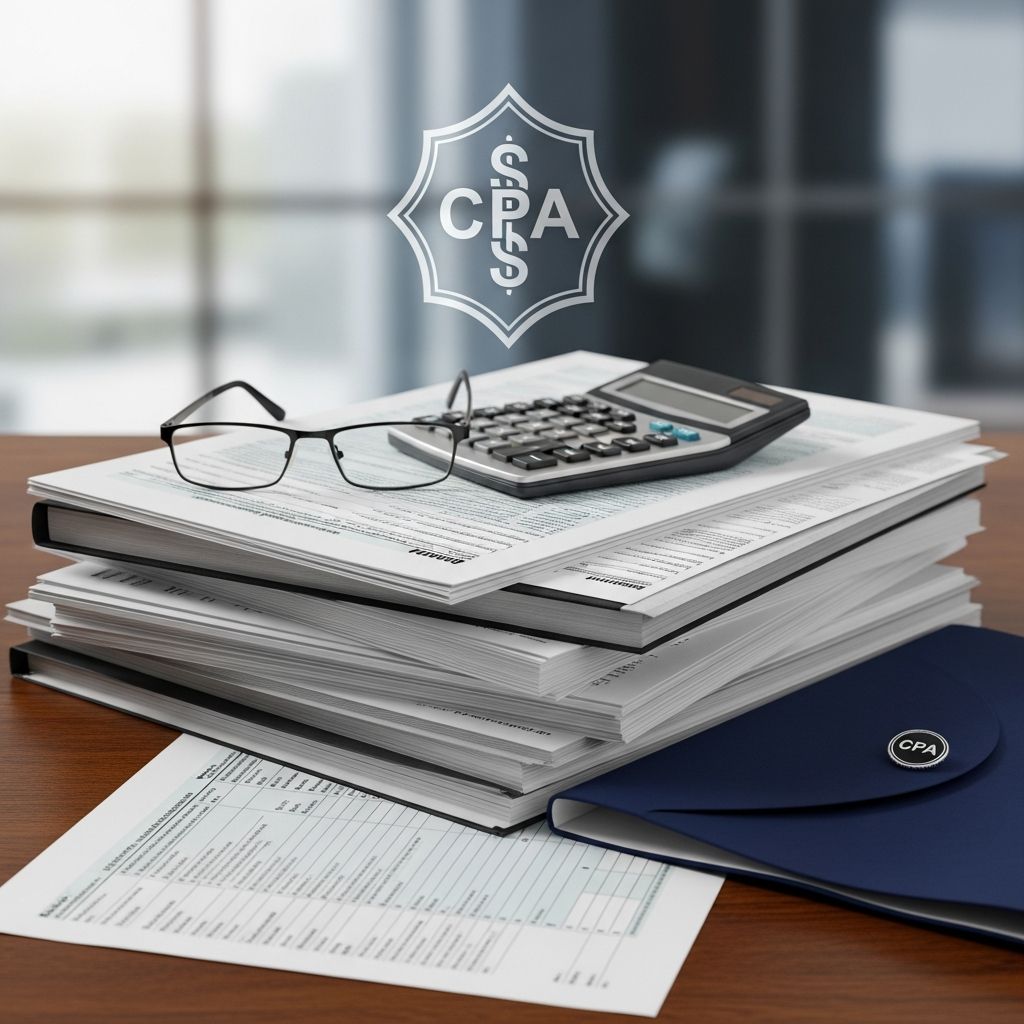
A Certified Public Accountant (CPA) is a professional accounting credential granted to individuals who meet specific educational, examination, and ethical requirements established by state regulatory boards. The CPA designation is one of the most respected and widely recognized credentials in the accounting and finance industry, signifying that the holder possesses comprehensive knowledge of accounting principles, tax law, auditing, and business finance.
CPAs are qualified to provide a wide range of accounting services including financial statement preparation, tax planning and preparation, auditing, management consulting, and forensic accounting. The credential demonstrates that a professional has passed rigorous examinations and maintains high standards of competence and ethical conduct.
Key Characteristics of CPAs
- Professional License: CPAs are licensed by state boards of accountancy and must comply with state and federal regulations
- Quality Assurance: The credential ensures clients receive services from qualified professionals with proven expertise
- Legal Authority: Only CPAs can provide certain services such as auditing financial statements and signing audit reports
- Ethical Standards: CPAs must adhere to a strict code of professional conduct and continue their education
- Public Trust: The CPA designation represents a commitment to protecting the public interest through competent and ethical service
CPA Requirements and Qualifications
To become a CPA, candidates must meet several stringent requirements that vary slightly by state but generally include the following components:
Educational Requirements
Most states require CPA candidates to complete a bachelor’s degree or higher from an accredited college or university with a focus on accounting and business courses. Many states now mandate 150 semester hours of college education, which is 30 hours more than a typical four-year bachelor’s degree. This requirement ensures candidates have comprehensive knowledge in accounting, auditing, taxation, and related business disciplines.
The Uniform CPA Examination
The Uniform CPA Examination (CPA Exam) is a comprehensive test administered by the American Institute of Certified Public Accountants (AICPA). The exam consists of four sections designed to assess the candidate’s knowledge and skills in different areas of accounting:
- Auditing and Attestation (AUD): Tests knowledge of auditing standards, procedures, and reporting requirements
- Financial Accounting and Reporting (FAR): Covers generally accepted accounting principles (GAAP) and financial statement preparation
- Regulation (REG): Assesses knowledge of business law, ethics, and tax regulations
- Business Environment and Concepts (BEC): Tests understanding of business concepts, economics, and information technology
Candidates must pass all four sections within a specified timeframe. Each section is scored on a scale of 0 to 99, with a passing score typically set at 75 or higher. The exam is computer-based and conducted at testing centers throughout the year.
Work Experience Requirements
Most states require candidates to complete a specified amount of accounting work experience under the supervision of a licensed CPA. This requirement typically ranges from one to three years, depending on the state. The work experience must involve accounting services such as auditing, tax preparation, accounting analysis, or financial statement preparation to ensure candidates have practical knowledge in their field.
Continuing Professional Education (CPE)
After obtaining their CPA license, professionals must complete ongoing continuing professional education to maintain their credential. States typically require CPAs to complete between 20 and 40 hours of CPE annually, covering topics such as accounting standards, tax law changes, ethics, and technology advancements in the profession.
CPA Exam Structure and Format
The CPA Exam has undergone significant changes to better reflect modern accounting practices and technologies. The current exam format emphasizes practical application of accounting knowledge and includes various question types:
| Exam Section | Key Topics | Time Allocation | Question Types |
|---|---|---|---|
| AUD (Auditing and Attestation) | Audit procedures, risk assessment, reporting standards | 4 hours | Multiple choice, task-based simulations |
| FAR (Financial Accounting and Reporting) | GAAP, consolidations, derivative instruments | 4 hours | Multiple choice, written communications |
| REG (Regulation) | Business law, ethics, taxation, government regulations | 3 hours | Multiple choice, task-based simulations |
| BEC (Business Environment and Concepts) | Economics, finance, technology, internal controls | 3 hours | Multiple choice, written communications |
Career Opportunities and Specializations
The CPA credential opens numerous career paths across various industries and sectors. CPAs work in public accounting firms, corporate finance departments, government agencies, non-profit organizations, and as independent consultants. Common career specializations include:
- Public Accounting: Providing accounting services to multiple clients in areas like tax preparation, auditing, and consulting
- Corporate Accounting: Managing financial records, preparing financial statements, and implementing internal controls for corporations
- Tax Accounting: Specializing in tax planning, compliance, and strategy to minimize client tax liabilities
- Forensic Accounting: Investigating financial crimes, conducting fraud examinations, and providing litigation support
- Government Accounting: Working for federal, state, or local government agencies to manage public funds and ensure accountability
- Internal Auditing: Assessing organizational risk management, internal controls, and governance procedures
- Financial Planning: Providing comprehensive financial advice to individuals and businesses
CPA Salary and Job Outlook
The CPA credential significantly enhances earning potential and career opportunities. According to the U.S. Bureau of Labor Statistics, accountants and auditors earn a median annual wage, with CPAs typically earning substantially more than non-certified accounting professionals. Salary varies based on factors including geographic location, employer size, industry, experience level, and specialization.
Entry-level CPAs in public accounting typically earn competitive salaries with opportunities for rapid advancement. As CPAs gain experience and move into senior positions such as senior accountant, manager, or partner, earning potential increases substantially. CPAs working in specialized areas such as forensic accounting or tax consulting often command premium salaries due to their specialized expertise.
The job outlook for CPAs remains strong, with growing demand for accounting professionals in virtually all industries. Factors driving this demand include increasing regulatory requirements, business complexity, technological advancement, and the ongoing need for reliable financial reporting and compliance.
Benefits of Becoming a CPA
Obtaining a CPA credential provides numerous professional and personal benefits:
- Enhanced Credibility: The CPA designation signals professional competence and expertise to clients and employers
- Increased Earning Potential: CPAs earn significantly more than non-certified accounting professionals throughout their careers
- Career Advancement: The credential opens doors to senior management and leadership positions
- Professional Mobility: With proper reciprocity arrangements, CPAs can practice in multiple states
- Client Confidence: The CPA title instills trust and confidence in clients seeking accounting services
- Specialized Services: CPAs have exclusive authority to perform certain services like audits and attestations
- Continuous Learning: CPE requirements ensure CPAs stay current with industry developments and best practices
- Professional Community: Membership in professional organizations provides networking, resources, and support
Challenges and Commitment Required
While the CPA credential offers substantial benefits, pursuing and maintaining this certification requires significant commitment and effort. The CPA Exam is widely recognized as one of the most challenging professional certification examinations, with relatively low pass rates. Candidates typically study for several months to adequately prepare for the exam, and many require multiple attempts to pass all four sections.
The educational requirements, including obtaining 150 semester hours of college education, necessitate additional time and financial investment beyond a traditional bachelor’s degree. Additionally, maintaining the CPA license requires ongoing compliance with continuing education requirements, ethical standards, and state regulations.
How to Become a CPA: Step-by-Step Process
Step 1: Meet Educational Requirements – Complete a bachelor’s degree with a focus on accounting and business courses, ensuring you meet your state’s educational requirements, typically 150 semester hours.
Step 2: Apply for CPA Candidacy – Submit an application to your state’s board of accountancy demonstrating that you meet preliminary educational requirements.
Step 3: Prepare for the CPA Exam – Study for and prepare to take the Uniform CPA Examination using official AICPA study materials or review courses.
Step 4: Pass the CPA Exam – Successfully complete all four sections of the CPA Exam within the required timeframe.
Step 5: Complete Work Experience – Fulfill your state’s required accounting work experience, typically one to three years, under supervision of a licensed CPA.
Step 6: Apply for CPA License – Submit your application for licensure to your state’s board of accountancy with proof of meeting all requirements.
Step 7: Maintain Your License – Complete continuing professional education requirements and comply with ethical standards to maintain your CPA license.
Frequently Asked Questions (FAQs)
Q: How long does it take to become a CPA?
A: The timeline typically ranges from 4-7 years. This includes four years for a bachelor’s degree, additional coursework for the 150-hour requirement, exam preparation and completion (often 6-12 months), and fulfilling work experience requirements (1-3 years depending on the state).
Q: How much does it cost to become a CPA?
A: Costs vary but typically range from $4,000 to $8,000 when accounting for college tuition, exam fees, study materials, and review courses. College costs will be the largest expense and vary significantly by institution.
Q: Can I become a CPA without a bachelor’s degree?
A: Most states require a bachelor’s degree, though the specific field may be flexible. Some states allow accounting experience to substitute for certain educational requirements, but this is increasingly rare.
Q: What is the CPA Exam pass rate?
A: Pass rates for individual sections typically range from 40-50%, making it a challenging examination. Many candidates take multiple attempts to pass all four sections.
Q: Do CPA licenses transfer between states?
A: Most states have reciprocity agreements allowing CPAs licensed in one state to practice in another, though specific procedures and requirements vary by state.
Q: What is the difference between a CPA and an accountant?
A: A CPA holds a professional license and meets strict requirements, while an accountant may not be licensed. CPAs can perform audits and other services that non-CPAs cannot legally provide.
Q: How often must CPAs complete continuing education?
A: Requirements vary by state, but typically CPAs must complete 20-40 hours of continuing professional education annually to maintain their license.
References
- About the CPA Credential — American Institute of Certified Public Accountants (AICPA). 2025. https://www.aicpa.org/cpa-career
- Uniform CPA Examination Policies and Procedures — AICPA. 2025. https://www.aicpa.org/cpa-exam
- Accountants and Auditors Occupational Outlook — U.S. Bureau of Labor Statistics. November 2024. https://www.bls.gov/ooh/business-and-financial/accountants-and-auditors.htm
- CPA License Requirements by State — National Association of State Boards of Accountancy (NASBA). 2025. https://nasba.org/
- The Value of the CPA Credential — American Accounting Association. 2024. https://aaahq.org/
Similar Articles








Read full bio of medha deb