Certified Check vs Cashier’s Check: Key Differences
Understand the differences between certified and cashier's checks for secure payments.
Certified Check vs Cashier’s Check: Understanding Your Payment Options
When you need to make a payment that requires guaranteed funds, you have several options beyond a standard personal check. Two of the most commonly used alternatives are certified checks and cashier’s checks. While both are official checks issued by banks and offer greater security than regular personal checks, they work differently and have distinct advantages depending on your situation.
Understanding the differences between these two payment methods is essential for making the right choice for your transaction. Whether you’re buying a car, making a down payment on a home, or need to send payment with confidence, knowing when to use each type of check can save you time, money, and potential headaches.
What Is a Certified Check?
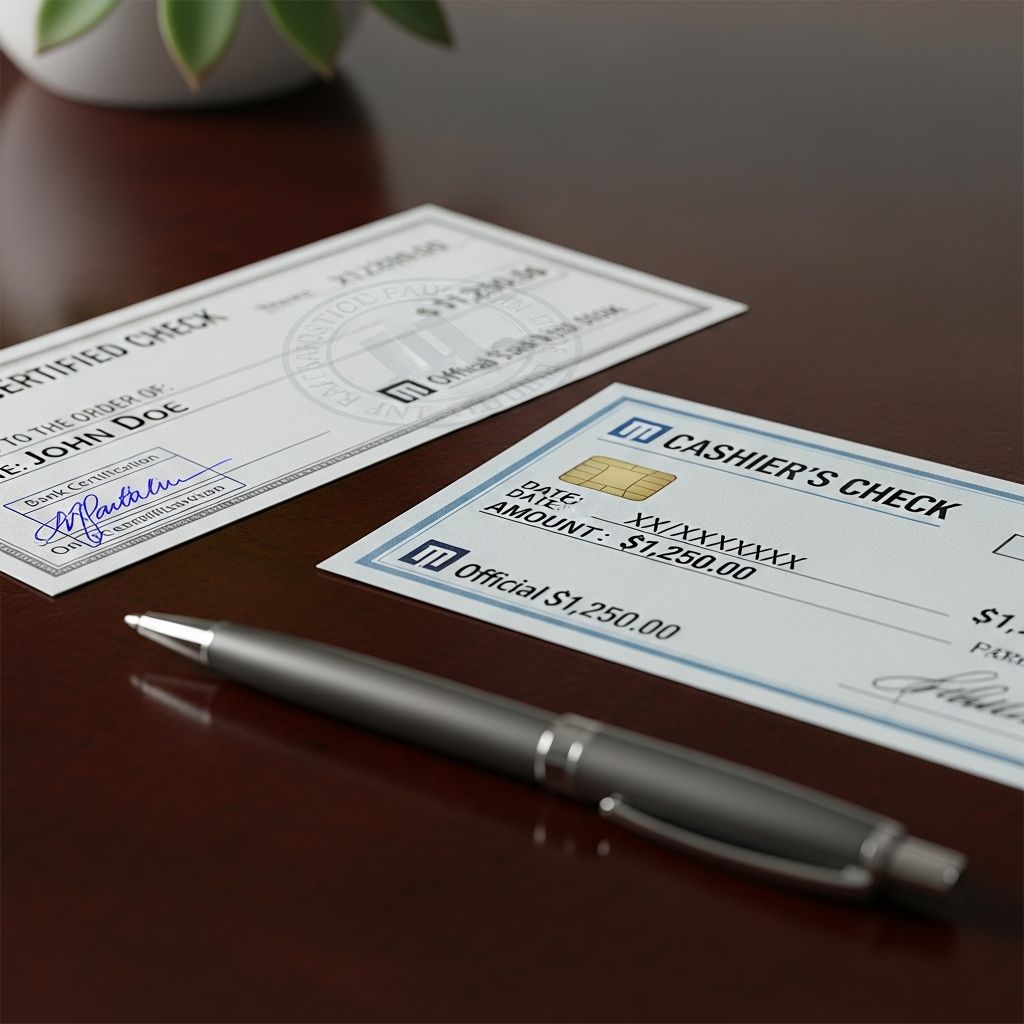
A certified check is a personal check that has been verified and certified by your bank or credit union. When you request a certified check, the financial institution takes several important steps to authenticate the payment. The bank verifies that your signature is genuine and that you have sufficient funds available in your checking account to cover the specified amount.
Once the bank confirms these details, a teller will mark the check with an official stamp or signature to indicate that it has been certified. Unlike a cashier’s check, you remain the signatory on a certified check rather than the bank. However, the bank earmarks the funds in your account, meaning the money is set aside and cannot be used for other purposes until the check is cashed.
Certified checks function similarly to personal checks in that the funds are drawn directly from your checking account. However, they provide an additional layer of verification that makes them more trustworthy than a standard personal check.
What Is a Cashier’s Check?
A cashier’s check is an official check issued and guaranteed by a bank or credit union. When you request a cashier’s check, the financial institution transfers funds from your account to its own reserves. The check is then signed by the bank, not by you, which signifies that the payment is guaranteed by the bank’s own funds rather than your personal account.
The key distinction is that a cashier’s check is backed by the bank’s reserves, making it a very secure form of payment. Since the funds come directly from the financial institution, the check cannot bounce, providing the payee with strong assurance that payment will be received. This guarantee comes from the institution itself, not from your personal creditworthiness.
Key Differences Between Certified and Cashier’s Checks
Funding Source
The most fundamental difference between these two check types lies in where the funds originate. With a certified check, the funds come directly from your personal checking account. The bank simply verifies that the money exists and marks it as reserved for that specific check. With a cashier’s check, the funds come from the bank’s own account. You provide the money to the bank upfront, and they issue the check from their reserves.
Who Signs the Check
With a certified check, you sign the check as the account holder, and the bank teller then certifies it with their signature or stamp. This indicates that the bank has verified your signature and confirmed sufficient funds. With a cashier’s check, the bank itself signs the check, not you. This is one reason cashier’s checks are considered more secure—the bank is directly responsible for the payment.
Security Level
While both checks are more secure than personal checks, cashier’s checks offer a higher level of security. Because they’re backed by the bank’s own funds, they can’t bounce. Certified checks are also quite secure, but they’re guaranteed by the payer rather than the bank, making them slightly less secure than cashier’s checks.
Cost and Availability
Cashier’s checks typically cost between $5 and $15 per check, while certified checks usually cost between $15 and $20. However, many banks now offer cashier’s checks for free to their customers, and some may charge nothing for certified checks either. Availability also differs—cashier’s checks are widely available at most banks and credit unions, while not all financial institutions offer certified checks. If your bank doesn’t offer certified checks, you’ll need to use a cashier’s check instead.
Processing Requirements
To obtain a cashier’s check, you can typically visit your bank in person or request one online in many cases. The process is straightforward—you tell the bank the amount you need, and they draw from your account and issue the check. For a certified check, you must typically visit your bank’s brick-and-mortar location in person, as most banks require you to sign the check in front of a teller who can verify your signature.
Comparison Table
| Feature | Cashier’s Check | Certified Check |
|---|---|---|
| Funds Source | Bank’s reserves | Your checking account |
| Who Signs | Bank or credit union | Account holder |
| Security Level | Very high (backed by bank) | High (verified by bank) |
| Typical Cost | $5 to $15 (often free) | $15 to $20 |
| Availability | Widely available | Less widely available |
| Guarantee | Bank’s own funds | Payer’s account |
| Where to Get | In person or online | In person only |
When to Use a Cashier’s Check
Cashier’s checks are ideal for situations where the payee requires maximum assurance that payment will be received. Common uses include:
– Home purchases: When making a down payment on a property, sellers often require a cashier’s check to ensure the funds are guaranteed.
– Vehicle purchases: Private sellers and dealerships frequently request cashier’s checks for vehicle sales to protect against bounced checks.
– High-value transactions: Any large payment where the recipient wants certainty that the check won’t bounce is a good candidate for a cashier’s check.
– Legal settlements: Courts and legal entities often require cashier’s checks for settlement payments.
– Business transactions: Many business-to-business payments rely on cashier’s checks for security.
When to Use a Certified Check
Certified checks work well for situations where you need a traceable, verified payment but the full security of a bank’s guarantee may be less critical. Common uses include:
– Personal transactions: Paying for personal items from private sellers who want more security than a personal check but don’t require a cashier’s check.
– Rental deposits: Landlords may accept certified checks when they want verification of funds.
– Business payments: Some vendors accept certified checks as a middle-ground option between personal and cashier’s checks.
– Situations requiring lower cost: When the extra security of a cashier’s check isn’t necessary but you want more protection than a personal check, a certified check may be the economical choice.
Pros and Cons of Cashier’s Checks
Advantages
– Cannot bounce since they’re backed by the bank’s own funds
– Widely available at most financial institutions
– Preferred for high-value transactions and formal purchases
– Generally lower cost than certified checks
– Often available online as well as in person
Disadvantages
– Less convenient than a personal check if you have multiple checks to write
– Requires upfront payment to the bank
– May take some time to process at smaller banks
Pros and Cons of Certified Checks
Advantages
– Verified form of payment with bank authentication
– Funds remain visible in your account (though earmarked)
– Good for transactions where you want proof of certified payment
– Can be obtained relatively quickly
Disadvantages
– Not as widely available as cashier’s checks
– Typically more expensive than cashier’s checks
– Must be obtained in person at a physical bank location
– Less secure than cashier’s checks since guaranteed by payer, not bank
– Funds are earmarked and unavailable for other uses
– Can be difficult to stop payment or replace if lost or stolen
How to Get a Cashier’s Check
Getting a cashier’s check is a straightforward process. Visit your bank or credit union in person or access their online banking platform if they offer this service. Tell the bank the exact amount you need and who the check should be made out to. Provide payment from your account, and the bank will issue the check on the spot or within a short timeframe. Most banks offer this service to their customers, often for free or for a small fee.
How to Get a Certified Check
To obtain a certified check, visit your bank’s branch in person and inform them you need check certification. Not all banks offer this service, so you may want to call ahead to confirm. You’ll need to write out the check with the correct amount and payee information in front of a bank teller. The teller will verify your signature matches your account records and confirm that sufficient funds are available. Once verified, the teller will stamp or sign the check to certify it. The money will be earmarked in your account and remain there until the check is cashed.
Frequently Asked Questions
Q: Can a cashier’s check bounce?
A: No, a cashier’s check cannot bounce because it’s backed by the bank’s own funds, not your personal account. The bank guarantees payment.
Q: Can a certified check bounce?
A: A certified check is much less likely to bounce than a personal check because the bank has verified sufficient funds at the time of certification. However, technically it’s not impossible in rare circumstances.
Q: Which is more secure, a cashier’s check or certified check?
A: A cashier’s check is more secure because it’s guaranteed by the bank’s own funds. A certified check is guaranteed by the payer’s account, making it slightly less secure.
Q: Do I need an account with the bank to get a cashier’s check?
A: Requirements vary by bank. Some require you to be a customer, while others may issue cashier’s checks to non-customers, though there may be additional fees.
Q: What if I lose a certified or cashier’s check?
A: Report the lost check to your bank immediately. They can issue a replacement, though there may be a fee and the process may take time.
Q: How long does it take to get a cashier’s check?
A: Cashier’s checks are typically available immediately in person or within one to two business days if requested online.
Q: Why do some sellers require a cashier’s check instead of a certified check?
A: Sellers prefer cashier’s checks because they’re guaranteed by the bank’s own funds, eliminating virtually all risk of the check bouncing.
Q: Are there alternatives to cashier’s checks and certified checks?
A: Yes, alternatives include wire transfers, electronic ACH transfers, money orders, and certified funds through other methods, though these have different advantages and disadvantages.
References
- Cashier’s Check vs. Certified Check: Key Differences Explained — SBIcal Bank. https://www.sbical.bank/education-center/cashiers-check-vs-certified-check
- Cashier’s Check vs. Certified Check: What’s the Difference? — KeyBank. https://www.key.com/personal/banking101/cashiers-vs-certified-checks.html
- Cashier’s Check vs. Certified Check — PNC Bank. https://www.pnc.com/insights/personal-finance/spend/cashiers-check-vs-certified-check.html
- Cashier’s Check vs. Certified Check: What’s the Difference? — Experian. https://www.experian.com/blogs/ask-experian/cashiers-check-vs-certified-check/
- Cashier’s Check Vs. Certified Check: What’s The Difference? — Bankrate. https://www.bankrate.com/banking/whats-the-difference-between-a-cashiers-check-and-a-certified-check/
- Cashier’s Check vs. Certified Check — American Express. https://www.americanexpress.com/en-us/credit-cards/credit-intel/cashiers-check-vs-certified-check/
- Cashier’s Check vs. Certified Check — Capital One. https://www.capitalone.com/learn-grow/money-management/cashiers-check-vs-certified-check/
Similar Articles








Read full bio of medha deb