Certificate of Title: Definition, Uses, and Legal Importance
Complete guide to certificates of title: proof of ownership for vehicles, real estate, and personal property.
Certificate of Title: Definition and Overview
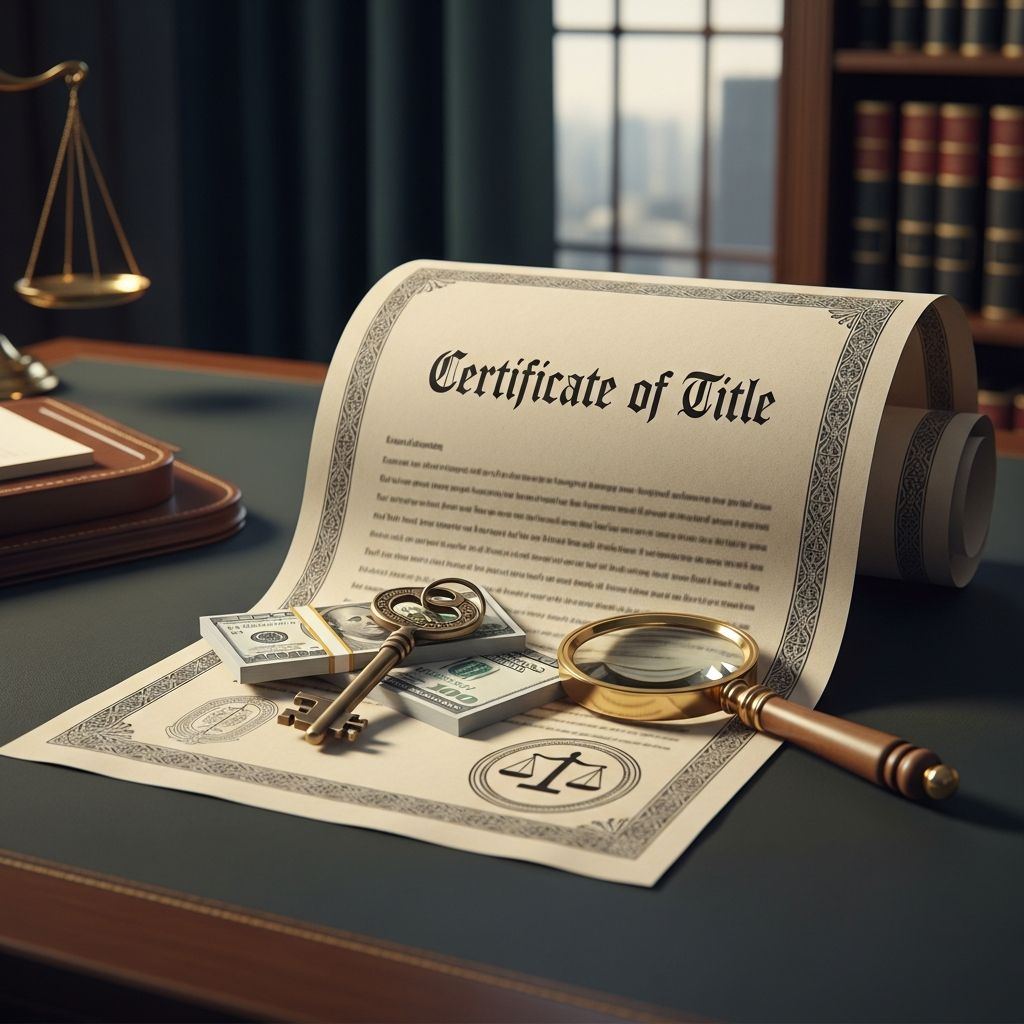
A certificate of title is an official legal document issued by state or local government authorities that serves as conclusive proof of ownership for various types of property. This document is essential in establishing and verifying legal ownership rights, whether for vehicles, real estate, vessels, or other valuable personal property. The certificate contains critical information that protects both the current owner and any financial institutions holding interests in the property.
The primary function of a certificate of title is to create an official record that demonstrates who legally owns a piece of property and to document any claims or financial obligations attached to that property. By providing a clear, documented trail of ownership, the certificate of title prevents disputes over property rights and helps maintain transparency in property transactions. This documentation is particularly important in modern property markets where clear title is essential for conducting legitimate sales, securing financing, and protecting against fraud.
Key Components of a Certificate of Title
Understanding what information appears on a certificate of title is crucial for property owners and buyers. Each certificate contains specific identifying details tailored to the type of property being documented.
For Vehicles and Vessels
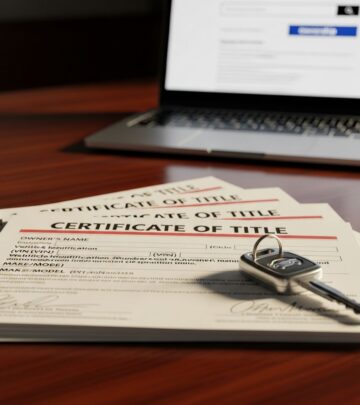
Vehicle certificates of title include the vehicle identification number (VIN), which is a unique identifier for each automobile. The document also lists the vehicle’s make, model, year of manufacture, and color. Additionally, it contains the registered owner’s name and address, along with details about any lienholder—typically a lending institution that has financed the vehicle purchase. The certificate may also indicate whether the vehicle has been branded as salvaged, rebuilt, or flooded, which affects its value and insurability.
For Real Estate
Real estate certificates of title, often called title deeds, provide a legal description of the property including lot number, block designation, and recorded plat information. The document identifies the property owner(s) by name and includes information about the property’s history. Title certificates for real estate often reference any easements, covenants, restrictions, or other encumbrances that may affect the property’s use or value. Many real estate transactions are backed by title insurance, which is noted in the certificate.
Common Information on All Certificates
Regardless of property type, most certificates of title contain ownership details, property descriptions, and crucially, information about any liens or encumbrances. A lien represents a legal claim against the property, typically held by a lender or creditor. The certificate clearly identifies who has priority claims on the property, which is essential when resolving ownership disputes or facilitating property sales.
The Importance of Certificates of Title
The certificate of title serves multiple critical functions in property law and commerce. First, it provides legal evidence of ownership that is recognized by courts and government agencies. Without a valid certificate of title, an owner cannot legally transfer property to another person or entity. This requirement ensures that only legitimate owners can sell property and that buyers receive clear, unencumbered ownership rights.
Second, the certificate of title protects lenders and financial institutions. When a bank provides a loan for a vehicle or real estate purchase, they require the borrower to provide evidence of property ownership. The lender then places a lien on the certificate of title, which legally secures their investment. This protection is essential to the lending industry, as it provides recourse if the borrower defaults on the loan.
Third, the certificate of title prevents fraud and unauthorized transfers. By maintaining an official record of ownership with government authorities, the certificate system makes it difficult for unscrupulous individuals to claim ownership of property they don’t own or to fraudulently transfer property without the legitimate owner’s consent. This protection extends to all stakeholders in property transactions.
How Certificates of Title Work in Practice
Vehicle Transactions
When purchasing a vehicle, the buyer and seller must transfer the vehicle’s certificate of title to legally establish new ownership. The seller signs the certificate of title, effectively releasing their ownership claim. The buyer then submits the signed certificate along with other required documentation to the state motor vehicle agency to register the vehicle in their name. Most states now offer electronic title systems, known as e-titles, which streamline this process and reduce the risk of lost or damaged physical documents.
If the vehicle is financed, the lender’s name appears on the certificate of title as the lienholder. The lender must sign off on the title transfer when the loan is fully paid, releasing their lien and allowing the owner to transfer the vehicle to another party without lender approval.
Real Estate Transactions
Real estate transactions follow a more complex process involving multiple professionals. When a property is being sold, a title company typically conducts a comprehensive title search to verify ownership and identify any existing claims, liens, or encumbrances on the property. This search examines public records to trace the property’s ownership history, often referred to as the chain of title. The title company then issues a title insurance policy, which protects the buyer and lender from losses arising from title defects that might not have been discovered during the initial search.
The actual transfer of the certificate of title occurs at the real estate closing, when both parties sign the deed. The deed is the legal document that transfers property ownership from the seller to the buyer. After signing, the deed is recorded with the local government office that maintains property records, officially establishing the new owner’s legal right to the property.
Role of Escrow and Title Insurance
Escrow services play a crucial role in protecting both buyers and sellers during property transactions. An escrow agent acts as a neutral third party, holding funds, documents, and other key elements until all conditions of the sale and purchase agreement are satisfied. This arrangement ensures that the buyer doesn’t release funds until the seller delivers a valid title, and it protects the seller’s interests by ensuring the buyer’s payment clears before transferring ownership.
Title insurance provides additional protection by covering losses from title defects discovered after the sale is complete. These defects might include undisclosed liens, previous claims on the property, or errors in public records. Title insurance protects both the buyer and the lender, ensuring that their investments in the property are secure.
Types of Ownership and Title Documentation
Different ownership arrangements require different approaches to title documentation. Understanding these variations is important for anyone involved in property transactions.
| Ownership Type | Definition | Title Implications |
|---|---|---|
| Sole Ownership | One person holds complete control and ownership of the property | Certificate of title lists only one owner; straightforward transfer process |
| Joint Tenancy | Two or more persons share equal ownership with rights of survivorship | Certificate identifies all joint tenants; surviving tenant automatically inherits deceased tenant’s share |
| Tenancy in Common | Multiple individuals own property without rights of survivorship; ownership shares can be unequal | Certificate lists all owners with their respective ownership percentages; each owner’s share passes to their heirs |
| Community Property | Marital partnership where most property acquired during marriage is equally owned by both spouses | Available in certain states; certificate reflects equal community ownership; specific state laws govern transfer |
| Condominium Ownership | Individual owns a specific unit plus shared ownership of common areas | Certificate identifies unit-specific ownership; shared ownership of building elements documented separately |
| Cooperative Ownership | Owner holds shares in corporation that owns the building; shareholders have rights to occupy specific units | Certificate documents share ownership rather than property ownership; unique transfer and financing requirements |
State-Specific Regulations and Requirements
While the fundamental concept of certificate of title remains consistent across the United States, specific regulations vary by state. Each state’s motor vehicle department and real property recording system establishes its own rules for issuing, maintaining, and transferring titles. Vehicle title regulations typically fall under state motor vehicle statutes, while real estate title requirements are governed by state property law and recording statutes.
Some states have implemented electronic title systems for vehicles, which offer advantages including faster processing times, reduced fraud risk, and easier document management. These e-title systems maintain the same legal significance as physical certificates of title while providing improved efficiency and accessibility.
Real estate title requirements also vary by state regarding what information must be included in deeds, how titles are recorded, and what type of title insurance coverage is standard. Property buyers and sellers should consult with local real estate professionals to understand their state’s specific requirements.
Types of Deeds and Title Transfer
The type of deed used in a property transfer affects the guarantees and protections provided to the buyer. Understanding these differences helps buyers assess the quality of title they are receiving.
Warranty Deeds
A general warranty deed provides the strongest protection to the buyer. The seller promises that they hold good title to the property and that no outside claims to the title have arisen during their ownership or previously. This guarantee extends back through the entire chain of title, protecting the buyer against all potential claims.
A special warranty deed provides more limited protection. The seller promises only that no claims to the title have arisen during the time they owned the property. The seller makes no guarantees about claims that may have existed before their ownership, which places some burden on the buyer to investigate the property’s history.
Quitclaim Deeds
A quitclaim deed transfers whatever ownership interest the grantor possesses without providing any warranties or guarantees about the quality of that title. The grantor makes no promise that they actually own the property or have the right to transfer it. Quitclaim deeds are typically used in situations where the parties have a close relationship or when clarifying existing ownership interests, but they provide minimal protection to the recipient.
Marketable Title and Clear Title
A clear and marketable title is essential for legitimate property transactions. Marketable title means the property is free from legal claims or defects that could burden the buyer’s ownership or affect the property’s value. A property with unclear title may have undisclosed liens, boundary disputes, or claims from previous owners, all of which can create legal and financial problems for the current owner.
Before completing a real estate purchase, buyers should ensure they are receiving clear title through a comprehensive title search and title insurance. This protection ensures that the investment in the property is secure and that ownership cannot be challenged by unknown claimants.
Protecting Your Certificate of Title
Maintaining an accurate and current certificate of title is essential for protecting ownership rights and ensuring smooth property transactions. Property owners should keep their certificates in a safe location and update them whenever ownership circumstances change, such as when a lien is satisfied or when adding or removing co-owners.
For vehicles, owners should promptly transfer titles when purchasing a new vehicle and should keep electronic or physical copies of title documents for record-keeping purposes. For real estate, owners should maintain copies of deeds and title insurance documents and should address any title issues promptly to avoid future complications.
Common Title Issues and Resolution
Several problems can affect certificates of title. Outstanding liens from previous debts can prevent property sale until satisfied. Errors in public records, such as misspelled names or incorrect property descriptions, can cause title defects. Undisclosed heirs or previous claims may surface after a property purchase. These issues can delay transactions or create legal disputes, which is why title insurance and comprehensive title searches are so important.
When title issues arise, property owners should work with title companies or real estate attorneys to investigate and resolve the problems. Title insurance can cover losses from certain defects, and legal remedies exist for other title complications.
Frequently Asked Questions
Q: What is the difference between a certificate of title and a deed?
A: A certificate of title is an official government document proving ownership of property. A deed is the legal document that transfers ownership from one party to another. The deed is used to create or transfer the title, while the certificate documents the resulting ownership rights.
Q: Can I sell property without a certificate of title?
A: No, you cannot legally sell property without a valid certificate of title. The certificate proves your ownership rights and is required to transfer those rights to a buyer. Without it, any transfer would be invalid.
Q: What does it mean if there is a lien on my certificate of title?
A: A lien indicates that another party has a legal claim against your property, typically because you borrowed money using the property as collateral. The lienholder must release the lien before you can sell the property or transfer clear title.
Q: How long does it take to transfer a vehicle title?
A: Transfer time varies by state, but typically ranges from a few days to several weeks. Electronic title systems generally process transfers faster than paper-based systems. Contact your state’s motor vehicle department for specific timelines.
Q: Is title insurance necessary for real estate purchases?
A: While not legally required, title insurance is highly recommended. It protects you from losses arising from title defects discovered after purchase, including undisclosed liens, ownership claims, or errors in public records that could be extremely costly to resolve.
Q: What should I do if my certificate of title is lost or damaged?
A: Contact your state’s motor vehicle department or local property recording office to request a replacement certificate. You may need to provide proof of ownership and pay a replacement fee. Electronic copies of titles can often be accessed online through state systems.
References
- Certificate of Title – Legal Glossary Definition 101 — Barnes Walker, Goethe, Perron & Shea, PLLC. 2024. https://barneswalker.com/legal-glossary/c/certificate-of-title/
- Ownership and Titles: Chain of Title in Property Law — University of Pittsburgh School of Law. 2024. https://online.law.pitt.edu/blog/understanding-ownership-and-title-in-property-law
Similar Articles








Read full bio of medha deb