Central Limit Theorem: Definition and Applications
Master the Central Limit Theorem: The foundation of statistical inference and financial modeling.

What Is the Central Limit Theorem?
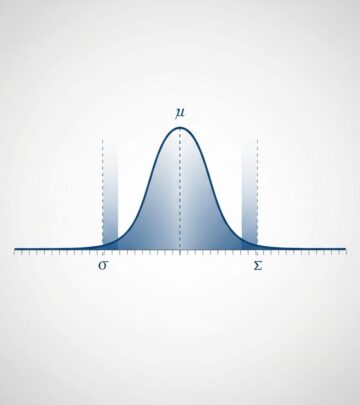
The Central Limit Theorem (CLT) is one of the most fundamental concepts in statistics and serves as a cornerstone for financial analysis and risk assessment. In its essence, the Central Limit Theorem states that the distribution of sample means approaches a normal distribution as the sample size increases, regardless of the shape of the original population distribution. This principle has profound implications for how financial professionals analyze data, make predictions, and manage risk.
This theorem provides a powerful mathematical foundation that enables analysts and investors to make inferences about entire populations by examining carefully selected samples. Whether you are analyzing stock returns, assessing portfolio risk, or pricing financial derivatives, understanding the Central Limit Theorem is essential for informed decision-making in modern finance.
The Historical Development of the Central Limit Theorem
The Central Limit Theorem was not discovered overnight but evolved over centuries through the contributions of multiple mathematicians and statisticians. The initial version of this theorem was coined by Abraham De Moivre, a French-born mathematician. In an article published in 1733, De Moivre used the normal distribution to find the number of heads resulting from multiple tosses of a coin. Although this groundbreaking work laid the foundation for modern statistical theory, the concept was unpopular at the time and was largely forgotten for decades.
It was not until much later that statisticians and mathematicians revisited and expanded upon De Moivre’s work, eventually establishing the Central Limit Theorem as a central pillar of statistical science. Today, it stands as one of the most widely used and practical concepts in both theoretical and applied statistics.
Understanding the Core Principles of CLT
Convergence to Normal Distribution
One of the most remarkable aspects of the Central Limit Theorem is that it demonstrates convergence to a normal distribution regardless of the underlying population distribution. Whether the original data is uniformly distributed, exponentially distributed, or follows any other pattern, the distribution of sample means will eventually approximate a bell curve as sample size increases.
The rate of convergence, however, depends significantly on the properties of the original distribution. Symmetric distributions with finite moments typically converge more quickly to normality. Conversely, heavily skewed or fat-tailed distributions, which are common in financial data, exhibit slower convergence rates. This distinction has important implications for determining adequate sample sizes in practical applications.
The Sample Size Requirement
A critical practical question is: how large must a sample be for the Central Limit Theorem to apply reliably? The general consensus among statisticians is that a sample size of at least 30 observations is sufficient for the CLT to hold in most situations. As the sample size increases to 40, 50, or higher, the distribution of sample means moves progressively closer to a perfect normal distribution.
For data that is unusually irregular or exhibits extreme skewness, larger sample sizes may be necessary. Financial data often contains outliers and fat tails, particularly during market stress periods, which may require sample sizes exceeding 50 or even 100 to achieve reliable normal approximations.
Independent and Identically Distributed Variables
The Central Limit Theorem relies on two critical assumptions about the underlying data: independence and identical distribution. Independent events have no influence on each other’s outcomes, meaning that one observation does not affect the probability distribution of subsequent observations. Identically distributed random variables follow the same probability distribution and have the same statistical properties.
The IID (Independent and Identically Distributed) assumption simplifies statistical analyses in finance and underlies many financial models. Examples include daily stock returns of different securities and individual loan default probabilities within a large portfolio. However, violations of the IID assumption can lead to biased estimates and incorrect risk assessments, potentially resulting in significant financial losses.
The Finite Variance Condition
For the Central Limit Theorem to apply, the parent distribution must have finite variance. Variance represents the average squared deviation from the mean and is a crucial measure of dispersion in financial data. However, some financial phenomena exhibit infinite variance, characterized by extreme price movements and sudden market dislocations.
When standard CLT does not apply due to infinite variance, financial analysts must turn to alternative approaches including truncated distributions that cap extreme values, robust statistics that reduce sensitivity to outliers, and the Generalized Central Limit Theorem designed specifically for stable distributions with infinite variance.
The Mathematical Framework Behind CLT
Asymptotic Behavior and Convergence
The asymptotic behavior of the Central Limit Theorem describes what happens to the sample mean as sample size approaches infinity. CLT guarantees that the limiting distribution is normal, regardless of the parent distribution’s shape. Understanding this asymptotic behavior is fundamental for assessing the reliability of CLT approximations in practical, finite-sample situations.
The Berry-Esseen theorem provides quantitative bounds on the rate of convergence to normality. This theorem establishes that the maximum difference between the cumulative distribution function (CDF) of the standardized sum and the standard normal CDF depends on the third absolute moment of the distribution. These bounds help financial professionals determine the accuracy of normal approximations for specific sample sizes and data characteristics.
Advanced Generalizations
The Lindeberg-Lévy theorem represents a significant generalization of the classical Central Limit Theorem for non-identically distributed random variables. This extension requires the Lindeberg condition, which states that the contribution of any single variable to overall variance becomes negligible as the number of variables increases.
In finance, the Lindeberg-Lévy theorem proves particularly valuable for modeling heterogeneous financial time series and analyzing portfolios with varying asset characteristics. This generalization provides theoretical justification for CLT-based inference in scenarios where the standard assumption of identical distribution does not hold.
Applications in Financial Analysis
Portfolio Risk Assessment
The Central Limit Theorem enables financial professionals to estimate portfolio risk using historical returns data. For large, diversified portfolios, returns are approximately normally distributed, allowing analysts to apply standard statistical techniques. Value-at-Risk (VaR) calculations, which estimate the maximum potential loss under normal conditions, often rely on CLT assumptions about the normality of return distributions.
However, limitations emerge for portfolios containing significant non-linear payoffs, such as options. In these cases, Monte Carlo simulations based on CLT assumptions help assess risk for more complex portfolios by generating thousands of potential price paths and evaluating outcomes across various market scenarios.
Option Pricing and Derivatives
The renowned Black-Scholes model, which revolutionized derivatives pricing, assumes a log-normal distribution of stock prices, a distribution justified by the Central Limit Theorem. CLT underlies the normality assumption in many option pricing models and enables the derivation of closed-form solutions for European option prices.
Nevertheless, limitations arise for short-term options and during extreme market conditions when price movements deviate significantly from normal distributions. Modern extensions accommodate non-normal returns through jump diffusion models that account for sudden price jumps and stochastic volatility models that capture changing market uncertainty.
Statistical Inference and Practical Applications
Confidence Intervals and Population Parameters
Statistical inference forms the bridge between sample data and population parameters in financial analysis. The Central Limit Theorem provides the theoretical foundation for constructing confidence intervals, which offer a range of plausible values for unknown population parameters. A confidence interval captures the true parameter with a specified probability in repeated sampling.
Financial applications of confidence intervals include estimating average stock returns with a specified margin of error and assessing the precision of risk measures. By leveraging CLT, analysts can determine the sample size needed to achieve desired accuracy levels and understand the trade-offs between precision and cost.
Hypothesis Testing in Finance
Beyond confidence intervals, the Central Limit Theorem underpins hypothesis testing procedures widely used in financial analysis. When testing whether portfolio returns significantly differ from a benchmark or examining if risk measures have changed, analysts rely on the normal distribution approximation provided by CLT. This enables the calculation of p-values and test statistics that determine statistical significance.
Practical Examples in Finance
Stock Market Index Analysis
Consider an investor who wishes to estimate the average return of a major stock market index comprising 100,000 individual stocks. Analyzing each stock independently would be impractical and prohibitively expensive. Instead, the investor uses random sampling to obtain an estimate of the overall index return.
The investor selects multiple random samples, with each sample containing at least 30 stocks. Importantly, previously selected stocks must be replaced in subsequent samples to maintain the independence assumption and avoid bias. As the investor examines more samples, the distribution of sample means converges to a normal distribution, and the average return of the stock samples provides an accurate estimate of the entire index return.
Risk Assessment in Banking
Banks and financial institutions use the Central Limit Theorem to assess credit risk across large loan portfolios. By assuming that individual default probabilities are independent and identically distributed, and that sample sizes are sufficiently large, banks can apply normal distribution assumptions to estimate portfolio-level loss distributions. This enables the calculation of regulatory capital requirements and the pricing of credit risk.
Frequently Asked Questions
Q: Why is the Central Limit Theorem so important in finance?
A: The Central Limit Theorem is crucial because it allows financial professionals to use normal distribution properties for any underlying data distribution when sample sizes are large enough. This simplifies risk modeling, option pricing, portfolio analysis, and regulatory capital calculations, making it foundational to modern finance.
Q: What is the minimum sample size needed for the Central Limit Theorem to apply?
A: Generally, a sample size of 30 or more is considered sufficient for the CLT to hold. However, for data with significant skewness or extreme values, sample sizes of 40, 50, or higher may be necessary to achieve reliable normal approximations.
Q: Does the Central Limit Theorem always work with financial data?
A: While the CLT is extremely powerful, it has limitations. Financial data with infinite variance, extreme outliers, or fat tails may not converge to normality as quickly. Additionally, during market crises, financial returns often exhibit non-normal behavior that violates CLT assumptions.
Q: How does the Central Limit Theorem relate to the Black-Scholes option pricing model?
A: The Black-Scholes model assumes stock prices follow a log-normal distribution, which is justified by the Central Limit Theorem. This assumption enables the derivation of closed-form solutions for European option prices and forms the basis for modern derivatives pricing.
Q: What happens when CLT assumptions are violated?
A: When CLT assumptions are violated, such as when data has infinite variance or exhibits extreme dependence, alternative approaches become necessary. These include robust statistics, generalized CLT for stable distributions, monte carlo simulations, and stress testing to account for non-normal market behavior.
Conclusion
The Central Limit Theorem stands as one of the most powerful and practical concepts in both statistics and finance. By demonstrating that sample means converge to normal distributions regardless of underlying population distributions, it provides the theoretical justification for countless financial models, risk management techniques, and investment strategies. From portfolio analysis to option pricing, from confidence interval construction to hypothesis testing, the CLT enables financial professionals to extract meaningful insights from sample data and make informed decisions in the face of uncertainty.
Understanding the conditions under which CLT applies, recognizing its limitations, and knowing when to employ alternative approaches are essential skills for modern financial practitioners. As financial markets continue to evolve and present new challenges, the Central Limit Theorem remains an indispensable tool for managing risk and maximizing returns.
References
- Central Limit Theorem in Financial Mathematics — Fiveable. 2024. https://fiveable.me/financial-mathematics/unit-3/central-limit-theorem/
- Central Limit Theorem: Overview and Example — Corporate Finance Institute. 2024. https://corporatefinanceinstitute.com/resources/data-science/central-limit-theorem/
- Central Limit Theorem — EBSCO Research Starters. 2024. https://www.ebsco.com/research-starters/science/central-limit-theorem
Similar Articles








Read full bio of Sneha Tete