CDs vs S&P 500: Long-Term Wealth Comparison
Discover why choosing CDs over S&P 500 investments could limit your financial growth over decades, with data-backed insights on returns and risks.

Certificates of Deposit (CDs) provide a secure way to earn predictable interest, backed by FDIC insurance up to $250,000 per depositor per bank. In contrast, investing in the S&P 500 offers exposure to 500 leading U.S. companies, historically yielding higher returns but with market fluctuations. This analysis explores the financial outcomes of allocating $10,000 to either option over 30 years, drawing on decades of performance data to illustrate the growth potential gap.
Understanding CDs: Safety First
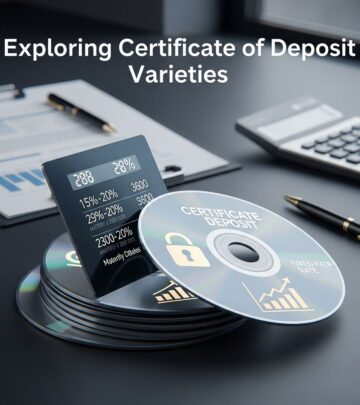
CDs lock your money for a fixed term, typically 3 months to 5 years, rewarding you with a guaranteed annual percentage yield (APY). Banks offer higher rates than regular savings accounts because funds remain inaccessible without penalties until maturity. This structure appeals to conservative savers prioritizing capital preservation over aggressive growth.
- FDIC Protection: Ensures principal safety up to $250,000, eliminating loss risk from bank failure.
- Fixed Returns: Rates lock in at purchase, shielding against falling interest environments.
- Term Variety: Options range from short-term for liquidity needs to longer durations for better yields.
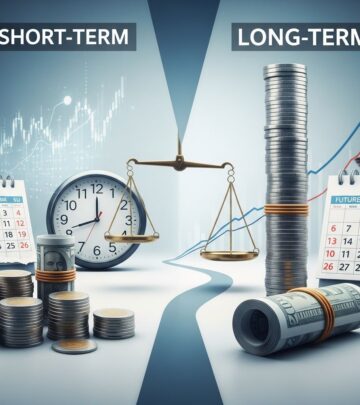
For short-term goals like emergency funds or upcoming purchases, CDs excel by providing modest growth without market worries. However, their real value erodes if inflation outpaces yields, a common occurrence in low-rate periods.
The Power of S&P 500 Investing
The S&P 500 index tracks large-cap U.S. stocks, delivering average annual returns around 10% nominally since the 1980s, adjusted for inflation closer to 7%. This compounding effect transforms modest investments into substantial wealth over time, far surpassing fixed-income alternatives.
| Period | Avg CD Real Return | Avg S&P 500 Real Return | Annual Outperformance |
|---|---|---|---|
| 1985-2014 | 1.58% | 8.39% | 6.81% |
Over 1985-2014, S&P 500 real returns beat CDs by 6.81% annually, highlighting stocks’ edge in beating inflation and building wealth. While short-term dips occur, long-term horizons mitigate volatility.
Projecting 30-Year Growth Scenarios
Assume a $10,000 initial investment in 1994. At a conservative 2.72% average CD rate (historical norm), it grows to about $22,500 by 2024, factoring reinvestments. The same amount in the S&P 500, assuming 10% average annual return including dividends, balloons to over $174,000.
- CD Path: Steady but limited; inflation-adjusted purchasing power barely doubles.
- S&P 500 Path: Volatile yearly but exponential compounding yields 7-8x growth.
Extending to 30 years from today, CDs at current 4-5% rates might reach $32,000-$40,000, while S&P 500 could exceed $174,000 conservatively or $500,000+ with historical averages. These projections underscore opportunity costs of safety.
Risk and Volatility: Key Trade-Offs
CDs carry virtually no principal risk but suffer from reinvestment risk—maturing into lower rates—and inflation risk. S&P 500 investments face market downturns, like 2008’s 37% drop, but recover strongly, with no 30-year negative periods historically.
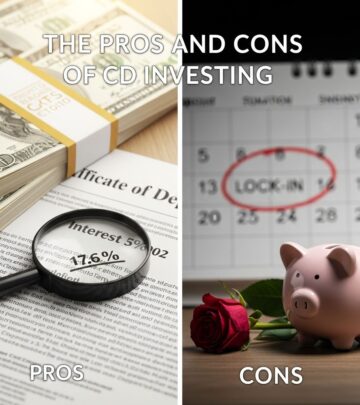
| Factor | CDs | S&P 500 |
|---|---|---|
| Risk Level | Low | High |
| Liquidity | Penalized early withdrawal | High (sell anytime) |
| Insurance | FDIC up to $250K | SIPC up to $500K (brokerage) |
| Inflation Hedge | Poor | Strong |
Diversification tempers stock risks; pairing S&P 500 ETFs with bonds mimics a 60/40 portfolio outperforming CD proxies long-term.
Strategic Ways to Balance Safety and Growth
Rather than all-or-nothing, blend approaches. CD laddering staggers maturities for liquidity and rate capture: divide funds across 1-5 year terms, reinvesting as each ends.
- Core-Satellite: 60% S&P 500 index funds, 40% CDs/bonds for stability.
- Laddering: Equal CD allocations maturing yearly for flexibility.
- Bucket Strategy: Short-term CDs for needs in 1-5 years; stocks for 10+ year horizons.
This hybrid preserves peace of mind while capturing equity upside. For retirees, CDs fund immediate withdrawals; stocks grow the rest.
When CDs Outshine Stock Investments
Certain scenarios favor CDs: imminent expenses (e.g., home down payment), rising rate environments before peaks, or ultra-conservative profiles unable to tolerate drawdowns. Post-2022 rate hikes, 5%+ CDs briefly competed with stock yields, but history shows fleeting advantage.
Tax-advantaged accounts like IRAs amplify both: CDs yield taxable interest annually; S&P 500 gains defer taxes until withdrawal.
Modern Market Context and Future Outlook
As of 2026, CD rates hover 4-5% amid steady Fed policy, tempting sidelined cash. Yet S&P 500’s forward P/E suggests 8-10% annualized returns, per diversified models. Inflation at 2-3% further favors equities for real growth.
Callable CDs add issuer risk; brokered versions trade secondary markets for liquidity, unlike bank CDs.
Frequently Asked Questions
Are CDs better than S&P 500 for short-term savings?
Yes, for goals under 5 years, CDs’ guarantees prevent losses from market dips.
Can I lose money in the S&P 500?
Short-term yes, due to volatility; long-term (10+ years), historical data shows positive returns nearly always.
How does inflation affect CDs vs stocks?
CDs often lag inflation, eroding purchasing power; S&P 500 typically exceeds it by 4-7% real annually.
What’s the best CD strategy today?
Laddering across terms captures yields while providing periodic access.
Should retirees avoid stocks entirely?
No; a balanced portfolio with 40-60% equities sustains growth against longevity risk.
Building Your Personalized Plan
Assess risk tolerance, timeline, and goals. Tools like Vanguard or Fidelity calculators simulate outcomes. Consult advisors for tailored advice, ensuring alignment with holistic finances.
Ultimately, CDs suit parking cash short-term; S&P 500 drives multi-decade wealth. Most investors benefit from both in a diversified mix.
References
- Real Returns of Certificates of Deposit versus Stocks — Solid Rock Wealth Management Inc. 2014. https://www.solidrockproperty.com/wp-content/uploads/RealReturnsofCDvsSP5001.pdf
- Comparing a Certificate of Deposit to Other Investments: Pros and Cons — JSB Bank. N/A. https://www.jsb.bank/resources/comparing-a-certificate-of-deposit-to-other-investments-pros-and-cons
- CDs vs. Stocks Comparison — SmartAsset. N/A. https://smartasset.com/investing/cds-vs-stocks-comparison
- CDs vs Stocks: Why You Should Think Twice About a CD — Edelman Financial Engines. N/A. https://www.edelmanfinancialengines.com/education/investment-management/think-twice-about-a-cd/
Similar Articles








Read full bio of medha deb