CD Rates Forecast: When Will They Decline?
Experts predict CD rates will ease in 2026 amid Fed cuts—find out timelines, impacts, and smart strategies to maximize your savings now.
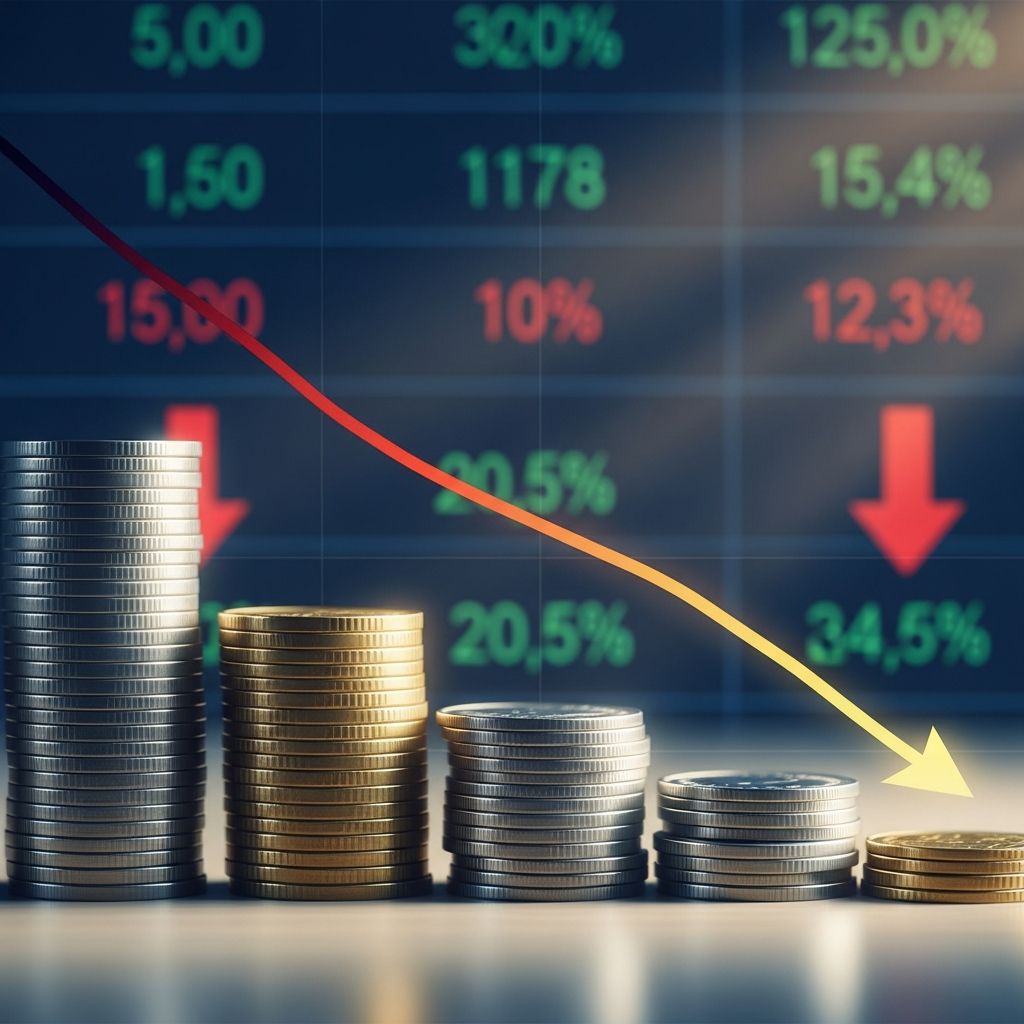
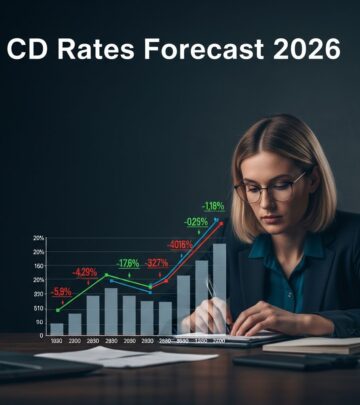
Certificate of deposit (CD) rates, which have provided savers with reliable returns in recent years, are poised for a downward trajectory in 2026. This shift stems primarily from anticipated Federal Reserve interest rate reductions, cooling inflation, and evolving economic conditions. While yields remain competitive against inflation today, projections indicate a gradual decline, prompting savers to consider locking in current rates before they fall further.
Current State of CD Yields Entering 2026
As of early 2026, top CD rates continue to attract depositors, particularly from online banks and credit unions. For instance, competitive one-year CDs offer around 3.8% to 4.1% APY, significantly outpacing national averages reported by the Federal Deposit Insurance Corporation (FDIC), which stand at about 1.61% for 12-month terms. These elevated levels trace back to the Federal Reserve’s rate-hiking cycle in 2022-2023, but recent cuts in late 2025 have begun eroding them.
Shorter-term options like 6-month CDs also yield strongly at 3.8%-4.1% APY from institutions such as Capital One and Marcus by Goldman Sachs. However, promotional rates exceed averages, highlighting the importance of shopping among online providers for the best deals. Despite these opportunities, maturing CDs from the 2025 rate peak—especially those expiring in Q1 2026—will flood the market with reinvestment funds, exerting downward pressure on new yields.
Federal Reserve Policy: The Primary Driver of CD Rate Changes
The Federal Reserve’s federal funds rate serves as the benchmark influencing CD yields. Institutions adjust deposit rates in tandem with this target range, which affects borrowing costs across the economy. In 2025, the Fed implemented cuts in September and October, with further reductions projected for 2026.
According to the Fed’s Summary of Economic Projections, policymakers anticipate a modest one-quarter-point reduction in 2026, though market futures suggest up to two cuts totaling 50 basis points, likely in Q2 and Q3 if inflation moderates and labor markets soften. Bankrate analyst Ted Rossman forecasts three quarter-point cuts, influenced by declining inflation (2.7% year-over-year in November 2025 per the Consumer Price Index), a softening job market, and potential policy shifts under new leadership.
Goldman Sachs researchers predict cuts in December 2025, March, and June 2026, potentially lowering the target range to 3.00%-3.25%. Stronger-than-expected September 2025 job growth might delay this, but consensus points to easing. These moves aim to support growth without reigniting inflation, directly translating to lower CD APYs.
Expert Projections for 2026 CD Yields
Analysts across institutions provide detailed forecasts, emphasizing gradual rather than steep declines. Bankrate’s Ted Rossman projects the top one-year CD at 3.5% APY—down one percentage point from 2025 peaks—and 3.8% for five-year terms, a 0.5% drop. National averages for one-year CDs are expected at 1.8% overall (low 1.7%, high 1.9%), and 1.55% for five-year (low 1.4%, high 1.7%), reflecting tenth-of-a-point decreases from late 2025.
MyBankTracker aligns, anticipating top one-year yields slipping to 3.5% and five-year to 3.8% by year-end. CBS News experts note early 2026 dips, with short-term CDs falling faster than longer ones, as banks compete for stable, long-term deposits. Experian confirms the downward trend tied to Fed actions. Even with declines, rates should exceed historical norms and outpace inflation, preserving real returns.
| CD Term | 2025 Peak (Top APY) | 2026 Forecast (Top APY) | National Avg. 2026 |
|---|---|---|---|
| 1-Year | 4.5% | 3.5% | 1.8% |
| 5-Year | 4.3% | 3.8% | 1.55% |
| 6-Month | 4.1% | ~3.5% | 1.57% |
Note: Figures synthesized from expert forecasts; actual rates vary by institution.
Quantifying the Impact: Earnings Comparisons
The difference between locking in rates now versus waiting compounds over time. Consider a $10,000 one-year CD:
- At 4.20% APY: Earns $420 in interest.
- At 3.50% APY (2026 forecast): Earns $350—a $70 shortfall.
For longer terms, the gap widens. A five-year CD at current 4.3% could yield over $2,300 total interest, versus $1,900 at 3.8%—a $400+ difference. Three-year terms amplify this further for patient savers. These calculations underscore the value of acting promptly, especially for funds not needed short-term.
Factors That Could Alter the Trajectory
While declines seem certain, variables could accelerate or temper them. Persistent inflation above 2% might prompt the Fed to pause cuts, stabilizing CD rates. A robust labor market, as seen in late 2025, supports this caution. Conversely, economic slowdowns or aggressive Fed easing could hasten drops.
Maturing CDs in Q1 2026 will increase supply, pushing banks to lower offers. Credit union managers like A’Jha Tucker at Georgia’s Own predict small, gradual declines absent major shocks. CDValet’s Mary Grace Roske highlights longer-term stability as banks seek locked deposits. Monitor FOMC meetings—eight annually—for updates.
Strategic Moves for Savers in a Declining Rate Environment
To optimize returns:
- Compare widely: Use online tools to scan rates from multiple banks and credit unions, prioritizing those with FDIC/NCUA insurance.
- Ladder your CDs: Divide funds across terms (e.g., 6-month, 1-year, 2-year) for liquidity and reinvestment at potentially higher early-2026 rates.
- Opt for longer terms: Secure current yields on 3-5 year CDs if funds are committed long-term.
- Understand penalties: Review early withdrawal fees, typically 3-12 months’ interest.
- Consider alternatives: High-yield savings or money market accounts offer flexibility if rates fall slower than expected.
Online banks often lead with top APYs due to lower overhead. Act before Q1 maturities flood the market.
Long-Term Perspective: CDs in the Broader Economy
CDs excel for risk-averse savers seeking guaranteed returns amid uncertainty. Even at forecasted 2026 levels, they surpass inflation (2.7% in late 2025), delivering positive real growth. Historically, post-hike cycles see prolonged elevated yields before normalization; 2026 rates remain appealing versus pre-2022 lows.
As the Fed balances growth and inflation, savers benefit from proactive planning. Diversify beyond CDs into Treasuries or bonds for similar safety with potential rate sensitivity.
Frequently Asked Questions (FAQs)
Will CD rates rise in 2026?
Unlikely; experts consensus on declines tied to Fed cuts, though pauses possible if inflation rebounds.
Should I open a CD now?
Yes, especially longer terms, to capture current highs before forecasted drops.
How do Fed cuts affect my existing CD?
Locked rates remain unchanged; impacts hit new or renewing CDs.
Are credit union CDs better?
Often competitive with fewer fees; always verify NCUA insurance.
What’s the safest CD investment?
FDIC/NCUA-insured up to $250,000 per depositor per institution.
References
- CD Interest Rates Forecast For 2026 — Bankrate. 2026-01 (approx.). https://www.bankrate.com/banking/cds/cd-rate-forecast/
- What’s the CD rate forecast for January 2026? Here’s what experts predict — CBS News. 2026-01 (approx.). https://www.cbsnews.com/news/whats-the-cd-rate-forecast-for-january-2026-heres-what-experts-predict/
- 2026 CD rate forecast: Should you lock in rates now? — MyBankTracker. 2026-01-20 (approx.). https://www.mybanktracker.com/cd/cd-rate-forecast
- CD Rates Forecast for 2026: Are CD Rates Going Down? — Experian. 2025 (updated for 2026). https://www.experian.com/blogs/ask-experian/cd-rates-forecast/
Similar Articles








Read full bio of Sneha Tete