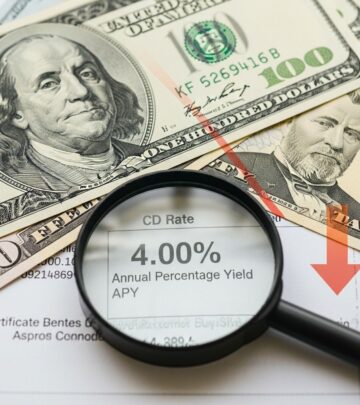
Securing Favorable CD Rates Before Yields Decline Further
Learn why now remains an opportune moment to lock in certificate of deposit rates before they drop further.

The landscape for certificate of deposit investments has shifted noticeably over the past several months. While rates have experienced a downward trajectory from their recent peaks, the current environment still presents meaningful opportunities for savers willing to act promptly. Understanding the dynamics driving these changes and evaluating whether the time is right to commit your funds to a fixed-rate product requires a nuanced look at both present conditions and anticipated future movements.
Understanding the Current State of CD Rates
As of March 2026, the most competitive certificate of deposit offerings continue to hover in attractive territory. The highest rates available across the industry reach approximately 4.20% annual percentage yield (APY), with many reputable institutions offering rates between 3.90% and 4.15% across various term lengths. This represents a substantial shift from where rates stood just months earlier, reflecting broader economic and monetary policy trends.
The contrast between today’s rates and those available during the peak rate environment is significant. In August 2024, savers could access CD rates reaching up to 6%, providing a window into just how dramatically the compensation landscape has transformed. While this represents a meaningful decline, the current offerings still maintain considerable appeal when evaluated against historical baselines and inflation considerations.
Different term lengths offer varying rates, creating opportunities for savers with different time horizons and liquidity preferences:
- Short-term certificates (6-12 months) typically offer rates in the low 4% range
- Intermediate-term products (2-3 years) generally provide rates in the 3.8% to 3.9% range
- Longer-term certificates (4-5 years) often yield rates in the 3.8% to 3.9% range
This rate structure suggests that the market continues to compensate shorter-duration commitments at a premium, reflecting expectations about future rate movements and the opportunity cost of capital deployment.
How Federal Reserve Policy Influences CD Yields
The trajectory of certificate of deposit rates cannot be understood without examining Federal Reserve decision-making. The central bank’s benchmark interest rate, known as the federal funds rate, serves as the foundational reference point that shapes what banks and credit unions offer on savings products. When the Fed adjusts this rate, the ripple effects extend throughout the financial system, influencing everything from CD yields to mortgage rates to checking account returns.
The Federal Reserve embarked on a rate-cutting cycle that began in September 2024, with additional reductions following in subsequent months. Throughout 2025, the Fed implemented three separate rate cuts, each reducing the federal funds rate target range. These actions represent a significant policy shift from the elevated rate environment that characterized 2023 and 2024, when policymakers held rates at elevated levels to combat inflation.
Looking forward into 2026 and beyond, economic forecasters anticipate continued downward pressure on rates. Economists at major institutions project additional rate cuts could occur throughout the year, with some analysts expecting cuts in March and June 2026. However, these remain predictions rather than certainties, as economic data continues to send mixed signals about inflation trends, employment strength, and overall economic growth.
Why the Timing Question Matters Now
The fundamental question facing savers involves timing: should you lock in current rates immediately, or wait for potentially lower rates that might accompany further Fed cuts? This question reflects a classic economic trade-off that every saver must navigate.
The case for acting now centers on several compelling arguments. First, if the Federal Reserve continues cutting rates as many economists predict, future CD offerings will almost certainly provide lower yields than what exists today. A saver who waits for “better” conditions might instead find progressively diminishing returns. Second, the current rate environment still provides meaningful real returns—the difference between nominal yields and inflation. At 4% yields with inflation hovering around 3%, savers earn approximately 1% real return, which represents a genuine benefit compared to holding cash.
Additionally, the opportunity cost of delay deserves consideration. Every month that passes without your funds locked into a fixed product means those dollars are potentially earning lower yields in savings accounts or money market funds. Even a modest rate differential compounds significantly over time, particularly as CDs tend to offer substantially higher returns than basic savings accounts.
Conversely, the argument for exercising patience rests on the possibility that waiting could capture even more attractive rates if the Fed maintains its rate-cutting trajectory. However, this strategy assumes perfect timing and carries the risk of being wrong about the direction and magnitude of future rate movements.
Comparing CD Rates to Alternative Products
| Product Type | Current Rate Range | Key Characteristics |
|---|---|---|
| Certificates of Deposit | 3.9% – 4.2% APY | Fixed rate, FDIC insured, penalties for early withdrawal |
| High-Yield Savings | 2.5% – 3.5% APY | Flexible access, variable rate, FDIC insured |
| Money Market Accounts | 2.2% – 3.2% APY | Check-writing capability, variable rate, FDIC insured |
| Treasury Bills | 3.5% – 4.0% APY | Government backed, varying maturities, no FDIC insurance needed |
When evaluated against alternatives, certificates of deposit maintain a clear rate advantage. High-yield savings accounts typically offer rates 100-150 basis points lower than comparable CD products. Treasury bills provide government-backed security but generally offer rates below top-tier CD products. This differential represents substantial benefit accumulation over the life of a CD investment, particularly for larger deposit amounts.
Strategic Approaches to CD Laddering
Rather than viewing the CD decision as a binary choice between committing entirely now or waiting indefinitely, sophisticated savers often employ a laddering strategy. This approach involves purchasing multiple CDs with staggered maturity dates, creating a portfolio that balances current yield capture with flexibility for future rate adjustments.
For example, a saver might allocate funds across one-year, two-year, three-year, and five-year certificates. This structure ensures that portions of the portfolio mature regularly, creating opportunities to reinvest at prevailing rates. If rates decline as expected, the saver captures some funds at attractive current yields while maintaining optionality through maturing tranches. If rates unexpectedly rise, the saver has flexibility to adjust subsequent placements.
The laddering approach offers several advantages:
- Reduces the impact of mistiming the entire investment
- Maintains regular access to portions of capital
- Allows for gradual rate adjustments over time
- Provides flexibility to capitalize on changing circumstances
- Reduces the psychological pressure of making a perfect timing decision
Evaluating Minimum Deposit Requirements and Account Features
The accessibility of competitive CD rates has improved considerably, with many institutions now offering attractive yields at modest minimum deposit levels. Certain providers require only $500 to access competitive rates, while others maintain no minimum requirements whatsoever. This democratization of access means that savers across different financial situations can participate in the CD market.
Beyond rate considerations, account features merit evaluation. Some institutions offer CDs that can be opened and managed entirely online, eliminating the need for branch visits. Others provide flexible terms allowing modifications to maturity dates or deposit amounts. Certain products offer tiered rates that increase based on deposit size, creating advantages for larger savers. Understanding these features helps ensure that the selected CD product aligns with your operational preferences and financial circumstances.
How Inflation and Real Returns Factor Into Your Decision
The nominal interest rate—the stated percentage yield—tells only part of the story about CD returns. The real return, which reflects the difference between the nominal rate and inflation, represents the true increase in purchasing power. Currently, with inflation hovering around 3% and top CD rates reaching 4.2%, savers enjoy real returns of approximately 1.2%.
This positive real return distinguishes the current environment from various historical periods when savings rates fell below inflation, meaning that savers actually lost purchasing power despite earning nominal interest. In the present context, CD investments provide meaningful inflation protection while offering certainty and security through FDIC insurance protection.
However, if inflation trends higher or if rates continue declining without corresponding price reductions, real returns will compress further. This consideration underscores why the present moment may represent an attractive window before conditions potentially deteriorate from the saver’s perspective.
Risk Considerations and Portfolio Context
While certificates of deposit offer security through deposit insurance, they carry specific risks worth acknowledging. The primary risk involves opportunity cost—if rates rise substantially after you lock in a CD at a lower rate, you forego those higher yields for the commitment period. However, given current forecasts suggesting continued rate declines, this risk appears limited in the near term.
Another consideration involves inflation risk. If inflation accelerates, your fixed returns become less attractive in real terms. Conversely, if deflation occurs, your fixed returns become more valuable. The appropriate CD strategy depends partly on your inflation expectations and macroeconomic outlook.
Liquidity constraints represent another factor. Once funds are committed to a CD, early withdrawal typically triggers penalties that can eliminate interest earnings. This feature makes CDs appropriate only for money that won’t be needed before maturity. Savers should maintain adequate emergency reserves in more liquid products before committing substantial sums to CDs.
Frequently Asked Questions About Current CD Opportunities
What happens to my CD when it matures?
Upon maturity, you’ll receive your principal plus accrued interest. The institution will typically provide a grace period during which you can decide whether to renew the CD, withdraw the funds, or pursue alternative investments. If you don’t take action, many institutions automatically renew at the then-current rate, which could be significantly lower.
Can I withdraw my CD funds early without penalty?
Early withdrawal typically triggers penalties that can substantially reduce or eliminate your earnings. The specific penalty varies by institution and CD product, ranging from a portion of interest earned to a percentage of principal. Some specialized “no-penalty” CDs exist but generally offer lower rates to compensate for the added flexibility.
Are all CDs protected by deposit insurance?
Most CDs offered by FDIC-insured banks and credit unions with NCUA insurance are protected up to $250,000 per depositor per institution. However, coverage limits apply, so savers with substantial funds should understand these limits and potentially spread deposits across multiple institutions.
Does the CD rate ever change before maturity?
No, certificate of deposit rates remain fixed throughout the commitment period. This predictability represents one of the primary attractions of CDs compared to variable-rate products. Your yield is determined at purchase and will not change regardless of broader rate movements.
Should I choose a longer or shorter CD term?
This depends on your circumstances, outlook, and preferences. Shorter terms provide flexibility and allow reinvestment opportunities at new rates more frequently. Longer terms lock in higher yields but commit your capital for extended periods. A laddered approach often provides middle-ground benefits.
The Case for Action in the Current Environment
The convergence of several factors suggests that the present moment offers a relatively attractive window for CD investors. Rates remain substantially above historical averages and continue to provide meaningful real returns after inflation adjustment. Federal Reserve policy appears positioned toward continued rate reductions, which would likely compress future CD yields. The accessibility of competitive rates at modest minimum deposits means that most savers can participate.
While no investment decision is perfect or free from risk, the risk-reward calculus for locking in current CD rates appears reasonably favorable. The downside risk—that rates don’t fall as expected—appears limited given current economic forecasts. The upside benefit—capturing current yields before they decline—appears meaningful and quantifiable.
For savers seeking security, predictability, and above-average returns on their capital, the time to act appears to be now rather than later. The most competitive rates may not persist indefinitely as the Federal Reserve continues its policy course and competition for deposits adjusts accordingly.
References
- Best CD Rates Of March 2026 — Bankrate. March 31, 2026. https://www.bankrate.com/banking/cds/cd-rates/
- Best CD Rates for March 2026: Up to 4.25% — NerdWallet. March 31, 2026. https://www.nerdwallet.com/banking/best/cd-rates
- Top CD rates March 27, 2026: Lock in up to 4.20% — Fortune. March 27, 2026. https://fortune.com/article/cd-rates-3-27-26/
- CD Rates Forecast for 2026: Are CD Rates Going Down? — Experian. March 31, 2026. https://www.experian.com/blogs/ask-experian/cd-rates-forecast/
- Will a CD account still be worth opening in 2026? — CBS News. March 31, 2026. https://www.cbsnews.com/news/will-cd-account-be-worth-opening-2026-experts-weigh-in/
Similar Articles








Read full bio of medha deb