Causes Of Unemployment: 7 Main Causes And Policy Solutions
Explore the seven primary causes of unemployment affecting workers and the economy.
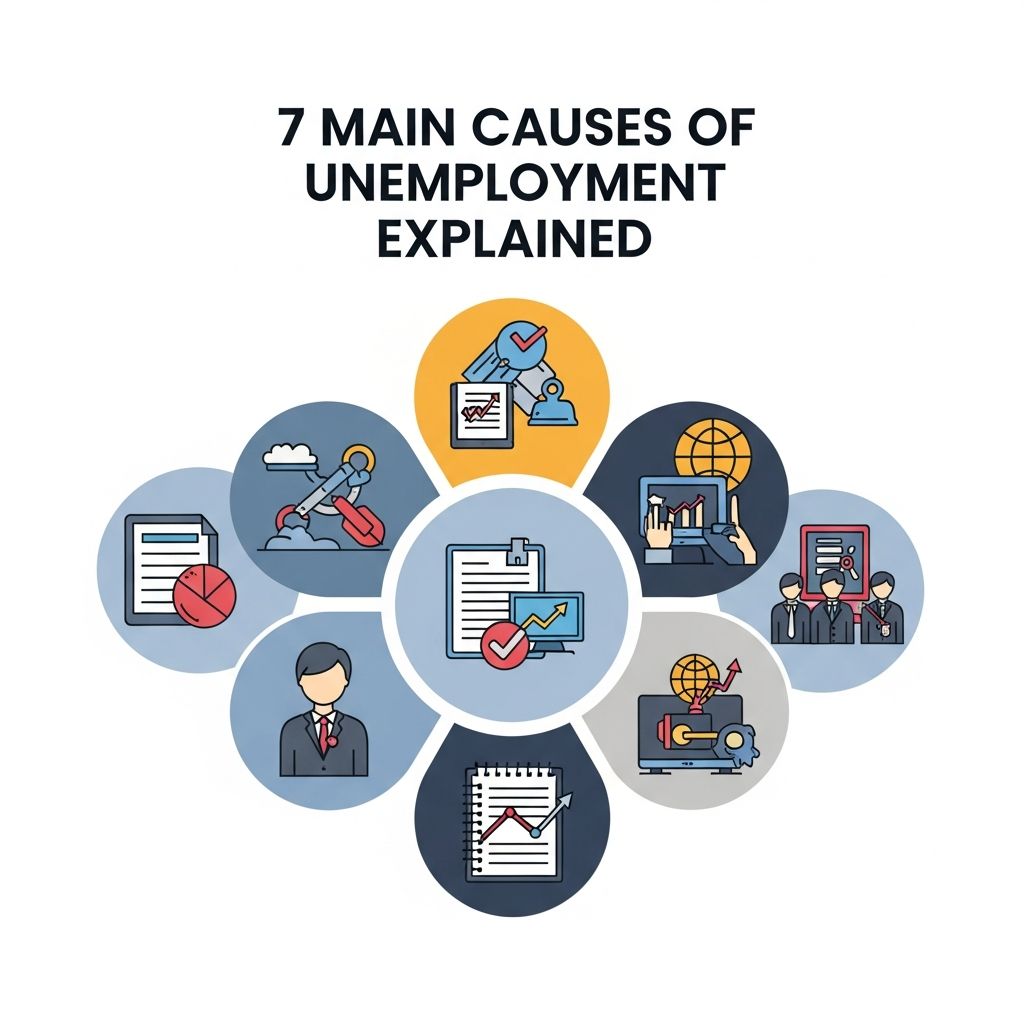
Understanding the Seven Main Causes of Unemployment
Unemployment remains one of the most challenging economic issues facing modern societies. When individuals actively seek employment but cannot find work, they contribute to the unemployment rate—a critical economic indicator that reflects the health of a nation’s labor market. Understanding the causes of unemployment is essential for policymakers, economists, and workers alike, as it helps identify potential solutions and informs economic policy decisions. The causes of unemployment are multifaceted and interconnected, ranging from broad economic cycles to individual circumstances and technological shifts.
Unemployment is not a monolithic problem with a single cause. Rather, it stems from various factors that operate at different levels of the economy, from macroeconomic forces to individual employment circumstances. Economists have identified multiple categories and causes that help explain why people lose their jobs or struggle to find employment. By examining these seven main causes, we can better understand the dynamics of labor markets and the challenges workers face.
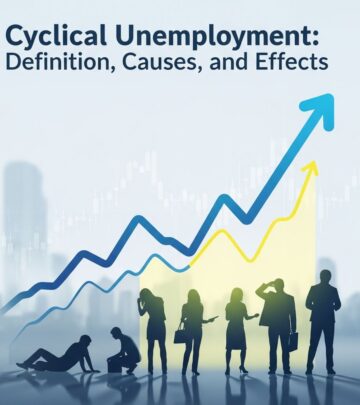
1. Cyclical Unemployment: The Impact of Economic Downturns
Cyclical unemployment represents one of the most significant causes of job losses and occurs during periods of economic contraction or recession. This type of unemployment is directly tied to the business cycle—the alternating periods of expansion and contraction that characterize modern economies. When an economy enters a recession, consumer demand for goods and services decreases, forcing businesses to reduce production and cut their workforces.
During economic downturns, companies face reduced revenues and profitability pressures, prompting them to lay off workers as a cost-cutting measure. The 2007-2009 financial crisis exemplifies this phenomenon dramatically, as unemployment in the United States peaked at approximately 10 percent in 2009 following the housing market collapse and subsequent recession. During such periods, entire industries may experience widespread layoffs simultaneously, affecting workers across geographies and skill levels.
The cyclical nature of this unemployment means it is theoretically temporary—as the economy recovers and demand rebounds, businesses rehire workers and unemployment rates decline. However, prolonged recessions can convert cyclical unemployment into structural unemployment when workers lose skills during extended joblessness or when industries fail to recover.
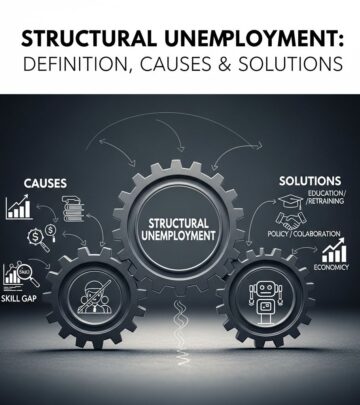
2. Structural Unemployment: Skills Mismatch and Geographic Barriers
Structural unemployment occurs when there is a fundamental mismatch between available jobs and the workers seeking employment. This can manifest in two primary ways: workers lack the specific skills required for available positions, or jobs are geographically distant from where workers reside and cannot easily relocate.
Technological advancement frequently creates structural unemployment as automation and digitalization eliminate certain job categories while simultaneously creating new roles requiring different skill sets. Workers in declining industries—such as traditional manufacturing—may find their expertise obsolete in the modern economy. For instance, factory workers displaced by automation or offshoring may struggle to transition into technology-focused or service-sector roles without significant retraining.
Geographic mismatches present another dimension of structural unemployment. A region may have abundant job opportunities, but local workers lack transportation, cannot afford housing, or face visa restrictions preventing relocation. Additionally, demographic shifts and industry consolidation can concentrate employment opportunities in specific regions while leaving others economically depressed, creating persistent unemployment in affected areas.
3. Frictional Unemployment: Normal Workforce Transitions
Frictional unemployment is the most benign and natural form of joblessness in a functioning labor market. It occurs when workers transition between jobs voluntarily, either seeking better compensation, improved working conditions, or positions that better match their skills and interests. This category also includes new entrants to the labor force, such as recent college graduates or individuals re-entering employment after career breaks.
Frictional unemployment exists in virtually every economy because job searching requires time and effort. Workers must identify suitable positions, submit applications, interview with employers, and negotiate terms. During this transition period, they are temporarily unemployed even though jobs may be available. The duration of frictional unemployment typically ranges from weeks to a few months, as workers ultimately secure positions matching their qualifications.
While frictional unemployment is inevitable and not inherently problematic, reducing search times through improved job matching mechanisms and labor market information can minimize its duration and prevalence. Online job boards, employment agencies, and career services have all contributed to reducing frictional unemployment in modern economies.
4. Technological Displacement and Automation
Rapid technological advancement represents an increasingly significant cause of unemployment in contemporary labor markets. Automation, artificial intelligence, and digitalization continuously displace workers from traditional roles while creating demand for new skills. Unlike cyclical unemployment that rebounds with economic recovery, technological displacement can create permanent job losses in specific sectors.
Historical technological revolutions—from mechanized agriculture to computerization of clerical work—demonstrate this pattern. Workers in roles vulnerable to automation, such as data entry, assembly line work, and routine customer service, face elevated unemployment risks. The transition to new employment often requires substantial retraining and education, which many displaced workers struggle to access or afford.
However, technology also creates new employment opportunities in emerging fields such as software development, renewable energy, and digital marketing. The challenge lies in ensuring that displaced workers can successfully transition into these new sectors and that educational systems adapt quickly enough to prepare workers for evolving labor market demands.
5. Education and Skills Deficiencies
Educational attainment and skills training significantly influence unemployment risk. Workers lacking adequate education or specialized skills face substantially higher unemployment rates compared to highly educated individuals. This relationship reflects both employer preferences for qualified candidates and the structural barriers facing undereducated workers in competitive labor markets.
A skills gap exists when employers demand competencies that the available workforce does not possess. This mismatch can persist even during periods of overall labor surplus, creating “hidden” unemployment among those lacking requisite qualifications. Advanced economies increasingly require workers to possess technical skills, digital literacy, and specialized certifications, yet educational systems often lag behind labor market demands.
Addressing skills deficiencies requires investment in vocational training, community colleges, and adult education programs that enable workers to acquire in-demand competencies. Early education, particularly in science, technology, engineering, and mathematics (STEM) fields, also plays a crucial preventive role in reducing future unemployment.
6. Globalization and International Competition
Globalization has fundamentally altered employment patterns by enabling companies to source labor globally, often relocating production to countries with lower labor costs. This trend has contributed to deindustrialization in developed economies and structural unemployment among manufacturing workers. Companies seeking competitive advantages may establish operations in emerging markets, reducing domestic employment even as global production increases.
International trade policies, including tariffs and trade agreements, also influence unemployment patterns. Trade deficits—where imports exceed exports—correlate with reduced domestic production and lower employment levels. Additionally, immigration policies affect labor supply and composition, potentially impacting employment opportunities for native-born workers, particularly those in lower-skill categories.
Globalization’s effects on unemployment are geographically concentrated, with specific communities experiencing severe impacts when major employers relocate operations. While globalization generates overall economic benefits through increased trade and consumer choice, adjustment costs fall heavily on displaced workers and affected communities who may struggle with persistent structural unemployment.
7. Demographic Changes and Labor Force Participation
Demographic trends significantly influence unemployment patterns and labor force participation rates. An aging population, particularly in developed nations, gradually removes workers from the active labor force through retirement. The United States has experienced a long-term decline in labor force participation since approximately 2000, coinciding with the retirement of the Baby Boomer generation.
Conversely, demographic shifts also affect unemployment through changes in youth participation and gender employment patterns. Declining participation rates among young adults—potentially due to extended education—and fluctuating female labor force participation rates both influence overall unemployment statistics and economic dynamics.
Immigration policy intersects with demographic factors, affecting the size and composition of the labor force. Immigration can address labor shortages in specific sectors and contribute to overall labor force growth, though it may also create localized competitive pressures in particular occupational categories and geographic regions.
Secondary Factors Contributing to Unemployment
Government Policy and Regulation: Regulatory environments, minimum wage policies, unemployment insurance provisions, and labor laws all influence hiring decisions and unemployment rates. Excessively restrictive regulations may discourage hiring, while inadequate safety nets can intensify hardship for unemployed workers.
Industry Consolidation: When industries consolidate through mergers and acquisitions, competitive pressures often lead to workforce reductions. Consolidated companies may eliminate redundant positions, close facilities, and centralize operations, resulting in localized unemployment spikes.
Social and Community Factors: Research indicates that incarceration, mental health challenges, and racial discrimination all correlate with elevated unemployment risks. These factors demonstrate that unemployment is not purely an economic phenomenon but reflects broader social dynamics and systemic inequalities.
Types of Unemployment Comparison
| Unemployment Type | Primary Cause | Duration | Economic Cycle | Mitigation Strategy |
|---|---|---|---|---|
| Cyclical | Economic recession and reduced demand | Variable; ends with recovery | Tied to business cycle | Monetary and fiscal stimulus |
| Structural | Skills mismatch or geographic barriers | Long-term; persistent | Exists across cycles | Retraining and relocation assistance |
| Frictional | Normal job transitions | Short-term; weeks to months | Natural rate component | Improved job market information |
| Technology-Driven | Automation and skill obsolescence | Medium to long-term | Ongoing trend | Education and skills development |
Frequently Asked Questions About Unemployment
Q: What is the difference between cyclical and structural unemployment?
A: Cyclical unemployment results from economic downturns and recessions, typically resolving as the economy recovers. Structural unemployment stems from fundamental mismatches between available jobs and workers’ skills or locations, persisting even during economic expansion. Structural unemployment generally requires intervention through retraining or relocation assistance.
Q: How does technological advancement cause unemployment?
A: Technology automates routine tasks, eliminating certain job categories while creating demand for new skills. Workers in vulnerable occupations may face permanent displacement if they cannot successfully transition to emerging fields. However, technology also generates new employment opportunities in developing sectors, though transitions often require substantial retraining.
Q: Is frictional unemployment a problem?
A: Frictional unemployment is a normal, inevitable aspect of functioning labor markets and reflects the time required for job matching. While some frictional unemployment is healthy and necessary, excessive levels may indicate inefficient labor markets with poor information flow or matching mechanisms.
Q: What can workers do to reduce unemployment risk?
A: Workers can enhance employment prospects by pursuing relevant education and skills training, particularly in high-demand fields. Maintaining current technical skills, developing soft skills like communication and leadership, and building professional networks all contribute to reduced unemployment risk and improved career resilience.
Q: How do demographic changes affect unemployment?
A: Demographic shifts, including aging populations and changing labor force participation rates, influence overall unemployment levels and labor market dynamics. An aging population may reduce labor force growth, while changing youth and female participation rates alter employment patterns and unemployment statistics.
Q: Can government policies reduce unemployment?
A: Yes, government policies significantly influence unemployment through fiscal stimulus during recessions, educational investments, unemployment insurance programs, and labor market regulations. However, policy effectiveness varies depending on unemployment type—cyclical unemployment responds well to stimulus, while structural unemployment requires targeted interventions like retraining programs.
Conclusion
Unemployment results from multiple interconnected causes operating simultaneously within labor markets. Understanding these seven primary causes—cyclical fluctuations, structural mismatches, frictional transitions, technological displacement, educational deficiencies, globalization effects, and demographic changes—provides essential insight into labor market dynamics. While some unemployment is inevitable and even beneficial for labor market functioning, excessive unemployment creates substantial hardship for workers and their families while reducing overall economic growth. Addressing unemployment effectively requires comprehensive approaches acknowledging its multifaceted nature, combining macroeconomic policy to manage cyclical unemployment with targeted interventions addressing structural barriers and worker skill development. By recognizing and responding to unemployment’s diverse causes, economies can work toward minimizing joblessness while promoting sustainable growth and improving living standards for all workers.
References
- Causes of unemployment in the United States — Wikipedia. 2024. https://en.wikipedia.org/wiki/Causes_of_unemployment_in_the_United_States
- Unemployment: Definition, Types, and Causes of Unemployment — Corporate Finance Institute. 2024. https://corporatefinanceinstitute.com/resources/economics/unemployment/
- United States Unemployment: History, Causes & Consequences — Debt.org. 2024. https://www.debt.org/jobs/unemployment/united-states/
- Unemployment: Its Measurement and Types — Reserve Bank of Australia Education. 2024. https://www.rba.gov.au/education/resources/explainers/unemployment-its-measurement-and-types.html
- Making Sense of Unemployment Data — St. Louis Federal Reserve. 2016. https://www.stlouisfed.org/publications/page-one-economics/2016/02/01/making-sense-of-unemployment-data
Similar Articles








Read full bio of Sneha Tete