Cashing Business Checks: Complete Guide For Businesses
Master the process of cashing business checks with essential steps, required documents, legal rules, and smart strategies for quick access to funds.

Business checks represent vital payments for services rendered or goods supplied, yet converting them into usable cash can present unique hurdles for company owners. Unlike personal checks, those issued to businesses demand specific verification to safeguard against fraud. This guide explores proven methods to transform these checks into immediate cash, covering everything from basic endorsements to navigating regulatory landscapes.
Understanding Business Check Basics
A business check is typically drawn from a corporate account and payable to another entity, such as your company name or DBA. These instruments require careful handling because financial institutions prioritize security. The payee line must precisely match your legal business identity to prevent rejection. Factors like business structure—whether sole proprietorship, partnership, LLC, or corporation—directly influence the cashing process. Sole owners often enjoy streamlined access, while structured entities face added scrutiny.
Key distinctions arise from legal entity types. For instance, sole proprietorships treat the owner and business as one, simplifying transactions. In contrast, LLCs or corporations necessitate proof of authority, ensuring only designated representatives act on behalf of the entity. Recognizing these nuances upfront prevents wasted trips to banks or services.
Essential Steps for Successful Cashing
The journey begins with proper preparation. Follow these structured steps to maximize efficiency:
- Inspect the Check: Verify the amount, date, payee name, and issuing bank’s routing details. Look for alterations or post-dated issues, which could lead to refusal.
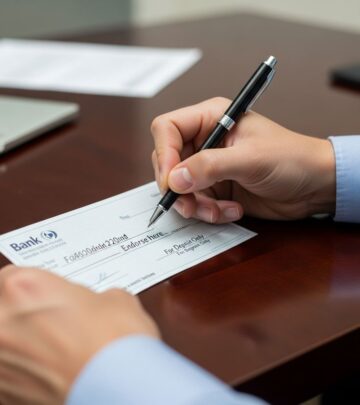
- Endorse Correctly: Sign the back with your business name, your title (e.g., ‘Owner’ or ‘Authorized Signer’), and personal signature. For businesses, full endorsement like ‘Your Business Inc. by John Doe, Manager’ is standard.
- Gather Documentation: Assemble ID and business proofs before heading out.
- Select Venue: Choose between your bank, the issuer’s bank, or specialized check-cashing outlets.
- Complete Verification: Present everything for review, then receive funds upon approval.
This sequence minimizes delays, often yielding same-day cash at compliant locations.
Required Documentation Breakdown
Financial venues universally demand verification to mitigate risk. Core items include:
| Document Type | Purpose | Common Examples |
|---|---|---|
| Government-Issued ID | Confirms identity | Driver’s license, passport, state ID |
| Business Proof | Validates entity and authority | Articles of incorporation, EIN letter, partnership agreement |
| Authorization Evidence | Authorizes individual | Corporate resolution, operating agreement |
| Tax ID | Links to business | EIN confirmation from IRS |
Sole proprietors might bypass extensive paperwork, relying mainly on personal ID since no separation exists between individual and business. Larger entities, however, must furnish registration docs to affirm legitimacy. Fees apply at non-bank services, typically 1-5% of check value, but offer immediacy absent from deposits.
Primary Options for Cashing Business Checks
Several avenues exist, each with pros and cons:
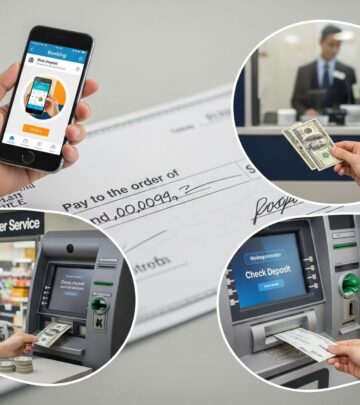
- Your Business Bank: Ideal if you maintain an account. Deposits clear in 1-5 days; full cashing rarer without sufficient balance. Requires account matching payee.
- Issuing Bank: Approach the check writer’s bank. They may cash for non-customers with robust ID, but policies vary and fees possible.
- Check-Cashing Stores: Specialized outlets like currency exchanges process quickly. Bring docs for verification; get cash instantly post-fee. Best for urgent needs.
- Retailers or Payroll Services: Some grocery chains or apps cash small business checks, but limits and fees apply.
Banks often prefer deposits over cashing to control liquidity, pushing alternatives for speed.
Navigating Bank Policies and Common Roadblocks
Banks scrutinize business checks rigorously. Mismatches in payee names, absent endorsements, or unverified authority trigger denials. Sole proprietors fare better, yet even they encounter holds if account history lacks funds. Corporations and LLCs must present formation docs; partnerships need agreements naming signers.
To sidestep issues:
- Deposit instead if cash unnecessary—funds available faster via ACH.
- Maintain active business account with history to build trust.
- Request reissue as ACH transfer or wire for high-value payments.
Persistent refusals signal need for dedicated business banking.
Federal Regulations and Compliance Essentials
U.S. laws under the Bank Secrecy Act (BSA) govern check cashing to combat money laundering. Check cashers qualify as Money Services Businesses (MSBs) if handling checks over $1,000 daily, mandating FinCEN registration via Form 107 within 180 days.
Critical rules include:
- CTR Filing: Mandatory for cash transactions exceeding $10,000 in one day. Partial cash plus instruments (e.g., money orders) under $10,000 evades CTR if not structured to avoid reporting.
- SAR Filing: Required for suspicious activity over $2,000, regardless of cash amount.
- Recordkeeping: Retain IDs, endorsements, and docs for 5 years; MSBs maintain CTR copies and agent lists.
- AML Programs: Written anti-money laundering policies with independent reviews.
Violations invite penalties; businesses should inquire about venue compliance to avoid flagged transactions.
Strategies Tailored to Business Structures
Sole Proprietorships
Simplest path: Personal ID suffices at most spots. Banks treat as individual transactions, enabling quick cashing.
Partnerships and LLCs
Present agreement or operating docs naming you. EIN verifies entity; mismatches halt process.
Corporations
Articles of incorporation, bylaws, and board resolutions prove authority. Heavier scrutiny demands preparation.
Across types, proactive documentation streamlines access.
Fees, Risks, and Cost-Saving Tips
Expect 1-4% fees at non-banks, scaling with amount. Banks waive for account holders but impose holds. Risks encompass fraud holds, bounces (rare with verification), and regulatory flags.
Minimize costs by:
- Building bank relationships for fee-free options.
- Opting for electronic payments proactively.
- Comparing service rates locally.
Frequently Asked Questions
Can anyone cash a business check?
No, only authorized personnel with matching ID and docs. Banks verify against account or registration.
Why won’t my bank cash my business check?
Commonly due to policy limits, verification gaps, or deposit preferences. Alternatives resolve this.
How long for a business check to clear?
Deposits take 1-5 business days; cashing instant at services post-verification.
Do I need a business account?
Not always for cashing, but helpful. Sole proprietors use personal; entities need proofs.
What if the check is large, over $10,000?
Triggers CTR; prepare for reporting. Split payments risk structuring charges.
Best Practices for Seamless Transactions
Proactive steps ensure reliability: Update docs annually, foster bank ties, diversify payment methods, and monitor regulatory shifts. Digital tools like mobile deposits suit low-value checks, reserving cashing for urgency.
For high-volume operations, consider in-house policies mirroring MSB standards to internalize processes securely.
References
- How Does A Business Cash A Check Issued By Another Business — Order Express. Accessed 2026. https://www.orderexpress.com/how-does-a-business-cash-a-check-issued-by-another-business/
- Check Cashing Laws and Regulation — National Check Cashers Association. Accessed 2026. https://www.natcnc.com/msb/check-cashing-laws-regulation/
- Cashing a Business Check for Your Small Business — My Currency Exchange. Accessed 2026. https://mycurrencyexchange.com/cashing-a-business-check-for-your-small-business/
- Guidance on Definition of Check Casher and BSA Requirements — FinCEN (U.S. Department of Treasury). Accessed 2026. https://www.fincen.gov/resources/statutes-regulations/guidance/guidance-definition-check-casher-and-bsa-requirements
- How to Cash a Business Check — Experian. Accessed 2026. https://www.experian.com/blogs/ask-experian/how-to-cash-a-business-check/
- Opening Procedures for Check Cashing Businesses — National Check Cashers Association. Accessed 2026. https://www.natcnc.com/msb/opening-procedures-check-cashing-businesses/
- ITG FAQ 4 Answer – What are the recordkeeping requirements for check cashers? — IRS (U.S. Department of Treasury). Accessed 2026. https://www.irs.gov/government-entities/indian-tribal-governments/itg-faq-4-answer-what-are-the-recordkeeping-requirements-for-check-cashers
Similar Articles








Read full bio of Sneha Tete