Cash-Out Refi vs. Home Equity Loan: Best Choice?
Unlock your home equity wisely: Compare cash-out refinance and home equity loans to find the smartest borrowing option for your needs.

Homeowners often seek ways to access built-up equity for major expenses like renovations, debt consolidation, or education costs. Two popular methods stand out: cash-out refinancing and home equity loans. Each offers distinct advantages in terms of interest rates, repayment structures, and overall costs, making the choice dependent on individual financial situations, market conditions, and long-term plans.
Understanding Cash-Out Refinancing
A
cash-out refinance
involves replacing your existing mortgage with a larger loan. The difference between the new loan amount and your current mortgage balance provides cash at closing. This process resets your primary mortgage terms, potentially securing a lower interest rate while accessing funds.For instance, if your home appraises at $400,000 with a $200,000 mortgage balance, refinancing for $280,000 yields about $80,000 cash after payoff, minus fees. Lenders typically cap borrowing at 80% of home value for conventional loans, requiring you to retain 20% equity. Veterans Affairs loans may allow up to 100% loan-to-value.
Key benefits include fixed or adjustable rates akin to purchase mortgages, often lower than secondary loans. Funds are versatile—tax-free for any use, though interest deductibility applies mainly if used for home improvements. Closing costs range from 2-6% of the loan, including appraisals and origination fees. Monthly payments may rise due to the larger principal, but terms up to 30 years can ease this.
Decoding Home Equity Loans
A
home equity loan
, known as a second mortgage, sits atop your primary mortgage. It delivers a lump-sum payment secured by your home’s equity, with fixed rates and predictable payments.Borrowers usually access up to 80-85% of home value minus existing debts, maintaining 15-20% equity. Credit minimums hover at 640, slightly higher than refinances’ 620. Interest rates exceed primary mortgages by 2-3%, reflecting junior lien status.
Closing costs are lower, 1-5% of the loan, often without full underwriting. You manage two payments: the original mortgage plus the new fixed installment. This suits those avoiding primary loan disruption. Tax deductions may apply if funds improve the home.
Core Differences: A Side-by-Side Analysis
While both tap equity with home collateral, their mechanics diverge significantly. Cash-out refinances consolidate into one loan; home equity loans add a second.
| Feature | Cash-Out Refinance | Home Equity Loan |
|---|---|---|
| Loan Type | First mortgage (replaces existing) | Second mortgage (additional) |
| Interest Rates | Comparable to purchase loans (e.g., 6.16% on 15-year) | 2-3% higher than primary rates |
| Payments | One monthly payment | Two monthly payments |
| Closing Costs | 2-6% of loan amount | 1-5% of loan amount |
| Equity Requirement | 20% post-loan (80% LTV) | 15-20% post-loan (80-85% LTV) |
| Credit Score Min | 620 | 640 |
| DTI Max | 43% | 43% |
Data synthesized from lender guidelines. Rates fluctuate; current averages favor refinances for cost savings over time.
Financial Scenarios: Which Fits Best?
Scenario 1: Home Renovation Project
Consider a $75,000 kitchen upgrade. With a $200,000 balance on a 4% 30-year mortgage ($1,552/month P&I), a cash-out refi to $275,000 at prevailing rates combines debt into one payment, potentially lowering overall interest if rates dropped. A home equity loan adds fixed payments atop the original, ideal if rates haven’t fallen.
Scenario 2: Debt Consolidation
High-interest credit cards at 20% APR? Cash-out refi replaces them with mortgage rates ~6%, slashing interest. One payment simplifies budgeting. Home equity loans work similarly but carry higher rates and dual payments.
Scenario 3: Short-Term Plans
Planning to sell soon? Avoid refi closing costs (unrecoupable short-term). Home equity loans’ lower fees and quick funding (3 days post-closing) suit transient needs.
Costs and Long-Term Impacts
Over 24 months, a $150,000 15-year cash-out refi at 6.16% with $2,400 fees totals ~$33,091; extending to 120 months reaches $155,855. Home equity loans may cost more due to elevated rates despite cheaper setup.
Both risk foreclosure on default. Refinances extend terms, potentially increasing total interest. Second loans amplify payment shock if rates rise elsewhere.
Pros and Cons Breakdown
- Cash-Out Refinance Pros: Lower rates, single payment, new terms, rate reduction opportunity.
- Cash-Out Refinance Cons: Higher closing costs, reset clock on equity buildup, payment increases.
- Home Equity Loan Pros: Fixed rates/payments, lower upfront costs, preserves original mortgage rate.
- Home Equity Loan Cons: Two payments, higher rates, additional lien risk.
Eligibility Essentials
Both demand strong credit (620+), debt-to-income under 43%, and ample equity. Appraisals verify value; income stability counts. VA borrowers enjoy lenient LTV. Shop multiple lenders for best terms.
Alternatives to Consider
Don’t overlook
HELOCs
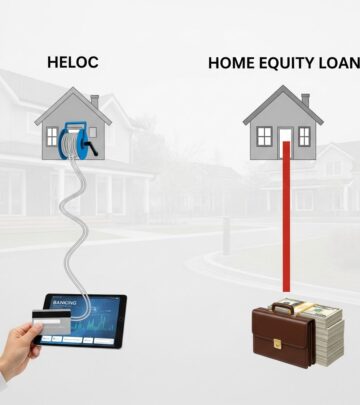
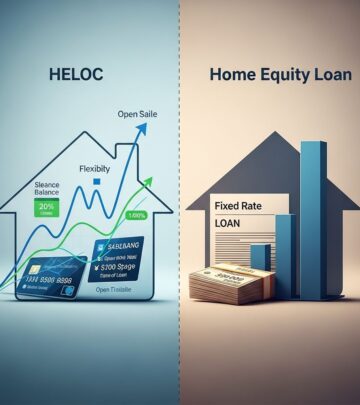
: Revolving credit with variable rates, low/no closing costs, draw-as-needed flexibility. Ideal for ongoing projects, but rate volatility poses risks. Personal loans offer unsecured speed but sky-high rates.Factors Influencing Your Decision
- Current Rates: If below your mortgage, refi shines.
- Equity Level: High equity favors loans; low pushes refi.
- Timeline: Long-term stay? Refi. Short? Second loan.
- Risk Tolerance: Fixed preferences lean loan; consolidation favors refi.
Frequently Asked Questions
Can I use funds for anything?
Yes, both provide flexible, tax-free cash, though home-related uses maximize deductions.
Which has lower payments?
Refinances often lower total interest via one payment; loans add a second.
How soon do I get money?
Loans: 3 days post-closing. Refis: At closing after processing.
Impact on credit?
Both inquiries ding scores temporarily; new debt raises utilization.
Best for bad credit?
FHA/VA options for refis; loans stricter.
Making the Smart Choice
Evaluate rates, costs, and goals. Use calculators to model payments. Consult advisors for personalized math. In rising rate environments, loans preserve low original mortgages; falling rates amplify refi appeal.
References
- Cash-out refinance vs. home equity loan — Rocket Mortgage. 2023. https://www.rocketmortgage.com/learn/cash-out-refinance-vs-home-equity-loan
- Cash-Out Refinances Vs. Home Equity Loans — Bankrate. 2023. https://www.bankrate.com/home-equity/refinance-vs-home-equity-loans/
- Cash Out Refinance vs Home Equity Loan — Salem Five Bank. 2023. https://www.salemfive.com/education-center/homeownership-article-index/article-cash-out-refinancing-or-a-home-equity-loan/
- Cash Out Refinance vs. HELOC: Key Differences — Freedom Mortgage. 2023. https://www.freedommortgage.com/learn/refinancing/cash-out-or-heloc
- Cash-out refinance vs. home equity loans — U.S. Bank. 2023. https://www.usbank.com/home-loans/home-equity/home-equity-loan-vs-refinance.html
Similar Articles








Read full bio of Sneha Tete