Cash or Loan: Best Way to Buy a Car?
Discover the financial trade-offs of paying cash versus financing a car purchase to make the smartest choice for your budget and goals.
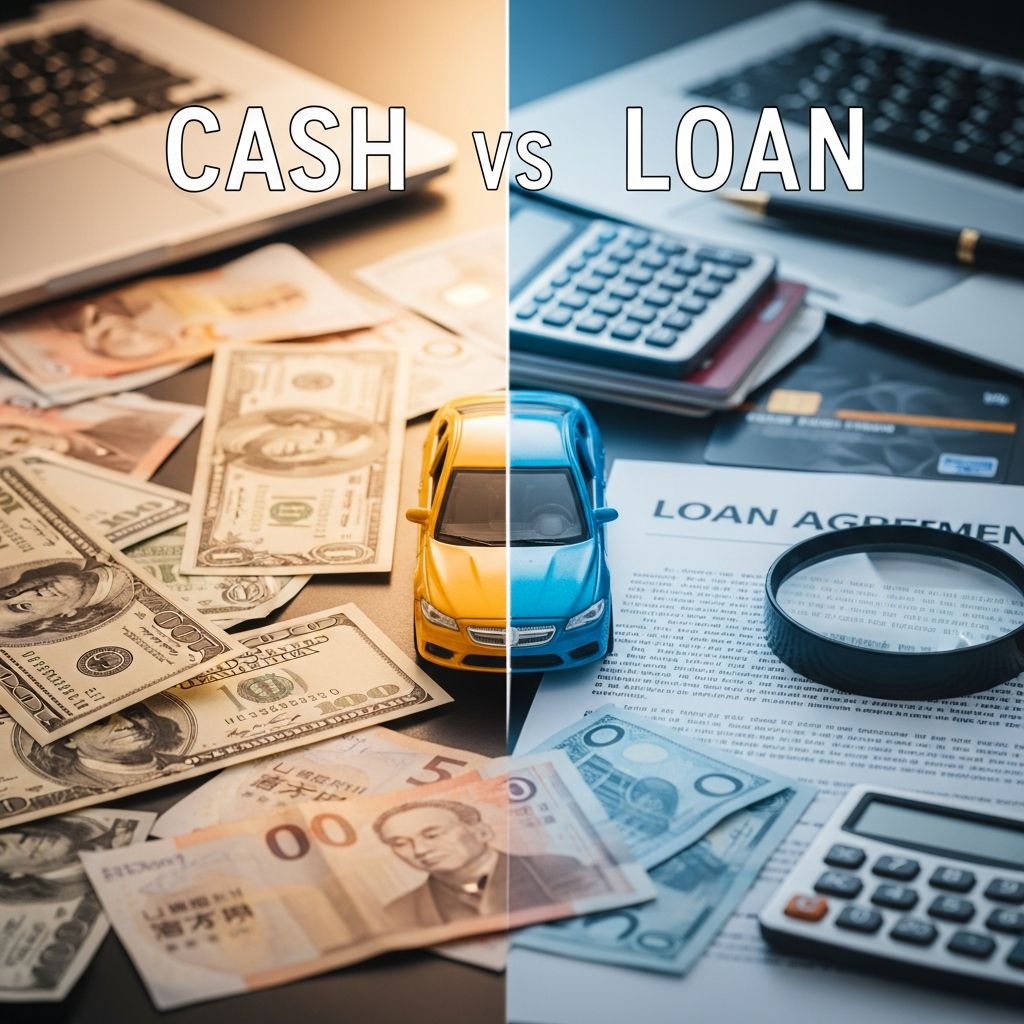
Deciding how to pay for a new or used vehicle involves balancing immediate costs against long-term financial health. Paying upfront eliminates debt but depletes savings, while financing spreads payments but adds interest. This guide breaks down the options to help you choose wisely.
Understanding Your Payment Options
Vehicle purchases rank among the largest expenses for most households. Cash payment means handing over the full amount at purchase, granting instant ownership without ongoing obligations. Financing, however, uses a loan repaid in installments, often with interest.
Cash appeals to those prioritizing debt avoidance, while loans suit budgets needing flexibility. Factors like interest rates, savings yield, and credit needs tip the scales.
Benefits of Paying Cash Upfront
Opting for cash offers clear advantages in cost control and simplicity.
- Zero Interest Costs: Skip loan interest entirely, which can exceed thousands on typical loans. A $40,000 loan at 6% over five years adds about $6,400 in interest.
- Immediate Ownership: Drive away owning the vehicle fully, free from liens or repossession risks.
- Stronger Bargaining Position: Dealers often provide discounts to cash buyers, avoiding their financing fees.
- Budget Discipline: Limits spending to available funds, curbing impulse buys.
These perks shine for buyers with ample savings seeking hassle-free ownership.
Drawbacks of Draining Savings for a Car
While appealing, cash payments carry risks to liquidity and growth potential.
- Reduced Emergency Funds: Tying up cash leaves less for unexpected needs, heightening vulnerability.
- Lost Investment Returns: Money in a car earns no interest; savings accounts or investments might yield more than loan rates.
- Narrower Vehicle Choices: Limited cash may force settling for older models with higher repair risks.
- No Credit Improvement: Misses chance to build payment history, vital for FICO scores.
Evaluate if forgoing these could strain future finances.
Advantages of Financing Your Vehicle
Loans provide tools for smarter money management when used strategically.
- Preserve Liquidity: Keep savings intact for investments or emergencies while paying gradually.
- Credit Score Boost: On-time payments improve history (35% of FICO) and mix (10%).
- Access Better Deals: Qualify for manufacturer low-APR or 0% offers, sometimes with rebates.
- Manageable Payments: Spread costs over time fitting monthly budgets.
Ideal for those with strong credit securing favorable terms.
Downsides of Taking an Auto Loan
Financing introduces extra expenses and commitments.
- Interest Accumulation: Raises total cost; even low rates add up over terms.
- Full Coverage Insurance Mandate: Lenders require comprehensive policies, hiking premiums.
- Ongoing Debt Burden: Monthly payments strain cash flow if income dips.
- Fees and Penalties: Origination fees (1-2%) and prepayment restrictions possible.
Weigh these against benefits carefully.
Financial Calculations: Cash vs. Financing
Run numbers to compare. If savings interest beats after-tax loan cost, cash wins; otherwise, finance.
| Scenario | Cash Total | Finance Total (5yr, 6% APR) | Net Difference |
|---|---|---|---|
| $30,000 Car | $30,000 | $34,500 | Cash saves $4,500 |
| $40,000 Car | $40,000 | $46,400 | Cash saves $6,400 |
| With 4% Savings Yield | $32,500 (after 5yr) | $46,400 | Finance if investing |
Assumptions: No discounts/fees. Adjust for real rates.
When Cash Makes the Most Sense
Choose cash if:
- Sufficient emergency fund remains post-purchase.
- High loan rates exceed savings returns.
- Seeking used cars with negotiation leverage.
- Avoiding debt aligns with goals.
Perfect for conservative savers.
Ideal Scenarios for Financing
Finance when:
- Low rates (under 4%) available.
- Need credit building or diverse history.
- Opportunity cost high from investments.
- Manufacturer incentives apply.
Best for growth-oriented buyers.
Hybrid Strategies to Optimize Costs
Blend approaches:
- Large down payment reduces loan size/interest.
- Take promotional loan, pay off early (check penalties).
- Finance to capture rebates, invest savings.
- Save aggressively first, buy cash later.
These maximize upsides.
Impact on Insurance and Ownership
Cash buyers select minimum state insurance, cutting premiums. Financed vehicles demand full coverage until paid off, adding 20-50% to costs.
Ownership differs: Cash = title immediately; loans hold lien until cleared.
Tax and Incentive Considerations
Loans may qualify for tax deductions if business use. Cash misses financing rebates. Check 2026 promotions.
Frequently Asked Questions
Is paying cash always cheaper?
Not if loan rates low and savings earn more. Calculate opportunity cost.
Does financing hurt credit?
No, on-time payments help; hard inquiry temporary dip.
Can I pay off a loan early?
Often yes, but verify prepayment fees.
What if I lack cash but good credit?
Finance selectively for best rates.
How much to save before cash buy?
3-6 months expenses minimum post-purchase.
Steps to Decide Your Best Path
- Assess savings, income, credit score.
- Research rates, incentives.
- Project totals with calculators.
- Consider lifestyle, goals.
- Negotiate price first, reveal payment last.
Align choice with overall finances for regret-free purchase.
References
- Paying Cash for a Car: Pros, Cons, and Considerations — Farris Motor. 2023. https://farrismotor.com/blog/paying-cash-for-a-car
- Should I Pay Cash for a Car? — Experian. 2024-03-15. https://www.experian.com/blogs/ask-experian/should-i-finance-or-pay-cash-for-a-car/
- Should I finance or pay cash for a vehicle? — myFICO. 2025. https://www.myfico.com/credit-education/financial-calculators/vehicle-financing-vs-paying-cash
- Paying Cash for a Car in 2026: Consider the Pros and Cons — Kelley Blue Book. 2026-01-10. https://www.kbb.com/car-advice/should-i-pay-cash-for-a-new-or-used-car/
- When to Pay Cash or Finance — Five Star Bank. 2024. https://www.five-starbank.com/resources/when-to-pay-cash-or-finance
- Cash for a Car vs. Car Financing Calculator — Allstate. 2025. https://www.allstate.com/resources/car-insurance/financing-vs-cash-calculator
Similar Articles








Read full bio of Sneha Tete