Cash on Balance Sheets: Liquidity Essentials
Discover why cash tops the balance sheet and how mastering cash flow insights empowers smarter financial decisions for investors and businesses alike.

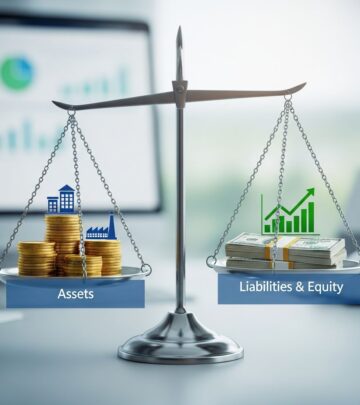
Cash represents the most immediately accessible asset on a company’s balance sheet, positioned at the top of current assets due to its unmatched liquidity. This positioning reflects its role in meeting short-term obligations without conversion delays.
The Fundamental Role of Cash in Financial Reporting
In accounting, cash encompasses physical currency, demand deposits, and other forms readily usable for transactions. It forms the cornerstone of liquidity assessment, signaling a business’s capacity to handle daily operations and unexpected demands. Balance sheets list cash first among assets because it requires no transformation to spend, unlike inventory or receivables.
Understanding cash goes beyond mere numbers; it reveals operational efficiency. For instance, ample cash indicates robust short-term solvency, while persistent low balances may signal cash flow strains. Investors scrutinize this metric to gauge resilience against economic shifts.
Defining Cash and Cash Equivalents Precisely
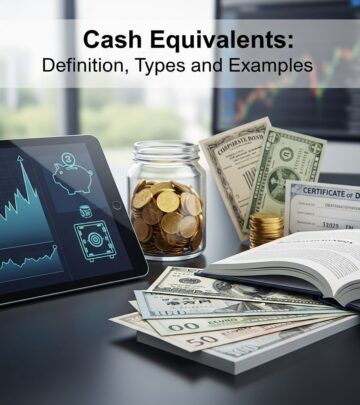
Cash equivalents extend the definition to include short-term, highly liquid investments convertible to known cash amounts within 90 days, with minimal value fluctuation risk due to interest rate changes. U.S. GAAP specifies these as assets near maturity, ensuring stability.
- Physical cash: Bills, coins, and petty cash funds for minor expenses.
- Bank balances: Checking and savings accounts accessible on demand.
- Cash equivalents: Treasury bills, commercial paper, and money market funds maturing soon.
These components aggregate into a single balance sheet line item under current assets, emphasizing their quick usability for debt payments or investments.
How Cash Integrates Across Financial Statements
Cash influences all major statements but stars in the balance sheet and cash flow statement. On the balance sheet, it offsets liabilities, contributing to working capital calculations. The cash flow statement then details inflows and outflows across operating, investing, and financing activities, reconciling period-end balances.
| Financial Statement | Cash’s Role | Key Insight |
|---|---|---|
| Balance Sheet | Top current asset | Liquidity snapshot |
| Income Statement (Cash Basis) | Records revenue/expenses on payment | Simplifies tracking but misses accruals |
| Cash Flow Statement | Tracks movements by category | Reveals true cash generation |
Under cash basis accounting, transactions record only upon cash exchange, simplifying entries but potentially distorting long-term performance views.
Cash Basis vs. Accrual Accounting: A Core Distinction
Cash basis recognizes revenues when received and expenses when paid, ideal for small operations due to its straightforwardness. Accrual basis, however, matches revenues to earnings and expenses to incurrence, offering a fuller profitability picture regardless of payment timing.
For example, a service delivered in December but paid in January appears in January under cash basis, delaying recognition. This method suits internal management for quick liquidity checks but falls short for external reporting requiring accrual standards.
| Aspect | Cash Basis | Accrual Basis |
|---|---|---|
| Transaction Timing | Cash exchanged | Earned/incurred |
| Balance Sheet Impact | Only paid liabilities/assets | Includes receivables/payables |
| Complexity | Low | High |
| Suitability | Small businesses | Large/public companies |
Businesses must align method with size, regulations, and stakeholder needs; accrual dominates for GAAP compliance.
Why Scrutinize Cash Flow Beyond Balance Sheet Figures
A robust cash balance alone misleads without cash flow context. Positive net income might mask cash burns from heavy investing, while operating cash flow positivity signals sustainable operations. Analyzing trends helps predict solvency.
- Operating cash flow: Core business cash generation.
- Investing cash flow: Asset acquisitions/disposals.
- Financing cash flow: Debt/equity movements.
Reconciliations between net income and operating cash expose non-cash items like depreciation, vital for valuation.
Practical Strategies for Optimizing Cash Positions
Maintaining ideal cash balances balances liquidity with returns. Excess cash idles unproductively, while shortages risk crises. Tools like cash flow forecasting project needs, enabling timely adjustments.
Key tactics include:
- Accelerating receivables via discounts.
- Negotiating extended payables.
- Investing surpluses in equivalents.
- Regular bank reconciliations.
For investors, compare cash ratios across peers; higher ratios denote conservative management, potentially lower returns.
Restricted Cash and Reporting Nuances
Not all cash is unrestricted. Restricted portions, like debt-collateralized funds, appear separately but factor into cash flow statements’ starting/ending balances. Entities must disclose and reconcile these for transparency.
For mortgage servicers holding borrower payments, control determines classification: as cash if managed internally, or restricted otherwise.
Investor Perspectives: Decoding Cash Metrics
Analysts prioritize cash for its predictive power. Metrics like the current ratio (current assets/liabilities) and quick ratio (excluding inventory) highlight liquidity. Trends in free cash flow—operating cash minus capex—gauge growth funding without dilution.
In volatile markets, firms with strong cash buffers weather downturns better, as evidenced by 2020-2022 resilience patterns.
Common Pitfalls in Cash Management
Overreliance on accrual profits ignores cash realities, leading to shortfalls. Neglecting equivalents risks suboptimal yields. Failing to segregate restricted cash obscures true availability.
Seasonal businesses must forecast peaks; ignoring this invites overdrafts.
FAQs: Cash on Balance Sheets and Cash Flow
What exactly counts as cash on a balance sheet?
Cash includes currency, bank deposits, and petty cash. Equivalents add short-term instruments like T-bills convertible within 90 days.
Why is cash listed first under assets?
Its supreme liquidity—usable immediately without conversion—prioritizes it atop the balance sheet.
How does cash basis accounting differ from accrual?
Cash basis records on payment/receipt; accrual on earning/incurring, better for matching but complex.
What’s the link between balance sheet cash and cash flow statements?
Cash flow reconciles changes, categorizing sources/uses for liquidity insights.
Can restricted cash be included in main cash balances?
Disclosed separately on balance sheets but reconciled in cash flow totals.
Why monitor cash flow even with high balance sheet cash?
Reveals sustainability; high cash might stem from one-off financing, not operations.
Advanced Analysis: Ratios and Benchmarks
Leverage ratios like cash ratio (cash + equivalents / current liabilities) assess immediate coverage. Benchmarks vary by industry: tech firms hold more for agility, manufacturers less.
Free cash flow yield (FCF / market cap) attracts value investors seeking undervalued cash generators.
In summary, cash on the balance sheet anchors liquidity evaluations, but pairing it with cash flow dynamics unveils comprehensive health. Investors and managers who master these interconnections make superior decisions.
References
- What is Cash Basis Accounting? (A Complete Guide) — HighRadius. 2024. https://www.highradius.com/resources/Blog/cash-basis-accounting/
- What is cash? Definition, types, and accounting use in 2026 — QuickBooks Intuit. 2026. https://quickbooks.intuit.com/r/accounting/cash/
- What is cash – BDC — BDC. 2024. https://www.bdc.ca/en/articles-tools/entrepreneur-toolkit/templates-business-guides/glossary/cash
- Cash and cash equivalents (CCE): Definition; Types & How It Works — Bill.com. 2024. https://www.bill.com/learning/cash-and-cash-equivalents
- Cash and Cash Equivalents | Definition + Examples — Wall Street Prep. 2024. https://www.wallstreetprep.com/knowledge/cash-equivalents/
- 4.1 Definition of Cash and Cash Equivalents — Deloitte DART. 2024. https://dart.deloitte.com/USDART/home/codification/presentation/asc230-10/roadmap-statement-cash-flow/chapter-4-cash-cash-equivalents/4-1-definition-cash-cash-equivalents
- How re:cap ensures your ideal cash balance — re:cap. 2024. https://www.re-cap.com/blog/cash-balance
Similar Articles








Read full bio of Sneha Tete