Cash Conversion Cycle: Formula, Calculation & Optimization
Complete guide to feline pancreatitis: recognize symptoms, understand causes, and explore effective treatment options.
Understanding the Cash Conversion Cycle
The cash conversion cycle (CCC), also known as the cash cycle or operating cycle, is a fundamental financial metric that measures the length of time it takes a company to convert its cash investments in inventory back into cash through the sale of products and collection of customer payments. This metric is essential for business managers, investors, and financial analysts seeking to understand how efficiently a company manages its working capital and operational cash flows.
At its core, the cash conversion cycle represents the journey money takes through a business. A company purchases inventory, holds it for a period, sells it to customers (often on credit), collects payment from those customers, and finally pays its suppliers. Understanding this cycle helps organizations identify inefficiencies and opportunities for improvement in their operations.
The Three Components of the Cash Conversion Cycle
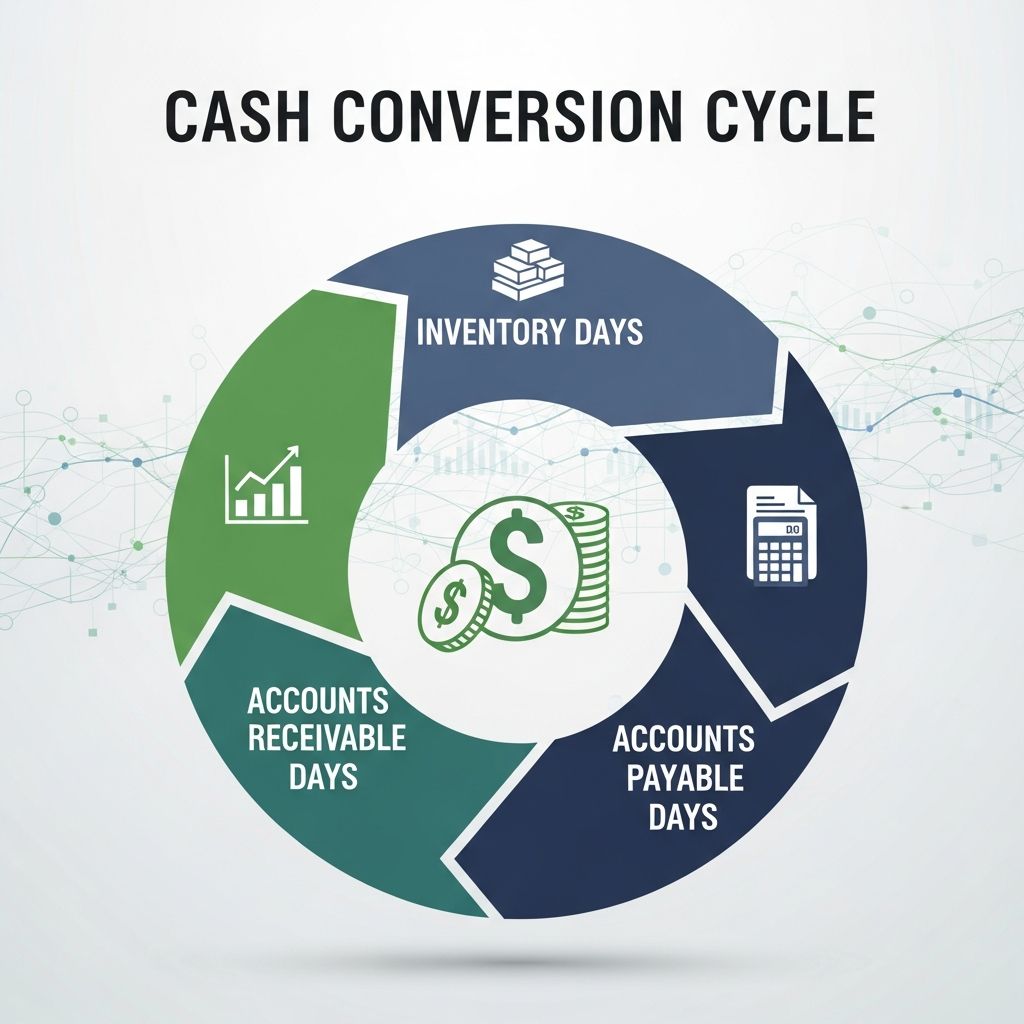
The cash conversion cycle is built upon three critical working capital metrics that together tell a comprehensive story about how a company manages its finances:
Days Inventory Outstanding (DIO)
Days Inventory Outstanding measures the average number of days a company holds inventory before selling it. This metric reflects how quickly a company can convert raw materials and finished goods into sales. A lower DIO indicates that inventory is moving rapidly, which ties up less capital and reduces storage costs. Companies with efficient supply chains and strong sales typically have lower DIO values. The DIO calculation takes into account the average inventory level and the cost of goods sold over a specific period.
Days Sales Outstanding (DSO)
Days Sales Outstanding represents the average number of days it takes a company to collect payment from customers after making a sale. This metric is particularly important for businesses that offer credit terms to their customers. A shorter DSO means the company collects cash faster, improving liquidity and reducing the risk of bad debts. Companies with strong collection processes and favorable payment terms typically maintain lower DSO values, indicating better cash management.
Days Payable Outstanding (DPO)
Days Payable Outstanding measures the average number of days a company takes to pay its suppliers for goods and services received. Unlike DIO and DSO, which represent cash outflows tied up in operations, DPO represents a benefit to the company’s cash position. A longer DPO means the company retains cash longer before paying suppliers, which can improve short-term liquidity. However, this must be balanced against maintaining healthy supplier relationships.
The Cash Conversion Cycle Formula
The cash conversion cycle is calculated using a straightforward formula that combines the three working capital metrics:
CCC = DIO + DSO – DPO
Where:
- DIO (Days Inventory Outstanding) = (Average Inventory ÷ Cost of Goods Sold) × Number of Days
- DSO (Days Sales Outstanding) = (Accounts Receivable ÷ Total Credit Sales) × Number of Days
- DPO (Days Payable Outstanding) = (Accounts Payable ÷ Cost of Goods Sold) × Number of Days
The formula demonstrates that the cash conversion cycle combines the time needed to sell inventory and collect payment from customers, then subtracts the time the company has before paying suppliers. The result is the number of days that capital is tied up in the operating cycle.
Calculating the Cash Conversion Cycle: A Practical Example
Consider a hypothetical company with the following financial metrics:
- Days Inventory Outstanding: 70 days
- Days Sales Outstanding: 30 days
- Days Payable Outstanding: 45 days
Using the cash conversion cycle formula:
CCC = 70 + 30 – 45 = 55 days
This result indicates that the company takes approximately 55 days to convert its cash investment in inventory back into cash. During this 55-day period, the company’s capital is tied up in operations, which could otherwise be used for other business investments or debt reduction.
The Operating Cycle vs. Cash Conversion Cycle
An important distinction exists between the operating cycle and the cash conversion cycle. The operating cycle represents the first portion of the CCC formula: DIO + DSO. This metric measures the total time from when a company purchases inventory until it collects cash from customers. The cash conversion cycle then refines this by subtracting DPO, accounting for the timing advantage gained by delaying supplier payments.
For example, if a company has an operating cycle of 100 days (70 days DIO + 30 days DSO) and a DPO of 45 days, the cash conversion cycle is 55 days. This means that while the company takes 100 days to move through its inventory and collection process, it doesn’t actually experience a full 100-day cash gap because it delays paying suppliers for 45 days.
What Constitutes a Good Cash Conversion Cycle?
The ideal cash conversion cycle depends on several factors, including industry type, business model, and competitive dynamics. Research indicates that the median cash conversion cycle across various industries falls between 30 and 45 days. Companies operating below this range demonstrate superior working capital efficiency compared to their peers.
However, the definition of a “good” CCC varies significantly by industry:
- Retail and E-commerce: Often have shorter cycles due to fast inventory turnover and rapid cash collection
- Manufacturing: Typically have longer cycles due to production lead times and inventory holding requirements
- Technology Services: May have negative cycles due to upfront payment models
- Construction: Often have extended cycles due to project-based revenue recognition
The key principle is that a shorter cash conversion cycle generally indicates more efficient working capital management and stronger financial health.
Strategies for Optimizing the Cash Conversion Cycle
Companies seeking to improve their cash conversion cycle can focus on three primary strategies:
Accelerating Inventory Conversion
The first strategy involves converting inventory into sales more quickly. This can be achieved through improved demand forecasting, better inventory management systems, promotional campaigns to boost sales, and optimization of the supply chain. By reducing DIO, companies minimize the capital tied up in inventory and reduce carrying costs.
Expediting Customer Collections
The second strategy focuses on collecting payment from customers sooner. Techniques include offering early payment discounts, implementing automated invoicing and payment systems, improving credit policies, and strengthening collection efforts. Reducing DSO accelerates cash inflow and improves liquidity.
Extending Supplier Payment Terms
The third strategy involves extending the time taken to pay suppliers, thereby increasing DPO. This can be negotiated with vendors, particularly as business relationships strengthen and order volumes increase. However, it’s crucial to maintain positive supplier relationships and ensure timely payment to avoid supply chain disruptions.
The Interconnected Nature of the Cash Conversion Cycle
It’s important to recognize that the cash conversion cycle does not exist in isolation. It describes how a company interacts with both its suppliers and customers. When a company extends payment times to suppliers, those suppliers experience an adverse impact through increased DSO in their own cash conversion cycles. In some cases, such decisions can create cash flow pressures for suppliers that hinder their ability to fulfill orders on time or maintain service quality.
Similarly, when a company tightens its collection efforts on customers, those customers may experience working capital stress. Successful CCC optimization requires balancing efficiency with maintaining healthy business relationships across the supply chain.
Understanding Negative Cash Conversion Cycles
While most companies operate with a positive cash conversion cycle, some businesses achieve a negative CCC, which represents a significant competitive advantage. A negative cash conversion cycle occurs when a company receives payment from customers before it must pay suppliers for goods and services.
For example, major retailers and e-commerce platforms often operate with negative cash conversion cycles. They collect payment from customers immediately upon purchase (or very quickly through credit card processing) but may negotiate extended payment terms with suppliers, sometimes 30, 60, or even 90 days out. This means the company has access to customer cash before it needs to pay suppliers, effectively using supplier financing to fund operations.
A negative CCC of -30 days means the company receives customer payments 30 days before it must pay suppliers, creating a favorable cash position that can be used to fund growth, invest in operations, or reduce debt.
Why the Cash Conversion Cycle Matters
The cash conversion cycle is a critical metric for several reasons:
- Working Capital Efficiency: It directly measures how effectively a company manages its working capital
- Cash Flow Forecasting: It helps predict when cash will actually be available despite accounting profits
- Financing Needs: A shorter CCC reduces the need for external financing to fund operations
- Operational Health: Changes in CCC can signal operational improvements or deterioration
- Competitive Position: Companies with superior CCC management enjoy better liquidity and financial flexibility
Industry Variations in Cash Conversion Cycle
Different industries naturally have different cash conversion cycles based on their business models and operational characteristics. Understanding these variations is essential when comparing companies or evaluating performance:
| Industry | Typical CCC Range | Key Characteristics |
|---|---|---|
| Fast-Moving Consumer Goods (FMCG) | 10-30 days | Rapid inventory turnover, cash sales, minimal receivables |
| Retail | 20-40 days | Quick sales, extended supplier terms |
| Manufacturing | 40-80 days | Production time, inventory holding, credit sales |
| Wholesale Distribution | 30-60 days | Inventory management, customer credit terms |
| Business Services | 50-120 days | Extended payment terms, service delivery periods |
Monitoring and Improving Cash Conversion Cycle Performance
To continuously optimize cash conversion cycle performance, companies should establish regular monitoring processes. This includes tracking each component (DIO, DSO, DPO) on a monthly or quarterly basis, comparing results against industry benchmarks, analyzing trends over time, and identifying root causes of any deterioration.
Technology solutions such as enterprise resource planning (ERP) systems, supply chain management software, and automated accounting systems can provide real-time visibility into cash conversion cycle metrics, enabling faster decision-making and more responsive management.
Frequently Asked Questions
Q: What is the relationship between cash conversion cycle and free cash flow?
A: The cash conversion cycle directly impacts free cash flow. A longer CCC means more working capital is tied up in operations, reducing the cash available for other purposes. Conversely, a shorter CCC frees up cash that can be used for debt reduction, investments, or shareholder returns.
Q: Can a company have a very long cash conversion cycle but still be profitable?
A: Yes, a company can be profitable but have a long CCC. However, this typically means the company needs significant working capital financing to support operations. This can strain liquidity and limit financial flexibility, even if accounting profits are strong.
Q: How does seasonal business affect cash conversion cycle analysis?
A: Seasonal businesses may show significant CCC variations throughout the year. Analysts should calculate CCC using average figures across a full year or compare same-season periods year-over-year to avoid misleading conclusions based on seasonal fluctuations.
Q: What actions can damage the cash conversion cycle?
A: Common mistakes include over-purchasing inventory, poor sales forecasting leading to excess stock, ineffective collection processes, offering overly generous payment terms to customers, or poor supplier management that disrupts the supply chain.
Q: How important is cash conversion cycle relative to other financial metrics?
A: While CCC is important, it should be analyzed alongside other metrics such as gross margin, operating margin, return on assets, and debt ratios. A comprehensive financial analysis considers multiple factors to assess overall business health.
References
- Cash Conversion Cycle (Cash Cycle) Definition/Formula — SAP Taulia. 2025. https://taulia.com/glossary/what-is-the-cash-conversion-cycle-ccc/
- Cash Conversion Cycle – Overview, Example, Formula — Corporate Finance Institute. 2025. https://corporatefinanceinstitute.com/resources/accounting/cash-conversion-cycle/
- Cash Conversion Cycle | Formula + Calculator — Wall Street Prep. 2025. https://www.wallstreetprep.com/knowledge/cash-conversion-cycle-ccc/
- Understanding & Optimizing Your Cash Conversion Cycle (CCC) — JPMorgan. 2025. https://www.jpmorgan.com/insights/treasury/receivables/understanding-and-optimizing-your-cash-conversion-cycle
Similar Articles








Read full bio of Sneha Tete