Why Cash Back Cards Beat Travel Cards for Everyday Users
Discover why straightforward cash back credit cards outperform flashy travel rewards for most budgets and lifestyles.

Cash back credit cards deliver straightforward value through direct monetary returns on purchases, surpassing travel cards for individuals with routine spending patterns. This approach prioritizes accessibility and reliability over specialized perks.
Understanding the Core Differences in Reward Systems
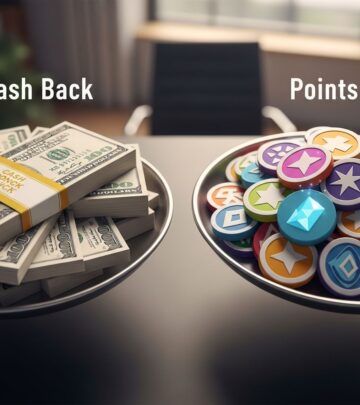
Rewards programs divide primarily into cash back, which provides a percentage return as money, and travel rewards, which accumulate points or miles for flights, hotels, or related services. Cash back maintains a fixed 1 cent per percentage point value, ensuring predictability, while travel points fluctuate based on redemption methods and availability.
For typical users, this stability favors cash back. A card offering 2% cash back on $20,000 annual spend yields $400 directly usable anywhere, without redemption hurdles. Travel points might match or exceed this if optimized, but require effort many find daunting.
Simplicity: The Biggest Advantage for Busy Lives
Cash back stands out for its ease of use, allowing instant redemption as statement credits, deposits, or gift cards without portals or blackout dates. Travel cards demand navigating partner programs, transfer partners, or booking windows, complicating rewards access.
- Rewards redeem at face value: 1% cash back equals 1 cent per dollar spent.
- No need to track point valuations that vary from 0.6 to 2+ cents each.
- Apply credits directly to bills, enhancing immediate financial relief.
This simplicity suits those prioritizing low-maintenance finances over maximization strategies.
Cost Efficiency Without Annual Fees Draining Value
Most cash back cards waive annual fees, preserving full rewards value, unlike travel cards averaging $95+ fees for perks like lounge access. For low travelers, these fees erode net gains.
| Feature | Cash Back Cards | Travel Cards |
|---|---|---|
| Typical Annual Fee | $0 | $95–$550 |
| Fee Offset Potential | Always positive | Requires heavy travel |
| Net Rewards After Fee (2% on $20k spend) | $400 | $305 (after $95 fee) |
Data shows cash back nets higher returns for spends under $30,000 yearly without travel focus. Fee-free options like those from major banks amplify long-term savings.
Versatility Across All Spending Categories
Cash back applies universally to groceries, gas, utilities, and more, without category restrictions. Travel cards boost rates on airlines or hotels but yield base rates elsewhere, limiting everyday utility.
- Flat 1.5–2% on everything maximizes non-travel spend.
- Bonus categories (e.g., 5% groceries) stack without travel dependency.
- Rewards usable on any expense, not locked to partners.
For households spending 70% on non-travel, cash back captures value travel cards miss.
Lower Risk and Predictable Long-Term Value
Travel rewards face devaluation risks as issuers adjust point charts or end partnerships, whereas cash back holds steady. No foreign transaction fees appear on some cash back cards too, countering a travel advantage.
Sign-up bonuses tilt toward travel (e.g., 60,000 points), but cash back offers accessible ones like $200 after $500 spend, suiting modest budgets. Over years, consistency trumps occasional highs.
When Travel Cards Might Still Make Sense
Frequent flyers (4+ trips/year) benefit from 3–5x points on travel and perks like insurance or priority boarding. High spenders ($50k+/year travel) can justify fees via credits and transfers yielding 1.5–2.5 cents/point.
Hybrid cards blending cash back with travel options bridge gaps, but pure cash back wins for 80% of users per industry analyses.
Real-World Examples: Cash Back in Action
Consider a family spending $3,000 monthly: $1,500 groceries (3% cash back), $500 gas (3%), $1,000 other (2%). Annual haul: $720, fee-free. A travel card at 2x everyday might net 24,000 points (~$240–$360 value), less without optimization.
Another: Commuter with $15,000 yearly transit/gas. 5% rotating cash back yields $750 vs. travel’s 2x points ($300 max).
Strategies to Maximize Cash Back Rewards
- Pair flat-rate (2% all purchases) with bonus category cards.
- Track quarterly 5% rotations for big spends like groceries or online shopping.
- Combine with no-fee cards from banks like Chase or Capital One for sign-up boosts.
- Pay balances fully to avoid interest wiping rewards.
Portfolio approach yields 2–3% average returns without travel hassle.
Common Pitfalls to Avoid with Any Rewards Card
- Carrying balances: 20%+ APR negates all rewards.
- Chasing bonuses: Multiple apps hurt credit scores.
- Ignoring terms: Some cash back excludes returns/exchanges.
Focus on sustainable habits for true value.
FAQs
Are cash back cards always better than travel cards?
No, but for infrequent travelers, yes—due to simplicity and no fees.
Can I get travel perks with cash back cards?
Some offer basic insurance or no foreign fees, but not lounges.
What’s the best cash back rate?
Up to 5% in bonuses, 2% flat elsewhere.
Do travel points ever equal cash value?
Often higher (1.5+ cents/point) if transferred wisely, but requires effort.
Should I have both card types?
Yes, for optimized rewards across lifestyles.
Cash back empowers everyday financial growth without gimmicks, fitting most users’ realities.
References
- Cash Back vs. Travel Credit Card: Which to Choose — Chase Bank. 2025. https://www.chase.com/personal/credit-cards/education/basics/cash-back-vs-travel-credit-cards
- Cash Back vs. Travel Rewards: How to Choose a Credit Card — Navy Federal Credit Union. 2025. https://www.navyfederal.org/makingcents/credit-debt/cash-back-vs-travel-rewards-credit-cards.html
- Cash Back vs. Travel Points: How To Choose Credit Card Rewards — Bankrate. 2025. https://www.bankrate.com/credit-cards/cash-back/weighing-a-cash-back-card-vs-a-points-and-miles-card/
- Cash Back vs Travel Rewards Credit Cards for 2025 — Johnny Jet. 2025. https://johnnyjet.com/cash-back-vs-travel-rewards/
- Cash back vs. travel rewards: How to choose a credit card — The Points Guy. 2025. https://thepointsguy.com/credit-cards/cash-back-vs-points-and-miles/
- Cash Back vs. Travel Rewards: Which May Be Best for You? — American Express. 2025. https://www.americanexpress.com/en-us/credit-cards/credit-intel/cashback-vs-travel-credit-cards/
- Cash Back vs. Travel Rewards: How to Choose — NerdWallet. 2025. https://www.nerdwallet.com/credit-cards/learn/cash-back-vs-travel-how-to-choose-your-credit-card-rewards
Similar Articles








Read full bio of medha deb