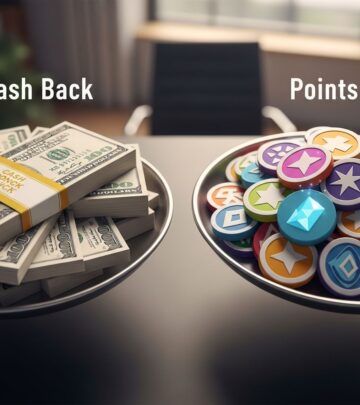
Cash Back vs Points vs Miles
Unlock the best credit card rewards: Compare cash back simplicity with the high-value potential of points and miles for smarter spending.

Credit card rewards come in three primary forms: straightforward cash back, flexible points, and travel-focused miles. Cash back provides direct monetary returns, while points and miles offer variable value, often higher when redeemed for travel. The best choice hinges on your spending habits, travel frequency, and redemption preferences.
Understanding the Fundamentals of Rewards Types
Cash back rewards deliver a percentage of your spending as redeemable money, typically fixed at 1 cent per dollar earned. Points function as a currency within a card issuer’s ecosystem, redeemable for various options with fluctuating value. Miles, often tied to airlines or hotels, emphasize travel bookings but can convert to other rewards.
Each type suits different users: cash back for simplicity, points for versatility, and miles for avid travelers seeking premium experiences.
How Cash Back Rewards Operate
Cash back cards award a set percentage on purchases, such as 2% on all spending or 5% in rotating categories. Redemption is simple—request checks, statement credits, or deposits—always equaling the earned amount.
- Flat-rate cards: Unlimited 1.5% to 2% on everything.
- Bonus category cards: Higher rates like 5% on groceries or gas, often quarterly activated.
- No annual fees common, making them accessible.
This predictability appeals to those prioritizing ease over maximization.
The Mechanics of Points-Based Systems
Points accrue per dollar spent, with issuers like Chase or American Express offering transferable currencies. Earn 1-5 points per dollar, boosted in travel or dining. Value varies: 1 cent for cash, up to 2+ cents via partner transfers.
Key programs include Chase Ultimate Rewards and Amex Membership Rewards, allowing shifts to airlines or hotels for elevated returns.
| Redemption Option | Average Value per Point | Example |
|---|---|---|
| Cash Back/Statement Credit | 1 cent | 10,000 points = $100 |
| Gift Cards | 1-1.2 cents | 10,000 points = $120 Amazon card |
| Travel Portals | 1.25-1.5 cents | 10,000 points = $150 flight |
| Partner Transfers | 1.5-2.5+ cents | 10,000 points = business class upgrade |
Transferability unlocks outsized value for strategic users.
Decoding Airline and Hotel Miles
Miles mimic points but anchor to specific programs like Delta SkyMiles or Capital One miles. Earn 1-10 miles per dollar, especially on flights or hotels. Redeem for flights, upgrades, or transfers.
- Co-branded cards: Tied to one airline/hotel, earning elite status perks.
- General travel cards: Flexible miles transferable to multiple partners.
- Bonus offers: Welcome miles after meeting spend thresholds.
Miles excel for free travel but face blackout dates and devaluations.
Earning Strategies: Maximizing Every Dollar
Match cards to spending: Use bonus categories for groceries (5% cash back) or travel (5x miles). Pair cards—one for daily use, another for travel.
Examples:
- Capital One Venture: 2x miles everywhere, 5x via portal.
- Chase Sapphire Preferred: 3x dining/travel, transfer partners.
- Discover it Cash Back: 5% rotating, 1% else.
Track activations and pay balances to avoid interest eroding rewards.
Redemption Tactics for Peak Value
Cash back shines in flexibility—any use. Points/miles peak at 1.5-2+ cents per unit via travel transfers. Aim higher than 1 cent benchmark.
Pro tips:
- Transfer to partners during promotions.
- Book peak travel off-peak for better rates.
- Avoid low-value options like merchandise.
Capital One miles transferred to Wyndham yielded 2.3 cents per mile vs. 1 cent portal.
Pros and Cons Comparison
| Rewards Type | Pros | Cons |
|---|---|---|
| Cash Back |
|
|
| Points |
|
|
| Miles |
|
|
Cash back suits minimalists; points/miles reward planners.
Real-World Scenarios: Which Wins?
Everyday Spender: $2,000 monthly on 2% cash back = $480/year. Simple wins.
Traveler: Same spend on 2x miles at 2 cents/mile = $960 value. Doubles return.
Mixed: Combine cards—cash back daily, miles for trips.
Costs and Fees to Watch
Premium cards charge $95-$550 annually but offset with credits/bonuses. Foreign transaction fees (3%) hurt miles cards abroad. Always calculate net value.
Building a Rewards Portfolio
Start with no-fee cash back, upgrade to points/miles as travel grows. Diversify issuers for transfer options. Use tools to track valuations.
Frequently Asked Questions
Are points or miles worth more than cash back?
Yes, often 1.5+ cents vs. 1 cent, especially for travel.
Can I convert miles to cash?
Usually at reduced value (0.5-1 cent/mile).
Do rewards expire?
Activity keeps them alive; check terms.
Best for beginners?
Cash back for simplicity.
How to avoid devaluations?
Transfer promptly; monitor programs.
Rewards evolve—review annually. Align with goals for optimal returns.
References
- Cash back vs. travel rewards: How to choose a credit card — The Points Guy. 2023. https://thepointsguy.com/credit-cards/cash-back-vs-points-and-miles/
- Miles vs. Cash Back Credit Cards Comparison — Capital One. 2024-01-15. https://www.capitalone.com/learn-grow/money-management/miles-vs-cash-back/
- Comparing Cash Back vs. Points or Miles — Discover. 2024. https://www.discover.com/credit-cards/card-smarts/comparing-cash-back-vs-points-or-miles/
- Cash Back vs. Travel Rewards: How to Choose — NerdWallet. 2024-02-20. https://www.nerdwallet.com/credit-cards/learn/cash-back-vs-travel-how-to-choose-your-credit-card-rewards
- Consumer Financial Protection Bureau: Credit Card Rewards Overview — CFPB.gov. 2023-06-01. https://www.consumerfinance.gov/consumer-tools/credit-cards/
- Federal Reserve: Credit Card Rewards Report — FederalReserve.gov. 2024. https://www.federalreserve.gov/publications.htm
Similar Articles








Read full bio of Sneha Tete