Cash App, Zelle, Venmo: How to Choose the Right Payment App
Compare Cash App, Zelle, and Venmo to find the best peer-to-peer payment app for your needs.
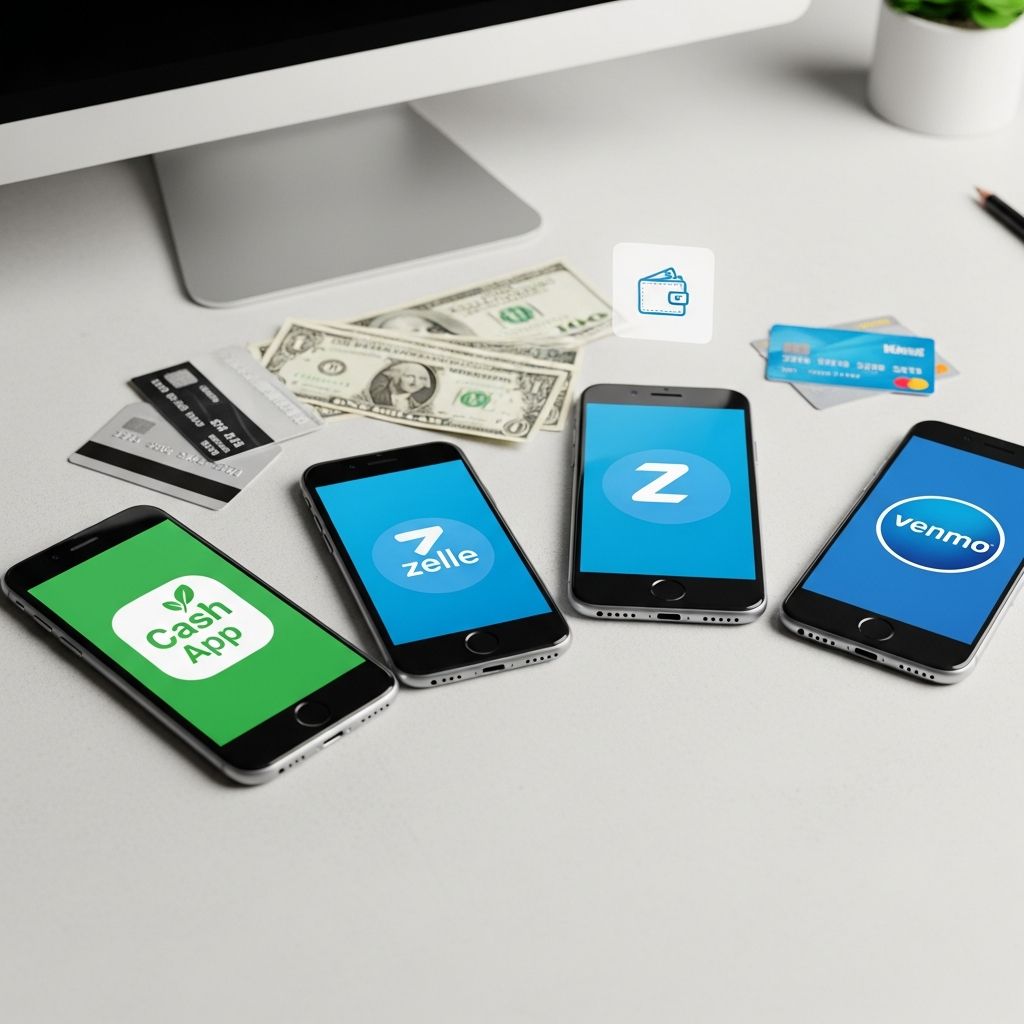
In today’s digital world, peer-to-peer (P2P) payment apps have become essential tools for managing money. Whether you’re splitting rent with roommates, paying back a friend for dinner, or sending money to family, having the right payment app makes all the difference. The three most popular options—Cash App, Zelle, and Venmo—each offer unique features, fee structures, and security measures. Understanding the differences between these platforms will help you select the one that best fits your financial needs and lifestyle.
Understanding Peer-to-Peer Payment Apps
Peer-to-peer payment applications allow individuals to transfer money directly to one another using smartphones or computers. These apps eliminate the need for traditional banking methods like checks or wire transfers, making money exchanges faster and more convenient. Each platform operates differently, integrating with banks, credit cards, or internal digital wallets to facilitate transactions. Before choosing an app, consider how often you use P2P transfers, who you typically send money to, and whether security and social features matter to you.
Zelle: The Bank-Connected Solution
Zelle stands out as the most traditional banking-focused payment app, integrated directly into most major U.S. banking platforms. This integration means you may already have access to Zelle through your existing bank app without downloading a separate application.
Key Advantages of Zelle
Direct Bank Integration: Zelle transfers money directly between bank accounts without requiring you to share sensitive account details. You only need the recipient’s U.S. mobile number or email address linked to their bank account. This direct transfer method enhances security and eliminates intermediaries.
Zero Fees: Unlike competitors that charge fees for certain types of transfers, Zelle charges no fees for any standard transactions, making it the most economical choice for regular users. This cost advantage compounds for those who frequently send money.
Instant Transfers: Money moves between bank accounts immediately, ensuring recipients access funds without waiting periods. This speed is particularly valuable for time-sensitive payments.
Competitive Sending Limits: Most banks offer favorable limits with Zelle. For example, some banks allow minimum payments of $1.00, maximums of $2,000 per transaction, and monthly limits of $3,500. These limits accommodate most personal payment needs.
Recurring Payments: You can set up automatic payments with Zelle to ensure bills are paid on time, every time. This feature simplifies managing recurring expenses.
Limitations of Zelle
No Buyer or Seller Protection: Zelle does not offer dispute resolution or purchase protection. If you pay for something and don’t receive it, or if money is sent fraudulently, Zelle cannot intervene. This limitation makes it risky for transactions with unknown parties or online purchases.
No Balance Storage: Zelle functions purely as a transfer service. You cannot keep money in a Zelle account; transfers must go directly to a bank account.
Limited Social Features: Without emojis, payment notes, or social feeds, Zelle feels formal and impersonal. This limitation matters less for business payments but may feel restrictive for casual friend payments.
No Credit Card Support: Zelle only accepts bank account transfers, not credit card payments. This restriction limits payment method flexibility.
Venmo: The Social Payment Platform
Venmo, owned by PayPal, combines payment functionality with social networking elements, making it particularly popular among younger users who want to add personality to their transactions.
Key Advantages of Venmo
Established Infrastructure: As a PayPal-owned platform, Venmo benefits from robust security infrastructure and is widely accepted by merchants and service providers. This credibility provides users with confidence in their transactions.
Balance Storage and Card Support: Unlike Zelle, Venmo allows you to maintain a balance within the app for easy spending. The platform offers both debit and credit cards that work wherever Mastercard is accepted. This feature provides greater financial flexibility.
High Spending Limits: Unverified accounts can send up to $299.99 per week, while verified accounts can send up to $60,000 weekly. These generous limits accommodate larger transactions.
Social Features: Users can include messages and emojis with transactions, making payments more personal and entertaining. The social feed allows friends to see non-private payment activity. These social elements appeal to those who enjoy interactive features.
Cryptocurrency Support: Venmo lets you buy, sell, track, or transfer cryptocurrency directly within the app. This feature attracts crypto-interested users.
Business Payments: Venmo allows you to make purchases from approved businesses in-store, online, or in-app using your balance, linked cards, or bank account.
Disadvantages of Venmo
Credit Card Fees: While sending money via debit card and bank account are free, using a credit card incurs a 3% fee. This fee can accumulate quickly for frequent credit card users.
Instant Transfer Charges: Standard transfers are free but take up to three business days. Instant transfers cost 1.75% with a $25 cap. This pricing structure may frustrate users seeking faster access to funds.
Public Transactions by Default: Payment activity appears on Venmo’s social feed by default, requiring manual privacy adjustments. This default public setting raises privacy concerns for users uncomfortable with transaction visibility.
Limited Protection: Venmo lacks robust buyer and seller protection measures compared to PayPal, making it risky for online purchases.
Cash App: The Versatile Financial Tool
Cash App, owned by Block, offers cryptocurrency and investment capabilities alongside peer-to-peer payments, appealing to users seeking a comprehensive financial platform.
Key Advantages of Cash App
Investment Features: Cash App allows users to buy, sell, and hold cryptocurrency, as well as invest in fractional shares of U.S. stocks directly within the app. These features attract investment-minded users.
High Sending Limits: Once identity verification is complete, users can send up to $10,000 weekly and $20,000 over a rolling 30-day period. These limits exceed many competitors.
Fast Transactions: Cash App processes transactions quickly, making it ideal for urgent payments.
Direct Deposit Support: Cash App supports direct deposit, allowing paychecks and government benefits to be deposited directly into your Cash App account.
Disadvantages of Cash App
Limited Bank Integration: Unlike Zelle, Cash App doesn’t connect seamlessly to traditional banks, making it harder to manage all finances in one place. This limitation may frustrate users preferring centralized banking.
Higher Fraud Risk: Because transactions are fast and often irreversible, scams or mistaken payments can be difficult to recover. Users must exercise caution and only send money to trusted contacts.
Credit Card Fees: Using a credit card to fund Cash App transactions typically incurs fees.
Feature Comparison Table
| Feature | Zelle | Venmo | Cash App |
|---|---|---|---|
| Transfer Fees | None | 3% via credit card; 1.75% instant transfers | 3% via credit card |
| Instant Transfers | Yes | Yes (with fee) | Yes |
| Bank Integration | Direct integration | Moderate | Limited |
| Balance Storage | No | Yes | Yes |
| Social Features | None | Yes | Limited |
| Crypto Support | No | Yes | Yes |
| Investment Features | No | No | Yes |
| Buyer Protection | No | Limited | Limited |
| Weekly Sending Limit | Varies by bank | $60,000 (verified) | $10,000 |
Security and Privacy Considerations
Security varies significantly among these platforms. Zelle relies on bank-level security systems and typically protects funds with FDIC insurance, offering the highest institutional safeguards. However, Zelle’s lack of dispute resolution means users must trust recipients completely.
Venmo offers fraud monitoring and allows users to set additional security features, though balances are typically not FDIC-insured. Cash App provides security features but requires users to be cautious about transaction reversibility.
Privacy also differs. Zelle transactions remain completely private within banking systems. Venmo requires manual privacy adjustments to prevent public visibility. Cash App maintains moderate privacy by default but offers limited anonymity.
Choosing the Right App for Your Needs
Choose Zelle if: You prioritize security, frequently transfer money between trusted contacts, want zero fees, and prefer direct bank integration. Zelle is ideal for traditional banking methods and emphasizes security over social features.
Choose Venmo if: You enjoy social elements, frequently split payments with friends, value balance storage capabilities, and appreciate the ability to add emojis and notes to transactions. Venmo shines in casual, day-to-day payments among friends.
Choose Cash App if: You’re interested in cryptocurrency or stock investments, need higher sending limits, want to maintain a digital balance, or prefer a comprehensive financial app beyond simple money transfers.
Fee Breakdown and Cost Analysis
Understanding fee structures is crucial for frequent users. Zelle charges absolutely nothing, making it the most economical for bank-to-bank transfers. Venmo charges 3% for credit card transactions and 1.75% for instant bank transfers. Cash App similarly charges approximately 3% for credit card funding.
For those sending money weekly through standard bank transfers, Zelle’s zero-fee structure provides significant savings over time. However, if you value instant transfers or require balance storage, the fees associated with Venmo and Cash App may be worthwhile.
Frequently Asked Questions
Q: Can I use all three apps on the same device?
A: Yes, you can download and use multiple payment apps simultaneously on one device. Many people use different apps for different purposes—Zelle for trusted contacts, Venmo for social friends, and Cash App for investments.
Q: Which app is safest for sending money to strangers?
A: None of these apps provide strong protection for transactions with unknown parties. For purchases from strangers, credit card services or platforms with buyer protection like PayPal are safer alternatives.
Q: Can I get my money back if I send it to the wrong person?
A: This depends on the app and circumstances. Zelle offers no dispute resolution, making recovery difficult. Venmo and Cash App have limited chargeback options, but recovery is not guaranteed. Prevention is always preferable to recovery attempts.
Q: Do these apps work internationally?
A: Zelle, Venmo, and Cash App all operate primarily within the United States. For international transfers, specialized services like TransferWise are better options.
Q: Are there spending limits on these apps?
A: Yes, all three apps impose limits. Zelle limits vary by bank but typically cap around $2,000 per transaction and $3,500 monthly. Venmo allows up to $60,000 weekly for verified accounts. Cash App permits $10,000 weekly and $20,000 over 30 days once verified.
Q: Which app is best for paying small businesses?
A: Zelle increasingly accepts small business payments if they have Zelle-enabled accounts. For more comprehensive business payment solutions with invoicing and receipts, PayPal or Square are stronger options.
Conclusion
The best payment app depends on your specific needs, priorities, and how you typically use peer-to-peer transfers. Zelle excels for security-conscious users who want zero fees and bank-level protection. Venmo appeals to those seeking social interaction and balance storage flexibility. Cash App attracts users interested in cryptocurrency and investments alongside money transfers.
Most users benefit from having multiple apps installed, using each for its strengths. Zelle for trusted contacts and zero fees, Venmo for social friend groups, and Cash App for investment features. By understanding the advantages and limitations of each platform, you can make informed decisions that align with your financial lifestyle and priorities.
References
- Which P2P Payment App Is Best for You? A Comparison of Zelle, Venmo, Cash App, and Apple Cash — First National Bank of Omaha. 2025-01-15. https://www.fnbo.com/insights/personal-finance/2025/which-p-2-p-payment-app-is-best-for-you-a-comparison-of-zelle-venmo-cash-app-and-apple-cash
- Venmo vs Zelle vs PayPal vs Cash App — Primeway Federal Credit Union. 2025-01-10. https://www.primewayfcu.com/blog/venmo-vs-zelle-vs-paypal-vs-cash-app
- Venmo, PayPal, Cash App, Zelle: Comparing Popular Payment Apps — Platte Basin Tilapia Cooperative. 2025-01-08. https://www.pbtc.net/blog/post/venmo-paypal-cash-app-zelle-comparing-popular-payment-apps
- Choosing the Best Instant Transfer Apps: Comparing Zelle, Venmo, PayPal, Cash App, and TransferWise — BiyaPay. 2025-01-05. https://www.biyapay.com/blogDetail/592-choosing-the-best-instant-transfer-apps-comparing
- Top Money Transfer Apps: Pros and Cons of P2P Payment Apps — NerdWallet. 2024-12-20. https://www.nerdwallet.com/banking/learn/peer-to-peer-p2p-money-transfers
- The 9 Best Payment Apps of 2025 (For Personal & Business) — Inspiring Apps. 2025-01-12. https://www.inspiringapps.com/blog/best-payment-apps-for-personal-and-professional-use
Similar Articles








Read full bio of medha deb