Cash App Guide: Banks, Fees, Direct Deposit, Cash Card
Complete guide to Cash App: Learn how to send money, set up direct deposit, and manage your finances.
What is Cash App & How Does It Work?
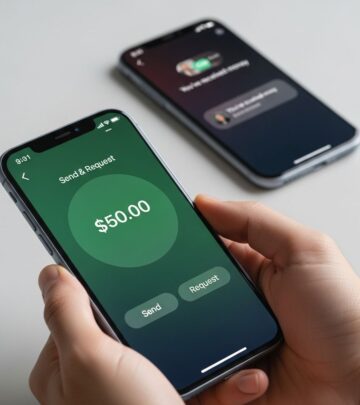
Cash App is a mobile-first financial platform designed to simplify peer-to-peer money transfers and provide a comprehensive suite of banking services. Rather than requiring users to navigate multiple financial applications, Cash App positions itself as an all-in-one financial solution for individuals looking to send money, receive payments, manage savings, and invest—all from a single smartphone application. The platform has grown significantly, with millions of active users relying on it for their daily financial transactions.
The core functionality of Cash App revolves around its ability to facilitate money transfers between users quickly and conveniently. However, the platform has expanded well beyond simple peer-to-peer payments to become a comprehensive financial ecosystem. Users can now access stock investing, cryptocurrency trading, tax filing services, and high-yield savings accounts through the same interface.
How to Find Your Cash App Bank
Although Cash App operates as a mobile application rather than a traditional bank, it partners with established financial institutions to enable core banking functions. Understanding your Cash App bank partner and associated account details becomes essential in specific situations.
You’ll need to identify your Cash App bank information when:
– Setting up direct deposit from an employer or government benefits provider- Establishing recurring or one-time bill payments- Sending e-checks to recipients who don’t accept Cash App transfers- Connecting external bank accounts to your Cash App profile
To locate your Cash App bank name, account number, and routing number, navigate to the Banking tab within the application. Your banking details will display below your current balance. If any numbers appear partially obscured or hidden, simply tap on them to reveal the complete information. This straightforward process ensures you have all necessary details for external banking operations.
Do You Need a Bank Account to Use Cash App?
One of Cash App’s most appealing features is its flexibility—you don’t require an existing bank account to use the service. Even if you maintain a traditional bank account, linking it to Cash App remains entirely optional. The application functions normally without a connected external bank account, allowing users to send and receive money between Cash App accounts seamlessly.
However, if you want convenient access to your Cash App balance and the ability to use those funds for real-world purchases, obtaining a Cash Card becomes highly valuable. The Cash Card is offered at no cost and requires no credit check, making it accessible to virtually all users. Given its affordability and ease of acquisition, most users find it worthwhile to obtain one.
How to Get Money Off Cash App Without a Bank Account
Users without a linked bank account still have viable options for accessing and utilizing their Cash App funds. The most practical approach involves using the Cash Card for everyday purchases you would make regardless.
Using Your Cash Card for Purchases
The Cash Card functions as a Visa debit card accepted virtually everywhere Visa is recognized. You can use it similarly to any traditional debit card, though an important distinction exists: unlike standard debit cards with overdraft protection, you cannot spend beyond your current Cash App balance. This built-in safeguard prevents overspending and maintains financial discipline.
At merchants offering cash back on debit card transactions, you can request cash as part of your purchase. During checkout, simply select the cash back option and specify your desired amount. This cash is added to your total transaction, so ensure your Cash Card balance exceeds the combined amount. If insufficient funds exist, the entire transaction will decline.
How to Set Up Direct Deposit
Direct deposit represents one of the most valuable features for users wanting to make Cash App their primary financial hub. This function allows your paycheck and benefits to flow directly into your Cash App account, creating a seamless income management system.
Cash App accepts direct deposits from multiple sources:
– Employer payroll systems- Government benefits providers- Third-party payers such as insurance companies- Government revenue agencies including the IRS and state tax authorities
One significant advantage of using Cash App for direct deposits is timing. The platform typically makes deposits available upon receiving payment instructions—often 2 business days before funds would appear in traditional banks. If your paycheck usually arrives Friday, you can access it through Cash App as early as Wednesday, providing crucial early access to your earnings.
Cash App accommodates substantial deposit amounts. Individual direct deposits can reach up to $25,000, while daily cumulative deposits cap at $50,000. These limits accommodate most workers’ payroll needs comfortably.
Cash App Security and FDIC Insurance
Understanding Cash App’s security framework is crucial for making informed decisions about where to keep your funds. The application’s security structure includes specific protections and notable limitations.
If you maintain a Cash Card, your balance receives FDIC insurance protection up to applicable limits, currently $250,000. This insurance coverage means your Cash Card funds enjoy the same federal protection as money in traditional bank accounts. Consequently, if you haven’t linked an external bank account or prefer keeping your Cash App balance above zero, maintaining funds on your Cash Card ensures maximum security.
However, Cash App’s bank account balance itself is not FDIC-insured. This distinction matters significantly for users maintaining substantial balances without a Cash Card or those regularly transferring funds elsewhere. Additionally, investments made through Cash App, including cryptocurrency purchases, lack FDIC insurance protection and therefore carry greater risk than traditional Cash Card balances.
Two additional security gaps warrant attention. First, your balance lacks fraud protection beyond standard measures, so never share account credentials or allow others to access your account. Second, maintain vigilance against social engineering and deceptive schemes targeting Cash App users.
What Does Cash App Cost?
Cash App maintains a competitive fee structure, though it’s not entirely cost-free despite popular belief.
Free services include:
– Downloading the application- Sending and receiving money- Standard transfers to linked bank accounts
Services with fees:
– ATM withdrawals (typically charged by ATM operators)- Bitcoin transactions- Instant transfers to connected bank accounts (the greater of $0.25 or 1.75% of the transfer amount)
The instant transfer option costs more than standard transfers, which take 1 to 3 business days. This premium service suits situations where immediate fund availability justifies the expense.
Does Cash App Have a Debit Card?
Yes, Cash App offers the Cash Card, a full-featured debit card accepted anywhere Visa is recognized. The Cash Card functions identically to bank-issued debit cards, drawing funds directly from your Cash App balance rather than a traditional checking account.
The Cash Card provides numerous advantages: it’s free to obtain, requires no credit check, and offers widespread acceptance. You can use it for online purchases, in-store transactions, and ATM withdrawals. The card represents a crucial bridge between your digital Cash App funds and the physical retail world.
Additional Cash App Features
Beyond basic money transfer functionality, Cash App has evolved into a comprehensive financial platform. The application now includes stock investing capabilities allowing users to purchase individual stocks and ETFs commission-free. Bitcoin trading features enable cryptocurrency investment directly within the app. Cash App Investing democratizes market access by offering fractional shares, allowing users to invest with limited capital.
The platform’s savings feature provides competitive interest rates for users maintaining sufficient direct deposits. Tax filing services integrated into the app simplify annual tax preparation. Buy Now, Pay Later (BNPL) functionality enables purchase financing directly through the application. These expanded capabilities position Cash App as a genuine financial ecosystem rather than a simple payment transfer tool.
Cash App’s Strategic Vision
Cash App primarily targets households earning $150,000 or less annually, positioning itself as a comprehensive “one-stop shop” for all financial service needs. Rather than juggling five or six specialized financial applications, Cash App argues users need only one platform for complete financial management. The strategy’s success depends largely on convincing users to direct deposit paychecks into Cash App. Currently, only approximately 2 million of 57 million active users transfer even partial paychecks to the platform, representing significant growth potential.
The expanding feature set—including BNPL options, cash advances, wire transfers, and high-yield savings—makes Cash App increasingly attractive as a primary financial account. Bitcoin Round Ups automatically invest transaction change into cryptocurrency, creating passive investment opportunities. These layered features create powerful incentives for users to consolidate their financial life within the application.
Frequently Asked Questions
Q: Can I use Cash App without a bank account?
A: Yes, you can use Cash App to send and receive money without a linked bank account. However, having a Cash Card makes accessing your funds for real-world purchases much easier.
Q: How long does direct deposit take to appear in Cash App?
A: Cash App typically makes direct deposits available 2 business days before they would appear in traditional banks, so Friday paychecks often arrive Wednesday.
Q: Are my Cash App funds protected by FDIC insurance?
A: Funds on your Cash Card are FDIC-insured up to $250,000, but your general Cash App balance is not. Investments through Cash App also lack FDIC insurance.
Q: What are the spending limits on Cash App?
A: The Cash Card allows up to $7,000 per transaction and daily, $10,000 weekly, and $25,000 monthly. ATM withdrawals max at $1,000 per transaction, day, and week.
Q: Are there any fees for basic Cash App transfers?
A: No, sending and receiving money with Cash App is completely free. Standard transfers to your bank account are also free. Fees only apply to ATM withdrawals, Bitcoin transactions, and instant transfers.
Q: Can I get cash back with my Cash Card?
A: Yes, you can request cash back at participating retailers during debit transactions. The cash amount is added to your total purchase.
References
- What is Cash App & How Does It Work? — Money Crashers. 2024. https://www.moneycrashers.com/bank-cash-app/
- What Is Cash App and How Does It Work? — NerdWallet. 2024. https://www.nerdwallet.com/banking/learn/what-is-cash-app
- Cash App looks beyond P2P payments, and strives to become users’ primary bank — The Harris Poll. 2024. https://theharrispoll.com/briefs/cash-app-looks-beyond-p2p-payments-and-strives-to-become-users-primary-bank/
- Federal Deposit Insurance Corporation (FDIC) — FDIC Official Website. 2024. https://www.fdic.gov/
- Visa Global Payment Information — Visa Inc. Official Documentation. 2024. https://www.visa.com/
Similar Articles








Read full bio of Sneha Tete