Cash Advances: Smart Move or Costly Trap?
Explore the hidden costs, types, and smarter alternatives to cash advances for urgent financial needs.

Cash advances provide immediate access to funds through credit cards, banks, or specialized lenders, but they often carry exorbitant costs that can exacerbate financial difficulties rather than resolve them.
Understanding the Basics of Cash Advances
A cash advance allows individuals or businesses to borrow money against a credit line, typically for short-term needs. Unlike standard credit card purchases, these transactions trigger immediate interest accrual without a grace period, making them significantly more expensive. Common scenarios include covering unexpected expenses before payday or handling emergencies when other funds are unavailable.
Financial institutions define cash advances broadly, encompassing several formats tailored to different users. For consumers, it’s often a credit card feature; for businesses, it might tie into sales revenue. The key appeal lies in speed—no lengthy approval processes—but this convenience demands caution due to the financial pitfalls involved.
Primary Types of Cash Advances Explained
Cash advances vary by provider and purpose, each with unique mechanics and risks. Here’s a breakdown of the most prevalent forms:
- Credit Card Cash Advances: Users withdraw cash from ATMs or bank counters using their credit card, limited to 20-50% of the available credit limit. Funds are versatile for any need, but fees and rates apply instantly.
- Payday Loans: Short-term borrowings repaid on the next paycheck, often from non-bank lenders. These target individuals with urgent cash gaps but feature triple-digit effective APRs due to flat fees.
- Merchant Cash Advances (MCAs): Businesses receive upfront capital repaid via a percentage of daily credit card sales. Ideal for sales-dependent operations, using factor rates (e.g., 1.3) instead of traditional interest.
Each type serves distinct needs, but all prioritize quick funding over low cost.
| Type | Access Method | Repayment | Typical Limit |
|---|---|---|---|
| Credit Card | ATM/Bank | Monthly minimums on balance | 20-50% of limit |
| Payday Loan | Lender storefront/online | Next paycheck | $100-$1,000 |
| Merchant | Business lender | % of daily sales | Based on sales history |
How Credit Card Cash Advances Operate
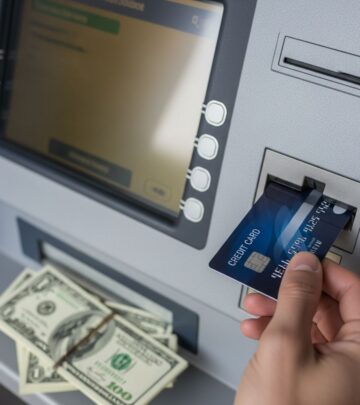
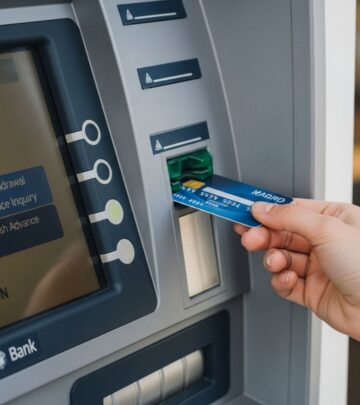
Using a credit card for cash involves simple steps but hidden expenses. Insert the card at an ATM, enter your PIN, and withdraw up to the cash advance limit—often flagged separately from purchase limits. Banks may also process over-the-counter requests.
Interest begins accruing the moment funds are dispensed, at rates frequently hitting 24-30% variable APR, far above standard purchase rates of 11-23%. A 3-5% fee per transaction compounds costs; for a $300 advance, expect $9-$15 upfront plus daily interest.
This structure reduces available credit immediately, potentially hindering other essential purchases and signaling high utilization to credit bureaus, which can lower scores.
Merchant Cash Advances for Businesses
MCAs appeal to retailers and service providers with steady card transactions. Lenders evaluate past sales to advance a lump sum, say $10,000, repaid at a 10-15% daily holdback rate until a factor (e.g., 1.4) multiple is reached.
Repayments flex with revenue—low sales mean smaller deductions—but high-volume days accelerate payoff and costs. Effective APRs can exceed 50-100% due to factor pricing, positioning MCAs as a last-resort option despite accessibility for poor-credit businesses.
Fees and Interest: The Real Price Tag
Cash advances erode finances through multiple charges:
- Transaction Fees: 3-5% of the amount or a $10 minimum, whichever is higher.
- Elevated APR: Up to 29.99% with no grace period, versus 21% average for purchases.
- ATM Surcharges: Additional $2-5 from machine operators.
- Factor Rates for MCAs: Multiply advance (e.g., 1.3x = 30% add-on).
A $500 credit card advance at 5% fee ($25) and 25% APR could cost $50+ in first-month interest alone if unpaid, spiraling quickly.
Credit Score and Long-Term Impacts
Borrowing via cash advance treats the amount as debt, inflating credit utilization—a major FICO factor. High balances (over 30% utilization) drop scores temporarily. Multiple advances signal risk to lenders, complicating future approvals.
Payday-style advances, unregulated in some areas, lead to debt cycles; 80% of borrowers re-borrow within weeks per federal data, though not directly cited here. MCAs tie repayments to cash flow, risking operational strain during slumps.
When Might a Cash Advance Make Sense?
Rarely ideal, cash advances suit true emergencies like medical bills or car repairs when alternatives exhaust. Businesses with predictable sales might use MCAs for inventory without fixed payments straining budgets.
However, even then, compare costs: a $1,000 advance at 25% APR over 30 days costs ~$21 interest plus $50 fee ($71 total), versus a personal loan at 10% APR (~$8 interest).
Superior Alternatives to Cash Advances
Avoid the trap with these options:
- Personal Loans: Fixed rates (6-36% APR), longer terms from banks or online lenders.
- 0% Intro APR Cards: Balance transfers or purchases without interest for 12-21 months.
- Credit Union Advances: Lower fees for members.
- Savings or Salary Advances: Employer programs or apps like Earnin with minimal/no fees.
- Negotiate Bills: Payment plans from utilities/providers.
| Option | APR Range | Fees | Best For |
|---|---|---|---|
| Cash Advance | 24-30% | 3-5% | Ultra-short term |
| Personal Loan | 6-36% | Low/none | Amounts $1k+ |
| 0% Card | 0% intro | 3-5% transfer | Debt payoff |
Strategies to Minimize Cash Advance Risks
If unavoidable, act swiftly:
- Pay off immediately to curb interest.
- Select cards with lowest cash APR (check Schumer Box).
- Limit to absolute necessities.
- Track via apps to avoid exceeding limits.
Build emergency funds (3-6 months expenses) and improve credit for better rates long-term.
Frequently Asked Questions (FAQs)
What is a cash advance on a credit card?
A short-term loan against your card’s limit, accessed via ATM or bank, with high fees and immediate interest.
Do cash advances build credit?
They can if paid on time, but high utilization often hurts scores more.
How much can I withdraw?
Typically 20-50% of available credit, varying by issuer.
Are there cash advance checks?
Yes, convenience checks from issuers function like advances with similar costs.
Can businesses get cash advances?
Yes, via MCAs based on sales, not credit.
Final Thoughts on Avoiding Debt Cycles
Cash advances tempt with speed but punish with costs, often leading to deeper debt. Prioritize planning, budgeting, and low-cost alternatives for sustainable finances. Consult terms carefully and explore credit-building tools to prevent reliance on high-risk borrowing.
References
- Cash Advance explained | Swoop US — Swoop Funding. 2023. https://swoopfunding.com/us/business-glossary/cash-advance/
- Cash Advance: Meaning, Types, Benefits, Applications, and More — Razorpay. 2023. https://razorpay.com/learn/cash-advance/
- What Is A Cash Advance? | Bankrate — Bankrate. 2023-10-01. https://www.bankrate.com/credit-cards/advice/what-is-cash-advance/
- What Is a Cash Advance on a Credit Card? – Capital One — Capital One. 2023. https://www.capitalone.com/learn-grow/money-management/cash-advance/
- What is a Cash Advance? – Yendo — Yendo. 2023. https://www.yendo.com/glossary/cash-advance-definition
- What is Cash Advance? – Navan — Navan. 2023. https://navan.com/resources/glossary/what-is-cash-advance
Similar Articles








Read full bio of medha deb