Cash Advances and Credit Scores
Discover how credit card cash advances influence your credit profile through utilization and payments, plus strategies to minimize risks.
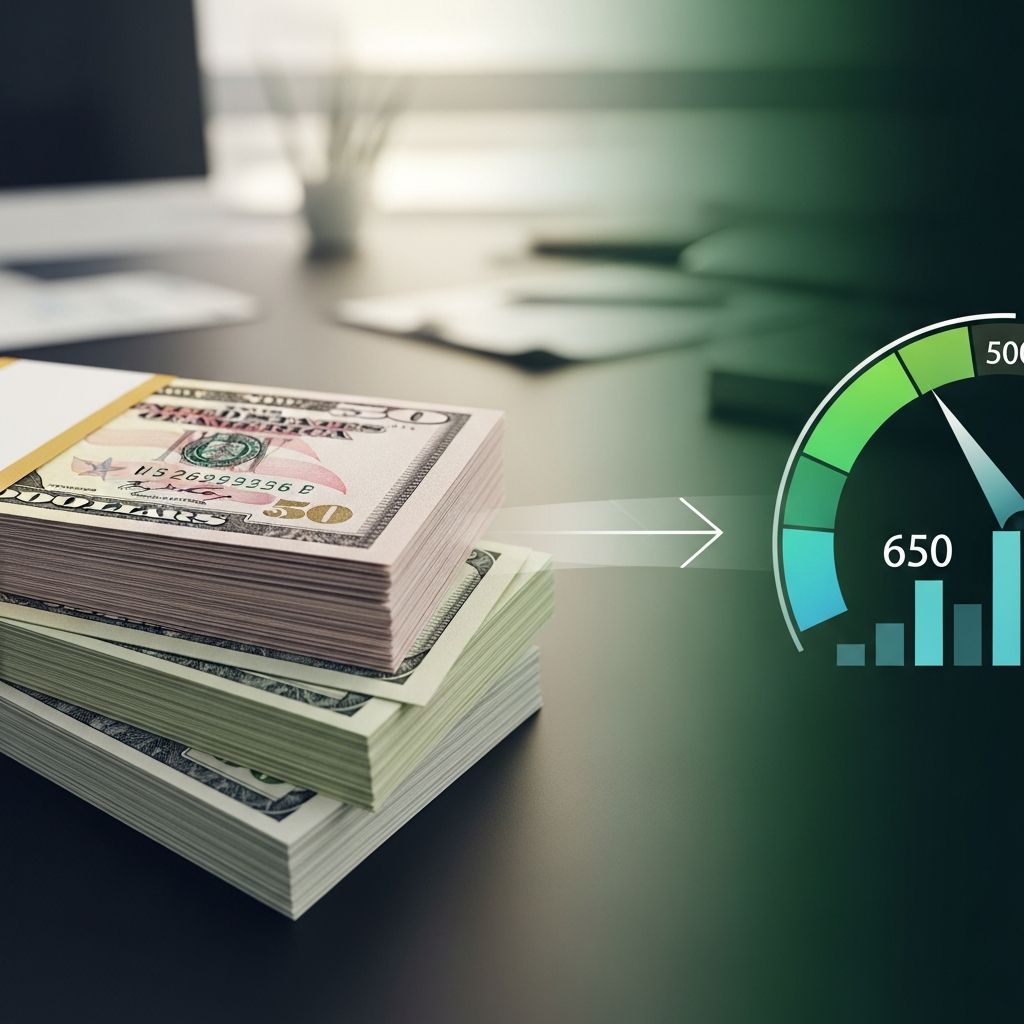
Credit card cash advances provide quick access to funds but carry hidden risks to your financial health, particularly your credit score. Unlike regular purchases, they influence your credit profile indirectly through balance increases and costly terms that can lead to higher utilization ratios or missed payments.
Defining Cash Advances and Their Mechanics
A cash advance allows credit cardholders to withdraw cash against their available limit, typically at ATMs, banks, or via convenience checks. These transactions come with immediate fees, often 3-5% of the amount or a flat minimum, and higher interest rates than standard purchases, sometimes exceeding 25% APR. Critically, no interest-free grace period applies, so charges accrue from day one.
This structure differs from everyday card use, where paying in full avoids interest. Advances blend into your total revolving balance, reported to credit bureaus like Experian alongside purchases, without separate notation. The Federal Reserve notes that such features on revolving credit can amplify debt burdens if not managed promptly.
Primary Ways Cash Advances Influence Credit Profiles
Direct notations of cash advances rarely appear on credit reports, meaning the transaction itself doesn’t trigger penalties. However, secondary effects dominate:
- Ballooning Credit Utilization: Utilization, weighing 30% of FICO scores, measures debt against limits. A $300 advance on a $1,000 limit card jumps utilization to 30% instantly, potentially dropping scores by 20-50 points if sustained.
- Escalating Minimum Payments: Fees and interest inflate balances, raising required payments. Overlooking this risks delinquencies, which comprise 35% of scores and linger seven years.
- Interest Compounding: Without grace periods, balances grow rapidly, pushing utilization higher across billing cycles.
Table comparing purchase vs. cash advance terms:
| Feature | Purchase | Cash Advance |
|---|---|---|
| Interest Start | After grace period | Immediately |
| Typical APR | 15-25% | 25%+ |
| Fees | None upfront | 3-5% + ATM fees |
| Utilization Impact | Gradual | Immediate & compounding |
When Cash Advances Lead to Credit Declines
High pre-existing balances amplify damage. If utilization nears 30%, even modest advances tip it over, signaling risk to lenders. Real scenarios illustrate: one user reported a score drop after a $500 advance on a near-maxed card, as utilization hit 40% on the statement date. Another faced penalties from underestimated minimums due to added interest, resulting in a 30-day late mark.
Credit scoring models like FICO penalize ratios above 30% severely, with optimal profiles under 10%. The Consumer Financial Protection Bureau warns that revolving debt spikes correlate with score volatility, especially amid economic pressures.
Potential Upsides and Rare Benefits
Though risky, advances aren’t universally harmful. Quick repayment before statement closing keeps reported utilization low, preserving scores. They avoid hard inquiries from new credit applications, protecting the 10% inquiries factor. On-time payments bolster payment history positively.
In debt consolidation cases, shifting high-APR payday loans to card advances at lower effective rates, followed by swift payoff, can enhance credit mix and reduce total debt, per FICO guidelines. Automatic repayment apps for earned wage advances sidestep credit impacts entirely, as they don’t touch revolving lines.
Strategies to Protect Your Credit Score
Mitigate risks with proactive steps:
- Monitor utilization pre-advance; avoid if over 20%.
- Repay fully before billing cycle ends to minimize reported balances.
- Request credit limit increases to dilute utilization ratios.
- Opt for balance transfers to 0% APR promo cards for emergencies.
- Build emergency funds covering 3-6 months’ expenses to reduce reliance.
Track via free weekly reports from AnnualCreditReport.com, authorized by federal law for accuracy verification.
Alternatives to Traditional Cash Advances
Explore lower-risk options:
- Earned Wage Access Apps: Platforms like those advancing paychecks charge no interest, report nothing to bureaus, and auto-repay from deposits.
- Personal Loans: Fixed-rate installment loans from banks diversify credit mix without utilization hits.
- 0% Intro APR Cards: Balance transfers extend grace periods for debt shuffling.
- Credit Union Advances: Lower fees and rates for members.
- Government Aid: SNAP, utility assistance for targeted needs.
Payday loans rarely report unless defaulted, but sky-high APRs (400%+) trap users in cycles, per CFPB data.
Long-Term Credit Building Amid Borrowing Needs
View advances as stopgaps, not habits. Consistent low utilization, on-time payments, and limited new credit build robust scores over time. FICO data shows 90% of top scorers maintain single-digit utilization.
For rebuilding, prioritize high-interest debt payoff via snowball or avalanche methods, negotiate hardship plans with issuers, and dispute errors via bureaus. Experian advises annual reviews to catch discrepancies early.
Frequently Asked Questions
Do cash advances show up separately on my credit report?
No, they merge into total balances without distinction.
How quickly does interest accrue on advances?
From the transaction date, daily until repaid.
Can a cash advance ever improve my score?
Yes, if repaid promptly and it replaces costlier debt.
What’s the ideal utilization threshold?
Under 30%, ideally below 10%.
Are cash advance apps safer for credit?
Yes, as they don’t affect revolving credit.
Key Takeaways for Smart Borrowing
Cash advances offer convenience but demand caution due to their score-threatening mechanics. Prioritize repayment speed, utilization awareness, and alternatives to safeguard your credit foundation for future opportunities like mortgages or loans.
References
- What Is a Cash Advance and How Does It Work? — Experian. 2023-05-15. https://www.experian.com/blogs/ask-experian/what-is-a-cash-advance/
- Does a Cash Advance Hurt Your Credit? — Experian. 2024-02-20. https://www.experian.com/blogs/ask-experian/does-cash-advance-hurt-credit/
- Can taking out a payday loan help rebuild my credit or improve my credit score? — Consumer Financial Protection Bureau. 2023-11-01. https://www.consumerfinance.gov/ask-cfpb/can-taking-out-a-payday-loan-help-rebuild-my-credit-or-improve-my-credit-score-en-1611/
- Does a Cash Advance Hurt Your Credit? — LendingTree. 2025-01-10. https://www.lendingtree.com/credit-repair/how-does-a-cash-advance-affect-your-credit/
- FICO Score Factors — myFICO (FICO official). 2024-08-01. https://www.myfico.com/credit-education/whats-in-your-credit-score
Similar Articles








Read full bio of medha deb