Car Title Loans: How They Work and Risk Assessment
Understanding car title loans: Fast cash with steep costs and vehicle collateral risks.

How Do Car Title Loans Work, and Are They Worth the Risk?
Car title loans have become increasingly popular among consumers facing immediate financial emergencies who have limited access to traditional credit options. These loans offer a quick way to obtain cash, but they come with significant drawbacks that make them a risky financial decision for most borrowers. Understanding how car title loans work, their true costs, and the potential consequences is essential before considering this type of borrowing.
What Are Car Title Loans?
A car title loan allows you to borrow anywhere from 25 percent to 50 percent of the value of your vehicle in exchange for giving the lender the title to your car as collateral. These loans are also known as “pink slip loans” or “title pawn” loans, reflecting the practice of using vehicle ownership documents as security for the borrowed amount.
Car title loans primarily serve consumers with past credit challenges who need fast cash. Most lenders have little to no credit requirements, and some won’t even check your credit history. The application process is typically simple and straightforward, and if approved, funding may be disbursed within a business day, making these loans attractive to those in urgent financial situations.
These short-term loans typically start at $100 with repayment periods of 15 to 30 days, though some lenders offer longer terms of three to six months through installment payment options. The accessibility of these loans depends on your location, as they are only available in certain states. If you live in one of the 25 states where car title loans are allowed, you will generally need to own your car outright to obtain a loan, although some lenders will approve you if you owe a small amount. Additionally, 12 states offer these loans with restrictions.
How Title Loans Work: Step-by-Step Process
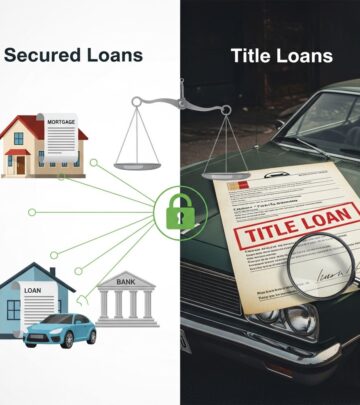
Understanding the mechanics of title loans helps illustrate why they can become problematic. Car title loans use your vehicle as collateral, which can include cars, motorcycles, boats, and recreational vehicles. When you apply for a title loan, you’re essentially pawning your vehicle’s ownership to secure the borrowed funds.
To understand how these loans function in practice, consider this realistic example: You own a car worth $5,000 but need $1,000 in immediate cash. You approach a title loan lender, and they offer you the $1,000 you need. However, there’s a catch—the lender charges a finance fee of 25 percent. On a $1,000 loan, this equals $250 in interest, even if the loan is repaid in just 30 days. This translates to an annual percentage rate (APR) of more than 300 percent. For comparison, in the first quarter of 2025, the average APR on a personal loan was 12.64 percent, making title loans vastly more expensive.
The typical process works as follows:
- You apply for a title loan and are quickly approved with minimal credit checks
- You provide the lender with your vehicle’s title as collateral
- The lender evaluates your vehicle’s value and determines the maximum loan amount (25-50% of value)
- You receive the cash, often within one business day
- You must repay the full loan amount plus fees within the agreed timeframe
- Upon repayment, you receive your vehicle title back
The True Cost of Car Title Loans
Title loans often charge an interest rate of 25 percent per month, which translates to an equivalent annual percentage rate (APR) of 300 percent or higher. Some states limit how much lenders can charge, while others have no restrictions on fees, allowing lenders to charge whatever the market will bear.
Title loans come with steep fees compared to the amount borrowed, which leads to exceptionally high APRs. Beyond the basic interest charges, title lenders often add other costs to the loan amount, including processing fees, documentation fees, and loan origination fees. Many lenders also require borrowers to purchase add-ons such as roadside service plans, GPS tracking devices, or starter interrupt devices, further increasing the overall cost of the loan.
Here’s a concrete example of how costs accumulate: If you borrow $500 for 30 days with a 25 percent monthly finance fee, you would owe $625 at repayment ($500 principal plus $125 in interest). When you add processing fees, documentation charges, and potentially required add-ons, the actual cost can easily exceed $700 or more. This makes title loans significantly more expensive than nearly every other borrowing option available.
Key Features of Car Title Loans
Loan Amounts: Depending on the lender, your location, and the value of your vehicle, you may be able to borrow as little as $100 or as much as $10,000 or more—usually 25% to 50% of your car’s value.
Credit Requirements: A credit check is generally not required to get approved, which means you could qualify with bad credit. This accessibility is a double-edged sword—while it makes the loans easy to obtain, it often traps vulnerable borrowers in expensive debt cycles.
Speed: One of the primary advantages of title loans is their speed. From application to funding, the process often takes less than a day, making them attractive for those facing immediate financial emergencies.
Collateral Risk: Unlike personal loans or credit cards, title loans put your vehicle directly at risk. If you fail to repay the loan, the lender can repossess your car, leaving you without transportation—often a necessity for work and daily living.
Risks and Drawbacks of Title Loans
Before considering a title loan, it’s crucial to understand the significant risks involved. The most obvious risk is losing your vehicle. Until you repay the loan in full, you won’t get your vehicle title back. If you’re unable to pay, the lender can repossess your car, potentially leaving you without transportation to get to work or handle essential responsibilities.
The extremely tight repayment timeline creates another major risk. Most lenders require repayment in 15 to 30 days—an extremely quick timeline that few borrowers are able to manage. This pressure often leads borrowers to roll over their loans, paying additional fees to extend the repayment period. This refinancing trap can quickly turn a $1,000 loan into thousands of dollars in fees.
The debt cycle is particularly problematic with title loans. Because of the high costs and short terms, many borrowers cannot afford to repay their loans when they come due. Rather than defaulting and losing their vehicles, they choose to refinance or roll over the loan, paying another round of fees to buy more time. This can create a seemingly endless cycle of debt.
Additional risks include:
- Repossession of your vehicle if you default on the loan
- Difficulty selling or trading your vehicle while owing a title loan
- Accumulating additional fees through loan rollovers
- Impact on your financial situation if you lose your vehicle
- Potential damage to your credit if the lender reports to credit agencies
Comparing Title Loans to Other Borrowing Options
When considering a title loan, it’s important to explore alternatives that may offer better terms and lower costs. Several options are worth considering before turning to a title loan:
Personal Loans: Personal loans typically have lower APRs (averaging around 12-13%) and more flexible repayment terms. While personal loans may require a credit check, they don’t put your vehicle at risk and often provide better terms than title loans.
Credit Cards: While credit cards aren’t ideal for large amounts, they typically offer lower interest rates than title loans for short-term borrowing, especially if you have a promotional APR offer.
Payday Alternative Loans: Some credit unions offer payday alternative loans (PALs) with maximum APRs of 28 percent—significantly lower than title loans—and better repayment terms.
Friends and Family: Borrowing from trusted friends or family members, if possible, eliminates interest charges and professional fees entirely.
Payment Plans: Contact the entity to whom you owe money and inquire about payment plans or hardship programs, which may be available without interest.
Community Resources: Many communities offer financial assistance programs for residents facing temporary hardships.
State Regulations and Availability
Title loans are not available in all states. Currently, car title loans are legal in approximately 25 states, with an additional 12 states offering these loans with specific restrictions. These restrictions vary widely by state and may include limits on the maximum APR lenders can charge, minimum loan periods, or requirements regarding loan rollovers.
Some states cap the fees lenders can charge, making these loans somewhat less predatory in those jurisdictions. However, even with state-imposed limits, title loans remain significantly more expensive than traditional lending options. If you’re considering a title loan, check your state’s specific regulations and any restrictions that apply to lenders in your area.
When Should You Consider a Title Loan?
Despite their significant drawbacks, there are limited circumstances where a title loan might be considered as an absolute last resort. These situations would include emergency medical expenses, preventing homelessness, or other life-threatening situations where no other financial options are available. Even in these cases, you should:
- Read all fine print carefully before signing any documents
- Understand the complete repayment obligation, including all fees
- Ensure you can realistically repay the loan within the given timeframe
- Ask about any penalties for early repayment
- Understand the consequences of default and repossession
- Consider whether losing your vehicle would create worse financial problems
Tips for Avoiding Title Loans
The best approach is to avoid title loans altogether by building financial resilience and exploring alternatives when emergencies arise. Consider these preventive strategies:
- Build an emergency fund to cover unexpected expenses
- Explore community assistance programs before resorting to high-cost loans
- Maintain access to various credit options, including credit cards with reasonable limits
- Negotiate with creditors for payment plans or hardship programs
- Seek financial counseling to develop better money management strategies
- Consider gig economy work or selling unused items for quick cash alternatives
Frequently Asked Questions About Car Title Loans
Q: What happens if I can’t repay my title loan?
A: If you cannot repay your title loan, the lender can repossess your vehicle. You would lose your car and still owe any remaining balance on the loan, plus additional collection fees.
Q: Can I get a title loan if my car has an outstanding loan on it?
A: Generally, no. Most title lenders require that you own your vehicle outright, meaning it’s completely paid off. However, some lenders may approve you if you owe a small amount on the vehicle.
Q: How quickly can I get approved for a title loan?
A: Title loans typically have fast approval processes, with some lenders approving applications and disbursing funds within one business day. The simplicity of the application process and minimal credit checks speed up the approval timeline.
Q: Will a title loan affect my credit score?
A: Most title lenders do not report to credit bureaus, so the loan itself won’t directly impact your credit. However, if you default and the lender pursues collection actions, this could negatively affect your credit.
Q: What if I want to get out of a title loan?
A: You can exit a title loan by repaying the full amount owed, including all fees and interest. Some lenders may also allow early repayment without penalties, though you should verify this before taking out the loan. Alternatively, you might explore refinancing options or negotiating with the lender.
Q: Is there a way to refinance my title loan?
A: Many title loan companies allow refinancing or “rolling over” your loan, but this simply extends your debt obligations and adds more fees. This is generally not recommended as it perpetuates the debt cycle.
Q: How much can I borrow with a title loan?
A: You can typically borrow between 25 and 50 percent of your vehicle’s value, ranging from as little as $100 to potentially $10,000 or more, depending on the lender and your vehicle’s value.
Q: Are title loans legal everywhere?
A: No. Title loans are only legal in approximately 25 states, with an additional 12 states offering them with specific restrictions. Check your state’s regulations to determine if title loans are available in your area.
References
- How Do Title Loans Work, And Are They Worth The Risk? — Bankrate. 2025. https://www.bankrate.com/loans/auto-loans/car-title-loans/
- What To Know About Payday and Car Title Loans — Consumer Advice, Federal Trade Commission. 2024. https://consumer.ftc.gov/node/77512
- How Do Title Loans Work? — Experian. 2024. https://www.experian.com/blogs/ask-experian/how-do-title-loans-work/
- Can I Use My Car As Collateral For A Personal Loan? — Bankrate. 2025. https://www.bankrate.com/loans/personal-loans/using-car-as-collateral-for-personal-loan/
- 7 ways to (legally!) get out of a car title loan — Bankrate. 2024. https://www.bankrate.com/loans/personal-loans/how-to-get-out-of-a-title-loan/
Similar Articles








Read full bio of Sneha Tete