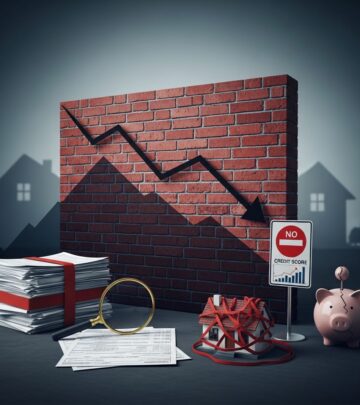
Car Purchases and Mortgage Hurdles
Discover how financing a new vehicle can jeopardize your home loan approval and learn strategies to safeguard your financial future.

Acquiring a new vehicle while pursuing a home loan often creates significant financial obstacles. Lenders scrutinize your overall debt burden, credit health, and liquidity when evaluating mortgage applications, and a fresh auto loan can undermine all three areas.
The Interplay Between Auto Financing and Home Loans
When planning major life purchases like a house and a car, timing matters immensely. A car loan introduces new monthly obligations that directly influence your eligibility for mortgage financing. Lenders calculate affordability based on standardized metrics, and any increase in recurring payments can shrink the home price you qualify for.
Consider the foundational elements of mortgage underwriting: income stability, debt levels, creditworthiness, and available assets. A vehicle purchase disrupts this balance by adding installment debt, triggering credit checks, and potentially reducing liquid savings if you’re dipping into down payment funds.
Understanding Debt-to-Income Ratio Challenges
The debt-to-income (DTI) ratio stands as a primary gatekeeper in mortgage approvals. This metric divides your total monthly debt payments by your gross monthly income, with most lenders preferring ratios below 36% to 43% for conventional loans.
A typical new car loan carries payments averaging $700 or more monthly, depending on vehicle price and terms. For instance, on an $8,000 monthly income, a $400 car payment consumes 5% of your DTI capacity alone, effectively limiting your housing budget by tens of thousands of dollars.12
| Monthly Car Payment | Approximate Reduction in Home Affordability |
|---|---|
| $250 | $50,000 |
| $400 | $90,000 |
| $600 | $140,000 |
| $1,000 | $235,000 |
This table illustrates the rule of thumb: every $100 in auto payments correlates to about $20,000 less in mortgage capacity. High car prices exacerbate this, as new vehicles often exceed $50,000, pushing payments into the $800+ range.3
Credit Score Fluctuations from New Auto Loans
Applying for a car loan involves a hard inquiry on your credit report, which can temporarily drop your score by 5-10 points. More critically, the new account reduces your average credit age and shifts your credit mix, potentially lowering scores further if your history is thin.
Lenders pull credit multiple times during the mortgage process—from pre-approval to closing—and any decline could push you below minimum thresholds, like 620 for FHA loans or 740+ for optimal rates. Even pre-approvals aren’t ironclad; ongoing monitoring means post-pre-approval car shopping risks loan denial at the last minute.15
- Hard inquiries: Visible for two years, impacting scores for 12 months.
- New account effect: Lowers average age of accounts, a factor worth 15% of FICO scores.
- Payment history boost: On-time auto payments can later improve scores if managed well over 6-12 months.
Depleting Cash Reserves and Down Payment Funds
Mortgage guidelines often require reserves—extra savings equivalent to 2-6 months of mortgage payments—post-closing. Using cash for a car down payment or outright purchase erodes this buffer, signaling risk to underwriters.
Even cash purchases aren’t harmless if they leave you short for the 3-20% home down payment plus 2-5% closing costs. Lenders verify bank statements throughout the process, and sudden large withdrawals raise red flags about financial stability.1
Strategic Timing for Vehicle and Home Purchases
Experts unanimously advise delaying car buys until after mortgage closing. Avoid new credit for 6-12 months pre-application to present the cleanest profile. If a vehicle is essential, explore these lower-risk paths:
- Pay cash without touching reserve or down payment funds.
- Replace an existing higher-payment loan with a lower one, potentially improving DTI.
- Maintain exceptionally high credit (760+) to weather inquiry dips.
Post-closing, your mortgage locks in, freeing DTI capacity for auto financing without threat.
Refinancing Existing Car Loans: Pros and Cons
Refinancing an auto loan mid-mortgage process merits caution but can help if it slashes payments. A lower rate or extended term reduces DTI, offsetting any credit hit from the new inquiry.
However, if the refinance extends the loan beyond 72-84 months or balloons the balance, lenders may factor the full remaining term into DTI calculations. Consult your loan officer first to model impacts.1
Leasing vs. Buying: Which Hurts More?
Car leases function as debt equivalents in DTI computations, often with higher monthly costs due to depreciation fees. A lease might exceed a purchase loan payment by 20-30%, amplifying affordability hits. Both trigger inquiries, but leases lack equity buildup.
- Leases: Treated as full-term obligations; early termination fees deter payoff strategies.
- Purchases: Allow prepayment to eliminate DTI impact pre-mortgage.
Neither is ideal during applications—opt for public transit or existing vehicles temporarily.8
Real-Life Scenarios and Lessons
Picture a buyer pre-approved for a $400,000 home. They finance a $45,000 SUV with $650 monthly payments right after. DTI jumps from 32% to 39%, disqualifying them from the property. Another pays off a $300/month car loan pre-application, boosting qualification by $60,000.
These cases underscore: lenders dictate affordability via formulas, not personal budgets. Proactive debt management unlocks larger homes.2
Steps to Protect Your Mortgage Path
- Assess current DTI: List all debts divided by income; aim under 36%.
- Freeze credit: Prevent inquiries; lift only for mortgage pulls.
- Build reserves: Maintain 6+ months’ expenses beyond down payment.
- Pay down debts: Target high-interest or high-payment loans first.
- Consult professionals: Loan officers simulate scenarios accurately.
Frequently Asked Questions
Can I buy a car after mortgage pre-approval?
No—pre-approvals monitor credit until closing. New debt can void it.15
How much does a $500 car payment reduce my loan amount?
Roughly $100,000, varying by income, rates, and guidelines.2
Does paying cash for a car help?
Only if reserves remain intact; large withdrawals still scrutinize.1
Will a car loan improve my credit for a mortgage?
Not immediately—positive history needs 6-12 months to benefit.5
What’s the ideal DTI for mortgage success?
Under 36%; 28% housing-only is optimal.13
Final Financial Prioritization Guide
Homeownership typically offers greater long-term wealth via equity and tax benefits over vehicles, which depreciate rapidly. Sequence purchases with housing first to maximize options and minimize costs. Track your metrics monthly and adjust habits accordingly for seamless approval.
References
- Will Buying a Car Affect My Mortgage Approval? — Experian. 2023-10-15. https://www.experian.com/blogs/ask-experian/how-buying-car-can-impact-mortgage-approval/
- How Does My Car Loan Payment Affect My Mortgage? — AZ Mortgage Brothers. 2024-02-20. https://azmortgagebrothers.com/how-does-my-car-loan-payment-affect-my-mortgage/
- How Rising Car Prices Present One More Hurdle For Homebuyers — Bankrate. 2024-05-10. https://www.bankrate.com/mortgages/car-loan-effect-on-mortgage-application/
- Consumer Credit – G.19 — Board of Governors of the Federal Reserve System. 2025-03-07. https://www.federalreserve.gov/releases/g19/current/
Similar Articles








Read full bio of medha deb