Car Payments Stay High Despite Falling Rates
Discover why your monthly car payment might not decrease even as interest rates drop, and learn proven strategies to reduce costs effectively.

Interest rates have been trending downward in recent years, yet countless drivers continue facing steep monthly car payments. This disconnect arises because payments hinge on more than just the rate—loan duration, borrowed amount, and lender terms play pivotal roles. Understanding these elements empowers you to take control and potentially slash your obligations.
The Mechanics Behind Stubborn Car Payments
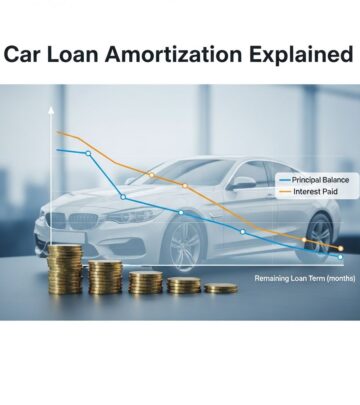
Auto loans use an amortization schedule where each payment splits between principal reduction and interest. A lower rate reduces the interest portion, but if your loan term remains fixed, the monthly total often stays unchanged unless you refinance or adjust terms. For instance, on a 60-month loan at 6% interest, dropping to 5% might only shave off a small fraction without restructuring.
Federal Reserve actions influence broader rates, but as of March 2026, the target remains at 3.50-3.75%, stabilizing auto lending without sharp drops. Subprime borrowers still face 16-21% APRs, amplifying the issue.
Key Factors Locking in High Payments
- Fixed Loan Terms: Most contracts span 48-84 months; shortening them hikes payments, while extending adds interest.
- Principal Balance: High initial borrowing from low down payments means more to repay, regardless of rate cuts.
- Credit Profile: Rates tie to scores; improvements post-purchase don’t auto-adjust existing loans.
- Vehicle Depreciation: New cars lose value fast, trapping negative equity that inflates refinanced amounts.
Refinancing: Your Path to Real Savings
Refinancing replaces your current loan with a new one at better terms. With rates dipping, qualified borrowers can cut APRs significantly. Average savings hit $151 monthly via platforms like Caribou. Steps include checking credit, shopping lenders, and calculating breakeven—typically 6-12 months.
| Scenario | Original Loan | Refinanced Loan | Savings |
|---|---|---|---|
| Loan Amount | $30,000 | $30,000 | – |
| Term | 60 months | 48 months | 12 months shorter |
| Rate | 6% | 5% | 1% lower |
| Monthly Payment | $579.98 | $704.55 (shorter term offsets rate drop) | Potential $100+ with same term |
| Total Interest | $4,799 | $3,818 | $981 less |
This table, adapted from Experian data, shows shorter terms save interest despite higher monthlies. Extend terms cautiously to avoid long-term costs.
Boost Down Payments for Future Wins
A hefty upfront payment shrinks the principal, curbing interest accrual. On a $30,000 car, $10,000 down halves interest from $4,799 to $3,199 over 60 months at 6%. Lenders view larger down payments (20%+) as lower risk, often granting better rates.
Opt for Shorter Loan Durations
Shorter terms like 36-48 months carry lower rates due to reduced default risk. A 48-month vs. 60-month loan on $30,000 at 6% saves $981 in interest, though payments rise. Biweekly payments accelerate payoff: 26 half-payments yearly equal 13 full ones, trimming interest via daily calculations.
Leverage Promotions and Smart Timing
Dealerships offer 0% APR or rebates during clearances, slashing effective costs. Strong credit (700+) unlocks these; check scores first. End-of-year events clear inventory at discounts, reducing financed amounts.
Advanced Tactics to Minimize Interest
- Principal-Focused Extra Payments: Target principal to lower daily interest base.
- Biweekly Schedule: Pay half monthly every two weeks for faster equity build.
- Cash Purchases: Ideal but rare; eliminates interest entirely.
- Trade-Ins: Offset loans, though depreciation risks negative equity.
Risks of Extended Terms in a Low-Rate World
Longer loans (72+ months) ease monthlies but inflate total interest. Even at 5.34% APR, a $49,000 five-year loan costs $933 monthly with substantial interest. Refinancing to extend rarely pays off.
Is Refinancing Worth It Now?
In 2026, with Fed rates steady, opportunities persist for creditworthy borrowers. Use calculators to project: if savings exceed fees, proceed. Improved credit since origination boosts odds of lower rates.
FAQs
Will falling rates automatically lower my payment?
No, existing loans require refinancing to capture new rates.
How much can I save refinancing?
Averages $151/month; depends on credit, term, and balance.
What’s the ideal down payment percentage?
20% or more to minimize interest and secure better rates.
Are biweekly payments effective?
Yes, they add an extra payment yearly, reducing principal faster.
When should I avoid refinancing?
If fees exceed savings or loan payoff nears within 18 months.
Take Action: Steps to Lower Your Payment Today
1. Pull free credit reports.
2. Compare 3+ lender quotes.
3. Run amortization scenarios.
4. Refinance if savings top 1% APR drop.
Proactive management turns rate drops into tangible relief, freeing cash for savings or investments.
References
- What do new interest rates mean for your car loan — Caribou. 2024. https://caribou.com/resource-center/auto-refinance/interest-rates-are-dropping-what-it-means-for-your-car-loan/
- 7 Ways to Pay Less Interest on a Car Loan — Experian. 2024. https://www.experian.com/blogs/ask-experian/how-to-pay-less-interest-on-car-loan/
- How To Avoid Paying Interest On A Car Loan — Preston Ford of Keller. 2024. https://www.prestonfordofkeller.com/blogs/3380/how-to-avoid-paying-car-loan-interest/
- Factors That Impact Your Auto Loan Interest Rate — North Jersey Federal Credit Union. 2024. https://njfcu.org/factors-that-impact-your-auto-loan-interest-rate/
- When will car interest rates start dropping? — Bankrate. 2026-03. https://www.bankrate.com/loans/auto-loans/when-will-auto-loan-rates-drop/
- Auto Loan Rates from Bank of America — Bank of America. 2026. https://www.bankofamerica.com/auto-loans/auto-loan-rates/
- How does the Fed interest rate affect car loans? — Bankrate. 2026. https://www.bankrate.com/loans/auto-loans/fed-rates-and-auto-loans/
Similar Articles








Read full bio of Sneha Tete