Car Loan Interest Rates Guide
Unlock strategies to secure the lowest car loan rates and minimize borrowing costs in today's market.
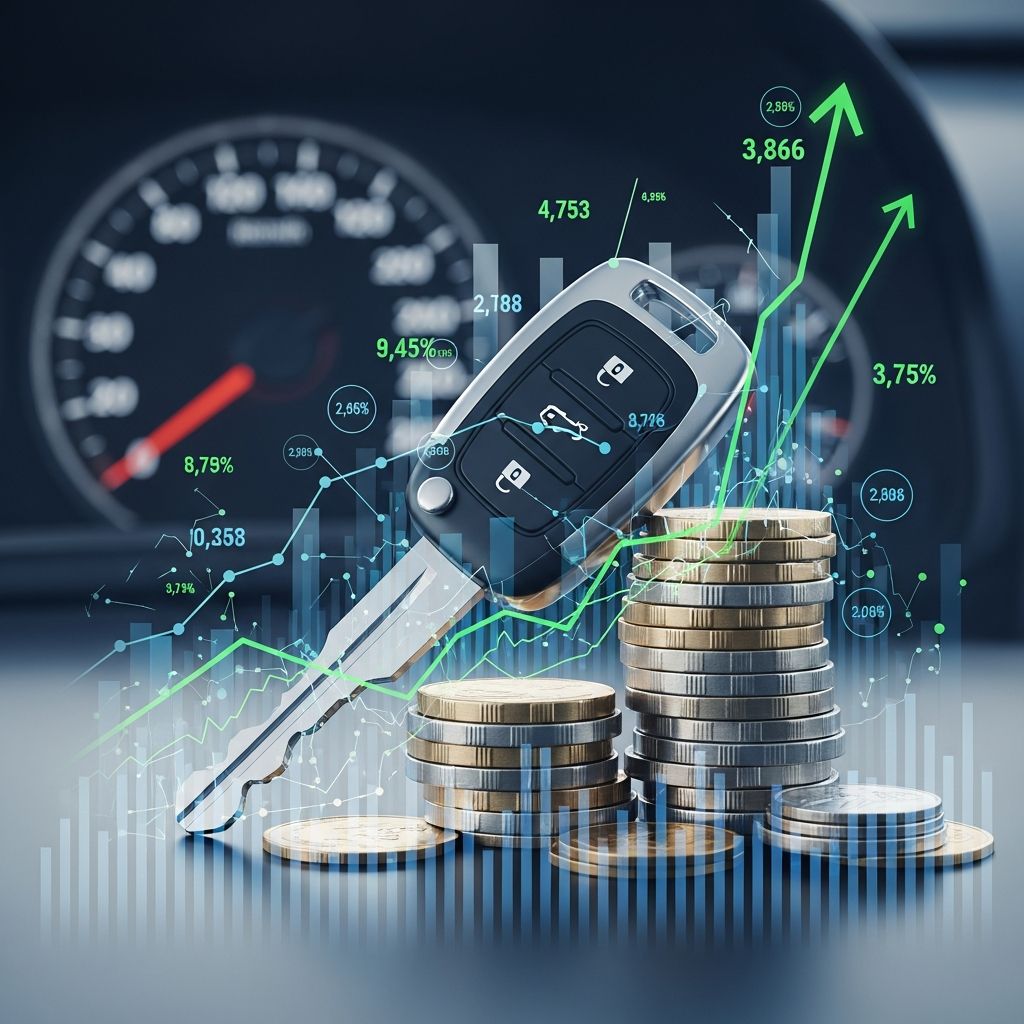
Car loan interest rates determine the total cost of financing a vehicle purchase. In 2026, average rates for new cars hover around 6.8-7% for 48-60 month terms, while used car rates are slightly higher at 7.2-7.4%. Understanding these rates and how to influence them can save thousands over the loan life.
Current Landscape of Auto Loan Rates
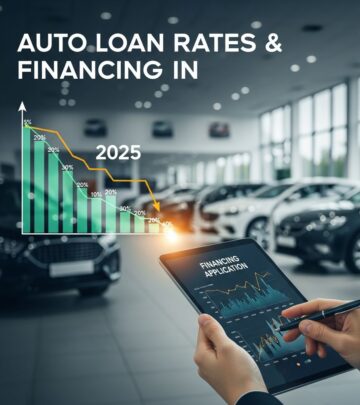
The auto lending market in 2026 reflects recent Federal Reserve adjustments, with benchmark rates at 3.5-3.75%. Despite this, consumer auto loans remain elevated due to lender risk assessments and vehicle pricing. New vehicle financing averages 6.96% for 60 months and 6.83% for 48 months, per recent surveys. Used cars see 7.41% for 48 months and 7.26% for 36 months.
Top lenders offer competitive starting APRs:
- PenFed Credit Union: 3.39% for new cars (with car-buying service).
- Southeast Financial Credit Union: 3.50% starting, terms 12-84 months.
- Navy Federal Credit Union: 3.89% for new cars (12-36 months).
- Caribou: 4.64% for fair credit borrowers.
These rates apply to qualified borrowers and vary by term, amount, and vehicle type. Longer terms like 72-84 months often carry higher APRs, such as 5.99% at Navy Federal.
Factors That Shape Your Car Loan APR
Several elements dictate the interest rate lenders assign to your auto loan. Primary among them is your credit profile, which signals repayment reliability.
Credit Score Impact on Rates
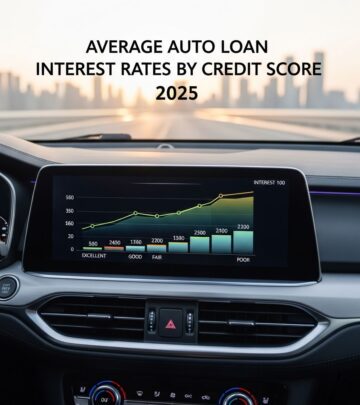
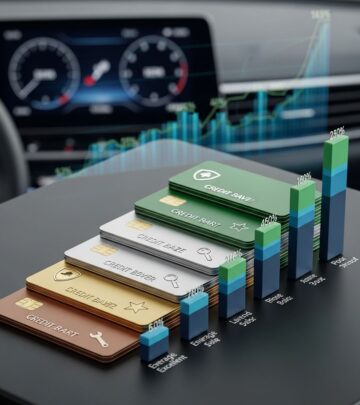
Credit scores directly correlate with APRs. Borrowers with excellent credit (800+) secure new car rates around 6.81% and used at 7.92%. Fair credit (580-669) faces 19.15% for new and 21.13% for used.
| Credit Score Range | Average New Car APR | Average Used Car APR |
|---|---|---|
| Excellent (800+) | 6.81% | 7.92% |
| Very Good (740-799) | 6.83% | 7.59% |
| Good (670-739) | 8.22% | 10.75% |
| Fair (580-669) | 19.15% | 21.13% |
| Poor (<580) | 22.11% | 23.82% |
Data shows a stark divide: top-tier scores save over 15% compared to poor credit.
Loan-to-Value Ratio and Down Payments
Lenders assess loan-to-value (LTV) ratios, preferring 99-100% or lower. Higher LTVs trigger elevated rates due to increased risk. For a $60,000 vehicle, financing beyond $72,000-$78,000 worsens terms. Larger down payments reduce LTV, improving rates.
Vehicle Age and Type
New cars command lower rates than used ones. Navy Federal lists 3.89% for new (short terms) vs. 4.79% for used. Private-party purchases often exceed dealer financing rates, like PNC Bank’s 7.69%.
Loan Term Length
Shorter terms yield better rates but higher monthly payments. A 36-month loan might start at 3.50%, while 84 months reaches 5.99%. Borrowers increasingly choose 70+ month terms to ease payments, raising total interest.
Strategies to Secure Lower Rates
Proactive steps can optimize your APR. Start by reviewing your credit report for errors and paying down debt to boost scores.
- Shop Multiple Lenders: Compare offers from credit unions like PenFed (3.39%) and banks like Capital One (5.00%).
- Increase Down Payment: Aim for 20% to lower LTV and demonstrate commitment.
- Opt for Shorter Terms: If affordable, choose 36-48 months for rates under 4%.
- Leverage Discounts: Autopay or car-buying services can shave points, e.g., PenFed’s service requirement.
- Pre-Qualify: Get rate quotes without hard inquiries to negotiate better.
Credit unions often undercut banks; Navy Federal’s rates for members start lower.
New vs. Used Car Financing Breakdown
New vehicles benefit from manufacturer incentives and lower risk, averaging 6.6% recently with $722 monthly on $43,894 over 69.7 months. Used loans average 10.6% on $29,995 over 70.1 months at $569 monthly.
| Type | Avg. APR (60-mo) | Avg. Payment | Avg. Amount |
|---|---|---|---|
| New | 6.96% | $722 | $43,894 |
| Used | 7.41% (48-mo equiv.) | $569 | $29,995 |
DCU offers same rates for both, up to 130% vehicle value.
Navigating Market Trends in 2026
Fed cuts provide marginal relief, but high vehicle prices sustain elevated payments. Delinquencies may tick to 1.54% in 2026. Overall average rate sits at 6.7%, blending all credit tiers.
Dealerships face floorplan constraints, pushing longer terms despite cost hikes. Monitor for further cuts, but focus on personal factors for best rates.
Common Pitfalls to Avoid
- Overlooking Total Cost: Longer terms reduce monthly outlay but amplify interest.
- Ignoring Fees: Seek no-fee options like Gravity Lending (4.99%+).
- Rushing Approval: Multiple apps ding scores; limit to 14-45 day windows.
- Skipping Refinance: Rates drop? Refinance to cut costs.
Frequently Asked Questions
What is a good car loan interest rate in 2026?
Under 5% qualifies as excellent for strong credit; 6-8% average for good scores.
How does credit score affect car loan rates?
Higher scores unlock sub-7% rates; below 670 expect double digits.
Are credit unions better for auto loans?
Yes, often 1-2% lower than banks, e.g., PenFed at 3.39%.
Should I put money down on a car loan?
Yes, 10-20% lowers LTV and APR.
Can I get a car loan with bad credit?
Possible, but rates exceed 20%; improve score first.
Final Thoughts on Optimizing Your Auto Financing
Securing favorable car loan rates demands preparation: bolster credit, compare lenders, and align terms with budget. In 2026’s market, savings of $2,000+ are achievable through diligence. Use tools from reputable platforms to match offers and drive away with optimal terms.
References
- Compare the Best Auto Loan Rates in April 2026 — LendingTree. 2026-04. https://www.lendingtree.com/auto/
- Auto Loan Rates & Financing in 2026 — Bankrate. 2026-03-25. https://www.bankrate.com/loans/auto-loans/rates/
- What Are Interest Rates for Car Loans in 2026? — Joshua McDonald / YouTube. 2026 (approx.). https://www.youtube.com/watch?v=hc5FFS45a6Q
- Federal Reserve Cuts Interest Rates to 3.5-3.75% — CBT News. 2025-12-10 (relevant for 2026 trends). https://www.cbtnews.com/federal-reserve-cuts-interest-rates-to-3-5-3-75-offers-limited-relief-for-auto-buyers/
- Auto Loan Rates for New & Used Cars — Navy Federal Credit Union. 2026 (current). https://www.navyfederal.org/loans-cards/auto-loans/auto-rates.html
Similar Articles








Read full bio of medha deb