Car Leasing vs. Short-Term Rentals: A Complete Guide
Understand the key differences between leasing and renting to find the right vehicle option for your needs.
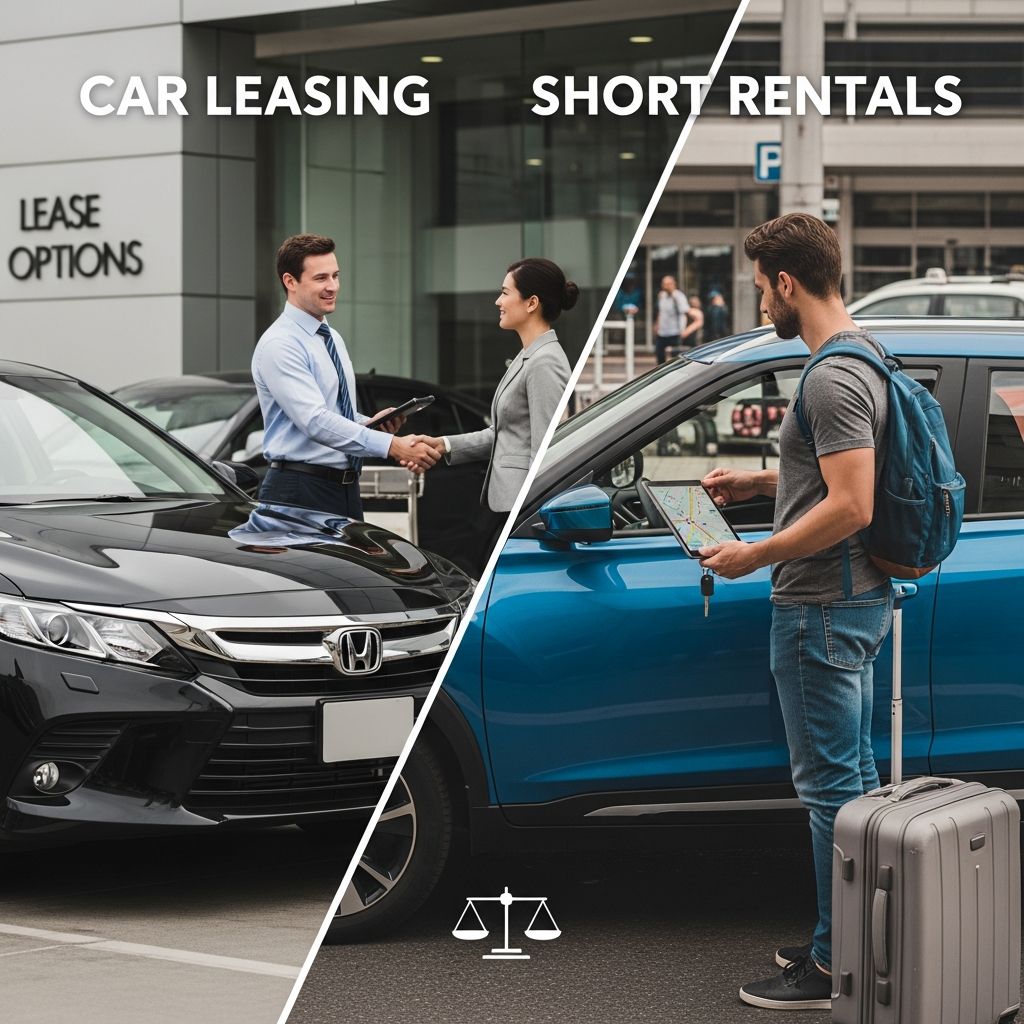
Deciding how to access a vehicle without purchasing one requires understanding the fundamental differences between leasing and renting. Both options allow you to drive a car without the long-term commitment of ownership, yet they serve distinctly different purposes and come with varying financial obligations, flexibility levels, and contractual requirements. The choice between these two approaches depends on your specific needs, driving patterns, budget constraints, and how much control you want over your vehicle experience.
Duration of Use: The Primary Distinction
The most significant difference between leasing and renting relates to how long you need the vehicle. Leasing typically commits you to 2-4 years, making it a medium-term solution for drivers who want consistent, predictable transportation. In contrast, renting serves short-term needs, ranging from a single day to several months, offering maximum flexibility for travelers, business professionals, or anyone with temporary vehicle requirements.
This temporal distinction shapes nearly every other aspect of the agreement, from pricing models to maintenance responsibilities. Understanding whether your need is temporary or sustained helps immediately narrow your options.
Financial Structure and Payment Models
The way you pay for each option reflects their different purposes. Leasing requires monthly payments over the contract term, often accompanied by an upfront down payment, acquisition fees, and registration costs. Rental agreements use a daily or weekly rate structure, where you pay only for the time you use the vehicle, making it genuinely pay-as-you-go.
For extended use periods, leasing often proves more cost-effective per month compared to daily rental rates accumulated over months. However, rental pricing flexibility means you can adjust your commitment based on changing circumstances without financial penalties. Consider a scenario where you need a vehicle for three months: while daily rental rates might initially seem expensive, the cumulative cost may rival or exceed a lease payment—but without the binding contract.
Upfront Costs Comparison
Both options involve initial expenses beyond the monthly charge:
- Lease initiation: First month’s payment, down payment (typically $1,000-$3,000), acquisition fee, registration, and taxes
- Rental initiation: Credit card authorization, optional insurance purchase, and sometimes a refundable security deposit
Leasing generally requires more substantial upfront investment, while rental agencies may authorize a larger amount on your credit card as a security measure but often refund it upon vehicle return in good condition.
Mileage Restrictions and Driving Limitations
Leases impose strict mileage limits, typically ranging from 10,000 to 12,000 miles annually, with excess mileage charges of 15-30 cents per mile. This means a 12,000-mile annual lease on a three-year contract allows 36,000 total miles. Exceeding this limit results in substantial fees added to your final bill.
Rental agreements often include mileage allowances but provide greater flexibility. Long-term rental arrangements may offer unlimited mileage or higher limits, and terms are more negotiable since the rental period is shorter and the company’s residual value concerns are minimal.
For commuters with lengthy daily drives or those planning cross-country trips, rental options may prove more practical. Conversely, drivers with predictable mileage patterns benefit from lease cost certainty.
Insurance and Liability Coverage
Insurance requirements differ significantly between these options:
- Leased vehicles: You must carry your own comprehensive auto insurance policy meeting the lessor’s requirements, typically including collision and comprehensive coverage. Lessor requirements often exceed standard personal policies.
- Rental vehicles: Insurance may be covered through your personal auto policy, credit card benefits, or purchased at the rental counter. This flexibility simplifies the process for occasional users.
Rental agencies assume ownership responsibility for the vehicle, so they maintain primary insurance. Your personal coverage or purchased rental insurance handles additional liability or damage protection. Lease companies require you to protect their asset because you’re responsible for the vehicle throughout the contract term.
Maintenance and Wear-and-Tear Responsibility
This area reveals another critical distinction in how each option operates:
Rental maintenance: The rental company handles all maintenance, repairs, servicing, and routine care. You drive the vehicle and return it; the company manages everything else. However, damage you cause—whether accidental or negligent—may result in charges.
Lease maintenance: Maintenance responsibility varies by lease agreement. Some leases include routine maintenance (oil changes, tire rotations, filters), while others make you responsible for these tasks. Most leases hold you responsible for excessive wear and tear beyond normal use, with additional charges for damage exceeding wear-and-tear thresholds.
Defining “normal wear and tear” becomes important in lease agreements. Worn tire tread, minor paint chips, and small interior marks typically fall within acceptable ranges, but large scratches, mechanical damage, or interior stains incur additional charges at lease-end.
Vehicle Selection and Model Availability
Leasing provides broader vehicle selection because dealerships offer their entire inventory across multiple manufacturers. You can choose from numerous models, trim levels, and colors, selecting exactly the vehicle you want.
Rental agencies maintain smaller inventories based on popular models and available stock. You may not get your exact choice—rental companies will offer a comparable vehicle from their available fleet. Long-term rentals sometimes allow model selection, but typical short-term rentals offer categories rather than specific vehicles.
Flexibility and Commitment Levels
The contractual nature of each option dramatically affects your flexibility:
Rental flexibility: You can return the vehicle anytime within your rental period without penalty. If your needs change, you simply return the car and walk away. This low-commitment approach suits unpredictable situations.
Lease commitment: Leases create legal contracts with significant early termination penalties, potentially costing thousands of dollars. Breaking a lease requires paying remaining monthly payments, early termination fees, and possible gap insurance charges. This high-commitment structure assumes you’ve planned your needs for the full term.
Customization and Modification Restrictions
Rented vehicles cannot be customized. You drive them as-is and must return them in similar condition. Adding equipment, modifying appearance, or changing functionality is prohibited.
Leased vehicles also typically prohibit customization. Since you must return the lease vehicle in saleable condition, any modifications or aftermarket parts must be removed. Residual damage from removed modifications may incur charges.
Purchased vehicles offer complete customization freedom because you own the asset and can modify it however you choose, though modifications may affect resale value and warranty coverage.
Comparative Analysis Table
| Feature | Leasing | Renting |
|---|---|---|
| Duration | 2-4 years (medium-term) | Days to months (short-term) |
| Payment Structure | Monthly payments | Daily/weekly rates |
| Upfront Costs | Higher ($1,000-$3,000+ down payment) | Lower (credit card authorization) |
| Mileage Limits | Strict (10,000-12,000/year typical) | Flexible (often unlimited for long-term) |
| Insurance | You must carry own policy | Covered by rental company or purchased |
| Maintenance | Shared or your responsibility | Rental company handles |
| Vehicle Selection | Wide dealership inventory | Limited to rental fleet |
| Customization | Not allowed | Not allowed |
| Early Exit | Expensive penalties | Flexible, no penalties |
| Best For | Predictable, medium-term needs | Temporary, flexible requirements |
Cost Analysis: When Each Option Makes Financial Sense
Comparing costs directly depends on your specific situation. For drivers needing a vehicle for several months, calculating the total cost reveals which option is more economical. A daily rental rate of $50/day equals $1,500 monthly, which may exceed or rival a lease payment of $300-$400 monthly for the same vehicle category.
However, leasing introduces additional considerations: mileage overage fees can quickly accumulate, and wear-and-tear charges at lease-end represent unexpected expenses. Rental options provide cost predictability because you know exactly what you’ll pay before committing.
Monthly lease advantages: Better long-term pricing, warranty coverage, newer vehicle technology, and predictable monthly budgeting.
Rental advantages: Flexibility to adjust duration, no long-term financial commitment, included maintenance, and simplified insurance.
Insurance Considerations and Hidden Costs
Insurance represents a critical but often overlooked factor. Leasing requires maintaining comprehensive coverage exceeding minimum state requirements, potentially adding $100-$200 monthly to your actual lease cost. Rental insurance, if you need to purchase it, typically costs $15-$30 daily but is optional if you have adequate personal coverage.
Both options may include gap insurance (covering loan differences in total-loss situations), but this is bundled into lease costs and optional for rentals. Late fees, excess mileage charges, and damage assessments represent additional hidden costs for both options but vary significantly based on your usage patterns.
Frequently Asked Questions
Can I negotiate lease payments like rental rates?
Yes, lease payments printed in advertisements often represent manufacturer’s suggested retail price and can be negotiated downward, similar to vehicle purchases. However, the best lease deals typically require excellent credit scores, and competitive rates may reflect manufacturers clearing inventory of slower-selling models.
What happens if I want to exit a lease early?
Early lease termination is expensive, potentially costing as much as completing the contract. Some dealers may purchase the vehicle from the leasing company as a trade-in, potentially releasing you from obligations, but this requires finding a willing dealer and depends on the vehicle’s current value.
Are rental mileage limits negotiable?
Yes, especially for long-term rentals spanning weeks or months. Rental companies often offer unlimited mileage options or higher limits for extended rentals, whereas short-term daily rentals typically include daily mileage allowances.
Which option is better for frequent drivers?
Renting is generally better for frequent drivers with unpredictable schedules or high mileage needs because there are no penalty fees for exceeding mileage limits. Leasing penalizes high mileage at 15-30 cents per mile, making it expensive for drivers exceeding allowances.
Does my personal auto insurance cover rental vehicles?
Most personal auto policies extend coverage to rental vehicles, but verify this with your insurer before renting. Credit cards sometimes provide rental coverage through their benefits programs, and rental companies offer purchased coverage at checkout if you lack personal coverage.
Making Your Decision: Key Factors to Consider
Selecting between leasing and renting requires honestly assessing your needs. Consider these questions:
- How long do you need the vehicle—weeks, months, or years?
- How many miles will you drive annually?
- Do you want a specific vehicle model or are you flexible?
- Can you commit to a multi-year contract, or do you need flexibility?
- Is minimizing upfront costs important to your decision?
- Do you want included maintenance or prefer handling your own?
Choose leasing if: You need reliable, newer-model transportation for 2-4 years with predictable mileage (under 12,000 miles annually), prefer included warranty coverage, and want to drive a specific vehicle type.
Choose renting if: Your needs are temporary (days to months), mileage is unpredictable, flexibility matters more than long-term savings, and you want zero long-term commitment.
Conclusion: Aligning Options With Your Lifestyle
Neither leasing nor renting represents a universally superior choice—each serves different purposes for different drivers. Business professionals on temporary assignments benefit from rental flexibility, while suburban families with stable commutes may prefer lease predictability and newer technology. Examining your actual driving patterns, financial situation, and timeline reveals which option aligns with your real-world transportation needs, ensuring you make a decision you won’t regret months into the agreement.
References
- Leasing vs. Renting a Car – Progressive — Progressive Insurance. Accessed February 6, 2026. https://www.progressive.com/answers/leasing-vs-renting-car/
- Leasing vs. Buying a New Car — Consumer Reports. https://www.consumerreports.org/cars/buying-a-car/leasing-vs-buying-a-new-car-a9135602164/
- Car Hire vs. Car Leasing: What is the Difference — Europcar. https://www.europcar.com/en-db/p/carleasingservicesdubai
Similar Articles








Read full bio of medha deb