Car Leasing Costs Explained
Discover the true expenses of leasing a vehicle, from monthly payments to hidden fees, and learn negotiation strategies for 2026 deals.

Leasing a car typically involves monthly payments around 1% of the vehicle’s MSRP for competitive deals, such as $400 for a $40,000 model over 36 months with standard mileage. This benchmark helps evaluate offers, though actual costs depend on negotiated price, interest rates, and vehicle depreciation projections.
Core Components Driving Lease Expenses
Lease payments stem from a formula balancing the vehicle’s initial value, its projected end-of-term worth, financing charges, and contract length. Understanding these elements empowers drivers to spot favorable terms and avoid inflated quotes.
- Capitalized Cost (Cap Cost): This represents the negotiated purchase price of the car before leasing calculations. Lowering it directly reduces payments; every $1,000 off translates to about $28 less monthly on a 36-month term.
- Residual Value: The estimated resale value at lease end, set by the lessor. Higher residuals mean lower payments since you’re financing less depreciation.
- Money Factor: Essentially the lease’s interest rate, often expressed as a small decimal (e.g., 0.0025 equals 6% APR). Dealers may markup this from the base rate, adding $20-50 monthly.
- Lease Term and Mileage: Standard is 36 months with 10,000-12,000 miles/year. Longer terms or higher mileage allowances increase costs due to greater depreciation risk.
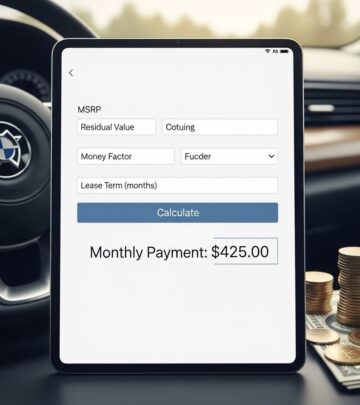
These factors interact in the lease equation: Monthly Payment = (Cap Cost – Residual) / Term + (Cap Cost + Residual) × Money Factor. Mastering this math reveals why comparing apples-to-apples quotes across dealers is crucial.
Average Monthly Payments by Vehicle Segment
In 2026, competitive leases align with the 1% MSRP rule, adjusted for incentives and market conditions. Here’s a breakdown of realistic ranges for popular categories, assuming minimal down payment and standard terms.
| Vehicle Type | MSRP Range | Competitive Monthly Payment | Examples |
|---|---|---|---|
| Compact Sedan | $28,000-$32,000 | $250-$320 | Honda Civic, Toyota Corolla |
| Mid-Size Sedan | $33,000-$40,000 | $330-$400 | Toyota Camry, Honda Accord |
| Compact SUV | $35,000-$42,000 | $350-$420 | Toyota RAV4, Honda CR-V |
| Mid-Size SUV | $42,000-$55,000 | $420-$550 | Toyota Highlander, Ford Explorer |
| Luxury Compact | $45,000-$55,000 | $450-$550 | BMW 3 Series, Audi A4 |
| Luxury Mid-Size SUV | $55,000-$75,000 | $550-$750 | BMW X5, Mercedes GLE |
These figures factor in strong residuals from reliable brands like Toyota and Honda, which keep payments lower. Luxury models may exceed 1% without promotions.
Upfront and Ongoing Costs Beyond the Monthly Payment
Leasing isn’t just monthly bills; initial drive-off amounts and extras add up. Expect $2,000-$4,000 upfront, covering first payment, taxes, registration, and fees. Large down payments lower monthlies but risk loss if the car is damaged early.
- Acquisition Fee: $500-$1,000, non-negotiable charge for lease processing.
- Taxes: Vary by state; often rolled into payments or paid upfront.
- Insurance: Typically higher for leases to cover full replacement value.
- Maintenance: Covered under warranty for new cars, but excess wear charges apply at end.
- Disposition Fee: $300-$500 at termination for return processing.
Over 36 months, total costs might reach 50-60% of MSRP, versus owning post-loan. High interest rates in 2026 amplify this, making low money factors essential.
Negotiation Strategies for Lower Costs
Leases are highly negotiable, contrary to myths of fixed ads. Focus on components, not the payment itself, to avoid dealer manipulations.
- Shop the Cap Cost: Treat it like buying—get quotes from 3-5 dealers via email for the same trim, color, options. Aim for invoice price or below.
- Challenge Money Factor: Request the manufacturer’s “buy rate” and cite sources like Edmunds if marked up. This can shave dozens off monthly.
- Eliminate Add-Ons: Decline dealer extras like protection packages; they inflate cap cost unnecessarily. Insist on itemized breakdowns.
- Leverage Incentives: End-of-quarter deals or loyalty programs can drop payments below 1% via subsidized rates.
- Use Brokers: They access dealer cost pricing, often saving $50-150/month without haggling.
Email strategy works best: Send specs to multiple dealers, pit offers against each other anonymously. This yields 10-20% better terms than in-person.
Leasing vs. Buying: Financial Breakdown for 2026
With elevated new car prices and rates, leasing offers lower monthlies for premium drives but perpetual payments. Buying builds equity but demands higher upfront and potential resale losses amid tech shifts.
| Aspect | Leasing | Buying |
|---|---|---|
| Monthly Cost | Lower (e.g., $400 vs. $600) | Higher initially, zero post-loan |
| Ownership | None; return vehicle | Full after payoff |
| Total 6-Year Cost | Higher with renewals | Lower long-term if kept |
| Flexibility | Upgrade every 3 years | Fixed until trade/sell |
| EV/Tech Risk | Less exposure | Higher depreciation |
Lease if driving under 12k miles/year and valuing newness; buy for longevity or high mileage.
Hidden Pitfalls and How to Avoid Them
Excess mileage fees ($0.15-$0.30/mile), wear-and-tear charges, and early termination penalties can balloon costs. Track usage, document condition at signup, and buy excess miles upfront if needed. Poor credit hikes money factors, so check scores beforehand.
Market shifts like rapid EV depreciation favor leasing, minimizing ownership risks from outdated tech.
Frequently Asked Questions
What is a good monthly lease payment?
Aim for 1% of MSRP, like $400 on a $40,000 car. Compare multiple quotes for context.
Can I negotiate a lease deal?
Yes, cap cost and money factor are key levers. Email multiple dealers for best results.
Are lease down payments required?
Minimal is ideal (first month + fees), but larger ones cut monthlies at higher risk.
How do residuals affect costs?
Higher residuals lower payments; brands like Toyota excel here.
Is leasing cheaper than buying long-term?
Often not, due to continuous payments, but suits short-term premium use.
Final Tips for Smart Leasing in 2026
Run numbers with online calculators, verify all terms in writing, and walk from deals exceeding benchmarks. With diligence, leasing delivers luxury access without ownership hassles.
References
- What Is a Good Lease Payment in 2026? Real Examples — The Vantage Group Auto. 2026. https://www.thevantagegroupauto.com/blog/what-is-a-good-lease-payment-2026
- Can You Negotiate a Lease in 2026? What Actually Works — The Vantage Group Auto. 2026. https://www.thevantagegroupauto.com/blog/can-you-negotiate-a-lease-2026
- Don’t Buy or Lease a Car in 2026 Until You Watch This — YouTube. 2026. https://www.youtube.com/watch?v=whguOmmjEEQ
- Buying or Leasing a Car in 2026: Which Make is Best for You? — Consumer Reports. 2026. https://www.consumerreports.org/cars/buying-a-car/leasing-vs-buying-a-new-car-a9135602164/
- Should You Buy or Lease a Car in 2026? Costs, Financing, and Smart Strategies Explained — Upbeat Wealth. 2026. https://upbeatwealth.com/blog/should-you-buy-or-lease-a-car-in-2026-costs-financing-and-smart-strategies-explained/
Similar Articles








Read full bio of medha deb