Car Insurance Claim Timeline
Discover the typical timeline for car insurance claims, from filing to payout, and learn what influences processing speed for faster resolutions.
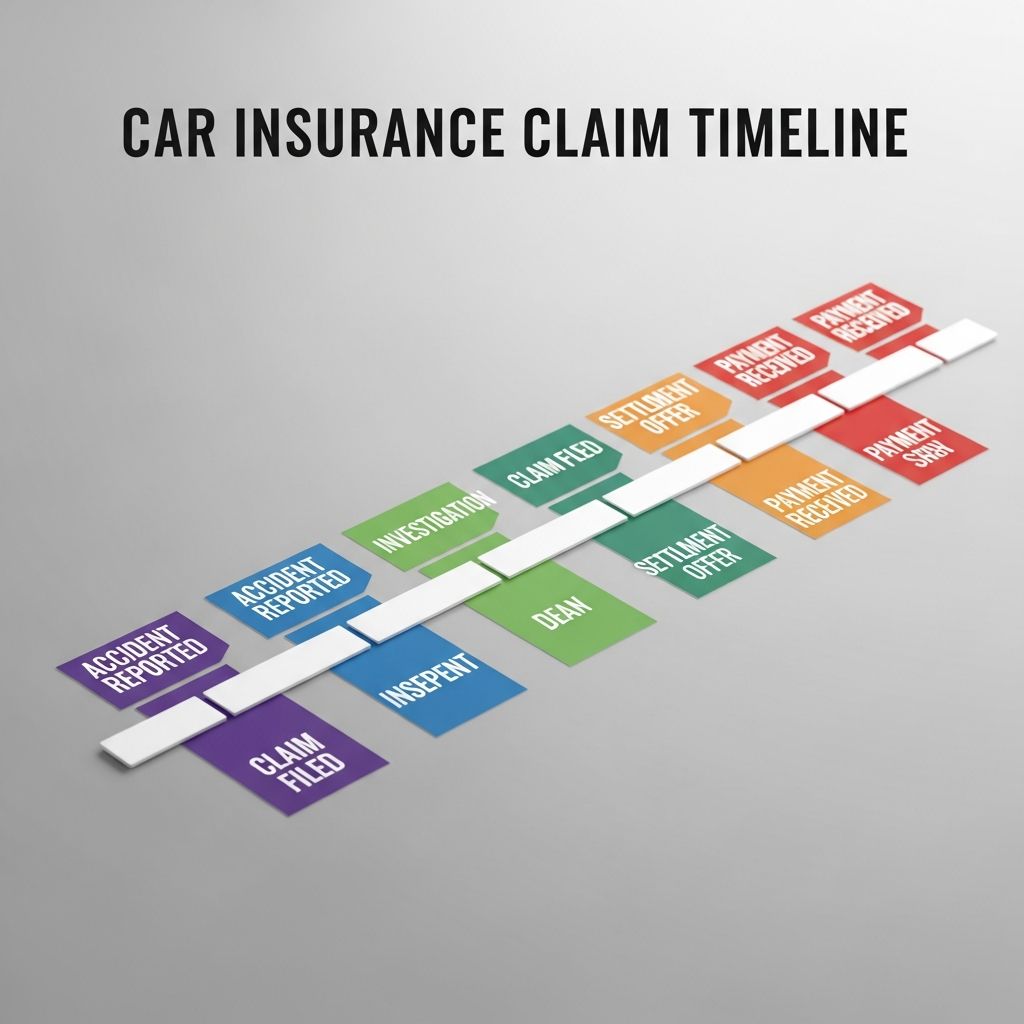
Car insurance claims typically take anywhere from a few days to several weeks to resolve, though complex cases involving injuries or disputes can extend to months. The process involves multiple stages, each with its own timeframe influenced by factors like damage severity and state regulations.
Initial Steps After an Accident
Right after a collision, prioritize safety and gather essential information to streamline your claim. Contact emergency services if needed, then exchange details with other drivers, including names, contact information, insurance policies, and vehicle details. Document the scene with photos of damages, road conditions, and license plates.
Obtain a police report if law enforcement responds, as it provides an official record of the incident. Many insurers recommend reporting claims within 24 hours to avoid complications. Use your insurer’s app, website, or 24/7 hotline for filing, providing your policy number, accident date, time, location, and initial evidence.
- Policy number and proof of coverage
- Details of all involved parties
- Photographic evidence of damage
- Police report or witness statements
This preparation allows claims departments to assign a handler quickly, often within hours of submission.
Key Stages in the Claims Process
The claims journey breaks down into distinct phases, each contributing to the overall timeline. Understanding these helps set realistic expectations.
Claim Assignment and Initial Review
Upon filing, your insurer assigns a claims adjuster, usually within 1-7 days. The adjuster contacts you to confirm details and opens a claim file. They review submitted documents, police reports, and photos to assess initial coverage applicability.
Investigation and Liability Assessment
Investigation follows, where adjusters verify fault through evidence collection. This includes interviewing witnesses, consulting other drivers’ insurers, and possibly site visits. Vehicle inspections occur here, either on-site or at approved shops. Simple cases resolve in 7-30 days; disputes prolong this to weeks or months.
| Stage | Description | Average Timeframe |
|---|---|---|
| Claim Filing | Submit details online or by phone | Immediate to 1 day |
| Adjuster Assignment | Contact and initial review | 1-7 days |
| Investigation | Fault determination and inspections | 7-30 days |
| Damage Appraisal | Repair estimates and coverage review | 3-14 days |
| Settlement and Payout | Negotiation and payment issuance | Days to weeks |
Data from major insurers shows repairable claims averaging around 19 days in recent studies.
Damage Evaluation and Repair Estimates
Adjusters or third-party appraisers inspect your vehicle to estimate repair costs. Preferred repair networks speed this up, often completing within days. Independent shops may require supplemental approvals if estimates differ. For totaled vehicles, valuation compares market value against repair costs.
Settlement Offer and Negotiation
Once liability and damages are confirmed, the insurer issues a settlement offer minus your deductible. Accept for quick payment, or negotiate if undervalued. Injury claims involve medical reviews, extending timelines to 30-90 days or more due to treatment documentation.
Payment Issuance
Approved claims result in payments via check, direct deposit, or repair shop reimbursement within days of settlement. Total loss payouts cover actual cash value; repair claims fund fixes directly.
Factors That Speed Up or Delay Claims
Several variables impact processing speed. Proactive steps can minimize waits.
Damage Extent and Claim Complexity
Minor fender-benders with clear liability settle in 1-2 weeks. Extensive damage, totals, or multiple vehicles extend evaluations. Backordered parts or shop backlogs add weeks.
Injury Involvement
Bodily injury claims require medical records, bills, and prognosis, often taking months. No-fault states like Florida mandate personal injury protection (PIP) reviews first.
Disputed Fault or Multiple Parties
Contested liability triggers inter-insurer negotiations, prolonging investigations. Witnesses or surveillance footage can resolve or complicate matters.
Documentation Quality
Complete, timely submissions accelerate reviews. Missing police reports or photos force follow-ups.
State-Specific Regulations
Laws mandate timelines: Georgia requires acknowledgment in 15 days and decisions in 30; Tennessee allows 45 days. Most states aim for 30-day investigations, with penalties for undue delays.
Recent 2025 data indicates average satisfaction improves with faster cycles, but injury claims lag.
Tips to Expedite Your Claim
Take control to shorten wait times:
- Report promptly: File within 24 hours using digital tools.
- Provide comprehensive evidence: Include all photos, reports, and contacts upfront.
- Choose network repairs: Insurer-approved shops process faster.
- Respond quickly: Reply to adjuster requests immediately.
- Track progress: Use claim numbers and apps for updates.
- Seek legal help if stalled: Attorneys assist in disputes.
Cooperation reduces average times significantly.
Common Challenges and How to Overcome Them
Delays frustrate, but solutions exist. Lowball offers? Gather independent estimates. Denied coverage? Appeal with evidence. Supplemental claims for hidden damage? Submit promptly post-repair discovery.
In high-volume periods like holidays, expect minor slowdowns. Persistence pays off.
Frequently Asked Questions (FAQs)
How long does a simple car insurance claim take?
Straightforward claims without injuries often resolve in 1-2 weeks.
What if my claim exceeds 30 days?
Contact your adjuster; state laws limit unreasonable delays. Escalate if needed.
Does filing a claim raise my premiums?
At-fault claims may increase rates, but minor incidents sometimes qualify for forgiveness.
Can I drive my car during the claim?
If safe, yes; rental coverage may apply if included in your policy.
What happens if the other driver is at fault?
Their insurer handles your claim; your policy covers gaps via collision coverage.
Navigating Claims in 2026: Staying Informed
As of 2026, digital tools like AI-driven apps and mobile inspections shorten timelines. J.D. Power studies highlight ongoing improvements in claim satisfaction through technology. Stay updated on your state’s insurance department guidelines for protections.
Preparation and patience, combined with knowledge, turn stressful claims into efficient resolutions.
References
- How the Car Insurance Claims Process Works — The General. 2023. https://www.thegeneral.com/going-places/blog/car-insurance/how-the-car-insurance-claims-process-works/
- How Long Does a Car Insurance Claim Take? — The Roth Firm, LLC. 2024. https://www.rothlawyer.com/blog/how-long-does-a-car-insurance-claim-take/
- Florida Car Accident Claim Timeline — Florida Injury Lawyer. 2024. https://www.floridainjurylawyer.pro/florida-car-accident-claim-timeline.html
- Time Limit for Car Insurance Claim Settlement — Progressive. 2025. https://www.progressive.com/answers/car-insurance-claim-settlement-time-limits/
- How Long Does an Auto Insurance Claim Take? — Acrisure. 2024. https://www.acrisure.com/blog/how-long-does-an-auto-insurance-claim-take
- What to Expect When Filing a Car Insurance Claim — Allstate. 2024. https://www.allstate.com/resources/car-insurance/how-to-file-a-car-insurance-claim
- How Long Does a Car Insurance Claim Take After an Accident? — P. Quinn Law. 2026-01-15. https://www.pquinnlaw.com/park-ridge-lawyer/how-long-does-a-car-insurance-claim-take-after-an-accident
Similar Articles








Read full bio of Sneha Tete