Car Comparison Spreadsheet: Free Template For 3-5 Vehicles
Download our free car comparison spreadsheet template to analyze new and used vehicles side-by-side and secure the best deal possible.
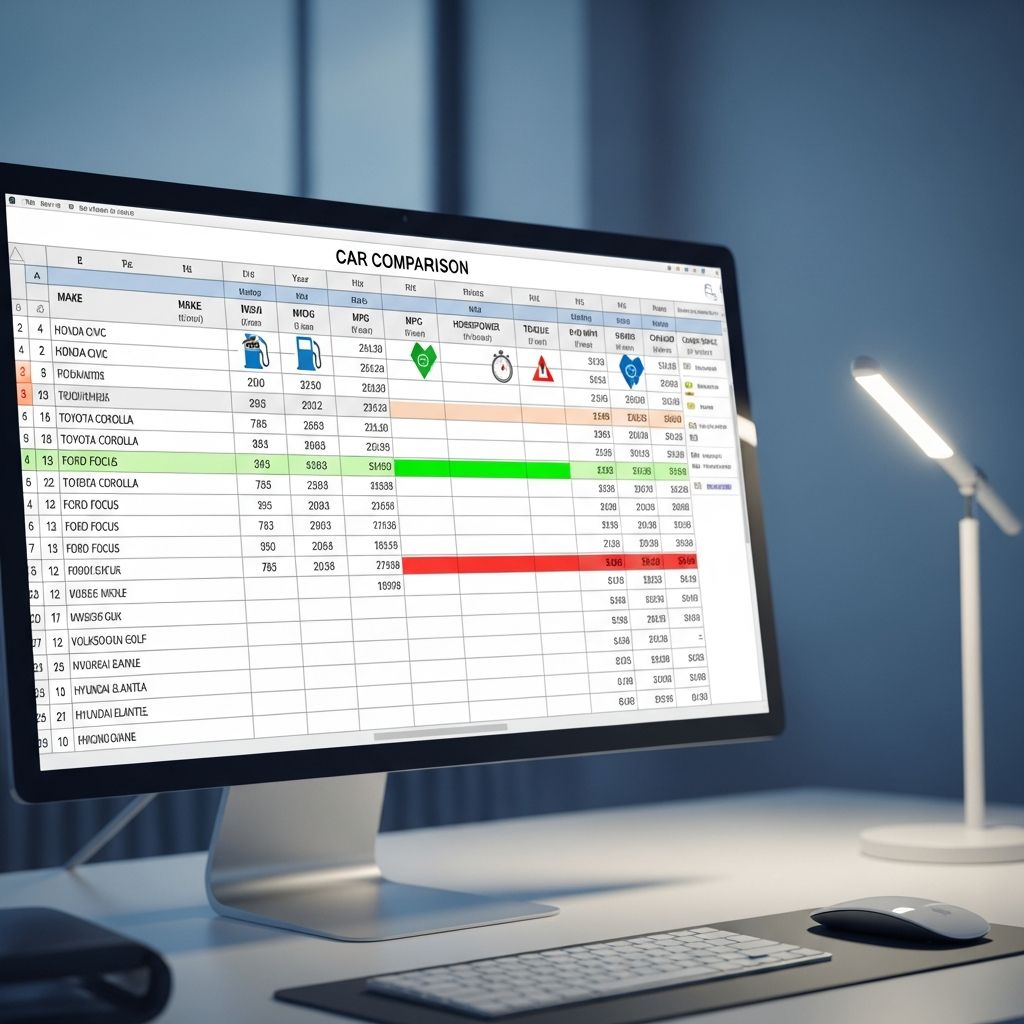
Shopping for a new or used car involves sifting through endless options, specs, and prices. A well-organized car comparison spreadsheet turns overwhelming data into clear insights, empowering you to choose the vehicle that best fits your budget, needs, and lifestyle. Whether you’re eyeing a shiny new SUV or a reliable used sedan, this tool helps you weigh factors like fuel efficiency, features, total ownership costs, and more side-by-side.
Our free, customizable template works seamlessly in Excel, Google Sheets, or similar programs. Input data for up to five vehicles and let the spreadsheet highlight winners based on your priorities. In today’s market—marked by fluctuating prices, inventory shortages, and rising interest rates—this spreadsheet is your secret weapon for negotiating smarter deals and avoiding buyer’s remorse.
How to Use Our Car Comparison Spreadsheet
Building your own vehicle comparison from scratch can be time-consuming, especially if spreadsheets aren’t your forte. That’s why we’ve created a ready-to-use car comparison spreadsheet template. Download it, make an editable copy, and start plugging in details for your top contenders. It’s designed for both new and used cars, with tailored sections to capture relevant data points.
Here’s a step-by-step guide to maximizing the template:
- Download and Duplicate: Get the file from our site and create your own copy in Google Sheets or Excel to avoid overwriting the original.
- List Your Vehicles: Enter the year, make, model, and trim for 3-5 cars you’re considering. Include photos if available for quick visual reference.
- Fill in Core Specs: Compare objective metrics like engine size, horsepower, fuel economy (MPG city/highway), seating capacity, cargo space, and transmission type.
- Evaluate Features: Check off must-haves like safety tech (airbags, blind-spot monitoring), infotainment (Apple CarPlay, navigation), comfort (heated seats, sunroof), and convenience (keyless entry, adaptive cruise).
- Crunch the Numbers: Input pricing details—MSRP or asking price, rebates/incentives, trade-in value, taxes, fees, insurance estimates, and financing terms. The template auto-calculates total out-the-door costs and monthly payments.
- Score and Rank: Assign weights to criteria (e.g., fuel efficiency at 30% importance) and let formulas generate overall ratings. Sort by total score to see clear frontrunners.
- Customize Freely: Add or remove columns for unique needs, like towing capacity for trucks or electric range for EVs.
Pro Tip: Research data from reliable sites like Edmunds, Kelley Blue Book, or manufacturer pages before inputting. Test drive each vehicle and note subjective impressions (ride quality, noise levels) in dedicated columns.
New Cars vs. Used Cars: Tailored Comparison Sections
The data points that matter differ significantly between new and used vehicles. Our spreadsheet includes dedicated tabs or sections for each, ensuring apples-to-apples comparisons.
New Car Comparison
For fresh-off-the-lot purchases, focus on standardized specs and forward-looking costs. Key fields include:
| Feature | Description |
|---|---|
| Base MSRP | Manufacturer’s suggested retail price before negotiations. |
| Rebates & Incentives | Dealer discounts, cash-back offers, or low-interest financing. |
| Fuel Economy | Combined MPG or electric MPGe; factor in local gas prices. |
| Warranty | Standard coverage (e.g., 3yr/36k miles bumper-to-bumper). |
| Tech/Safety Suite | Standard vs. optional features like forward collision warning. |
| Resale Projection | Estimated value after 3-5 years using depreciation tools. |
Calculate 5-year ownership cost by including depreciation, fuel, maintenance, insurance, and repairs. New cars often depreciate fastest in year one (20-30%), so compare against certified pre-owned options.
Used Car Comparison
Pre-owned vehicles shine in value but demand scrutiny on history and condition. Our template’s used car section prioritizes:
- Mileage: Annual average (under 12k ideal); high-mileage cars may need pricier upkeep.
- Number of Owners: Fewer is better; check via CARFAX or AutoCheck reports.
- Vehicle History: Accidents, flood damage, service records, title issues (salvage/rebuild).
- Exterior/Interior Condition: Dents, rust, upholstery wear, tire tread depth.
- Mechanical Inspection: Recent oil changes, brake pads, battery health from a trusted mechanic.
Don’t forget total cost of ownership. Used cars might save upfront but factor in potential repairs. Use the spreadsheet to project costs over 3 years, including an emergency fund column for surprises.
Key Data Points to Track in Your Spreadsheet
Regardless of new or used, compile these essential metrics for comprehensive analysis:
- Pricing Breakdown: Negotiated price, taxes (avg. 6-8%), title/registration fees, destination charges.
- Financing Details: Loan amount, APR (shop rates under 5% in 2026), term (60 months max), down payment (20% ideal).
- Fuel & Efficiency: Tank size, refill frequency, annual fuel cost (e.g., $2k at 25 MPG).
- Insurance Quotes: Get 3+ quotes; varies by model safety ratings and driver profile.
- Maintenance Projections: Oil changes ($50-100), tires ($600/set), expected repairs from Consumer Reports data.
- Performance Metrics: 0-60 mph, towing capacity, ground clearance for off-roaders.
- Comfort & Space: Head/legroom, trunk volume (cubic feet), child seat fit.
Advanced users: Add formulas for cost per mile (total costs ÷ projected miles) or value retention (% of original MSRP after years).
A Note on Car Shopping in 2026
The auto market evolves rapidly. Post-COVID supply chains have stabilized, but high demand for hybrids and EVs keeps prices elevated. Average new car prices hover around $48,000, while used averages $27,000. Inventory is up, giving buyers leverage—aim for 5-10% off MSRP.
Interest rates are cooling (around 4-6% for prime borrowers), but shop credit unions for better terms. EVs qualify for federal tax credits up to $7,500 if made in North America. Always verify eligibility.
Remote buying surged; use online configurators but insist on in-person inspections. Trade-ins: Get appraisals from CarMax, dealerships, and apps like Vroom for max value.
Frequently Asked Questions (FAQs)
Q: Is a car comparison spreadsheet really necessary?
A: Yes—humans overlook details under sales pressure. Spreadsheets provide objective rankings, saving thousands by spotting hidden costs early.
Q: Can I use this for trucks or EVs?
A: Absolutely. Customize columns for towing payload, battery range, charging time, or bed length to fit any vehicle type.
Q: How accurate are ownership cost calculations?
A: Estimates based on your inputs and averages; refine with real quotes and local factors for precision.
Q: What’s the best software for the template?
A: Google Sheets for cloud access/collaboration; Excel for advanced formulas and offline use.
Q: Should I include lease options?
A: Yes—add a lease tab with monthly payment, mileage limits (10-15k/year), and buyout price.
Bonus Tips for Spreadsheet Success
- Weight criteria: Assign 1-10 importance scores (e.g., budget=10, color=2).
- Visualize: Use conditional formatting for color-coded scores (green=best).
- Update dynamically: Link to Google Finance for real-time resale values.
- Share with family: Collaborative editing ensures group buy-in.
Ready to compare? Download our vehicle comparison spreadsheet now, input your shortlist, and drive home confidently. Happy hunting—may your next ride be reliable, affordable, and regret-free!
References
- Vehicle Comparison Spreadsheet Template — The Penny Hoarder. 2023. https://www.thepennyhoarder.com/save-money/car-comparison-spreadsheet/
- Car Comparison Calculator — Vertex42. 2024-01-15. https://www.vertex42.com/Calculators/car-comparison-calculator.html
- Edmunds Car Comparison Tool — Edmunds.com. 2025-11-20. https://www.edmunds.com/car-comparisons/
- Federal EV Tax Credit Eligibility — U.S. Department of Energy. 2025-12-01. https://www.energy.gov/save/ev-tax-credit
- Average New and Used Car Prices — Kelley Blue Book. 2026-01-10. https://www.kbb.com/car-news/average-new-used-car-prices/
Similar Articles








Read full bio of Sneha Tete