Car Battery Coverage Under Auto Insurance Policies
Learn when your auto insurance covers battery replacement and what you need to know
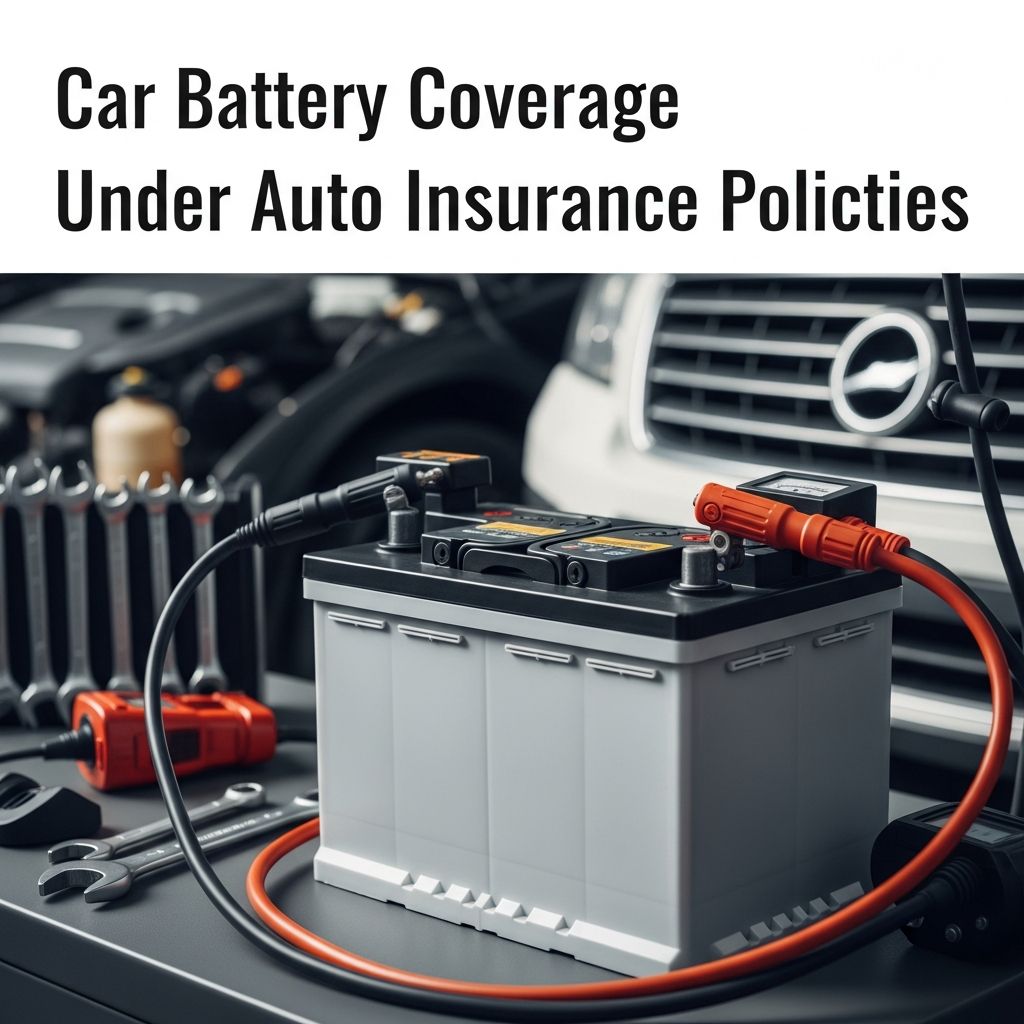
One of the most common questions vehicle owners ask their insurance agents is whether their policy covers the cost of replacing a car battery. The answer is more nuanced than a simple yes or no, as coverage depends on specific circumstances, the type of policy you carry, and how the battery failure occurred. Understanding these distinctions can help you make informed decisions about your coverage and avoid unexpected expenses.
The Distinction Between Routine Maintenance and Covered Losses
Car batteries are classified as consumable items in the insurance industry. Like tires, windshield wipers, and engine oil, batteries naturally wear down over time as part of normal vehicle operation. When a battery fails due to age, lack of maintenance, or simple wear and tear, your standard auto insurance policy will not cover the replacement cost.
This exclusion exists because batteries are considered predictable maintenance expenses rather than sudden, unexpected losses. Insurance is designed to protect against unforeseen events, not routine upkeep. If your battery dies from age or regular use, you will need to pay for replacement out of pocket, typically costing between $100 to $200 for standard batteries, though advanced batteries in luxury or electric vehicles may cost significantly more.
However, auto insurance may provide coverage in specific scenarios where battery damage results from a covered event rather than normal wear and tear. Understanding these situations is crucial for determining whether you should file a claim.
Collision Coverage and Battery Damage from Accidents
Collision coverage protects your vehicle when it strikes another vehicle, a stationary object, or is hit by another vehicle. If your car battery sustains damage during such an accident, collision coverage may help pay for the replacement or repair costs.
Consider this scenario: A collision causes physical damage to your vehicle’s electrical system or battery compartment, rendering the battery inoperable. Under collision coverage, the insurance company may cover the cost of a replacement battery as part of the overall damage claim. However, several important factors apply:
- You must have collision coverage as part of your policy (it is optional, not standard)
- The battery damage must result directly from the accident
- You must pay your deductible before insurance coverage begins
- The total cost of repairs, including battery replacement, must exceed your deductible threshold for the claim to be worthwhile
For example, if your collision deductible is $500 and the battery damage costs $200, your insurance will not cover the battery replacement because the repair falls below your deductible. In such cases, paying out of pocket may be more economical than filing a claim, which could also affect your premium rates in future years.
Comprehensive Coverage for Non-Collision Battery Damage
Comprehensive coverage protects against vehicle damage from events unrelated to collisions. These covered perils include theft, vandalism, fire, flood, hail, and other natural disasters. If your battery is stolen or damaged by any of these events, comprehensive coverage may provide reimbursement.
Stolen battery claims represent the most common scenario where comprehensive coverage applies. Vehicle thieves often target car batteries for resale value. If a thief removes your battery, leaving damage to your vehicle’s electrical components in the process, comprehensive coverage may cover both the battery replacement and the associated damage repairs.
Like collision coverage, comprehensive coverage comes with important limitations:
- Comprehensive coverage is optional and must be included in your policy
- Theft or damage must be documented, often requiring a police report for theft claims
- Your deductible applies before insurance payment begins
- The loss value must exceed your deductible for coverage to benefit you financially
For instance, if your comprehensive deductible is $500 and your battery is stolen (with a typical value of $100-$200), your insurance will not cover the loss because it falls below your deductible threshold. In this situation, filing a claim would not result in any reimbursement to you.
The Critical Role of Deductibles in Battery Claims
The deductible is perhaps the most important factor in determining whether battery damage will actually be covered by your insurance. Your deductible represents your share of the repair cost that you must pay before your insurance company begins reimbursement.
Because car batteries typically cost $100-$200 for standard vehicles, many deductibles ($500-$1,000 or higher) exceed the battery replacement cost. This means your insurance will not provide any payment for battery damage unless additional vehicle damage is claimed simultaneously, bringing the total claim value above your deductible.
Before filing any battery-related claim, calculate whether the total repair cost exceeds your deductible. Filing a claim for damage below your deductible provides no financial benefit and may increase your insurance rates in subsequent years, making the claim counterproductive.
Policy Type and Coverage Variations
Different auto insurance policies offer varying levels of protection. Your specific coverage options depend on several factors:
- The type of policy you selected (liability only, basic coverage, or comprehensive coverage)
- Whether you financed or leased your vehicle (lenders often require collision and comprehensive)
- Your geographic location and state minimum requirements
- The value and age of your vehicle
Some insurers offer optional add-ons like roadside assistance, which may provide battery jump-starts but does not cover replacement costs. This service helps if your battery temporarily fails on the road, enabling you to continue driving once the battery is recharged.
Special Considerations for Electric Vehicles
Electric vehicle (EV) batteries require different consideration than traditional vehicle batteries. EV battery replacements cost significantly more than standard car batteries, sometimes reaching several thousand dollars. However, EV batteries are typically covered under the vehicle’s manufacturer warranty for a specified period or mileage, which may provide more comprehensive protection than standard insurance.
In accident scenarios, collision coverage may apply to EV battery damage, but the high replacement cost makes this coverage particularly important for electric vehicle owners. Routine battery degradation from age and use is not covered by insurance, consistent with standard battery treatment.
Liability Insurance and Battery Coverage
It is important to clarify that liability insurance does not cover your own vehicle’s battery replacement. Liability coverage only pays for injuries or property damage you cause to other people in an at-fault accident. It does not apply to repairs on your own vehicle.
However, if another driver causes an accident and their liability insurance applies, your damaged battery may be covered as part of the claim against their policy. In this scenario, you would file a claim against the other driver’s liability coverage rather than using your own collision or comprehensive coverage.
Strategic Decision-Making for Battery Claims
When facing potential battery replacement costs, evaluate the claim carefully before proceeding:
| Scenario | Coverage Type | Likely Outcome |
|---|---|---|
| Battery fails due to age | Any coverage | Not covered |
| Battery damaged in accident | Collision | Covered if total claim exceeds deductible |
| Battery stolen | Comprehensive | Covered if total loss exceeds deductible |
| Battery damaged by weather | Comprehensive | Covered if total claim exceeds deductible |
| Dead battery from disuse | Roadside assistance | Jump-start provided, not replacement |
Frequently Asked Questions About Battery Coverage
Will my insurance cover a dead battery?
No, auto insurance does not cover dead batteries resulting from age, wear, or lack of maintenance. These are considered routine maintenance expenses. Roadside assistance may help with a jump-start, but replacement costs remain your responsibility.
What should I do if my battery is stolen?
If your battery is stolen, contact your insurance agent if you have comprehensive coverage. You will need to file a police report documenting the theft. Your insurance may cover the loss if the total damage exceeds your deductible. Be prepared to provide proof of the theft and documentation of the battery value.
Does my policy automatically include collision and comprehensive coverage?
No, collision and comprehensive coverage are optional additions to basic liability insurance. If you financed or leased your vehicle, your lender may require these coverages as part of the loan agreement. Review your policy documents or contact your agent to confirm your specific coverage.
How much does a typical car battery cost?
Standard car batteries typically cost between $100-$200. Advanced batteries for luxury vehicles, hybrids, or electric vehicles may cost considerably more, sometimes exceeding $1,000.
What is a deductible and how does it affect my claim?
A deductible is the amount you pay toward repairs before insurance coverage begins. Common deductibles range from $250 to $1,000. If your repair cost is less than your deductible, insurance provides no payment, making small claims economically unfavorable.
Recommended Action Steps
To determine your specific battery coverage situation, take these steps:
- Review your insurance policy documents to identify your collision and comprehensive coverage status
- Locate your deductible amounts for each coverage type
- Contact your insurance agent with details about your specific battery issue
- Ask explicitly whether your situation qualifies for coverage under your policy
- Request a claim estimate before filing if the damage involves an accident or theft
- Consider the total repair costs against your deductible to determine financial feasibility
Conclusion
Car battery replacement coverage depends heavily on the circumstances surrounding the battery failure and your specific policy structure. While routine battery replacements due to age and wear remain your financial responsibility, collision and comprehensive coverage may provide protection if your battery is damaged in an accident, stolen, or harmed by natural disasters. Always verify your coverage details and consult your insurance agent before assuming your battery replacement will be covered. Taking time to understand your policy now can prevent confusion and unexpected expenses when battery problems arise.
References
- Understanding Auto Insurance Coverage for Battery Replacement — Aggetta Insurance. March 2026. https://aggettainsurance.com/auto-insurance-battery-replacement-coverage/
- Does Car Insurance Cover a Battery Replacement — Plymouth Rock Insurance. 2026. https://www.plymouthrock.com/resources/does-car-insurance-cover-a-battery-replacement
- Does Car Insurance Cover Car Battery — LA Insurance. 2026. https://lainsurance.com/blog/does-car-insurance-cover-car-battery
- Does Insurance Cover a Stolen Car Battery — Progressive Insurance. 2026. https://www.progressive.com/answers/does-car-insurance-cover-a-stolen-battery/
- Does Car Insurance Cover Battery Replacement — eINSURANCE. September 18, 2024. https://www.einsurance.com/journal/does-car-insurance-cover-battery-replacement/
Similar Articles








Read full bio of Sneha Tete