Capitalism: Definition, Types, and Economic System
Understanding capitalism: The market-driven economic system shaping global commerce.

What Is Capitalism?
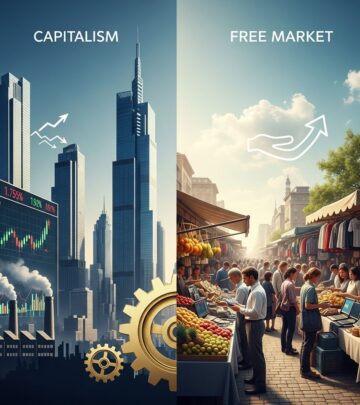
Capitalism is an economic and political system in which a country’s trade and industry are controlled by private owners for profit, rather than by the state. It is fundamentally based on the principles of free markets, private property rights, and the pursuit of profit through voluntary exchange. In capitalist economies, the means of production—factories, land, equipment, and other resources—are privately owned and operated by individuals and corporations seeking to generate returns on their investments.
The capitalist system emerged prominently during the Industrial Revolution and has become the dominant economic model in most developed nations worldwide. Unlike centrally planned economies where the government controls production and distribution, capitalism relies on market mechanisms and price signals to allocate resources and determine what goods and services are produced.
Core Principles of Capitalism
Capitalism operates on several fundamental principles that distinguish it from other economic systems:
- Private Ownership: Individuals and corporations own and control productive assets, making decisions about their use and investment based on profit potential.
- Free Markets: Supply and demand dynamics, rather than government intervention, determine prices, production levels, and resource allocation.
- Profit Motive: The pursuit of profit drives innovation, efficiency, and economic growth as businesses strive to maximize returns for their owners.
- Competition: Multiple producers compete to serve consumer demand, fostering innovation and efficiency while maintaining competitive pricing.
- Consumer Choice: Individuals have the freedom to choose which products and services to purchase, influencing market outcomes through their spending decisions.
- Limited Government Intervention: The state plays a minimal role in economic decision-making, allowing market forces to function with relative independence.
Historical Development of Capitalism
The concept of capitalism evolved gradually over centuries. During the feudal period, economies were based on land ownership and inherited social structures. As trade expanded and markets developed during the Renaissance and Age of Exploration, new economic relationships emerged. The Scottish economist Adam Smith, writing in the 18th century, articulated key principles of capitalist economies in his seminal work “The Wealth of Nations.” Smith described how self-interest and competition could lead to efficient economic outcomes, a concept often referred to as “the invisible hand.”
The Industrial Revolution of the 19th century accelerated capitalism’s growth, as technological innovations enabled mass production and wealth accumulation on unprecedented scales. Factory systems, mechanized production, and capital investment became hallmarks of capitalist economies during this period.
Types of Capitalism
Capitalism manifests in various forms across different nations and regions. Understanding these variations helps explain how different countries balance market freedom with social objectives:
Laissez-Faire Capitalism
Laissez-faire capitalism represents the purest form of capitalist ideology, emphasizing minimal government intervention in economic affairs. Under this system, markets operate with the fewest restrictions, and prices are determined almost entirely by supply and demand. Businesses face minimal regulations, taxation is kept low, and there is limited social safety net. Few modern economies operate as pure laissez-faire systems; however, some nations like Hong Kong and Singapore have historically embraced relatively laissez-faire economic policies.
Welfare Capitalism
Welfare capitalism combines free market principles with government-provided social safety nets and public services. This model, prevalent in many European nations and Canada, maintains private ownership and market mechanisms while using taxation and regulation to provide healthcare, education, unemployment benefits, and retirement security. Welfare capitalist economies balance profit-seeking with social welfare objectives, attempting to harness market efficiency while addressing social equity concerns.
State Capitalism
State capitalism occurs when the government plays a significant role in directing economic activity through state-owned enterprises or strategic industrial policies. While private ownership remains important, the state actively participates in economic planning and investment. China, Vietnam, and Singapore have employed state capitalist models, where governments guide economic development through targeted investments and regulations while maintaining market mechanisms for many sectors.
Stakeholder Capitalism
Stakeholder capitalism emphasizes that corporations should consider the interests of all stakeholders—employees, customers, suppliers, communities, and shareholders—rather than maximizing shareholder value alone. This emerging model gained prominence in the 21st century as businesses increasingly face pressure to address environmental, social, and governance (ESG) concerns.
Strengths of Capitalism
Capitalist economies have demonstrated several significant advantages:
- Innovation and Efficiency: Competition incentivizes businesses to innovate, reduce costs, and improve products, driving technological advancement and economic progress.
- Economic Growth: Capitalist systems have historically generated substantial wealth creation and improved living standards through industrialization and expansion of productive capacity.
- Consumer Benefits: Competition and market choice provide consumers with diverse products at varying price points, improving overall welfare and satisfaction.
- Incentive Structures: The profit motive encourages entrepreneurship, risk-taking, and investment in productive ventures that generate employment and economic activity.
- Decentralized Decision-Making: Market prices convey information efficiently, allowing millions of independent decisions to coordinate economic activity without central planning.
- Individual Freedom: Capitalism generally correlates with greater personal and economic freedoms, allowing individuals to pursue their economic interests.
Criticisms of Capitalism
Despite its strengths, capitalism faces several critiques and challenges:
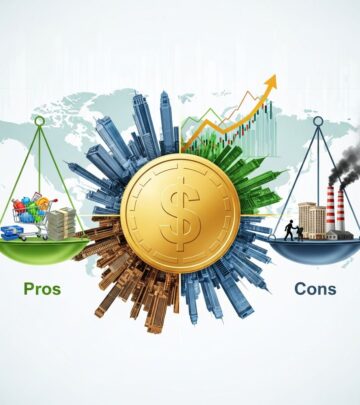
- Income Inequality: Unregulated capitalism can produce substantial wealth disparities, with accumulated capital generating returns that concentrate wealth among existing owners.
- Market Failures: Markets sometimes fail to efficiently allocate resources in areas like environmental protection, public health, and national defense, requiring government intervention.
- Monopolistic Tendencies: Without regulation, successful firms may establish dominant market positions, reducing competition and consumer choice.
- Externalities: Businesses may not bear full costs of negative externalities like pollution, leading to overproduction of harmful goods or services.
- Boom-Bust Cycles: Capitalist economies experience periodic recessions and financial crises, creating unemployment and economic hardship.
- Short-Term Focus: Pressure to maximize quarterly profits may discourage long-term investments in research, sustainability, and worker development.
- Labor Concerns: Without strong regulations, workers may face exploitation through low wages, unsafe conditions, and limited rights.
Capitalism vs. Other Economic Systems
| Economic System | Ownership | Price Determination | Government Role |
|---|---|---|---|
| Capitalism | Private ownership | Supply and demand | Minimal intervention |
| Socialism | Collective/public ownership | Central planning | Extensive control |
| Communism | Communal ownership | Central allocation | Complete control |
| Mixed Economy | Both private and public | Market and planning | Moderate intervention |
Capitalism in Modern Economies
Today’s global economy is predominantly capitalist, though most developed nations employ mixed economic models combining capitalist principles with government regulation and social programs. The United States operates a largely capitalist economy with significant regulatory oversight and social safety nets. European nations blend capitalism with more generous welfare provisions. Even nominally communist nations like China and Vietnam have adopted significant capitalist features, recognizing market efficiency benefits.
Global trade expansion, technological innovation, and financial market development have reinforced capitalist economic structures worldwide. However, ongoing debates about inequality, environmental sustainability, and corporate responsibility continue to shape discussions about capitalism’s future evolution.
Key Characteristics of Capitalist Economies
Capitalist economies typically display the following characteristics:
- Emphasis on profit maximization as the primary business objective
- Reliance on market mechanisms to allocate resources and set prices
- Protection of private property rights through legal systems
- Competitive markets with multiple producers and providers
- Freedom of enterprise allowing individuals to start businesses
- Limited direct government control over production decisions
- Financial markets enabling capital investment and wealth accumulation
- Price signals guiding consumer and producer behavior
Frequently Asked Questions
What is the main goal of capitalism?
The primary goal of capitalism is to generate profit through the efficient allocation of resources via market mechanisms. Businesses and individuals pursue their economic interests, which collectively drive innovation, economic growth, and wealth creation.
Does capitalism require government regulation?
While pure capitalism emphasizes minimal government intervention, most modern capitalist economies employ regulations to address market failures, protect consumers, ensure fair competition, and provide social services. The appropriate level of regulation remains debated among economists and policymakers.
How does capitalism create employment?
Capitalism generates employment as businesses expand to meet consumer demand and maximize profits. Competition drives companies to innovate and increase production, requiring workers. The profit motive encourages business creation and investment in new ventures that generate jobs.
Is capitalism sustainable?
Modern capitalism faces challenges regarding environmental sustainability and resource depletion. While market mechanisms can incentivize efficiency, externalities like pollution require government intervention. Growing emphasis on ESG investing and sustainable capitalism reflects efforts to align profit-seeking with long-term environmental and social concerns.
What distinguishes capitalism from socialism?
Capitalism emphasizes private ownership, market allocation of resources, and profit motive, while socialism emphasizes collective ownership, central planning, and equal distribution. Capitalism prioritizes individual economic freedom and efficiency; socialism prioritizes equity and collective welfare.
Can capitalism exist without private property rights?
No, private property rights are fundamental to capitalism. The ability to own, control, and profit from productive assets is essential to capitalist incentive structures. Without property rights protection, the profit motive lacks meaning and investment declines.
References
- The Wealth of Nations — Adam Smith. 1776. Original foundational text on capitalist economic principles, available through academic publishers.
- Capitalism and Its Alternatives — International Monetary Fund (IMF). IMF.org. https://www.imf.org
- Understanding Different Economic Systems — World Bank Economics Department. 2024. https://www.worldbank.org
- Market Economies and Regulation: A Comprehensive Overview — Organisation for Economic Co-operation and Development (OECD). 2023. https://www.oecd.org
- State Capitalism in Contemporary Markets — Harvard Kennedy School. HKS.Harvard.edu. 2024. https://www.hks.harvard.edu
- Environmental Sustainability and Market Capitalism — United Nations Environment Programme (UNEP). 2024. https://www.unep.org
Similar Articles








Read full bio of Sneha Tete