Capital Structure: Definition, Components & Optimization
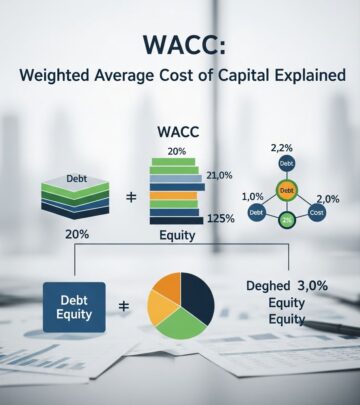
Understanding capital structure: balancing debt and equity for optimal firm value.

What Is Capital Structure?
Capital structure refers to the specific mix of debt and equity that a company uses to finance its operations and growth. It represents the combination of shareholders’ equity, borrowed funds (debt), and preferred stock that appears on a company’s balance sheet. Understanding capital structure is fundamental to corporate finance, as it directly impacts a company’s financial risk, cost of capital, and overall value.
In essence, capital structure answers the question: How should a company finance itself? Should it rely more heavily on borrowing money, raising capital from shareholders through equity sales, or using some combination of both? The decisions companies make about capital structure have far-reaching implications for their financial health and investor returns.
Key Components of Capital Structure
A company’s capital structure typically consists of three primary components:
Shareholders’ Equity
Shareholders’ equity represents the ownership stake in a company. When investors purchase stock, they become partial owners of the business and have claims on its assets after all liabilities are paid. Equity financing involves issuing shares to raise capital without the obligation to repay the funds. The advantage is reduced financial risk, but it may dilute existing shareholders’ ownership percentages and voting power.
Debt (Borrowed Funds)
Debt consists of borrowed money that must be repaid according to agreed-upon terms, typically with interest. This includes bank loans, bonds, mortgages, and other financial obligations. Debt financing offers tax advantages because interest payments are tax-deductible, reducing the company’s overall tax burden. However, excessive debt increases financial leverage and can create significant financial risk if the company struggles to meet payment obligations.
Preferred Stock
Preferred stock is a hybrid security that combines characteristics of both debt and equity. Preferred shareholders receive fixed dividend payments and have priority over common shareholders in receiving distributions and assets during liquidation. However, preferred shareholders typically don’t have voting rights like common shareholders do.
Understanding Financial Leverage
Financial leverage, also known as gearing in the United Kingdom, refers to the extent to which a company uses debt financing relative to equity. When a company has higher leverage, it means a greater proportion of its capital structure consists of debt rather than equity. Financial leverage can amplify returns to shareholders during good times, as profits are distributed among a smaller equity base. However, it also magnifies losses during downturns and increases the risk of financial distress.
The relationship between capital structure and financial leverage is direct: as the debt component increases relative to equity, financial leverage increases. This means the company is using more borrowed money to finance its operations, which can be advantageous if the company earns returns exceeding the interest rate on the debt, but dangerous if earnings fall below debt service requirements.
Why Capital Structure Matters
Capital structure decisions significantly affect several critical business metrics:
Cost of Capital
The cost of capital represents the weighted average return required by all investors (both debt holders and equity investors). Different sources of capital have different costs. Debt is typically cheaper than equity because debt holders have priority claims and lower risk. However, as a company takes on more debt, both the cost of debt and cost of equity increase due to heightened financial risk. Management’s primary objective is establishing a capital structure that minimizes the overall cost of capital.
Financial Flexibility and Risk
While debt can be cheaper than equity, too much debt reduces a company’s financial flexibility. With high debt obligations, a company has less ability to invest in new projects, weather economic downturns, or respond to unexpected opportunities. Additionally, excessive debt increases default risk, concerns investors, and leads to higher borrowing costs. Company management must balance these considerations to maintain sufficient flexibility while managing cost.
Company Valuation
The capital structure directly influences how the market values a company. Different capital structures can affect investor perception of risk and expected returns, ultimately impacting the company’s market value and stock price. An optimal capital structure maximizes firm value by achieving the ideal balance between debt and equity financing.
Optimal Capital Structure
An optimal capital structure is one that minimizes the combined cost of debt and equity financing while maximizing the firm’s value. Achieving this optimal structure requires careful analysis and consideration of multiple factors.
Key Considerations for Optimization
When determining optimal capital structure, management must consider maintaining the company’s credit rating at a level sufficient to attract external financing on reasonable terms. A strong credit rating signals financial health to lenders and investors, enabling the company to raise capital more cheaply. Additionally, management should maintain stable dividend policies and consistent earnings records, which signal financial stability and strengthen investor confidence.
External perceptions matter significantly. How creditors, investors, and rating agencies view the company’s financial position influences the terms available for raising new capital. Management decisions regarding capital structure must be tempered by recognition of these external perspectives.
Trade-off Between Debt and Equity
The optimal capital structure represents a trade-off between the benefits and costs of debt. As companies increase debt, the marginal benefits of lower financing costs initially outweigh marginal costs. However, at some point, additional debt increases financial risk faster than it reduces costs. The optimal structure occurs where the benefit of further debt increases is exceeded by the rising costs of financial distress and risk. Beyond this point, adding more debt actually decreases firm value.
Leverage and Capital Gearing Ratios
Financial analysts use various leverage ratios to quantify the proportion of debt and equity in a company’s capital structure and compare capital structures across companies. These metrics provide objective measures for evaluating financial leverage.
Debt-to-Capital Ratio
The debt-to-capital ratio, also called the debt-to-capitalization ratio, measures the proportion of debt financing relative to total capitalization (debt plus equity). It is calculated as:
Debt-to-Capital Ratio = Total Debt / (Total Debt + Total Equity)
A ratio of 0.40 means 40% of capital structure consists of debt and 60% consists of equity. This ratio helps analysts understand the financial leverage level and compare it against industry norms.
Other Important Ratios
Additional leverage ratios include the debt-to-equity ratio (total debt divided by total equity), the equity ratio (total equity divided by total assets), and the times-interest-earned ratio (earnings before interest and taxes divided by interest expenses). Each provides different insights into capital structure composition and the company’s ability to service debt obligations.
Capital Structure Theories
Modigliani-Miller Theorem
The Miller and Modigliani theorem, a foundational theory in corporate finance, proposes that in a perfect market, a firm’s market value is unaffected by changes in its capital structure. Under certain assumptions—including no taxes, no bankruptcy costs, and perfect information—the theorem suggests that how a company finances itself (debt versus equity) doesn’t matter for firm valuation.
However, this theory is primarily theoretical. Real-world markets are imperfect and subject to taxes, bankruptcy costs, information asymmetries, and other complications. The theorem’s value lies in providing a baseline from which to analyze why capital structure actually does matter in the real world.
Trade-off Theory
Trade-off theory acknowledges that companies choose capital structure by weighing costs and benefits of debt versus equity. The theory recognizes tax benefits of debt (interest tax-deductibility) while accounting for costs associated with financial distress and agency problems. Companies optimize by finding the point where marginal benefits and costs intersect. This theory explains variations in debt-to-equity ratios across industries but doesn’t fully explain variations within industries.
Pecking Order Theory
Pecking order theory suggests companies maintain a hierarchy of financing preferences. First, companies prefer internal financing (retained earnings). Second, if external financing is needed, companies prefer debt over equity. Third, equity is used as a last resort. This preference reflects the fact that equity issuance signals external need for capital and can be viewed negatively by markets. The form of debt a company chooses can signal its perceived need for external financing.
Real-World Complexities
In practice, capital structure often involves complexities beyond simple debt and equity. Many companies use convertible securities (debt that can convert to equity), warrants, stock options, and other hybrid instruments. Additionally, regulated utilities face special considerations where regulators determine appropriate capital structures and rates for ratemaking purposes, even though utilities technically have the right to choose their own structures.
Different industries maintain characteristic capital structures reflecting their business models, cash flow stability, asset bases, and growth opportunities. Capital-intensive industries like utilities typically have higher debt ratios, while technology companies with uncertain cash flows typically maintain lower leverage.
Frequently Asked Questions
Q: What is the relationship between capital structure and financial risk?
A: As debt increases in the capital structure, financial leverage increases, creating greater financial risk. Higher debt means higher fixed obligations that must be paid regardless of earnings, increasing the probability of financial distress. This heightened risk leads to higher required returns from investors and increased cost of capital.
Q: How can a company determine its optimal capital structure?
A: Determining optimal capital structure requires analyzing the trade-off between the costs and benefits of debt. Companies should consider their credit rating, industry norms, cash flow stability, growth opportunities, and investor base. Generally, optimal structure minimizes weighted average cost of capital while maintaining financial flexibility and sustainability.
Q: Why do companies choose to use debt if equity is safer?
A: Companies use debt because it offers several advantages: interest payments are tax-deductible, reducing the effective cost; debt holders have no voting rights, preserving management control; and leverage can amplify returns to shareholders. Additionally, some stakeholders prefer debt because it imposes financial discipline and forces efficient capital use.
Q: How does capital structure affect company valuation?
A: Capital structure affects valuation through its impact on cost of capital, financial risk, and expected cash flows. The optimal structure that minimizes cost of capital and maximizes financial flexibility typically increases company valuation. Conversely, excessive debt that increases distress risk typically decreases valuation.
Q: What factors should influence capital structure decisions?
A: Key factors include maintaining desired credit ratings, industry benchmarks, company growth stage, asset base stability, cash flow predictability, tax considerations, and external investor perceptions. Management must balance these factors to achieve a structure supporting long-term value creation.
References
- Capital Structure — Wikipedia. Accessed November 29, 2025. https://en.wikipedia.org/wiki/Capital_structure
- Modigliani, Franco; Miller, Merton H. — “The Cost of Capital, Corporation Finance and the Theory of Investment.” American Economic Review, Vol. 48, No. 3, 1958. https://www.jstor.org/stable/1809766
- Myers, Stewart C. — “The Capital Structure Puzzle.” The Journal of Finance, Vol. 39, No. 3, 1984. https://www.jstor.org/stable/2327916
Similar Articles








Read full bio of Sneha Tete