Capital Project: Definition, Examples & Financing
Understanding capital projects: Large-scale investments driving economic growth and infrastructure development.
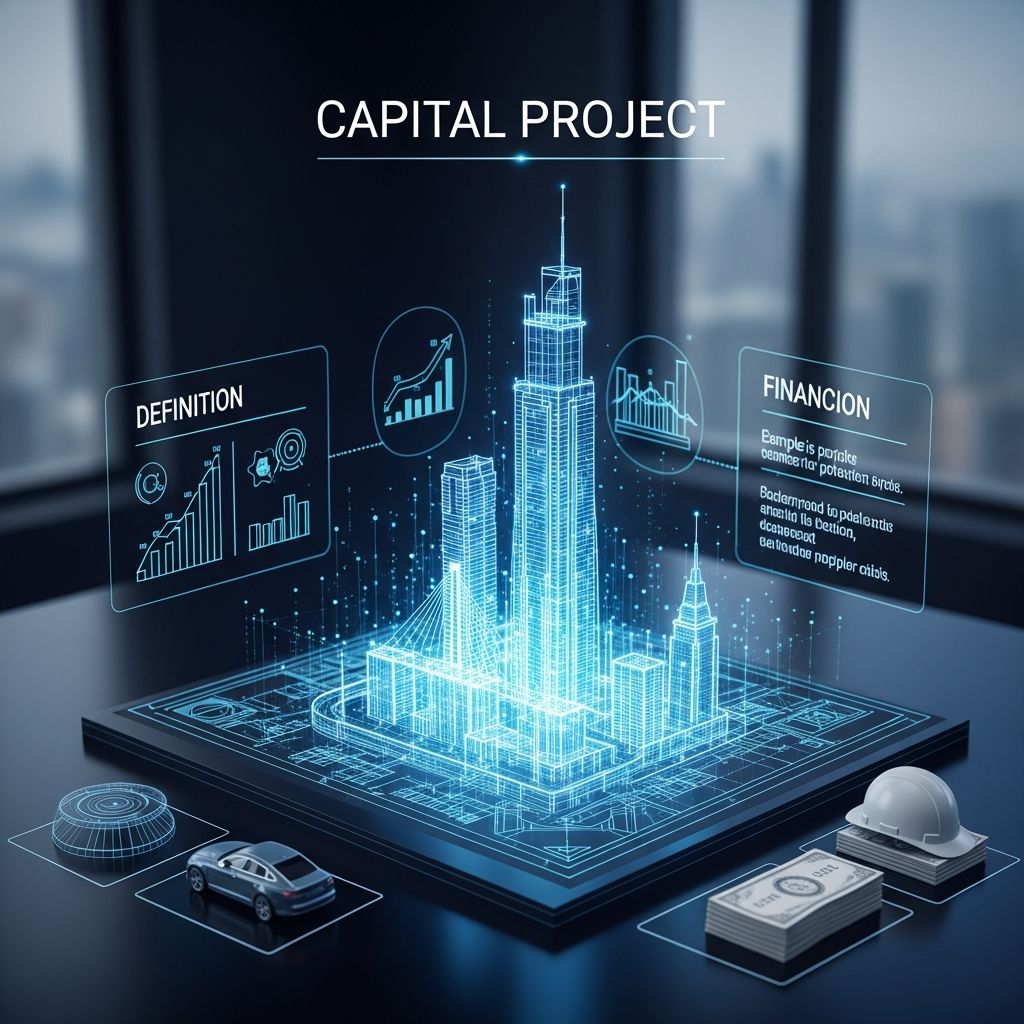
Capital projects represent some of the most significant investments in modern economies, shaping the infrastructure and development landscape across nations. These large-scale, long-term initiatives require substantial financial commitments and sophisticated planning to execute successfully. Understanding capital projects—their structure, financing mechanisms, and strategic importance—is essential for investors, project sponsors, financial institutions, and policymakers.
What Is a Capital Project?
A capital project is a large-scale, long-term investment initiative designed to build, develop, or enhance physical assets and infrastructure. These projects typically involve substantial capital expenditures, often exceeding $100 million, and span multiple years to complete. Capital projects are fundamental to economic growth, supporting the development of essential infrastructure that enables commerce, improves quality of life, and generates employment opportunities.
The defining characteristics of capital projects include their significant scale, extended timelines, complexity in execution, and multiple stakeholder involvement. Unlike routine operational expenditures, capital projects represent strategic investments that create lasting value and shape the economic landscape for decades to come.
Types of Capital Projects
Capital projects encompass a diverse range of infrastructure and development initiatives. The primary categories include:
Mega Projects
Mega projects represent the largest category of capital initiatives, characterized by their scale, complexity, and transformative impact. These include:
- Major airports and aviation hubs serving international destinations
- Highway networks and expressway systems
- High-speed rail networks and urban transit systems
- Large-scale commercial and residential developments
- Bridge and tunnel infrastructure
Global Projects
Cross-border capital projects involve multiple nations and international coordination. Examples include:
- International pipelines for oil and natural gas
- International ports and maritime facilities
- Transnational renewable energy farms
- Submarine cable networks for telecommunications
- Cross-border power transmission systems
Major Infrastructure Projects
These projects serve essential functions for communities and industries, including:
- Power generation facilities and electrical grids
- Water treatment plants and distribution systems
- Industrial complexes and manufacturing facilities
- Healthcare facilities and medical centers
- Educational institutions and research facilities
Why Capital Projects Matter
Capital projects play a crucial role in economic development and societal progress. They create the foundational infrastructure necessary for businesses to operate, facilitate trade and commerce, and improve public services. These investments generate employment during construction phases, stimulate economic activity through supply chains, and create long-term value through enhanced productivity and connectivity. For developing nations, capital projects are particularly vital, enabling modernization and economic transformation that can lift populations out of poverty and create sustainable development.
Financing Capital Projects: Understanding Project Finance
Financing capital projects differs significantly from traditional corporate finance. While conventional business loans depend on a company’s balance sheet and creditworthiness, project finance is structured around the project’s anticipated cash flows. This fundamental distinction creates unique advantages and challenges in securing funding for mega initiatives.
How Project Finance Works
In project finance structures, lenders and investors evaluate the project’s ability to generate sufficient revenue to service debt and provide returns on equity investment. The project is typically established as a separate legal entity—a Special Purpose Vehicle (SPV)—which isolates the project’s risks and financial obligations from the sponsoring organization’s balance sheet. This separation provides several critical benefits:
- Risk isolation protecting the sponsor’s creditworthiness
- Long-term financing aligned with the project’s lifecycle
- Flexibility in structuring debt and equity arrangements
- Attraction of institutional investors seeking project-specific returns
Key Advantages of Project Finance
Project finance offers distinct advantages over traditional financing approaches. It enables sponsors to undertake larger projects than their balance sheets would otherwise support, as lenders focus on project cash flows rather than corporate creditworthiness. Long-term financing can be structured to match the project’s revenue-generation timeline, reducing refinancing risk. Additionally, project finance accommodates multiple stakeholders—governments, private investors, and development banks—sharing risks and rewards appropriately through the capital structure.
Challenges in Financing Capital Projects
Despite the sophistication of project finance mechanisms, securing funding for mega projects presents substantial obstacles. Project sponsors and financing specialists must navigate numerous challenges:
High Capital Requirements
Most capital projects exceed $100 million in total cost, with many running into the billions. These substantial requirements necessitate coordinating multiple financing sources, including commercial debt, equity investments, government subsidies, and development bank financing. Assembling such complex financing packages demands extensive expertise and negotiation across diverse investor groups with varying risk tolerances and return expectations.
Risk Allocation and Management
Capital projects face multiple risk categories requiring careful management. Construction risks include delays and cost overruns that can substantially impact project viability. Operational risks emerge once the project becomes functional, potentially affecting revenue generation. Regulatory and political risks—including policy changes, permitting delays, and shifting government priorities—can fundamentally alter project economics. Market risks, such as commodity price fluctuations or demand changes, further complicate financial planning.
Extended Timelines
Many capital projects require 5–10 years or longer from conception to completion and full operational capacity. These extended timelines create financing challenges, as lenders must commit funds over prolonged periods while managing ongoing risks. Stakeholders require patience and financial staying power through construction phases before revenue generation begins, creating substantial carry costs and refinancing requirements.
Global Complexity
International and cross-border capital projects face additional complications beyond domestic initiatives. Currency fluctuation risks can significantly impact project costs and returns when projects involve multiple national currencies. Political instability in project locations introduces sovereign risk considerations. Varying regulatory environments across jurisdictions create compliance complexity and potential legal obstacles. Environmental and social standards differ internationally, requiring navigation of multiple regulatory regimes.
Financing Options for Capital Projects
Project sponsors have access to diverse financing mechanisms, each with distinct characteristics, advantages, and limitations. Selecting appropriate financing combinations requires careful analysis of project characteristics, risk profiles, and sponsor objectives.
Debt Financing
Debt typically constitutes the largest component of project financing structures. Commercial banks, institutional lenders, and bond markets provide debt capital for capital projects. Senior debt ranks first in repayment priority, offering lower interest rates due to reduced risk. Subordinated debt, positioned after senior claims, carries higher interest rates reflecting greater risk exposure. International bonds allow projects to access global capital markets, while syndicated loans distribute risk among multiple lenders. Export Credit Agencies (ECAs) provide specialized debt financing for cross-border projects, often with favorable terms supporting development objectives.
Equity Financing
Project sponsors, private equity firms, and institutional investors provide equity capital, accepting subordinated returns in exchange for profit participation. Equity investment provides financial flexibility and demonstrates sponsor commitment, potentially facilitating debt financing. However, equity financing dilutes ownership stakes and creates ongoing obligations to distribute profits to investors.
Public-Private Partnerships (PPPs)
PPPs represent collaborative structures where governments and private entities jointly develop and operate infrastructure projects. These arrangements enable risk and revenue sharing, allowing governments to access private sector expertise and capital while maintaining public oversight. PPPs have financed numerous transportation, energy, and utility projects worldwide.
Green Financing
Sustainable and renewable energy projects increasingly access specialized green financing mechanisms. Green bonds, issued specifically to fund environmental projects, attract institutional investors with sustainability mandates. Climate funds operated by multilateral development banks provide concessional financing for climate-related projects. Green financing often features favorable terms reflecting policy support for environmental objectives.
Multilateral Development Bank Funding
International institutions including the World Bank, Asian Development Bank, African Development Bank, and Inter-American Development Bank provide financing, guarantees, and expertise for capital projects in developing nations. These institutions offer long-term financing at favorable rates, political risk insurance, and technical assistance. Their involvement often catalyzes additional private sector financing by reducing perceived risks.
Structuring Capital Project Financing
Successfully financing capital projects requires careful structuring and strategic planning. A systematic approach addresses the multiple complexities involved:
Establishing a Special Purpose Vehicle
Creating an SPV isolates project risks and liabilities from sponsor organizations, enabling cleaner financing structures. The SPV holds project assets, executes contracts, and manages operations, providing lenders security through asset-based claims while protecting sponsor creditworthiness.
Implementing Risk Mitigation Tools
Sophisticated capital projects employ multiple risk management instruments. Construction guarantees protect against delays and cost overruns. Currency hedging addresses foreign exchange risks in international projects. Political risk insurance protects against expropriation and political violence. Performance bonds ensure contractor accountability, while insurance policies transfer various operational and liability risks to insurance markets.
Leveraging Export Credit Agencies
ECAs provide specialized financing, guarantees, and insurance supporting cross-border capital projects. These government-backed institutions extend financing terms beyond commercial market capabilities and provide political risk coverage, facilitating project development in emerging markets and developing nations.
Engaging Multilateral Development Banks
MDB involvement brings not only capital but also technical expertise, risk mitigation, and credibility. These institutions structure complex financings, provide capacity building, and offer political risk insurance, particularly valuable for projects in challenging environments.
Optimizing Capital Structure
Balancing debt and equity financing involves careful analysis of cost trade-offs and flexibility requirements. Higher debt leverage reduces overall capital costs but increases financial risk and constrains flexibility. Optimal structures balance cost minimization with sufficient financial flexibility to absorb unexpected challenges or capitalize on opportunities during the project lifecycle.
Real-World Examples of Capital Projects
Major capital projects operate globally across diverse sectors, demonstrating the scale and complexity of modern infrastructure investment. International airports serve as crucial transportation hubs requiring billions in investment. High-speed rail networks transform regional connectivity and economic integration. Major renewable energy projects—including solar farms and wind installations—represent growing capital project investments supporting energy transition objectives. Water infrastructure projects address critical resource needs in developing nations. Oil and gas pipeline projects, while increasingly controversial, continue representing substantial cross-border capital investments.
Frequently Asked Questions
Q: What distinguishes capital projects from regular business investments?
A: Capital projects typically involve investments exceeding $100 million with timelines spanning years or decades, creating enduring infrastructure or assets. Regular business investments generally involve smaller commitments with shorter timelines and more limited scope. Capital projects require specialized project finance structures and involve multiple stakeholders, while routine business investments rely on traditional corporate finance mechanisms.
Q: Why is project finance different from traditional corporate finance?
A: Project finance structures lending around the project’s cash flows rather than the sponsor’s balance sheet. This approach allows sponsors to undertake projects larger than their creditworthiness would otherwise support and isolates project risks from sponsor creditworthiness through Special Purpose Vehicle structures. Traditional corporate finance relies on the borrower’s overall financial condition and creditworthiness.
Q: What role do mutilateral development banks play in capital project financing?
A: Multilateral development banks provide financing, political risk insurance, technical expertise, and credibility for capital projects in developing nations. Their involvement reduces perceived risks for private investors and catalyzes additional financing. These institutions also support development objectives through concessional financing for projects addressing poverty reduction, climate change, and infrastructure gaps.
Q: How do export credit agencies facilitate cross-border capital projects?
A: Export Credit Agencies provide specialized financing, guarantees, and insurance for projects involving goods and services from their home countries. They extend financing beyond commercial market capabilities, offer political risk coverage, and support projects in emerging markets where commercial financing may be unavailable or prohibitively expensive.
Q: What are the primary risk categories affecting capital projects?
A: Capital projects face construction risks (delays and cost overruns), operational risks (affecting revenue generation), regulatory and political risks (policy changes and instability), market risks (commodity price and demand fluctuations), and financial risks (interest rate and currency movements). Effective risk management requires identifying, quantifying, and mitigating these diverse risk categories.
Q: How do Public-Private Partnerships differ from traditional capital project financing?
A: PPPs involve collaborative structures where governments and private entities jointly develop, finance, and operate projects. These arrangements enable risk and revenue sharing, allowing governments to access private sector expertise and capital while maintaining public oversight. Traditional capital project financing involves private sponsors bearing all development and operational risks.
References
- Capital Projects and How to Finance Them — AltFin. 2025. https://www.altfin.net/capital-projects/
- Project Finance in Practice — International Finance Corporation (IFC), World Bank Group. 2024. https://www.ifc.org/en/what-we-do/project-finance
- Financing Large Infrastructure Projects — Asian Development Bank. 2024. https://www.adb.org/what-we-do/main
- Export Credit Agencies: Mobilizing Finance for Development — Organisation for Economic Co-operation and Development (OECD). 2023. https://www.oecd.org/finance/
Similar Articles








Read full bio of Sneha Tete