Capital Goods vs Consumer Goods: Key Differences Explained
Understand the fundamental distinctions between capital and consumer goods in economics and business.
Understanding Capital Goods and Consumer Goods
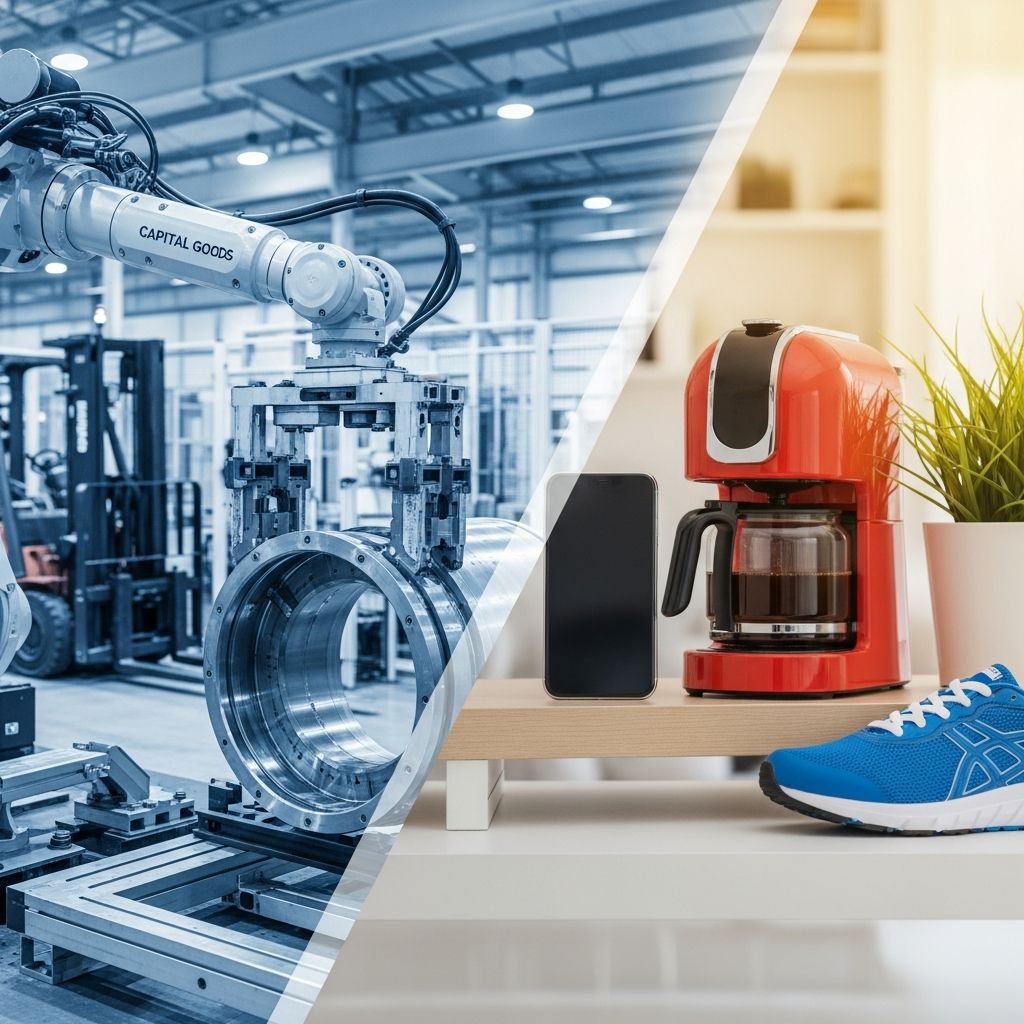
In economics, goods are classified into different categories based on their purpose, use, and who purchases them. Two of the most fundamental categories are capital goods and consumer goods. While both are tangible products that play important roles in the economy, they serve distinctly different functions. Understanding the differences between these two types of goods is essential for anyone involved in business, investing, or simply trying to comprehend how modern economies operate. This comprehensive guide explores the characteristics, differences, and practical examples of capital goods and consumer goods.
What Are Consumer Goods?
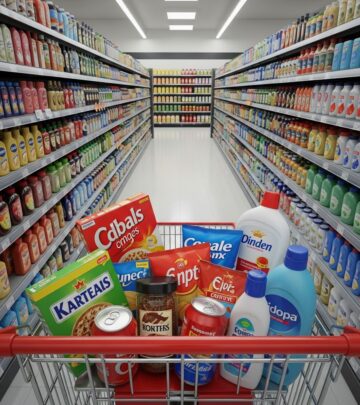
Consumer goods, also known as final goods, are tangible products that are directly purchased and used by individual consumers to satisfy their personal wants and needs. These goods represent the end products of the manufacturing process, designed specifically for end-user consumption. Unlike capital goods, consumer goods do not contribute to the production of other goods and are not used in a commercial production process.
Consumer goods encompass an enormous range of product categories that span virtually every aspect of daily life. These include:
- Personal care products such as toiletries, cosmetics, and hygiene items
- Food and beverages including groceries, snacks, and prepared meals
- Clothing and footwear for fashion and protection
- Automobiles for personal transportation
- Electronics including smartphones, computers, and televisions
- Home furnishings and household appliances
- Entertainment products and recreational items
The key characteristic that defines consumer goods is that they are purchased by individuals rather than businesses, and they are used for personal consumption rather than commercial purposes. When a person buys a laptop for personal use, streams a movie on a subscription service, purchases groceries at a supermarket, or acquires new clothing, they are engaging with consumer goods.
What Are Capital Goods?
Capital goods, also referred to as intermediate goods or producer goods, are tangible assets that businesses and manufacturers use to produce consumer goods and other products. Rather than being consumed directly by individuals, capital goods are purchased by companies and are instrumental in the production process. These goods generate economic value over time through their use in manufacturing and production.
Capital goods typically include:
- Manufacturing equipment and machinery
- Commercial real estate and factory buildings
- Production facilities and plants
- Heavy equipment and construction machinery
- Vehicles used for commercial purposes
- Computer systems and software for business operations
- Industrial tools and instruments
Capital goods are purchased through business-to-business (B2B) transactions, where one company sells these assets to another company for use in their operations. These purchases typically involve significant capital investment, as capital goods often represent major financial commitments for businesses. Unlike consumer goods, capital goods are not meant for immediate consumption but rather serve as productive assets that help generate revenue over an extended period.
The Fundamental Differences Between Capital and Consumer Goods
While both capital goods and consumer goods are tangible products, they differ significantly in several important ways. Understanding these distinctions is crucial for economics students, business professionals, and investors.
Purpose and Function
The most fundamental difference between capital and consumer goods lies in their intended purpose. Consumer goods are designed for final consumption by individuals and satisfy direct wants and needs. Capital goods, by contrast, are not consumed directly but are used in the production process to create other goods and services. A consumer good is an end product, while a capital good is a means to an end in the production process.
Who Purchases These Goods
Consumer goods are purchased by individual consumers for personal use. Capital goods are purchased by businesses, manufacturers, and commercial enterprises for use in their operations. This distinction reflects the fundamental difference in how these goods enter the economy and who derives value from them. Individual consumers typically do not purchase capital goods for personal use, as these items are designed for commercial or industrial applications.
Production and Contribution
Consumer goods do not contribute to the production of other goods. They represent the final stage of the production process. Capital goods, however, are directly involved in producing other goods. A factory building, manufacturing equipment, or industrial machinery all play active roles in the creation of consumer products. Without capital goods, the production of consumer goods would be impossible.
Market Structure and Sales Channels
Companies that produce consumer goods typically employ business-to-consumer (B2C) marketing strategies, utilizing public advertising channels, retail stores, and digital platforms to reach individual buyers. These marketing efforts focus on appealing to consumer preferences and purchasing behaviors. Capital goods companies, however, use business-to-business (B2B) marketing strategies, which rely on in-depth research, industry relationships, and direct sales to existing and potential corporate clients. B2B marketing emphasizes technical specifications, reliability, and return on investment rather than emotional appeal or brand loyalty.
Key Distinguishing Factors
Several specific factors can help determine whether a good is classified as a capital good or a consumer good:
User Type
If an individual uses the good primarily for personal consumption, it is classified as a consumer good. If a business uses the item for commercial or production purposes, it is classified as a capital good. This is often the most straightforward way to categorize goods, as the user type directly determines the classification.
Usage Context
The context in which a good is used determines its classification. Interestingly, the same physical product can be classified differently depending on who uses it and for what purpose. A laptop purchased by a consumer for personal use is a consumer good. However, if a business purchases the same model of laptop for its employees to use in their work, that laptop is classified as a capital good. The physical product is identical, but the classification changes based on its application.
Purchase Quantity
The quantity in which a good is purchased often indicates its classification. Consumer goods are typically purchased in smaller quantities by individual buyers. Capital goods are usually purchased in larger quantities and represent significant capital expenditures. A person buying one laptop is purchasing a consumer good, while a company ordering 500 laptops for its workforce is purchasing capital goods.
Pricing Strategy
Pricing models differ significantly between consumer and capital goods. Consumer goods pricing is typically driven by direct consumer demand. Consumers purchase goods directly based on their needs and desires, creating direct demand that influences pricing. Capital goods pricing, however, is based on derived demand. Derived demand refers to demand that is indirectly created through demand for consumer goods. When consumer demand for a particular product increases, the demand for the capital goods needed to produce that product also increases, which affects the pricing of those capital goods.
Can a Good Be Both Capital and Consumer Good?
Yes, the same product can function as both a capital good and a consumer good, depending on its specific context and usage. This demonstrates that the classification of goods is not inherent to the product itself but rather depends on how and by whom the good is used.
Examples of goods that can be classified either way include:
- Vehicles: A car purchased by an individual for personal transportation is a consumer good. A truck purchased by a logistics company for commercial deliveries is a capital good.
- Computers: A smartphone purchased by a student for personal communication is a consumer good. The same model smartphone purchased by a corporate office for employee use is a capital good.
- Software: Productivity software purchased by an individual for personal projects is a consumer good. The same software purchased by a corporation with site licenses for business operations is a capital good.
- Furniture: Living room furniture purchased by a household for home use is a consumer good. Office furniture purchased by a company for its workspaces is a capital good.
Comparison Table: Capital Goods vs Consumer Goods
| Characteristic | Capital Goods | Consumer Goods |
|---|---|---|
| Primary Purchaser | Businesses and manufacturers | Individual consumers |
| Purpose | Production and manufacturing of other goods | Direct personal consumption and satisfaction of needs |
| Market Type | Business-to-Business (B2B) | Business-to-Consumer (B2C) |
| Marketing Strategy | In-depth research, technical specifications, relationship-based | Mass marketing, emotional appeal, brand loyalty |
| Purchase Quantity | Large quantities, significant capital investment | Small quantities, individual purchases |
| Demand Type | Derived demand (indirect) | Direct demand |
| Examples | Factory equipment, commercial real estate, machinery | Food, clothing, electronics, automobiles |
| Lifespan | Long-term; contributes to production over years | Variable; consumed or used directly by end user |
Economic Impact and Market Considerations
Capital goods and consumer goods play different roles in economic analysis and policy. Capital goods are considered investments in productive capacity, and their production is closely monitored as an indicator of economic growth and business confidence. An increase in capital goods orders often signals that businesses expect economic expansion and are willing to invest in additional production capacity.
Consumer goods, conversely, are closely tracked as indicators of consumer confidence and spending patterns. Consumer goods sales data helps economists assess the health of the economy from the perspective of household purchasing power and consumer sentiment. Strong consumer goods sales typically indicate a healthy economy with confident consumers, while declining sales may signal economic slowdown.
Frequently Asked Questions
Q: Can the same product be classified as both a capital good and a consumer good?
A: Yes, absolutely. The classification depends on the context and how the product is used. For example, a computer is a consumer good when purchased by an individual for personal use, but it becomes a capital good when a business purchases it for employee use in commercial operations. The determining factor is the user and the purpose of the purchase.
Q: What is derived demand, and how does it relate to capital goods?
A: Derived demand is demand that is indirectly created through demand for consumer goods. Capital goods have derived demand because they are needed to produce consumer goods. When consumer demand for a product increases, manufacturers need more capital goods (machinery, equipment, facilities) to meet that demand, creating derived demand for capital goods.
Q: Why do capital goods and consumer goods use different marketing strategies?
A: Capital goods use B2B marketing because they are sold to businesses that make rational, research-based purchasing decisions based on technical specifications and return on investment. Consumer goods use B2C marketing because they are sold to individuals who may be influenced by brand appeal, emotional messaging, and mass media advertising. The purchasing decision processes and target audiences are fundamentally different.
Q: How does the pricing of capital goods differ from consumer goods?
A: Consumer goods pricing is based on direct demand—people purchase them directly based on their needs and wants. Capital goods pricing is based on derived demand, which depends on how much consumer demand exists for the products they help manufacture. Additionally, capital goods often have longer negotiation periods and more complex pricing structures due to their high value and customization requirements.
Q: Are raw materials considered capital goods or consumer goods?
A: Raw materials are neither capital goods nor consumer goods in the traditional sense. They are inputs into production but are not the manufactured goods themselves. Capital goods are human-made assets like machinery and equipment, not raw materials. Raw materials are consumed in the production process to create both capital and consumer goods.
Q: What are examples of industries that primarily deal with capital goods?
A: Industries dealing primarily with capital goods include manufacturing equipment producers, industrial machinery manufacturers, commercial real estate firms, construction equipment suppliers, and industrial automation companies. These businesses focus on selling to other businesses rather than individual consumers.
References
- Consumer Goods vs Capital Goods – What’s the Difference? — Assembled Brands. 2025. https://www.assembledbrands.com/resources/consumer-goods-vs-capital-goods
Similar Articles








Read full bio of Sneha Tete