Capital Gains Distribution: Definition and Tax Implications
Understanding capital gains distributions and their impact on your investment returns and tax liability.

A capital gains distribution represents a payment made by a mutual fund, exchange-traded fund (ETF), or other investment company to its shareholders when the fund realizes profits from the sale of securities held within its portfolio. Unlike dividend payments, which come from a company’s earnings, capital gains distributions arise when an investment manager sells securities at a higher price than the purchase price, thereby generating a capital gain. These distributions are a crucial aspect of investment income that investors must understand for both financial planning and tax preparation purposes.
Understanding Capital Gains Distributions
Capital gains distributions occur when investment fund managers make the strategic decision to sell securities from their portfolio. When a security is sold for more than its original purchase price, the fund realizes a capital gain. Rather than retaining all these gains within the fund, investment companies are required to distribute a significant portion of their net capital gains to shareholders on a periodic basis, typically annually. These distributions represent the investor’s proportional share of the realized gains generated by the fund’s trading activity.
It is important to distinguish between capital gains distributions and other types of fund distributions. While mutual funds and ETFs may distribute dividends paid by the underlying securities they hold, capital gains distributions result specifically from the fund manager’s investment decisions and portfolio management activities. A single fund may distribute both types of payments to shareholders during the same fiscal year.
How Capital Gains Distributions Work
The mechanics of capital gains distributions involve several key steps:
- Portfolio Management: Fund managers actively trade securities within the portfolio to achieve investment objectives and optimize returns.
- Realization of Gains: When securities are sold at prices higher than their cost basis, capital gains are realized.
- Calculation: The fund calculates net capital gains after accounting for any capital losses realized during the fiscal year.
- Distribution Decision: Fund managers must decide which portion of these net gains to distribute to shareholders and which to retain within the fund.
- Payment to Shareholders: Distributions are paid to all shareholders on record as of a specific distribution date, typically distributed proportionally based on ownership stakes.
Long-Term vs. Short-Term Capital Gains
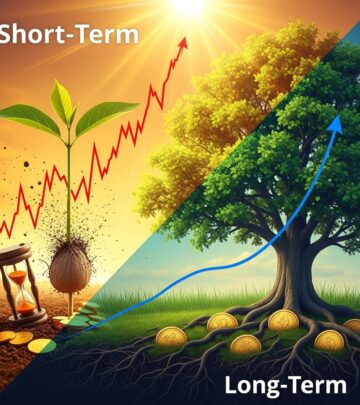
Capital gains distributions can be categorized based on the holding period of the securities sold by the fund. This distinction is critical because it determines the tax treatment for shareholders.
Long-Term Capital Gains
Long-term capital gains result from the sale of securities held by the fund for more than one year. These gains qualify for preferential tax treatment in most jurisdictions, including the United States. Long-term capital gains are typically taxed at lower rates than ordinary income, with federal rates generally ranging from 0% to 20% depending on the investor’s income level and tax filing status. This favorable tax treatment is designed to encourage long-term investment strategies.
Short-Term Capital Gains
Short-term capital gains arise from the sale of securities held for one year or less. These gains are taxed as ordinary income at the investor’s marginal tax rate, which can be significantly higher than long-term capital gains rates. Short-term gains may be taxed at rates ranging from 10% to 37% at the federal level, depending on the investor’s tax bracket.
Tax Implications of Capital Gains Distributions
Capital gains distributions have important tax consequences for investors that must be considered when evaluating fund performance and making investment decisions.
Taxable Events
Unlike some other investment transactions, receiving a capital gains distribution creates a taxable event for the shareholder. Even if an investor has not sold any fund shares, simply receiving a capital gains distribution triggers a tax liability. This is particularly significant for shareholders who purchased their fund shares at a higher price than the distribution value, as they may experience a tax bill despite having a net loss on their investment.
Tax Rate Application
The tax rate applied to capital gains distributions depends on whether the fund distributed long-term or short-term gains. Funds are required to designate the character of each distribution, informing shareholders whether the gains qualify for long-term or short-term treatment. Some funds may distribute both types of gains in a single payment, with each portion taxed according to its respective rate.
State and Local Taxes
In addition to federal income tax, capital gains distributions may be subject to state and local income taxes. Some states offer preferential tax treatment for capital gains similar to the federal system, while others tax them as ordinary income. Investors should verify the tax treatment in their specific jurisdiction.
Timing and Frequency of Distributions
Most mutual funds and ETFs distribute capital gains on an annual basis, typically near the end of the calendar year. However, the specific timing varies by fund. Some funds may distribute gains multiple times per year if substantial trading occurs within the portfolio. Investors should check their fund’s prospectus or distribution schedule to understand when distributions are expected.
The timing of distributions can significantly impact tax planning strategies. Investors considering purchasing fund shares should be aware that buying shares just before an ex-dividend date may result in receiving an immediate capital gains distribution and the associated tax liability, while the share price typically declines by the distribution amount on the ex-date.
Impact on Fund Performance
Capital gains distributions represent a return of realized gains to shareholders and do not represent new wealth creation. From a total return perspective, the fund’s value decreases by the distribution amount on the ex-dividend date, offsetting the gain received by shareholders. However, the tax implications may create a difference between the before-tax and after-tax returns experienced by investors.
Funds with high turnover rates and active trading strategies tend to generate larger capital gains distributions than passively managed funds or funds with lower turnover ratios. Index funds and ETFs typically produce smaller capital gains distributions due to their buy-and-hold approach to portfolio management.
Strategies to Minimize Capital Gains Distributions
Both fund managers and investors can employ strategies to reduce the tax impact of capital gains distributions:
- Tax-Loss Harvesting: Fund managers can strategically sell losing positions to offset realized gains and reduce the net capital gains distributed to shareholders.
- Buy-and-Hold Investing: Selecting funds with lower turnover rates minimizes the frequency of security sales and associated capital gains realizations.
- Index Funds and ETFs: Passively managed funds tend to generate fewer capital gains distributions due to their static portfolio composition.
- Tax-Managed Funds: Some funds are specifically designed to minimize capital gains distributions through active tax management strategies.
- Tax-Advantaged Accounts: Holding funds in retirement accounts such as 401(k)s or IRAs shields investors from immediate taxation on capital gains distributions.
Reinvestment of Distributions
Investors can typically choose to reinvest capital gains distributions automatically by purchasing additional fund shares at net asset value (NAV), or they can elect to receive the distribution as cash. Reinvestment can be beneficial for long-term investors seeking to compound returns and maintain their desired asset allocation without incurring brokerage fees or commissions.
Reporting and Documentation
Fund companies must report capital gains distributions to shareholders on Form 1099-DIV before January 31 of the following tax year. This form provides detailed information about the distribution, including the total amount and the portion attributable to long-term versus short-term gains. Investors should retain this documentation for tax filing purposes and maintain records of their adjusted cost basis for each fund holding.
Frequently Asked Questions
Q: Why do I owe taxes on capital gains distributions when I haven’t sold my fund shares?
A: Capital gains distributions represent your proportional share of the gains realized by the fund manager’s trading activity. These are taxable events regardless of whether you’ve sold your own shares. The fund is distributing realized gains earned within the fund portfolio to its shareholders.
Q: What is the difference between a capital gains distribution and a dividend?
A: Dividends are payments made from a company’s earnings or a fund’s received dividend income. Capital gains distributions result from the fund’s sale of securities at a profit. Both are taxable, but they may be taxed at different rates depending on their character.
Q: How can I find out about upcoming capital gains distributions?
A: Fund companies typically announce planned distributions on their websites and in their prospectuses. You can also contact the fund company directly or check financial websites for distribution schedules and ex-dividend dates.
Q: Are capital gains distributions better in long-term or short-term form?
A: Long-term capital gains distributions are generally preferable because they receive favorable tax treatment with lower tax rates. Short-term gains are taxed at ordinary income rates, which are typically higher.
Q: Should I avoid funds that generate large capital gains distributions?
A: Not necessarily. While capital gains distributions have tax implications, they may be offset by superior fund performance or returns. Consider the fund’s after-tax returns when evaluating performance. Tax-advantaged accounts eliminate this concern entirely.
Q: Can I reduce my capital gains tax by holding funds in different types of accounts?
A: Yes. Tax-deferred accounts like traditional IRAs and 401(k)s protect you from immediate taxation on capital gains distributions. Tax-free accounts like Roth IRAs allow distributions to grow and be withdrawn tax-free, making them ideal for high-turnover funds.
References
- Investment Company Act of 1940 — U.S. Securities and Exchange Commission. https://www.sec.gov/cgi-bin/browse-edgar
- Publication 550: Investment Income and Expenses — Internal Revenue Service. 2024. https://www.irs.gov/publications/p550
- Tax Considerations for Mutual Fund Investors — Financial Industry Regulatory Authority (FINRA). https://www.finra.org/investors/alerts
- Understanding Mutual Fund Classes and Expenses — U.S. Securities and Exchange Commission. 2023. https://www.sec.gov/investor/pubs/mutualfundclass.htm
- Tax-Efficient Investing Strategies — CFA Institute. https://www.cfainstitute.org/
Similar Articles








Read full bio of medha deb