Capital: Definition, Types, and Role in Finance
Understanding capital: Essential guide to financial resources, investment, and business growth.
Capital is one of the fundamental concepts in finance and business, serving as the lifeblood of economic activity. Whether you’re starting a new business, investing in financial markets, or managing an existing enterprise, understanding capital is essential to making informed financial decisions. This comprehensive guide explores what capital is, the various types of capital, and how it functions within the broader economic landscape.
What Is Capital?
Capital refers to financial assets or the financial value of assets that a business or individual possesses. In its broadest sense, capital encompasses money, equipment, property, and other resources that can be used to generate income or fund operations. The term is derived from the Latin word “capitalis,” meaning “of the head” or “chief,” emphasizing its importance as a principal resource.
In finance and economics, capital represents the resources available to produce goods, deliver services, and generate returns on investment. It can take various forms, from tangible assets like machinery and buildings to intangible assets like patents and intellectual property. Capital is what enables businesses to invest in growth, weather financial difficulties, and capitalize on opportunities.
The concept of capital is central to capitalism as an economic system, where capital accumulation drives economic growth and development. Investors seek to deploy their capital efficiently to maximize returns, while businesses require adequate capital to fund their operations and expansion plans.
Types of Capital
Capital exists in multiple forms, each serving different purposes within business and investment contexts. Understanding these distinctions helps stakeholders make better financial decisions.
Financial Capital
Financial capital refers to money available for investment or business operations. This includes cash reserves, bank loans, equity financing, and other monetary resources. Financial capital is the most liquid form of capital and is often the primary concern for businesses seeking to fund their operations and growth initiatives.
Financial capital can be raised through various means, including personal savings, bank loans, venture capital funding, private equity investment, and public equity offerings. The cost and availability of financial capital depend on factors such as interest rates, credit conditions, and investor sentiment.
Human Capital
Human capital represents the skills, knowledge, experience, and abilities of a workforce. This intangible asset is increasingly recognized as crucial to organizational success. Employees with advanced skills, relevant experience, and strong educational backgrounds contribute significantly to business productivity and innovation.
Investing in human capital through training programs, education, and employee development can yield substantial returns by improving productivity and reducing turnover. Companies that prioritize human capital development often experience better performance and competitive advantages in their industries.
Working Capital
Working capital is the difference between a company’s current assets and current liabilities. It represents the resources available to fund day-to-day operations and short-term obligations. Working capital management is critical for maintaining business liquidity and operational efficiency.
Positive working capital indicates that a company has sufficient resources to meet its short-term obligations and fund operations. Conversely, negative working capital may signal financial stress and difficulty in meeting obligations. Effective working capital management involves optimizing inventory, accounts receivable, and payables.
Physical Capital
Physical capital encompasses tangible assets used in production, such as machinery, buildings, vehicles, and equipment. These assets are essential for manufacturing, delivering services, and conducting business operations. Physical capital requires significant investment and maintenance but generates returns through productive use.
Physical capital investments are typically long-term in nature and involve substantial capital expenditures. Depreciation of physical capital must be considered when calculating true business profitability and asset values.
Social Capital
Social capital refers to the networks, relationships, and trust within and between communities. Strong social capital facilitates cooperation, reduces transaction costs, and creates opportunities for collaboration and mutual benefit. Businesses benefit from strong social capital through improved stakeholder relationships and community support.
Intellectual Capital
Intellectual capital encompasses patents, trademarks, copyrights, trade secrets, and proprietary processes. This form of capital is increasingly valuable in knowledge-based economies and technology sectors. Intellectual capital can provide significant competitive advantages and generate substantial returns through licensing and innovation.
Natural Capital
Natural capital includes environmental resources such as forests, water, minerals, and biodiversity. These resources are essential for economic activity and human survival. Sustainable management of natural capital is critical for long-term economic and environmental well-being.
Capital Structure
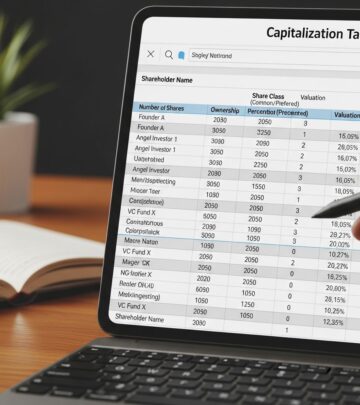
Capital structure refers to how a company finances its operations and growth through a combination of debt and equity. The optimal capital structure balances the benefits and risks of different financing sources.
Debt Capital
Debt capital comes from borrowed funds, such as bank loans, bonds, and credit lines. Debt financing obligates the company to repay principal and interest, creating fixed obligations. While debt can amplify returns through leverage, it also increases financial risk and requires consistent cash flow to service obligations.
Equity Capital
Equity capital represents ownership stakes in a business. Equity investors share in profits but also bear the risk of losses. Equity financing does not create fixed obligations but dilutes ownership and control for existing shareholders.
The Role of Capital in Business
Capital plays multiple critical roles in business operations and development:
- Funding Operations: Capital enables businesses to purchase inventory, pay employees, and cover operational expenses.
- Enabling Growth: Strategic capital investments support expansion into new markets, development of new products, and acquisition of competitors.
- Innovation: Research and development investments powered by capital lead to new technologies and business models.
- Risk Management: Adequate capital reserves help businesses absorb unexpected challenges and maintain stability during downturns.
- Competitive Advantage: Access to capital allows companies to invest in superior technology, talent, and infrastructure.
- Shareholder Returns: Profitable use of capital generates dividends, stock appreciation, and value creation for investors.
How Capital Affects Economic Growth
At the macroeconomic level, capital formation is essential for sustained economic growth. Societies that efficiently mobilize capital for productive investments experience faster development and improved living standards. Capital accumulation drives technological advancement, creates employment opportunities, and increases productivity.
Central banks and government policies influence capital availability and cost through interest rates, credit regulations, and fiscal policy. During economic expansions, capital availability tends to increase, stimulating investment and growth. During contractions, capital becomes scarce, potentially slowing economic activity.
Key Considerations for Capital Management
Effective capital management requires strategic planning and careful monitoring:
- Return on Investment (ROI): Businesses should evaluate capital investments based on expected returns and alignment with strategic objectives.
- Risk Assessment: Every capital investment carries risk; understanding and mitigating these risks is essential.
- Liquidity Balance: Maintaining adequate liquidity while deploying capital productively requires careful balance.
- Cost of Capital: Understanding the cost of debt and equity financing helps optimize capital structure.
- Diversification: Spreading capital across multiple investments and asset classes reduces risk exposure.
- Regular Monitoring: Continuous assessment of capital deployment ensures optimal allocation and performance.
Capital in Investment Context
For individual investors, capital represents the funds available for investment in securities, real estate, or other assets. Investment capital can be from personal savings, inheritance, or borrowed funds. The amount of capital available influences investment strategy, risk tolerance, and potential returns.
Investors must consider their investment horizon, risk tolerance, and financial objectives when deploying capital. Diversification across asset classes helps manage risk while pursuing growth objectives. Regular rebalancing ensures that capital allocation remains aligned with investment goals and risk profiles.
Frequently Asked Questions (FAQs)
Q: What is the difference between capital and cash?
A: Capital encompasses all financial and physical assets, while cash refers specifically to money available in liquid form. Capital includes equipment, property, and investments, whereas cash is only the monetary portion immediately available for use.
Q: Why is working capital management important?
A: Working capital management ensures businesses have sufficient resources to meet short-term obligations and fund operations. Poor working capital management can lead to liquidity crises even if a company is profitable on paper.
Q: How do companies raise capital?
A: Companies raise capital through debt financing (bank loans, bonds), equity financing (stock offerings, venture capital), retained earnings, and asset sales. The choice depends on cost, control considerations, and market conditions.
Q: What is human capital and why does it matter?
A: Human capital refers to the skills and knowledge of employees. It matters because skilled employees drive productivity, innovation, and competitive advantage, often generating higher returns than physical capital investments.
Q: How does capital structure affect company risk?
A: Higher debt levels increase financial leverage and risk, as companies must meet fixed obligations regardless of performance. Higher equity financing reduces this risk but dilutes ownership and may be more expensive than debt.
Q: What is meant by capital allocation?
A: Capital allocation refers to how companies distribute available resources among different investments, projects, and business units. Effective capital allocation maximizes returns and supports strategic objectives.
References
- Capital Definition and Concept — Investopedia. 2024. https://www.investopedia.com/terms/c/capital.asp
- Working Capital Management — U.S. Small Business Administration (SBA). 2024. https://www.sba.gov/business-guide/manage-your-business/manage-cash-flow
- Human Capital in Economic Growth — Organisation for Economic Co-operation and Development (OECD). 2024. https://www.oecd.org/education/
- Capital Structure and Corporate Finance — International Monetary Fund (IMF). Financial Markets and Institutions. 2024. https://www.imf.org/
- Intellectual Property and Intellectual Capital — World Intellectual Property Organization (WIPO). 2024. https://www.wipo.int/
Similar Articles








Read full bio of Sneha Tete