CapEx vs OpEx: Key Differences Explained
Master the critical distinction between capital and operational expenditures for better financial management.
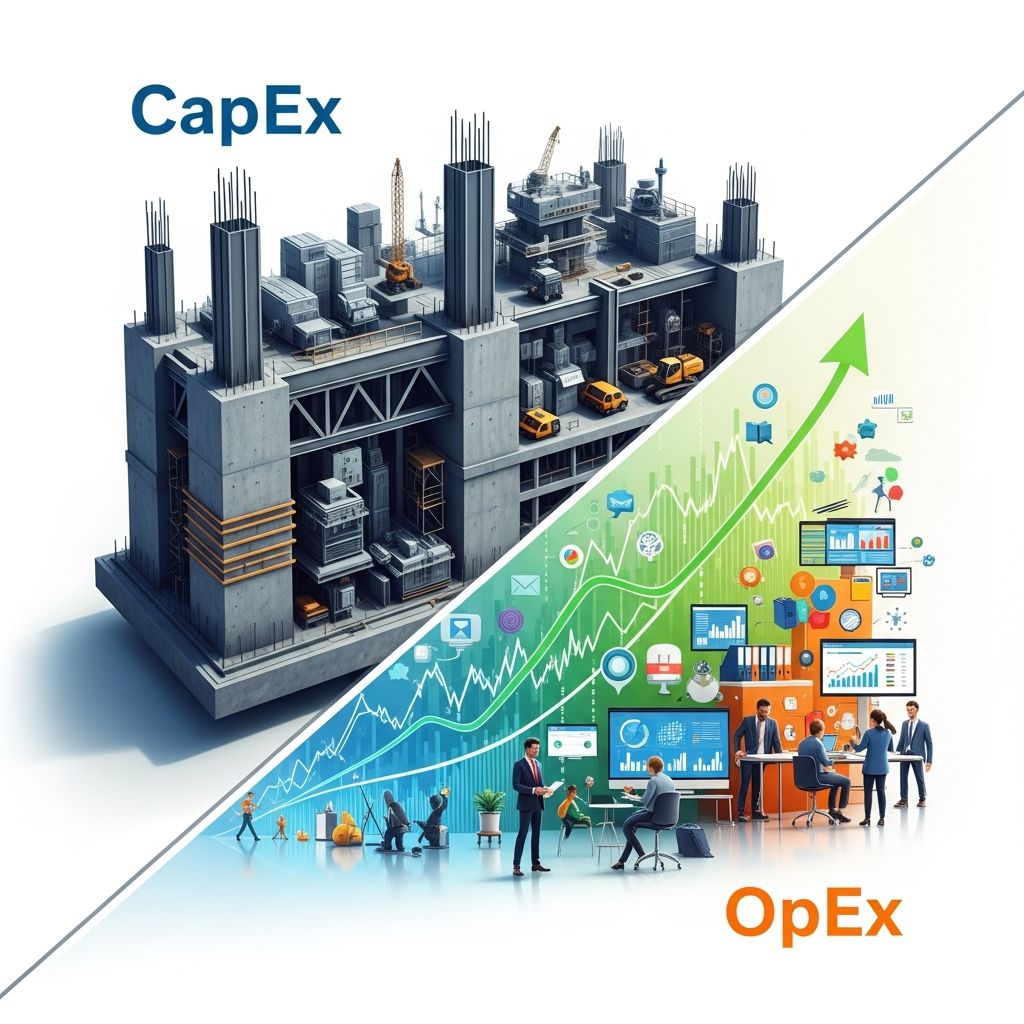
What’s the Difference Between Capital Expenditures (CapEx) and Operational Expenditures (OpEx)?
Understanding the distinction between capital expenditures (CapEx) and operational expenditures (OpEx) is fundamental to effective financial management and strategic business planning. While both represent money that flows out of a company, they serve fundamentally different purposes and are treated differently in accounting, taxation, and financial reporting. This comprehensive guide explores these critical differences and explains why they matter for your organization’s financial health and growth strategy.
Defining Capital Expenditures (CapEx)
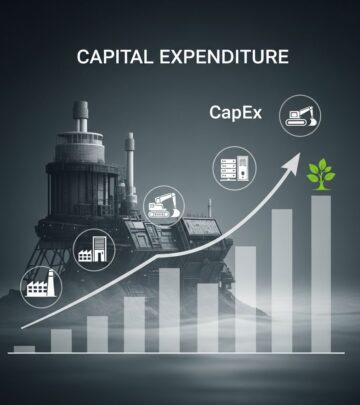
Capital expenditures refer to funds that a company invests in acquiring, upgrading, or maintaining physical assets that are expected to generate economic benefits over an extended period, typically more than one year. These investments represent the company’s commitment to long-term growth and operational capability enhancement. CapEx investments include purchases of property, plant, and equipment (PP&E), technology infrastructure, vehicles, buildings, and other tangible assets that will serve the business for years to come.
The distinguishing characteristic of CapEx is that it involves significant upfront capital outlay for assets that will contribute to revenue generation over multiple fiscal periods. For example, when a manufacturing company purchases new machinery to improve production efficiency, this substantial investment constitutes a capital expenditure because the equipment will provide benefits and generate value for years into the future. Similarly, a technology company investing in upgrading its IT infrastructure to support growth is making a capital expenditure decision.
Understanding Operational Expenditures (OpEx)
Operational expenditures, by contrast, represent the ongoing, recurring costs essential for a company’s day-to-day business operations and survival. These are the expenses necessary to maintain current operations and generate immediate revenue. OpEx encompasses a wide range of expenditures including salaries and wages, office rent, utility bills, insurance premiums, office supplies, maintenance costs, marketing expenses, research and development, travel costs, and other routine business expenses.
Unlike CapEx, which represents strategic long-term investments, OpEx deals with the immediate necessities that keep a business functioning. If CapEx represents building a car, OpEx is the fuel needed to keep that car running on a daily basis. These expenses are incurred continuously and are essential regardless of the company’s growth trajectory or market conditions.
Key Differences Between CapEx and OpEx
While both CapEx and OpEx involve company spending, they differ significantly in nature, accounting treatment, tax implications, and strategic impact. Understanding these differences is crucial for financial planning and decision-making.
Timeline and Duration of Benefits
One of the most fundamental differences lies in the timeline over which benefits are realized. CapEx investments are designed to provide benefits over an extended period, typically exceeding one year, often spanning many years. These long-term assets continue to generate value throughout their useful life. Conversely, OpEx provides immediate, short-term benefits within a single fiscal year or accounting period. Operating expenses are consumed in the period they are incurred.
Accounting Treatment and Financial Statements
The accounting treatment of CapEx and OpEx reflects their different natures and impacts on business finances:
- CapEx Treatment: Capital expenditures are capitalized, meaning they are recorded as assets on the balance sheet rather than expensed immediately. These assets appear in the property, plant, and equipment section and are gradually depreciated over their useful lives.
- OpEx Treatment: Operational expenditures are expensed immediately in the accounting period they are incurred, appearing directly on the income statement as expenses that reduce profitability in that period.
This fundamental accounting difference means that CapEx impacts the balance sheet by increasing the asset base and reflecting the company’s investments in growth, while OpEx directly affects the profit and loss statement by reducing reported earnings for the period.
Depreciation and Tax Deductions
The tax treatment of CapEx and OpEx differs significantly, with important implications for cash flow and tax planning:
| Aspect | Capital Expenditures (CapEx) | Operational Expenditures (OpEx) |
|---|---|---|
| Tax Deduction | Not immediately deductible; deducted through depreciation over multiple years | Immediately tax deductible in the year incurred |
| Depreciation Schedule | Spread across the useful life of the asset (often 5-30+ years) | No depreciation applies |
| Tax Shield | Gradual tax relief through annual depreciation deductions | Immediate tax relief in the same fiscal year |
| Cash Flow Impact | Large upfront cash outlay with gradual tax benefit recovery | Immediate cash outlay with immediate tax deduction |
Capital expenditures provide tax benefits over time through depreciation deductions, allowing companies to reduce their tax burden gradually across several years. This aligns with the matching principle in accounting, where expenses are matched against the periods in which benefits are realized. Operational expenditures, being ordinary and customary business costs, typically qualify as immediately tax-deductible expenses.
Risk Profile and Financial Flexibility
CapEx and OpEx also differ in their risk characteristics and impact on financial flexibility. Capital expenditures involve larger, one-time investments with higher inherent risk, as the company must wait years to recover the investment through operational benefits. Poor CapEx decisions can negatively impact the company for years. Operational expenditures, while necessary, are generally lower-risk and more flexible, with easier adjustment capabilities from period to period. If a company overspends on utilities one month, it can typically adjust the following month without long-term consequences.
Practical Examples of CapEx and OpEx
Capital Expenditure Examples
Understanding real-world examples helps clarify the distinction between these expense categories:
- Purchasing manufacturing equipment or machinery for production efficiency
- Constructing or acquiring buildings and real estate properties
- Investing in IT infrastructure and technology systems upgrades
- Acquiring vehicles for company transportation and logistics
- Installing equipment or systems that enhance operational capacity
- Making significant renovations or improvements to existing facilities
Operational Expenditure Examples
Common operational expenses that keep businesses running day-to-day include:
- Employee salaries, wages, and benefits
- Office rent and facility maintenance
- Utility costs including electricity, water, and internet
- Insurance premiums for business protection
- Office supplies and materials
- Marketing and advertising campaigns
- Research and development activities
- Travel expenses for business purposes
Cash Flow and Balance Sheet Impact
CapEx and OpEx create different cash flow patterns and balance sheet impacts that affect how companies are evaluated and managed:
Capital Expenditure Impact: CapEx represents investing cash outflows on the cash flow statement, showing how a company is investing in its future growth and asset base. These investments appear on the balance sheet as capital assets, reflecting the company’s tangible resources and productive capacity. A company with significant recent CapEx demonstrates confidence in its long-term prospects and commitment to growth.
Operational Expenditure Impact: OpEx is captured in operating cash flows, representing the cash required to sustain daily business operations. These expenses directly reduce net income and operating profits. Depreciation, being non-cash in nature, is added back to net income when calculating operating cash flows, as it represents an accounting allocation rather than actual cash outlay.
Strategic Considerations and Business Implications
Company Growth Strategy Indicators
The balance between CapEx and OpEx reveals important insights about a company’s strategic direction and financial health. High capital expenditures typically indicate that a company feels confident in its long-term prospects and is willing to invest in expansion, new product development, or operational enhancement. These companies are positioning themselves for growth and increased market share. Conversely, lower capital expenditures might signal a more cautious or maintenance-focused approach, suggesting the company is prioritizing near-term profitability over long-term growth investments.
Different Strategies for Different Companies
The appropriate balance between CapEx and OpEx varies dramatically depending on a company’s life stage and financial position. Startups typically prioritize OpEx while minimizing CapEx to avoid heavy upfront investments while establishing their market presence and achieving profitability. These young companies need flexibility and cash preservation more than they need long-term asset investments. Established companies with stable cash flows often invest more heavily in CapEx to foster growth, expand capabilities, and maintain competitive advantages in their markets. These mature organizations can absorb the capital requirements and long-term commitment of significant asset investments.
Why This Distinction Matters
Understanding the difference between CapEx and OpEx matters for multiple critical business reasons:
- Tax Planning: Proper classification enables companies to optimize tax strategies and maximize deductions timing
- Financial Analysis: Distinguishing between these expenses provides clearer pictures of profitability, efficiency, and financial health
- Investment Decisions: Investors use CapEx levels to assess growth strategy and future earnings potential
- Cash Flow Management: Understanding cash impacts helps companies maintain adequate liquidity for operations and investments
- Strategic Planning: The CapEx/OpEx mix reflects and shapes long-term business strategy and competitive positioning
- Performance Metrics: Different expense types affect various financial ratios and performance indicators differently
Maintenance CapEx vs. Growth CapEx
Within capital expenditures, companies make important distinctions between two types of investments. Maintenance CapEx represents investments made to maintain current business performance and capabilities, including replacing worn-out or broken equipment. These investments are necessary to prevent operational deterioration and keep existing assets functioning properly. Growth CapEx, by contrast, represents discretionary investments made to improve the business or help it expand, such as investing in additional equipment or acquiring land for new facilities. Growth CapEx is typically more flexible and discretionary, while maintenance CapEx is essential for business continuity.
Frequently Asked Questions
Q: Can an expense be classified as both CapEx and OpEx?
A: In complex situations, expenses may involve both CapEx and OpEx components. For example, purchasing and installing new equipment involves CapEx (the equipment purchase), while the installation labor might be expensed immediately or capitalized depending on circumstances and accounting standards.
Q: How does depreciation affect taxes?
A: Depreciation allows companies to deduct a portion of a capital asset’s cost each year on their tax return. This annual deduction reduces taxable income over the asset’s useful life, creating a tax shield that offsets the initial capital investment gradually rather than all at once.
Q: Why do startups prefer OpEx over CapEx?
A: Startups typically prefer OpEx because it preserves cash, maintains financial flexibility, and provides immediate tax deductions. CapEx requires significant upfront capital that startups often cannot spare during their establishment phase.
Q: Which type of expenditure is better for a company?
A: Neither CapEx nor OpEx is universally “better.” The appropriate balance depends on a company’s specific situation, strategic objectives, growth stage, and operational requirements. Successful companies typically balance both types strategically.
Q: How do CapEx and OpEx appear in financial statements?
A: CapEx appears on the balance sheet as an asset (typically in PP&E) and is gradually expensed through depreciation on the income statement. OpEx appears directly on the income statement as an expense in the period it is incurred.
Q: What’s the impact on working capital?
A: CapEx investments directly reduce working capital as they represent significant cash outflows for long-term asset purchases. OpEx, while necessary, typically has smaller individual impacts on working capital as these expenses are paid from regular operating cash flows.
References
- Understanding CapEx vs. OpEx in Corporate Finance — Corporate Finance Institute. 2024. https://corporatefinanceinstitute.com/resources/accounting/capex-vs-opex/
- CapEx vs OpEx: What’s the Difference & Why it Matters? — CathCap. 2024. https://cathcap.com/operational-expenditure-vs-capital-expenditure/
- CAPEX Vs OPEX: What’s the Difference and Why it Matters — IQX Business. 2024. https://www.iqxbusiness.com/iqx-blog/capex-vs-opex-whats-the-difference-why-it-matters/
- CapEx vs. OpEx: What’s the difference? — Cube Software. 2024. https://www.cubesoftware.com/blog/capex-vs-opex
- CapEx vs Opex: Key differences, examples & why it matters — Finance Alliance. 2024. https://www.financealliance.io/capex-vs-opex/
- Opex Vs Capex | Comparison — Xero US. 2024. https://www.xero.com/us/glossary/opex-vs-capex/
Similar Articles








Read full bio of medha deb